10 Gaming Mechanics That Revolutionized Video Games Forever
Discover how revolutionary gameplay mechanics and innovative features have redefined the gaming universe, inspiring new genres and unforgettable experiences.
The gaming universe has undergone transformations so monumental they'd make a supernova look like a flickering candle! From the humble beeps and pixels of yesteryear to the sprawling, living digital ecosystems of today, certain gameplay mechanics have not just evolved—they've exploded onto the scene, rewriting the very DNA of interactive entertainment. These aren't mere features; they are seismic shifts that created new genres, defined player expectations, and inspired legions of developers to dream bigger. Whether you're a veteran who remembers blowing into cartridges or a newcomer who thinks 'retro' means last year's game, the echoes of these innovations are felt in every controller vibration, every cinematic cutscene, and every heart-pounding multiplayer match. They are the foundational pillars upon which the entire colossal edifice of modern gaming is built.
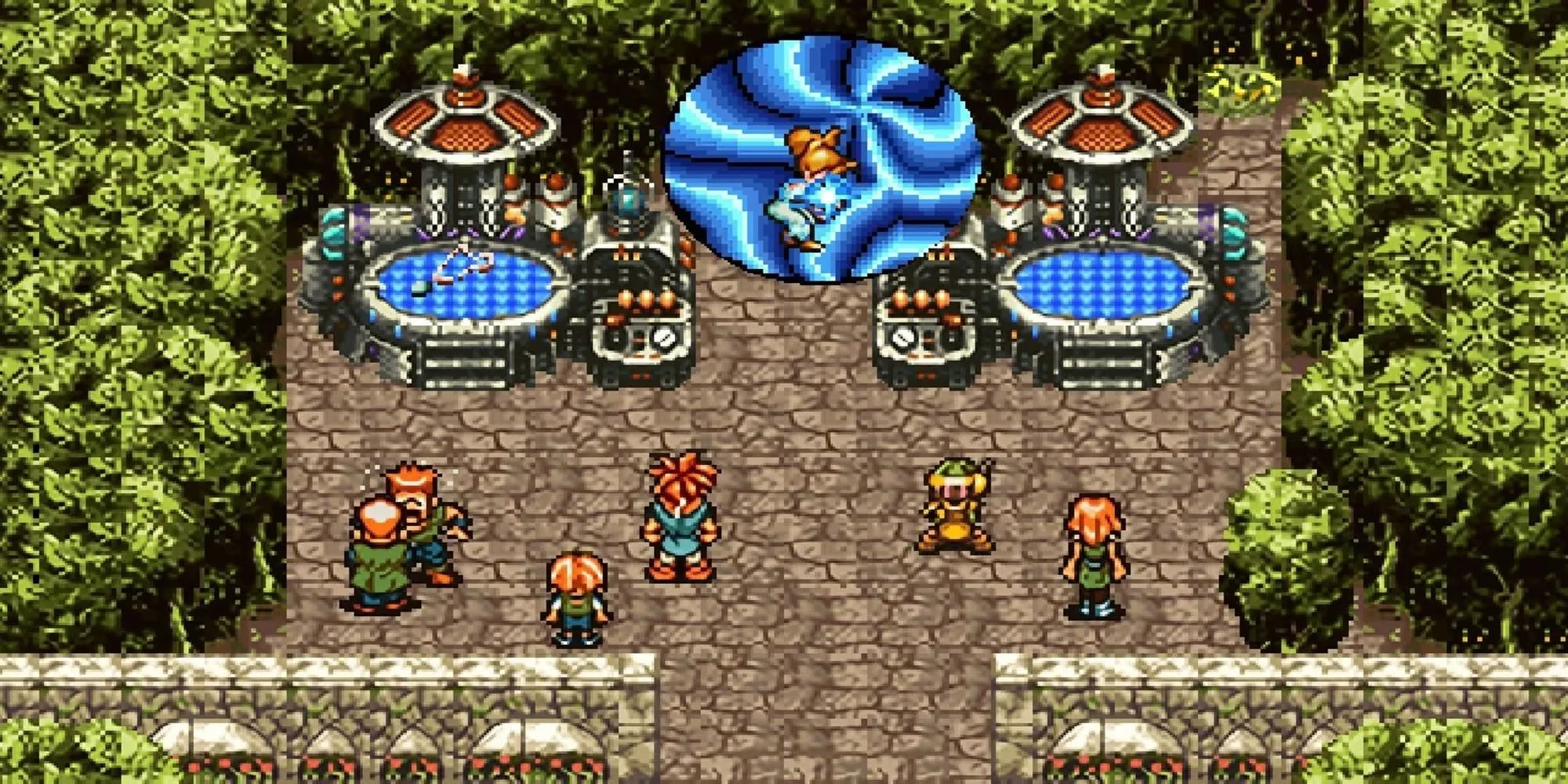
10. New Game PLUS: The Gift That Keeps on Giving
Chrono Trigger didn't just craft a timeless JRPG in 1995; it unleashed a paradigm-shifting beast upon the world: New Game Plus! 🎮✨ Imagine the sheer, unadulterated power of conquering the final boss with your maxed-out hero within minutes of starting a fresh file. This wasn't just replayability; it was a declaration of player sovereignty. Gamers could carry their hard-earned strength, their legendary gear, and their hard-won abilities into a new cycle, transforming a linear story into a playground of possibilities. It encouraged hunting for a dozen different endings without the soul-crushing grind. This single mechanic turned one-and-done experiences into lifelong investments, a tradition now sacred in franchises from Shin Megami Tensei to Elden Ring. The message was clear: your effort matters, and you can take it with you!
9. Stealth Action: The Art of the Silent Shadow
Before Metal Gear, action games were largely about who had the biggest gun and the fastest trigger finger. Then came Solid Snake, slinking through shadows and redefining 'action' as a cerebral, pulse-pounding game of cat and mouse. 🐍 This mechanic was a revolution in patience! Players were no longer gods of war; they were vulnerable infiltrators, using ventilation shafts, cardboard boxes, and carefully timed distractions. The thrill wasn't in the explosion, but in the breath held as a guard's flashlight beam swept inches past. It made every encounter a tactical puzzle. This genius shift birthed an entire genre, influencing everything from the gritty realism of Splinter Cell to the parkour assassinations of Assassin's Creed. It proved that sometimes, the most powerful action is the action you don't take.

8. Massive Multiplayer Online RPG: Building Worlds, Not Just Games
EverQuest didn't just create a game; it forged a universe. It was the big bang for the MMORPG genre, proving that a persistent online world could be a second home for millions. 🌍 This was more than co-op; this was a living, breathing digital society. Players formed guilds that felt like families, embarked on epic raids that required military coordination, and explored landscapes so vast they felt genuinely unknown. The sense of scale and shared purpose was absolutely unprecedented. EverQuest laid the bedrock for World of Warcraft's empire and every live-service world that followed. It transformed gaming from a solitary or small-group hobby into a massive social platform, creating friendships, economies, and legends that persist to this day in games like Final Fantasy XIV.
7. First-Person Perspective: Becoming the Hero
Doom in 1993 wasn't just a game; it was a visceral, adrenaline-fueled possession. By slapping the camera directly behind the eyes of the marine, it achieved a level of immersion that was nothing short of revolutionary. 🔫 The world wasn't something you watched; it was something you inhabited. The speed, the direct control, the sheer panic of seeing a Pink Demon round the corner right in your face—it was a sensory overload that defined a generation. This perspective made every victory personal and every defeat terrifying. It became the lifeblood of an entire genre, paving the way for narrative masterpieces like Half-Life, the console-defining combat of Halo, and the global phenomenon of Call of Duty. The first-person view remains the ultimate tool for placing players inside the story.
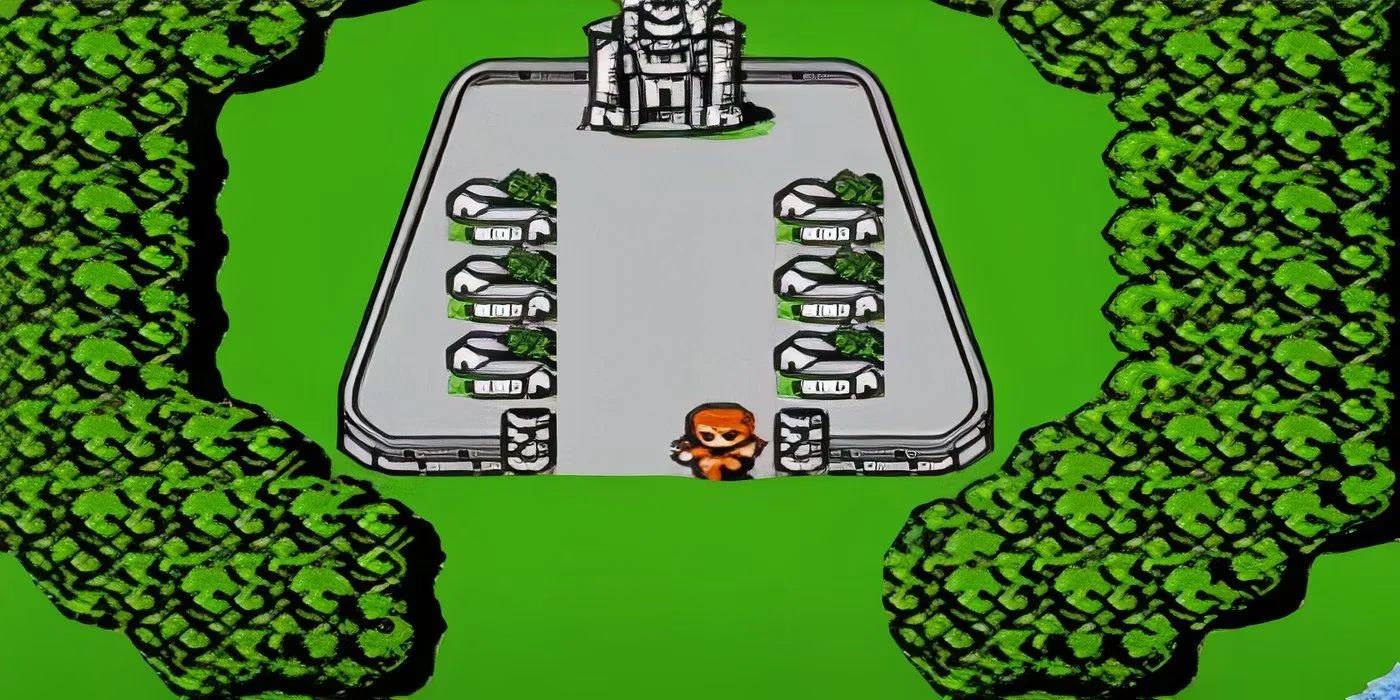
6. Turn-Based RPG: The Chess Match of Fantasy
When Final Fantasy popularized the turn-based RPG, it gifted players with the luxury of time. ⏳ In a world now obsessed with twitch reflexes, this mechanic championed strategy, planning, and thoughtful team composition. Each battle became a tactical puzzle: which spell to cast, which enemy to focus, when to heal. It allowed for deep character progression and complex narratives to take center stage. This deliberate pace created immense satisfaction, as a well-executed strategy felt infinitely more rewarding than a lucky headshot. The legacy is immortal, kept alive and thriving by modern titans like the Persona series and Baldur's Gate 3, proving that there will always be an audience hungry for cerebral, strategic depth in their adventures.
5. Motion Controls: Gaming Gets Physical
Wii Sports was a cultural tsunami. It took the controller out of your hands and put it in your body. 🎾 By translating a tennis swing or a bowling roll into the game, it demolished the wall between the digital and physical worlds. This wasn't about complex button combos; it was about intuitive, joyful movement. It made gamers out of grandparents and fitness enthusiasts out of couch potatoes. The emphasis was on pure, accessible fun, and it worked spectacularly. This innovation opened floodgates, leading to dance craze games like Just Dance and even VR fitness regimes. It was a bold reminder that innovation doesn't always mean more complexity; sometimes, it means getting players to stand up and move.
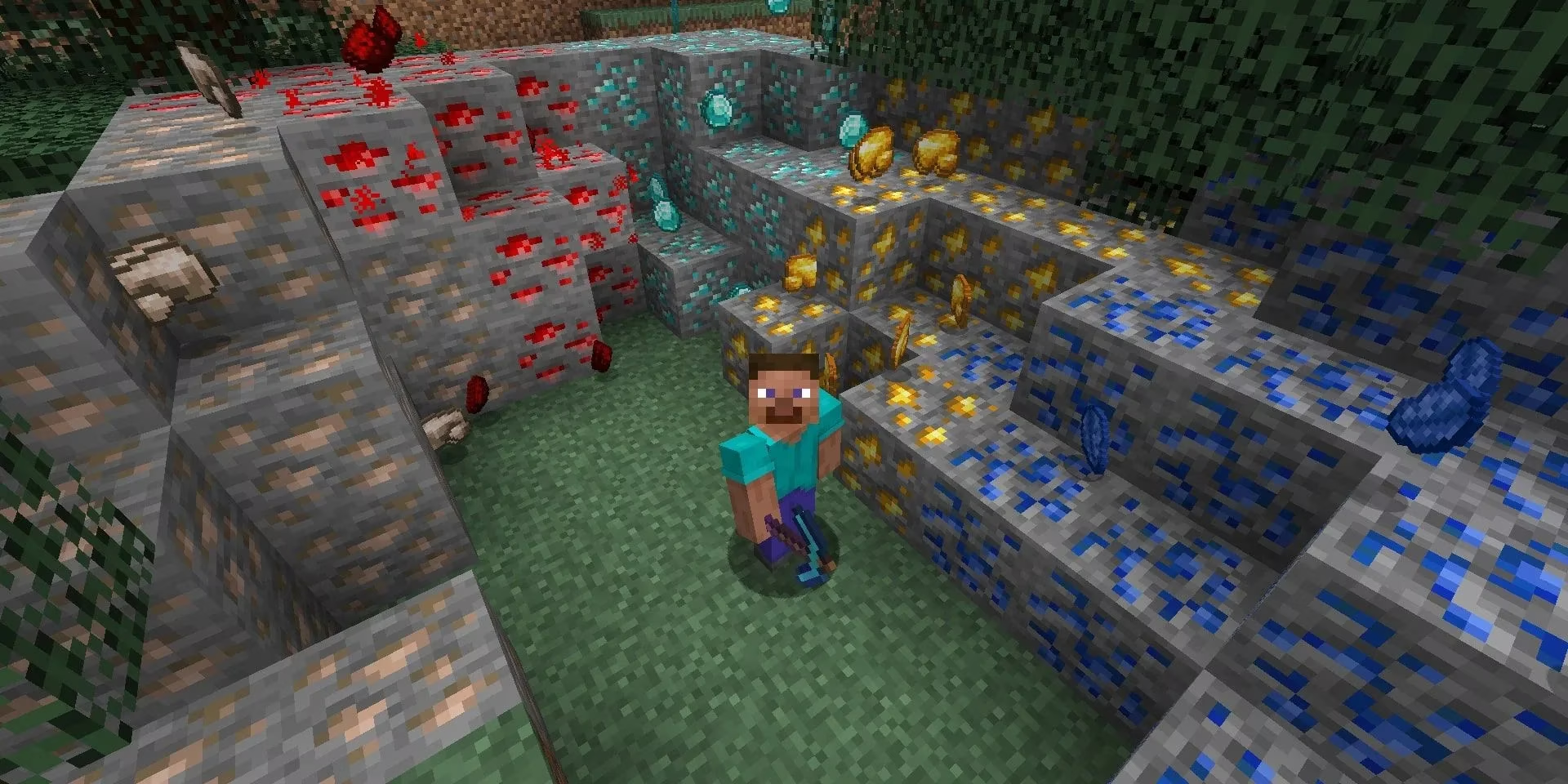
4. Procedural Generation: The Infinite Playground
Minecraft didn't just give players a world; it gave them a universe generator. Its use of procedural creation was a stroke of pure genius. Every new world was a unique, unexplored frontier with its own mountains, caves, and secrets. This mechanic guaranteed that no two playthroughs were ever the same, creating near-infinite replayability and a profound sense of discovery. 🌱 It shifted developer philosophy from crafting every detail by hand to designing intelligent systems that could build wonders automatically. Its influence is everywhere: in the ever-changing dungeons of roguelikes like Hades, and in the mind-boggling, galaxy-spanning algorithms of No Man's Sky. It empowered players as explorers and creators in a truly endless digital space.
3. Over-the-Shoulder Aiming: Precision from the Shoulder
Resident Evil 4 didn't just save Leon Kennedy; it saved third-person combat from clunky obscurity. By shifting the camera to hover just behind Leon's shoulder, it created the perfect marriage of immersion and control. 🔫 Players could aim with lethal precision, manage space during tense encounters, and feel the weight of every action. The iconic village siege became a masterclass in controlled chaos because of this perspective. It transformed the genre, becoming the gold standard for action games, from the cover-based warfare of Gears of War to the cinematic adventures of Uncharted. A simple camera adjustment made all the difference between watching an action hero and being one.

2. Z-Targeting: Taming the 3D Chaos
In the early days of 3D, fighting enemies was like trying to swat bees in a hurricane—frustrating and disorienting. Then The Legend of Zelda: Ocarina of Time bestowed upon the world the divine gift of Z-Targeting. With a press of a button, Link would lock onto an enemy, the camera would smoothly track the threat, and combat transformed from a messy struggle into an elegant dance. 🗡️ This mechanic didn't just fix combat; it made navigation, puzzle-solving, and exploration in a 3D space feel intuitive and fluid. Its DNA is etched into the lock-on systems of Dark Souls, Kingdom Hearts, and countless others. It was the simple, elegant solution that made complex 3D worlds finally feel like home.
1. Level Design and Secrets: The Mario Blueprint
And at the summit of this revolutionary mountain stands the plumber who started it all. Super Mario Bros. wasn't just a platformer; it was a masterclass in interactive design philosophy. Its levels were meticulously crafted playgrounds filled with secrets that rewarded curiosity like nothing before. Hidden blocks with extra lives, secret warp pipes that skipped worlds, and alternate pathways—these weren't just Easter eggs; they were invitations to explore every pixel. 🍄 This established a core tenet of game design: reward the player's curiosity. It taught developers that a level isn't just a path from A to B; it's a space to be investigated, mastered, and played with. This ethos of hidden depth and rewarding exploration echoes in every Metroidvania, every open-world map icon, and every speedrun attempt to this very day. Mario didn't just jump on Goombas; he jumped over the horizon of what games could be.