A Guide to Finding and Utilizing Rabbits in Minecraft
Discover the essential Minecraft rabbits guide for finding these versatile creatures across diverse biomes and unlocking their bountiful resources like food, leather, and the coveted Rabbit's Foot for potions.
Since their eventual introduction in 2014, rabbits have become one of my favorite creatures to encounter and utilize in the vast, blocky world of Minecraft. I remember the initial anticipation when they were first announced, and their arrival did not disappoint. They brought a new layer of life, utility, and even a touch of unexpected danger to the game's diverse biomes. Over the years, through various updates, these furry companions have proven to be more than just a cute aesthetic addition; they are a multifaceted resource for any dedicated player, whether I'm focused on survival, exploration, or simply building a thriving farm. Their presence enhances the immersive experience, offering both practical benefits and delightful interactions.
Where to Find These Furry Friends
Locating rabbits in my Minecraft adventures is a straightforward task, as they are not particularly elusive. They spawn across a variety of biomes, with their coat colors often serving as a natural indicator of their habitat. This biome-specific coloring adds a wonderful touch of realism to the game's ecology. For instance, the stark white of a snowy rabbit blends perfectly with a Snowy Plains biome, while a golden-brown rabbit might be found hopping through a sun-drenched Meadow. Here is a comprehensive table of biomes where I can reliably find these creatures, noting some edition-specific variations:
| Biome Name | Edition Availability | Common Rabbit Color Notes |
|---|---|---|
| Desert | Java & Bedrock | Salt & Pepper, Brown |
| Grove | Java & Bedrock | White, Black & White |
| Frozen Ocean | Bedrock Only | White |
| Snowy Plains | Java & Bedrock | White, Black & White |
| Snowy Taiga | Java & Bedrock | White, Black & White |
| Cherry Grove | Java & Bedrock | Various |
| Flower Forest | Java & Bedrock | Various |
| Meadow | Java & Bedrock | Brown, Salt & Pepper |
| Old Growth Spruce Taiga | Java Only | Brown, Black & White |
| Taiga | Java & Bedrock | Brown, Black & White |
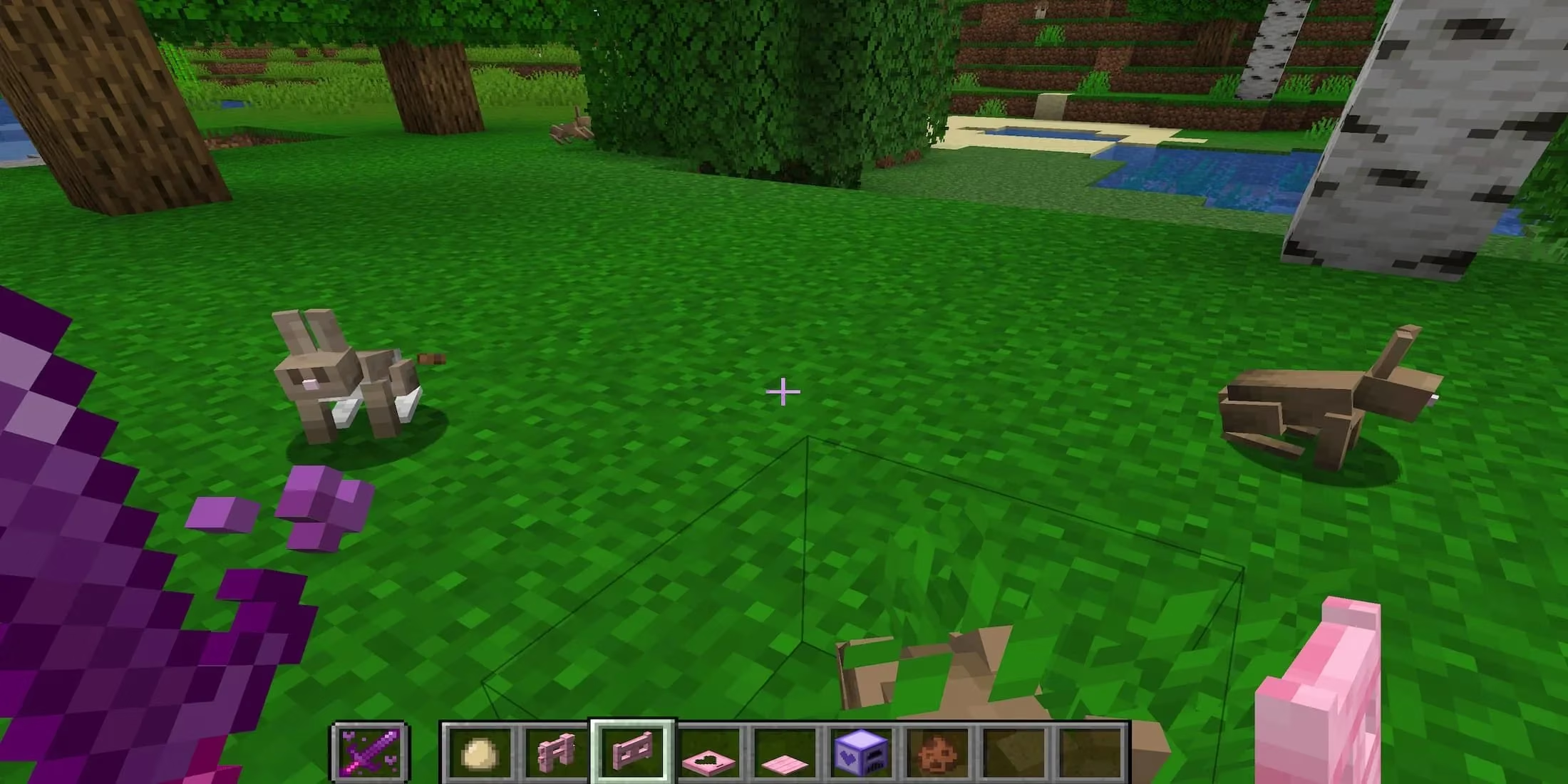
The Bountiful Rewards of Rabbit Husbandry
Once I've located a rabbit, the next step is understanding their value. These small animals are surprisingly bountiful, providing several key resources that aid my survival and progression:
-
🍖 Nourishing Food Source: Upon defeat, rabbits drop raw rabbit meat. When cooked, this becomes a reliable food item to restore my hunger bar.
-
🧤 Versatile Leather: They also drop rabbit hide, which can be crafted into leather. This material is essential for creating items like:
-
Saddles for riding horses, striders, or pigs.
-
Leather armor for early-game protection.
-
Item frames and books.
-
🐇 Rabbit's Foot: This rare drop is a coveted alchemical ingredient. It is a primary component for brewing the Potion of Leaping**, which grants the jump boost effect—incredibly useful for exploration and parkour.
-
💖 Companionship: Beyond utility, rabbits make for delightful pets. Their gentle hopping and varied appearances can add charm to any base or garden I construct.
It's crucial to remember that rabbits are fragile, possessing only 3 hearts of health. I must be gentle if my intention is to capture them rather than harvest resources. A misplaced punch can easily end their lives.
A Guide to Taming and Transporting
To bring a rabbit back to my homestead for breeding or as a pet, I need to coax it. Rabbits can be led by holding out certain enticing items. They will follow me if I remain within a reasonable distance, typically around 8 blocks. The most effective lures are:
-
🥕 Carrot: A common and easily farmable vegetable.
-
🌟 Golden Carrot: A more valuable variant, also used in brewing and as a superior food item.
-
🌼 Dandelion: A simple flower found abundantly in plains and forest biomes.
By holding one of these items, I can guide a rabbit across vast distances, carefully navigating obstacles to secure it in a pen I've prepared. Breeding rabbits follows the same principle: feeding two rabbits one of these items will cause them to enter "love mode" and produce a baby rabbit.
The Legend of the Killer Bunny
While most rabbits are passive and skittish, there exists a notorious legend within the Java Edition community: the Killer Bunny. This is not a naturally spawning mob in standard gameplay but a unique, hostile variant that can be summoned via commands. It serves as a playful and dangerous Easter egg, a callback to a famous scene from Monty Python and the Holy Grail.
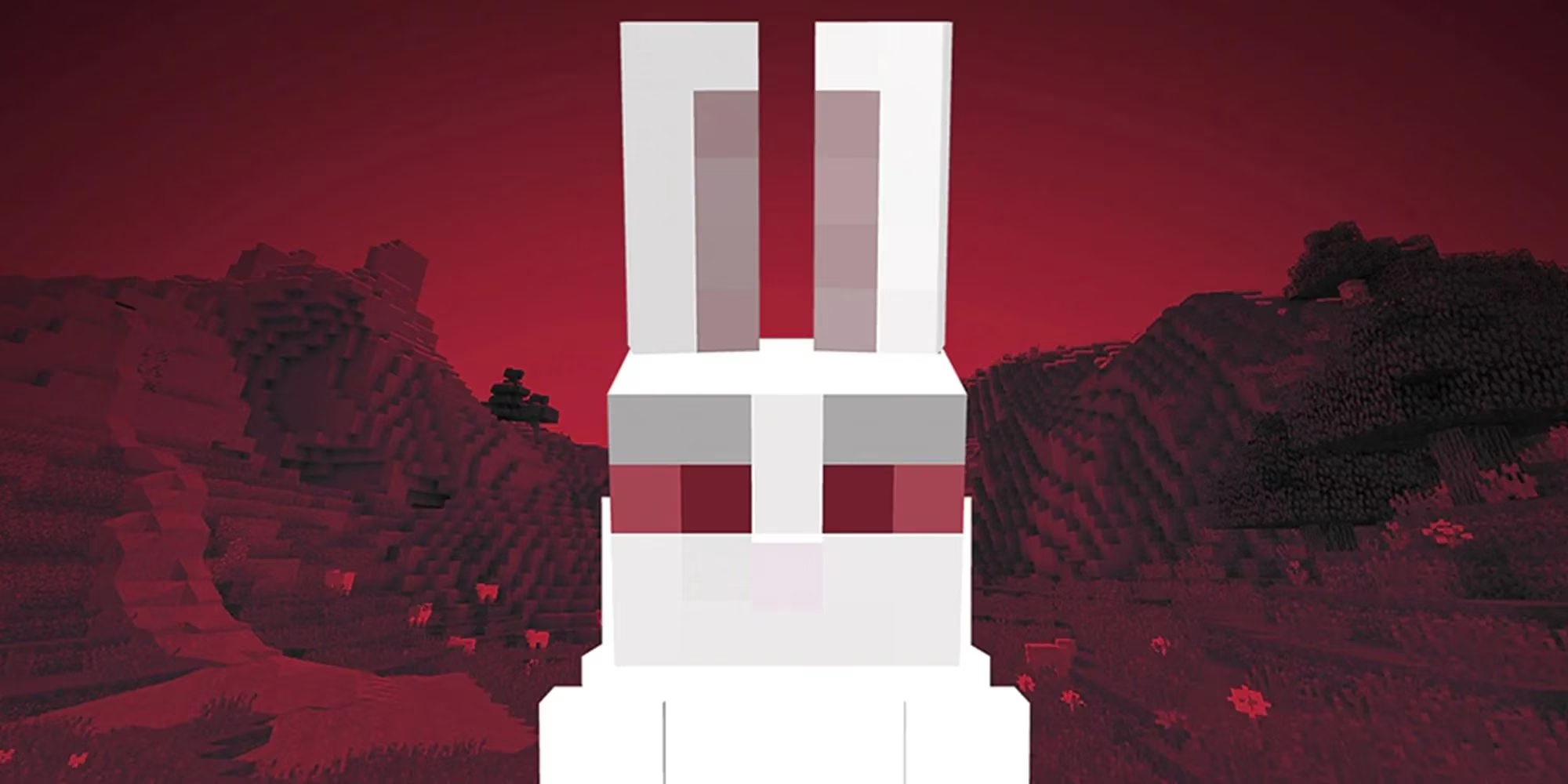
This crimson-eyed menace is no ordinary rabbit. If encountered, it will aggressively attack players and can deal significant damage, scaling with the world's difficulty setting:
-
😌 Easy Difficulty: 5 points of damage (2.5 hearts).
-
😐 Normal Difficulty: 8 points of damage (4 hearts).
-
😰 Hard Difficulty: 12 points of damage (6 hearts).
Uniquely among rabbits, the Killer Bunny has an armor rating of 8, making it surprisingly resilient. Although this specific entity was removed from natural spawning pools in later updates, its code remains, and it can still be encountered through specific modifications or server plugins, keeping its mythos alive for veteran players seeking an unusual challenge.
Final Musings on My Rabbit Adventures
In my years exploring Minecraft, from its earlier builds to the rich, detailed world of 2026, rabbits have consistently been a highlight. They represent a perfect blend of the game's core principles: simple mechanics leading to deep engagement. They are a resource to be managed, a creature to be cared for, and a source of both sustenance and spectacle. Whether I'm carefully leading a white rabbit through a snowy forest to my alpine cabin, breeding a population for a steady supply of leather, or reminiscing about the first time I heard tales of the mythical Killer Bunny, these animals add a dynamic and endearing layer to the sandbox. Their implementation shows how even a small, seemingly simple addition can profoundly enrich the player's experience, offering goals, stories, and a little extra life in every corner of the blocky wilderness.