A World Almost Unbuilt: Notch's Hesitation and the Creative Soul of Minecraft
Minecraft Creative Mode and community-driven updates inspire limitless creativity, shaping the game's legacy as a masterpiece of imagination.
What is a world without the freedom to build it from nothing? I often find myself pondering this question, especially when I recall the humble beginnings of the universe I helped shape. It is a curious thought, isn't it? That the very feature which came to define the boundless imagination of Minecraft—its Creative Mode—was once a whisper away from being silenced before it could ever speak. In the quiet digital forge of 2009, as lines of code became the first blocks of a nascent world, I did not foresee the architects who would one day raise castles in its sky. My vision was narrower, perhaps tethered to survival and challenge. It was the players, those early pioneers, who showed me the true potential of pure, unadulterated creation. They taught me that a game could be more than a set of rules to overcome; it could be an infinite canvas.
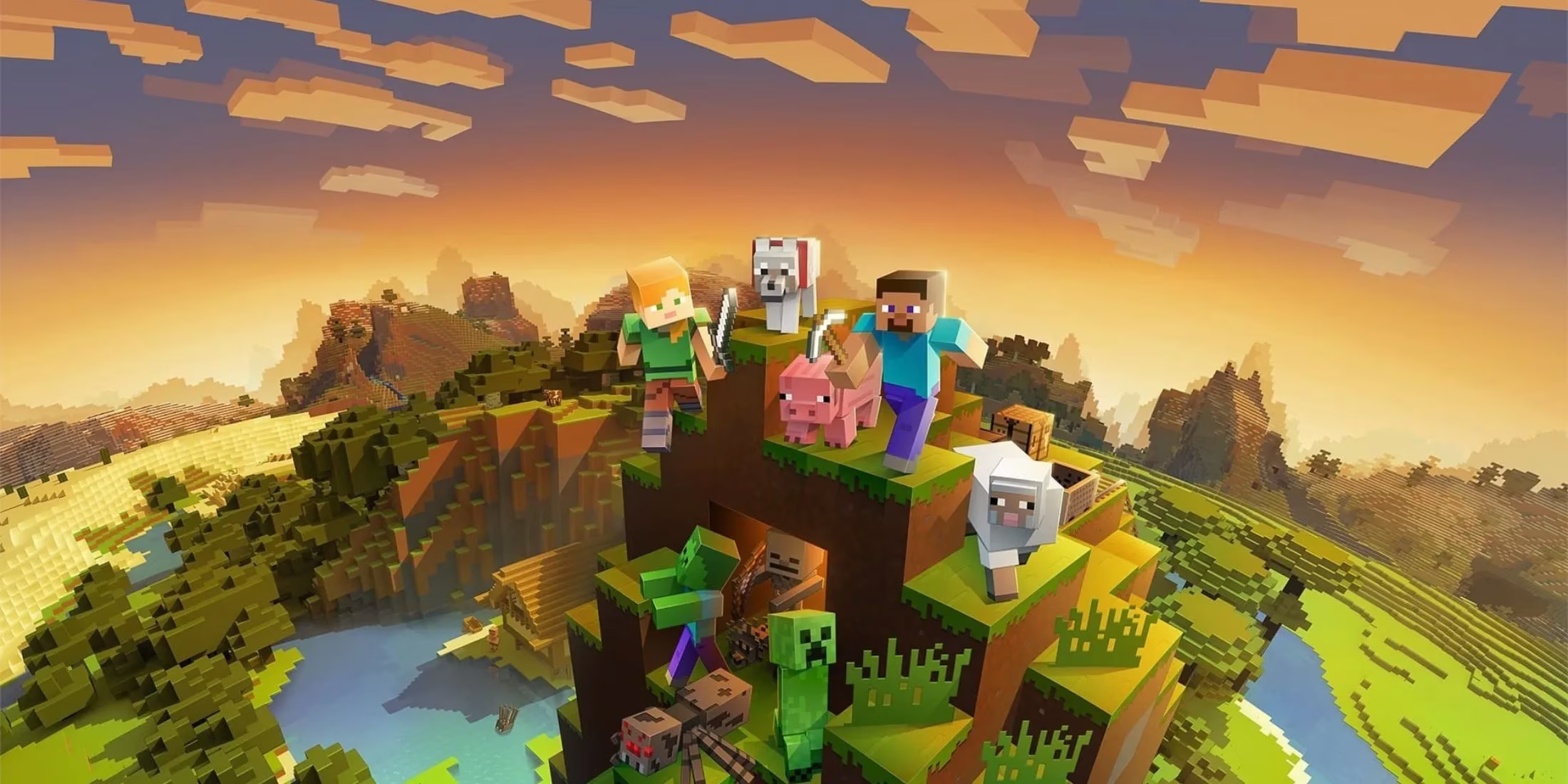
The journey from a simple test build to the best-selling video game of all time, with over 300 million copies sold by 2026, is a path paved with community voices. I remember the moment of realization vividly. I had not originally considered keeping Creative Mode as a permanent fixture. Why would I? The core loop of survival seemed complete. But then, I saw them. Player after player, not just surviving, but thriving in construction. They were building cathedrals, redstone computers, and replicas of entire cities with a precision and artistry I had never anticipated. A question formed in my mind: Had I been limiting the dream by focusing solely on the struggle? The answer, shouted back at me through countless player creations, was a resounding yes. Including Creative Mode wasn't just adding a feature; it was unlocking a fundamental dimension of human expression.
This legacy of player-driven evolution continues to echo through the halls of Mojang Studios today, even as my own direct involvement has long since passed into history. The recent updates, like the hauntingly beautiful Pale Garden biome and its unsettling resident, the Creaking, are testaments to this ongoing dialogue. When asked about these new additions, I found myself drawn to the visual design of the Creaking—a perfect blend of eerie elegance that feels both new and intrinsically Minecraft. It’s a reminder that the game’s soul can still expand in surprising and poetic ways.
Yet, my revelation about Creative Mode sparked more than just nostalgia; it ignited a contemporary debate within the community. Does Mojang truly listen? The evidence, as of 2026, suggests a conscious effort to harmonize with the player symphony. The studio's major shift to a more frequent, responsive update schedule feels like a direct chord struck from the community's requests. Consider the contrast between then and now:
| Era | Development Philosophy | Community Role |
|---|---|---|
| Early Days (2009-2011) | Intuitive, personal vision; features like Creative Mode were late revelations. | A direct, shocking inspiration that fundamentally altered the game's destiny. |
| Modern Era (2024-2026) | Structured, data-informed, with published roadmaps and scheduled snapshots. | A powerful advisory chorus influencing the pace and priority of content. |
The tools of conversation have changed, but the essence remains. We are all builders, in one form or another.
So, what does this mean for the heart of Minecraft? It means the game is a living collaboration, a shared dream. My initial hesitation serves as a permanent monument to a simple truth: the most profound features are sometimes those we don't plan, but discover through the eyes of others. Creative Mode was never my gift to the players; it was their gift to the game, and I was merely the conduit who chose to listen. Every floating island, every meticulously detailed village, every grand adventure map created in that mode is a stanza in a poem written by millions.
Looking at the vibrant, ever-growing world of Minecraft today, I am filled with a quiet awe. The blocks are the same, but the possibilities have multiplied beyond any single imagination. From my new endeavors at Bitshaft Entertainment, I carry this lesson forward: to build a world is to leave room for others to build it anew. The story of Minecraft asks us all a final, lingering question: In our own creations, do we build walls, or do we build doors? 🧱✨