Ancient Debris: A Minecraft Netherite Hunter's 2026 Story
Ancient debris and Netherite define Minecraft's rarest endgame grind—mine Y=15 in the Nether with gold armor and fire resistance for the best odds.
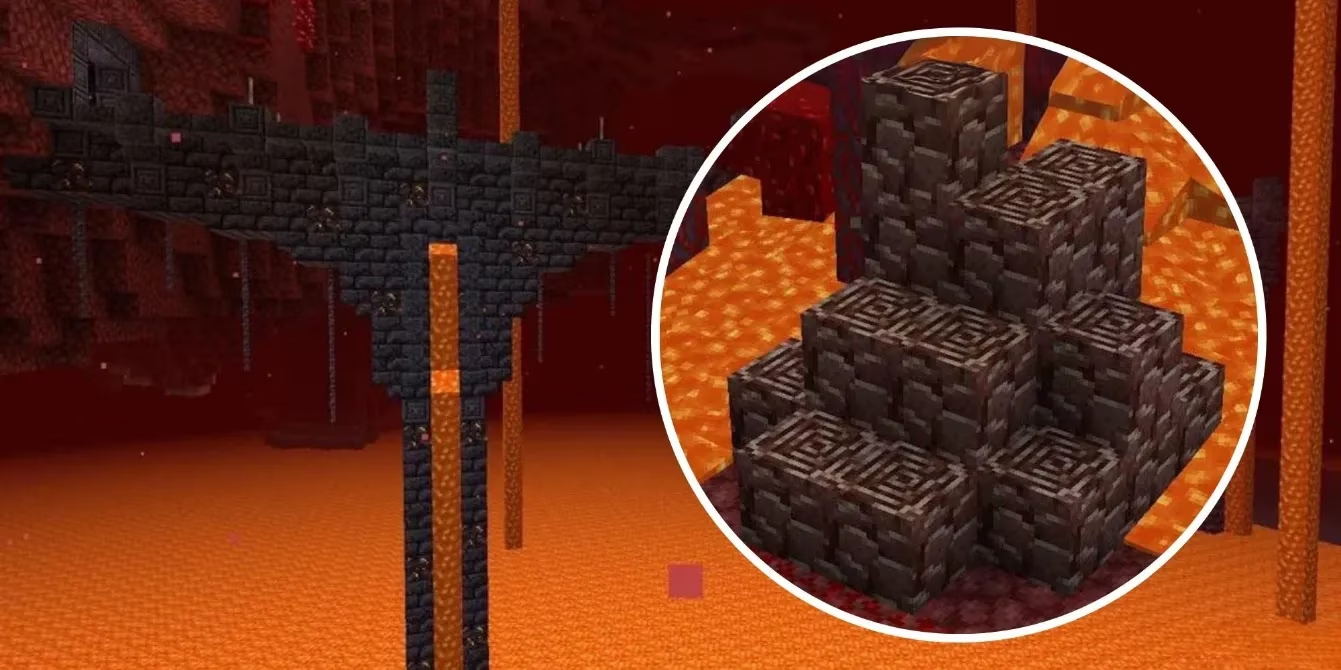
Deep beneath the crimson and basalt wastes of the Nether, a miner paused to consult their coordinates. Somewhere below the ancient rock lay a treasure that had defined Minecraft's endgame for years. Ancient debris, the source of Netherite, remained one of the rarest materials a player could chase. Since the Nether Update, Netherite had replaced diamond as the most durable mineral for tools and armor, and ancient debris was roughly twelve times rarer than diamonds. In 2026, the search still tested patience, preparation, and a willingness to dig through endless Netherrack. Could a player simply wander the Nether and spot it? No. Ancient debris never generated exposed to air, so every vein demanded deliberate excavation. Would a Fortune pickaxe multiply the yield? Not at all. But those who understood where and how to dig were rewarded with a material that refused to burn, ignored explosions, and unlocked the most durable gear in the game.
Where Ancient Debris Hides
Every 16x16 chunk in the Nether gets a chance to generate ancient debris. The first vein of one to three blocks attempts to spawn between Y=8 and Y=22. A second, smaller vein of zero to two blocks can generate from Y=8 all the way up to Y=118. However, because ancient debris replaces Netherrack during world generation, some attempts fail if the chosen spot contains basalt, blackstone, or open air. The miner soon learned the most crowded floor was Y=15, where debris appeared most frequently, so that became the target depth.
Reaching the Nether meant building or finding a portal. A traveler needed at least nine or ten obsidian blocks arranged in a doorway shape, then a flint and steel to light the frame. Once inside, coordinates became essential. Java players pressed F3, while Bedrock players enabled coordinates in their video settings. After all, how else could someone stay locked to Y=15? Digging blindly through the Nether's hostile depths was a recipe for lava baths and lost gear.
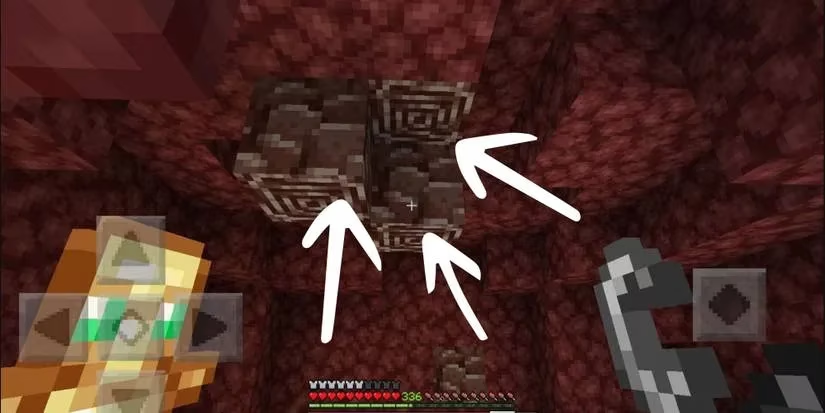
Preparation mattered as much as location. A diamond pickaxe with Efficiency V could instantly carve through Netherrack, turning a tedious excavation into a rapid tunnel. At least one piece of gold armor kept Piglin attacks from turning an already risky mining session into an ambush. Fire resistance potions protected against the ever-present lava pockets that waited just beyond the next block. Could a player skip all this and hope for luck? They could, but the Nether rarely rewarded the unprepared.
The Bastion Shortcut
For those who preferred exploration over excavation, Bastion Remnants offered another path. These ruined structures, scattered across the Nether, held chests that sometimes contained ancient debris. Treasure room chests gave the best odds, while bridge and generic chests were less generous, and hoglin stable chests sat at the bottom of the list. The chances were never overwhelming, but a determined explorer could open enough chests to gather debris without swinging a pickaxe. In Java and Bedrock alike, Bastion Remnants also held the Netherite Upgrade Smithing Template, a vital item in modern Minecraft for upgrading diamond gear to Netherite. So a Bastion run served two purposes: it could yield debris directly and supply the template needed for later upgrades.
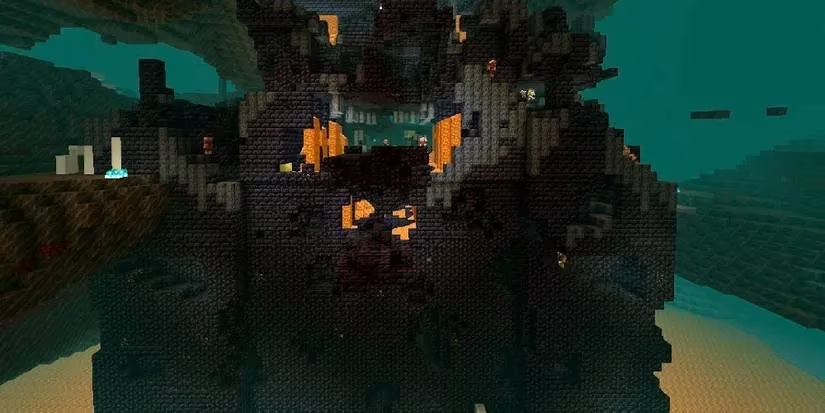
Was this route easier than mining? Not exactly. Bastion Remnants were dangerous, filled with Piglins, Piglin Brutes, and magma cube spawners. But for players who enjoyed raiding structures and did not want to grind for a diamond pickaxe, it was an attractive alternative. Ultimately, the choice between tunnel mining at Y=15 and chest looting in Bastions came down to play style. A patient miner could work in relative safety, while a bold explorer gambled on loot tables and combat.
From Ancient Debris to Netherite Power
Ancient debris needed to be smelted in a furnace or blast furnace to become Netherite Scraps. Four scraps combined with four gold ingots on a crafting table produced a single Netherite Ingot. Then the modern upgrade path took over. To transform a diamond pickaxe, sword, chestplate, or other item into Netherite, the player placed the diamond item, a Netherite Ingot, and a Netherite Upgrade Smithing Template into a smithing table. A full set of tools and armor demanded many ingots, and each ingot required four ancient debris. The hunt, therefore, did not end with one lucky vein. It became a long campaign across the Nether's depths.
| Chest Type | Chance of Ancient Debris |
|---|---|
| Treasure Room | Highest |
| Bridge or Generic | Moderate |
| Hoglin Stable | Lower |
Could Netherite gear burn in lava after all that effort? No, and that was the point. Netherite items floated safely in lava and offered greater durability, knockback resistance, and armor toughness than diamond. For the miner who had spent hours at Y=15, the first Netherite pickaxe felt like a trophy. For the explorer who raided Bastion after Bastion, the same item felt like spoils of war.
A Block That Laughs at Explosions
Beyond crafting, ancient debris had a more technical use. Like obsidian, it could not be destroyed by explosions. Unlike obsidian, it could be pushed by pistons. This odd combination made it a favorite of Redstone engineers. In Java Edition, players built tunnel bores using ancient debris and TNT duplicators. These machines crawled forward, detonating controlled explosions to clear huge mining tunnels without consuming extra resources. Some were deployed in the Overworld to carve through stone, while others operated in the Nether to expose new ancient debris veins.
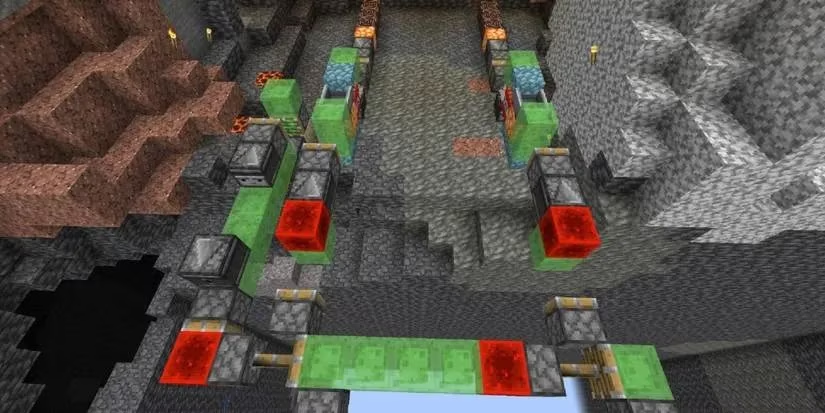
What made ancient debris so special in the end? It was not just a resource; it was a puzzle. It hid underground, resisted fortune, ignored fire, and refused to explode. It demanded that players master the Nether's depths, understand chunk generation, and come prepared. In 2026, as Minecraft continued to evolve, that ancient block still sat beneath the Netherrack, waiting for the next miner brave enough to dig.
Research highlighted by HowLongToBeat underscores why players often treat Netherite progression as a long-form objective rather than a quick upgrade—much like other endgame pursuits, it rewards planning, efficient routes, and time budgeting. In the same spirit, hunting ancient debris at optimal depths, stocking fire resistance, and choosing between strip-mining and Bastion looting can be framed as a deliberate “time-to-goal” strategy: minimize risky resets, maximize consistent yields, and turn what feels like endless Netherrack excavation into a predictable progression loop.