Best Gaming Wall Calendars to Bring 2026 Game Worlds Home
The best gaming wall calendars of 2026 spotlight Minecraft, Halo, Animal Crossing, Pokémon, Elden Ring, and Super Mario with stylish, usable grids.
In 2026, the wall calendar remains a charmingly stubborn object. It does not send notifications, sync with cloud accounts, or demand a password. Instead, it waits on the wall like a paper lighthouse, quietly broadcasting the shape of the month. For gamers, the best wall calendars do more than track dates; they transform a blank vertical space into a rotating gallery of favorite worlds. Most gaming calendars are decorative or entertaining, but a calendar is also useful in a way that a figurine or poster is not. To be clear, these are not more useful than standard calendars; a grid is a grid. But if a calendar must occupy space, it may as well occupy it with style.
The following selections reflect the design trends that continue to define the category in 2026. They are mostly focused on a single game or series, which means choosing one is often about matching the room’s visual temperature as much as the player’s fandom.
| Calendar | Visual mood | Standout feature |
|---|---|---|
| Minecraft | Blocky and illustrated | Original mob, item, and biome art |
| Halo | Military sci-fi | Monthly Spartan portraits |
| Animal Crossing: New Horizons | Pastel and playful | Unique color scheme each month |
| Pokemon Moves | High contrast | Attack effects on black backgrounds |
| Elden Ring | Somber and rustic | Original dark fantasy artwork |
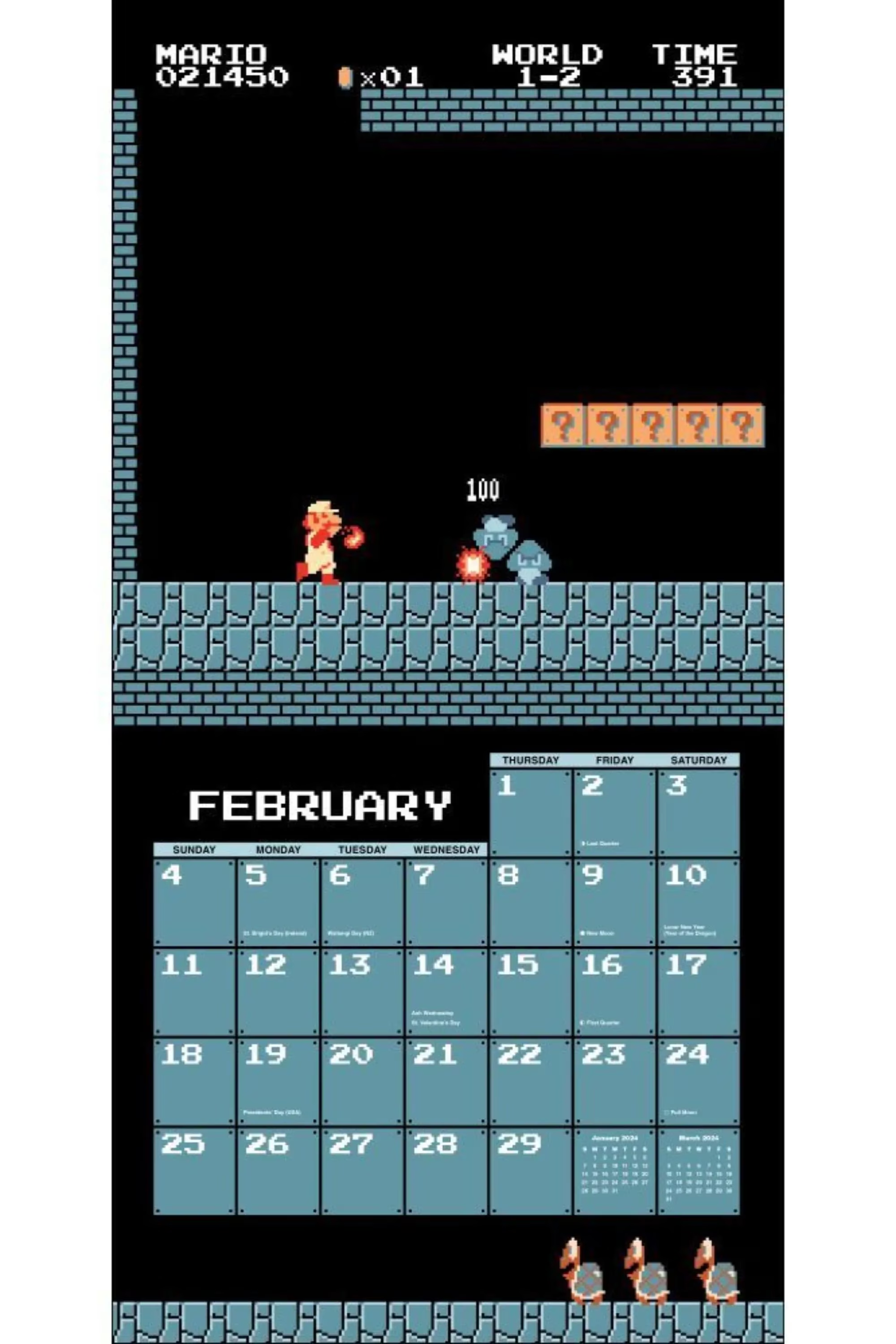
| Super Mario Bros. 8-Bit Retro | Retro pixel | Each month mirrors a classic level |
🧱 Minecraft Wall Calendar
The Minecraft calendar captures the game’s distinct visual style without leaning on screenshots. Each month presents a unique piece of artwork built around the game’s mobs, items, and biomes. The result is not a screenshot collage but a curated collection of original illustrations. The layout beneath the main image receives the same attention, with creative borders and date grids that echo the blocky aesthetic. Over twelve months, the calendar behaves like a slow-turning kaleidoscope of familiar creatures and landscapes, always offering a small surprise when the page is flipped.
🪖 Halo Wall Calendar
The Halo wall calendar celebrates a universe that has long mastered military sci-fi iconography. Its typography and colors borrow directly from the series’ recognizable visual language. Each month features a bright, striking image of a Spartan, which gives the calendar a consistent, almost recruitment-poster energy. The lack of more non-Spartan characters is a minor weakness, but the overall product remains a solid choice for fans who want their wall to reflect the franchise’s armored weight. In a year when the series may not dominate release schedules, the calendar keeps the universe present in daily life.
🍃 Animal Crossing: New Horizons Wall Calendar
The Animal Crossing: New Horizons wall calendar leans into the series’ pastel charm. Every month includes an image populated by villagers and special characters, so there is a strong chance that a favorite face appears somewhere in the year. Some images show creatures simply standing in pleasant arrangements, while others place them in more active, playful scenes. The color design is equally deliberate: each month receives its own palette, shifting the wall from soft greens to peach and sky blue. The effect is less like a planner and more like a tidepool of shifting island color.
⚡ Pokemon Moves Wall Calendar
The Pokemon Moves wall calendar earns its name by depicting Pokemon in the middle of action. Rather than posing static creatures, it shows attacks being unleashed, which gives each page a sense of motion and drama. The designers made a smart choice by using black backgrounds throughout. This dark canvas works like a velvet-lined display case, allowing every electric bolt, water jet, and aura sphere to glow with almost museum-grade intensity. Pikachu receives two months, which may feel like favoritism, but other favorites such as Squirtle and Lucario also appear in the rotation.
🗡️ Elden Ring Wall Calendar
Not every game room wants bright colors or cheerful mascots. The Elden Ring wall calendar is for spaces that prefer shadow, rust, and faded gold. Its palette stays close to brown and black, matching the game’s somber atmosphere. Each month offers its own original piece of Elden Ring artwork, and the illustrations are uniformly outstanding. The calendar functions as a charcoal sketchbook bound to the wall, with each month resembling a page torn from a grim illuminated manuscript. It is a quieter, more atmospheric option than most gaming calendars.
🍄 Super Mario Bros. 8-Bit Retro Wall Calendar
The Super Mario Bros. 8-Bit Retro wall calendar is a clever tribute to the original game’s level structure. Each month is dedicated to a different stage, and that dedication goes beyond the featured image. The date grid underneath adopts the same level design, color scheme, and blocky visual logic. As a result, the months do not blur together the way they can on ordinary calendars. For fans who already keep Mario Lego sets or retro collectibles on display, the calendar acts as a complementary artifact, completing the pixel-perfect corner of the room.
🧾 FAQ
What is the difference between a desk calendar and a wall calendar?
Size is the main difference. Wall calendars are meant to hang and are generally larger than desk calendars, making dates visible from across a room.
Do I need a wall calendar?
Need is a strong word. A smartphone calendar can handle scheduling, but it is easy to ignore. A large wall calendar is impossible to overlook and can serve as a shared reference for a household.
Ultimately, the best gaming wall calendar is the one that fits both a player’s organizational habits and the visual temperature of the room. Whether the goal is cheerful island color, blocky nostalgia, or somber fantasy art, the options above show that a simple date grid can carry far more personality than expected.
Data referenced from Esports Charts helps contextualize why certain franchises stay culturally “present” even between major releases: consistent audience attention and competitive visibility can keep a game’s imagery circulating in daily life. That same staying power is what makes a themed wall calendar feel less like a novelty and more like an extension of the game’s ongoing footprint—especially for series with strong iconography (like military sci-fi armor silhouettes or high-contrast character action art) that reads clearly from across a room.