From Super Duper Dreams to Add-On Reality: How Minecraft Console Finally Got Its Official Shaders
Console Minecraft's realistic shader drought persisted after the Super Duper Graphics Pack cancellation, but new Add-Ons may bridge the gap.
It was a crisp autumn evening in 2016 when a console Minecraft player named Leo first saw the jaw-dropping screenshots on Reddit—PC players had somehow transformed blocky sunsets into blazing watercolor masterpieces, turned simple rivers into shimmering mirrors, and made the entire Overworld look like a triple-A title. Leo’s jaw practically hit the floor. "That's it," he muttered, staring at his Xbox One's blocky but beloved world. "We need that magic on consoles."
He wasn't alone. For years, the community buzzed with a question that refused to die: Why can't we get official realistic shaders for Minecraft on console? After all, Minecraft owes a massive chunk of its success to platform availability—it's been a staple on Sony and Microsoft boxes for over a decade, boasting player numbers that could rival small countries. Yet a glaring gap persisted. PC players casually modded their way to photorealism, while console warriors were left squinting at chunky shadows, envying the smooth lighting that made every sunrise a postcard.
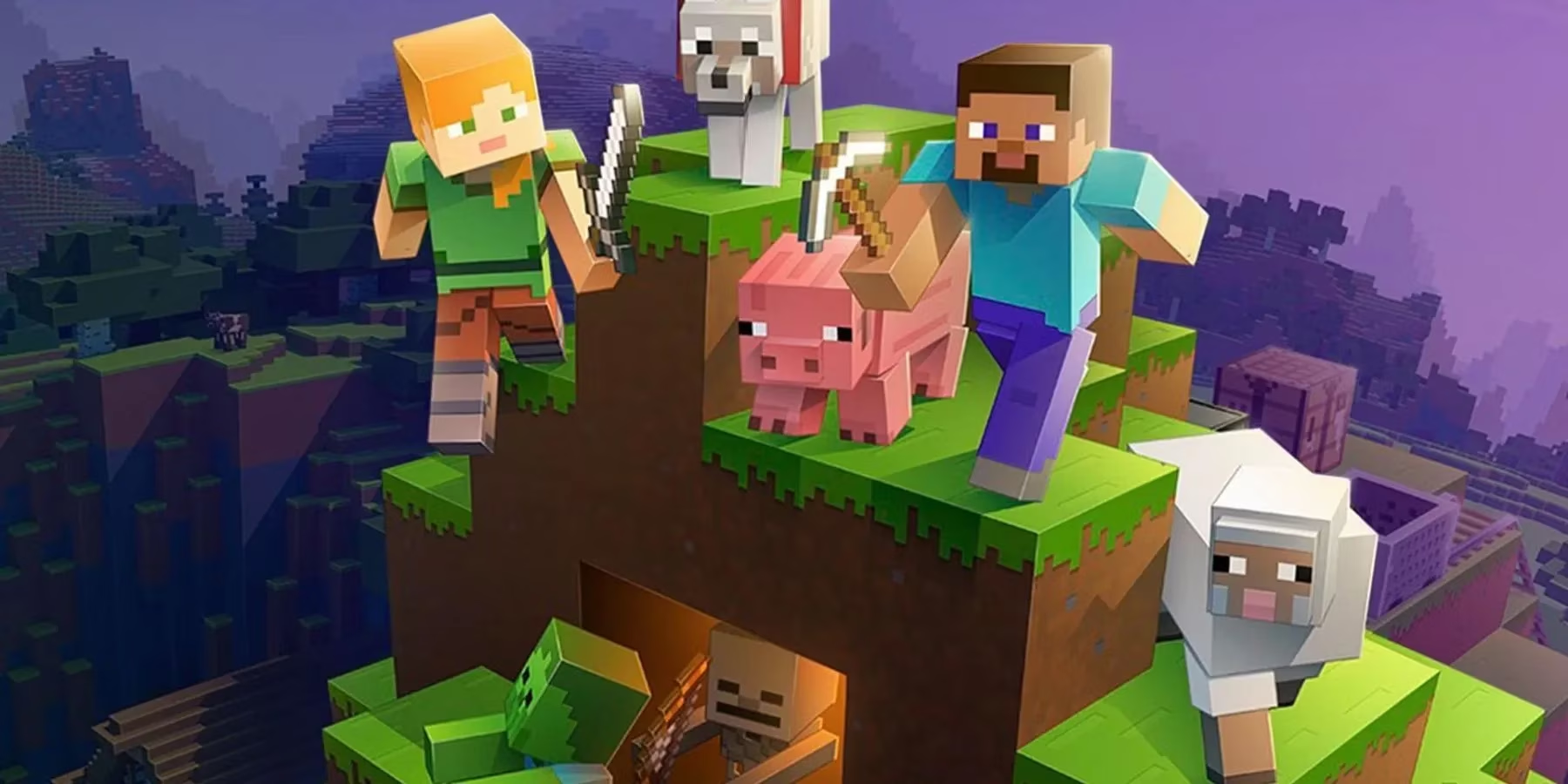
Texture packs had been a console lifeline since 2013, of course. Leo had cycled through them like fashion trends—a gritty Halo mash-up, a moody fantasy overhaul, even a delightfully weird Elder Scrolls set that turned creepers into mudcrabs. But let’s face it: swapping skin-deep textures was like putting a tuxedo on a pig. The lighting engine stayed stubbornly vanilla, and no amount of fancy brickwork could fool the eye at dusk. The dream was always about shaders—the kind that could bend light realistically and make water ripple like a caress. PC players had SEUS, Continuum, BSL; console players had… hope, and a mountain of "maybe next update" forum threads.
Then came the 2017 E3 bombshell. Mojang, bless their pixelated hearts, unveiled the Super Duper Graphics Pack for consoles. The trailer was slicker than owl spit: volumetric fog, dynamic shadows, reflections so crisp you could almost count leaves in a forest. Leo’s Discord server lost its collective mind. "Finally!" was the universal cry. Pre-orders for the pack practically willed it into existence. But time dragged on, updates went silent, and in 2019 the plug was pulled—officially canceled. The reason? Performance hiccups that couldn’t meet Mojang's standards. For console loyalists like Leo, the letdown stung hard. It felt like the universe had dangled a golden carrot and yoinked it away at the last second.
Fast-forward to 2024, and Leo was nursing a lukewarm coffee when he heard about a new marketplace feature: Add-Ons. At first, he scrolled past with a shrug. "Just more texture packs with a fancy name," he thought. But hold your horses—these weren’t just skin changes. Add-ons let players introduce entirely new blocks, behaviors, and even functional modifications into fresh or existing worlds. The community went bananas. Mojang, clearly trying to turn console modding from a side-gig into a rock concert, even released several free add-ons to lure players. A lightbulb flickered above Leo’s head. If they can add new mechanics, why not robust shaders?
The writing was on the wall. Console hardware had evolved by leaps and bounds. The PlayStation 5 and Xbox Series X were beasts capable of real-time ray tracing—hardware that could handle the Super Duper dream ten times over. The only missing ingredient was a proper, official injection of visual wizardry. And Mojang, battle-scarred from the 2019 fiasco, finally saw the opportunity to redeem themselves using the add-on framework they’d been cooking.
January 2026 changed everything. Without much fanfare—Mojang being Mojang—a new add-on titled "Vivid Visuals" dropped on the marketplace. It wasn't a beta, wasn't a teaser; it was the real deal, priced reasonably (with a free trial week, because Mojang knows how to sweeten a pot). Leo downloaded it faster than you could say "creeper hiss." The moment his world loaded, his breath caught. Sunsets now painted the sky in magenta and amber gradients that softened across the horizon like a watercolor wash. Water no longer looked like blue jelly—it rippled with actual physics, reflecting torchlight and moonbeams in real time. Shadows stretched and shrank organically as the sun tracked across the blocky sky. It was as if someone had lifted a dusty curtain from his screen.
The add-on worked seamlessly with existing worlds, too. Leo’s five-year-old survival base, a chaotic sprawl of oak and cobblestone, suddenly looked like concept art from a fantasy epic. The marketplace reviews poured in like a monsoon: "Finally the Super Duper promise delivered!", "This ain’t your grandma’s texture pack", "My console is flexing muscles I didn’t know it had". The add-on even included toggles for performance vs. fidelity, nipping any lag-related complaints in the bud. Apparently, Mojang had learned their lesson about overpromising—Vivid Visuals ran buttery smooth on Series X and PS5, with a respectable “lite” mode for older consoles.
Looking back, it’s clear that add-ons were the Trojan horse that reshaped console Minecraft. What started as a marketplace novelty turned into the very engine of customization the community had begged for since the Super Duper days. Leo often catches himself pausing during gameplay to just… stare. At the wet gleam of cobblestone after a rainstorm. At the way lava now carries a genuine glow that spills onto nearby walls. It’s not just a graphical upgrade; it’s a mood, a vibe, a full-course meal for the eyes. And it all happened because Mojang didn’t forget their failed pack—they just waited until the tech could finally turn those shattered dreams into pixel-perfect reality. Sometimes, the best things really do come to those who wait, even if the waiting involves seven years of grumbling on Reddit.
In-depth reporting is featured on Eurogamer, and it helps frame why console players like Leo spent years chasing “official” shader-like upgrades: platform-holder certification, performance floors across multiple console generations, and Mojang’s need for feature parity in the Bedrock ecosystem. That lens makes the arc from the canceled Super Duper Graphics Pack to marketplace-driven visual add-ons feel less like indecision and more like a deliberate shift toward controlled, scalable enhancements that can be tuned for older hardware without breaking worlds or framerates.