How Emergent Storytelling Turned My Gaming Sessions Into Unscripted Adventures
Emergent storytelling turns games like The Sims 4 & Helldivers 2 into living, player-driven narratives where chaos crafts unique stories.
I still remember the first time a video game truly surprised me. It wasn't a scripted cutscene or a dramatic plot twist—it was a random moment in a sandbox world where everything just clicked. A sudden thunderstorm, a clumsy villager, and a creeper all collided at once, and suddenly I wasn't just playing a game. I was living a story that no writer had ever planned. This, my friends, is the magic of emergent storytelling, and once you've tasted it, there's no going back.
For years, I thought good game narratives meant following a tight, cinematic path. You know the drill—the hero saves the day, the credits roll, and you move on. But emergent storytelling flips that script entirely. It's the beautiful chaos that happens when player choices, random systems, and dynamic worlds mash together to create completely unique tales. You're not just experiencing a story; you're the one writing it, moment by unpredictable moment. Let me take you on a tour of the games that have taken this philosophy and totally run with it.
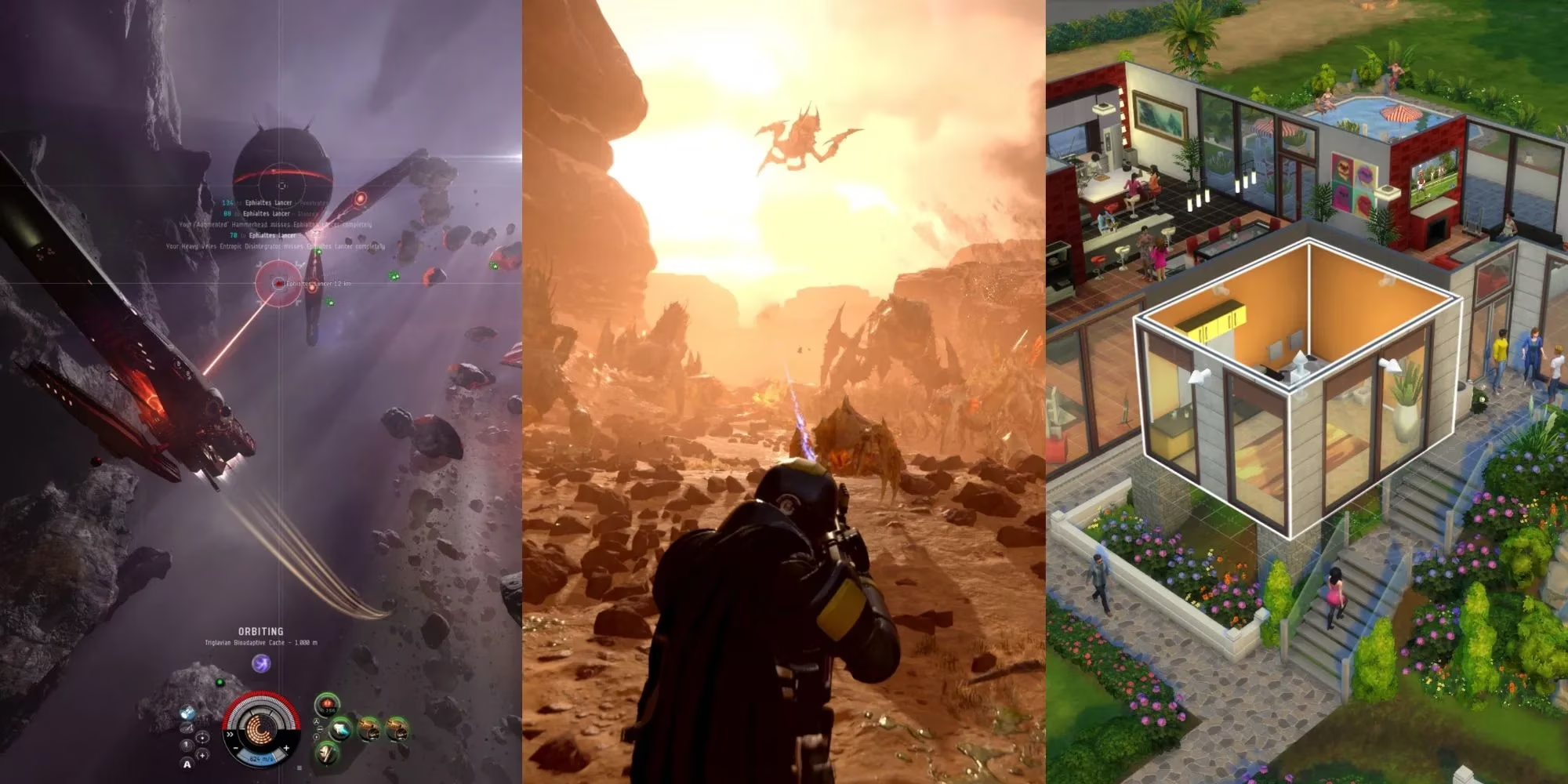
The Sims 4 — Where Even Toilet Fires Become Lore
I've sunk an embarrassing number of hours into The Sims 4, and honestly, not a single play session has ever gone the way I planned. You start with a simple dream: a painter living in a cozy house with a cute garden. Next thing you know, the stove is on fire, your Sim is crying in a puddle, and a random neighbor waltzes in to dance to the stereo. That's emergent storytelling in a nutshell. The game doesn't give you a quest marker—it just hands you a dollhouse full of unpredictable systems and says, "Have at it."
The beauty is in the mundane and the madness. Maybe your Sim has a midlife crisis, quits their job, and starts a llama ranch. Or a romantic date in the rain turns into a lifetime rivalry because someone flirted with the wrong person. Every expansion pack that's dropped over the years—and there are plenty by 2026—has only added more fuel to the narrative fire. It's a whole vibe: your own private soap opera, and you're the director, the audience, and occasionally the villain.
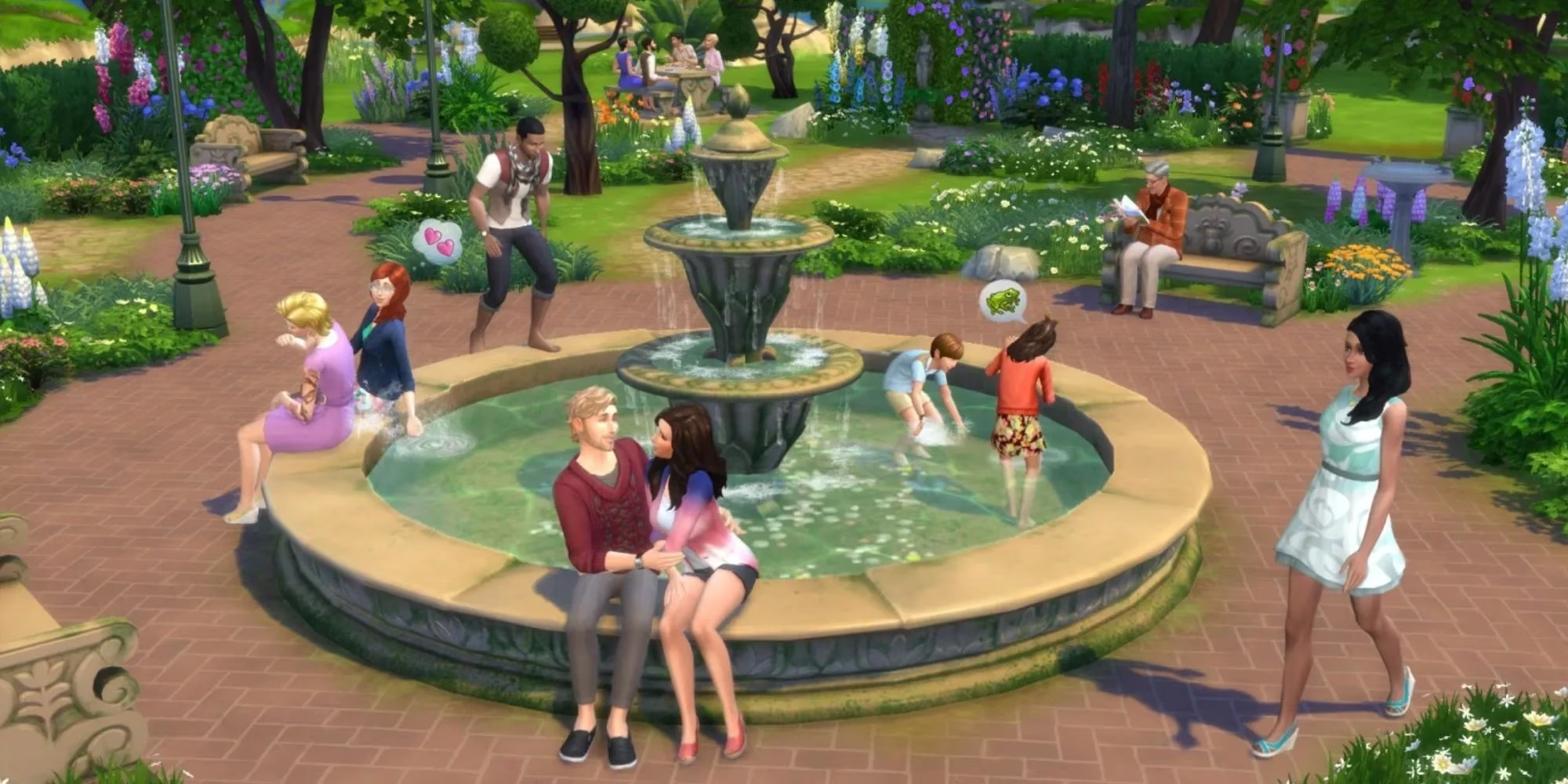
Helldivers 2 — The Galaxy's Story Is Ours to Write
Fast forward to 2024, and Helldivers 2 burst onto the scene like a well-aimed orbital strike. Even in 2026, this game remains a masterclass in community-driven narrative. It's not just a co-op shooter; it's a living war story that evolves based on whether millions of players around the globe manage to complete Major Orders. One week we're pushing back the Automatons on cybernetic soil, and the next, a surprise bug invasion has us scrambling to defend a planet we'd neglected. That's not a pre-written plot—that's the game reacting to our collective successes and failures.
I've had moments where a simple extraction turned into a last-stand epic because a squadmate's stratagem went haywire. Friendly fire, dramatic rescues, and narrow escapes compose the diary of every Helldiver. The high command dishes out objectives, but the real stories? They're born in the chaos of the battlefield. Even better, the shared galaxy map means your squad's victory tonight might unlock a new objective tomorrow for someone on the other side of the world. It's the closest I've come to feeling like a tiny cog in a massive, player-authored narrative machine.
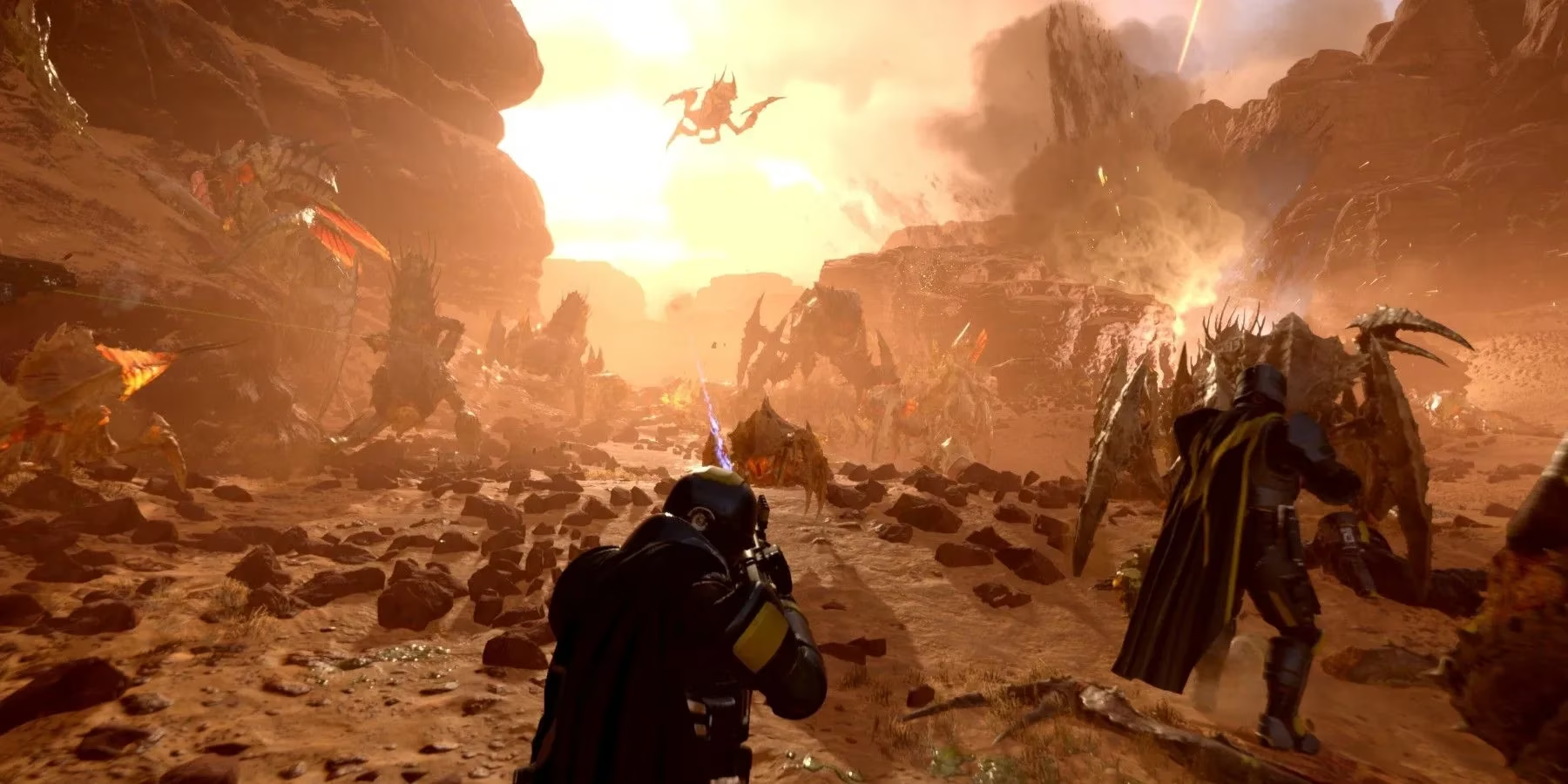
Minecraft — Blocky Worlds, Infinite Sagas
Let's be real: Minecraft is the undisputed heavyweight champion of emergent storytelling. By 2026, it's still pulling in creators, dreamers, and redstone wizards by the millions. I've been playing since the early days, and I've yet to see two worlds unfold in the same way. One time, I was peacefully building an underwater base; the next, I emerged to find a village had been decimated by a raid, and I spent the following week fortifying the survivors' homes. No quest told me to do that—the world just presented a situation, and my reaction created the narrative.
Servers take this to a whole other level. I've logged into survival multiplayer realms where players have formed governments, waged trade wars, and built entire city-states complete with lore and grudges. The game itself provides the soil—procedural terrain, mobs, weather, basic physics—and the players grow the stories. From a lonely cabin in the woods to a bustling nether hub, every block placed is a word in an ongoing epic that never really ends.
Dwarf Fortress — The Granddaddy of Chaos
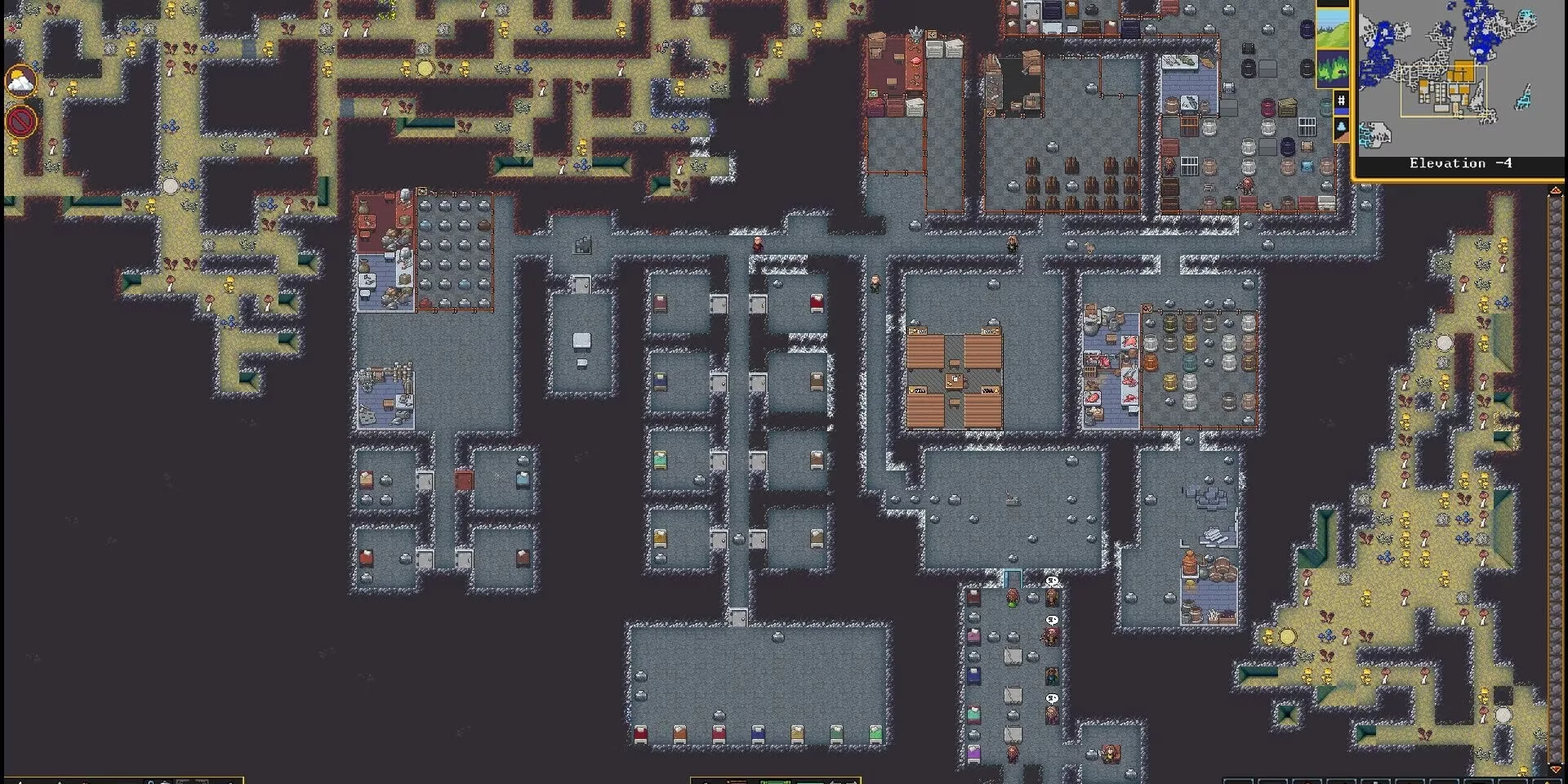
I'd be doing you a disservice if I didn't tip my hat to Dwarf Fortress. This one has "steep learning curve" tattooed on its forehead, but holy moly, the stories it generates are the stuff of legend. The ASCII graphics (or the Steam version's pixel art, as of recent years) hide a simulation so deep that every dwarf has a personality, relationships, and a fondness for specific types of booze. One of my fortresses collapsed not because of a dragon, but because a single dwarf went berserk after failing to acquire a particular sock. That, my friends, is emergent storytelling at its finest.
Before RimWorld or even Minecraft, Dwarf Fortress was showing us that a world that just… operates, with or without you, is a story engine. The procedural history generators mean that every new save comes with centuries of past events, wars, and fallen civilizations. You're stepping into a world that already has a pulse, and your dwarves' tiny adventures can either change the world or become a tragic footnote. It's utterly bonkers and I love it.
EVE Online — The Cold Vacuum of Player Politics
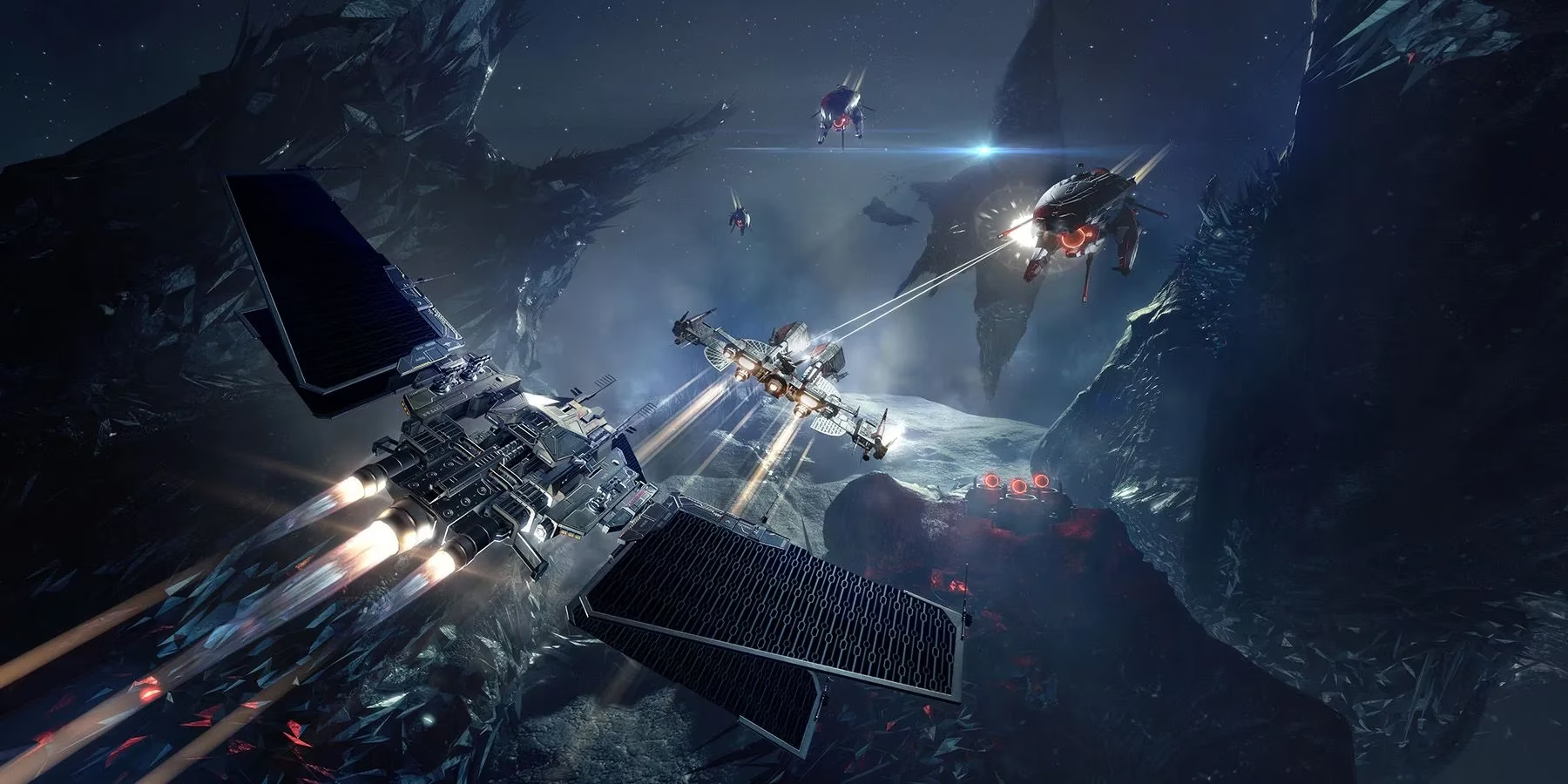
Last but absolutely not least, there's EVE Online. If sandbox games are storytelling gardens, EVE is a wild jungle of player-run clans, corporate espionage, and trillion-ISK heists. I've never experienced a game where the line between player and story blurs so completely. Factions have risen and fallen based on betrayal, economic blockades, or just one charismatic fleet commander rallying thousands for a final charge. These events are recorded in community history, not in a developer's script.
I once spent a week doing nothing but hauling cargo in safe space, just listening to comms chatter from a war happening three regions away. That war didn't exist when I first logged in; it was sparked by a disagreement over mining rights that escalated into a full-blown conflict. The developers didn't code that storyline—they just gave us the tools and the cold, dark sandbox, and we filled it with ambition and drama. Even in 2026, EVE remains the gold standard for showing that the best stories aren't written by game designers—they're written by us, the players, one risky decision at a time.
So next time you boot up a game, take a moment to appreciate the unplanned moments. The failed recipe, the ambush, the random act of kindness from a stranger online. That's the real narrative gold. Emergent storytelling has turned gaming into the most unpredictable and personal storytelling medium I know, and honestly, I wouldn't have it any other way. Game on, and may your stories be gloriously messy.