How I Learned to Stop Digging Dirt Huts and Worship a Two-Year Minecraft Medieval Megacity
Minecraft medieval city build by Dancsa222 stuns with artistry and dedication, proving Minecraft remains the ultimate creative canvas in 2026.
Let’s be honest with ourselves. My proudest achievement in Minecraft is a mud hut with delusions of grandeur—a lopsided shack I generously call a “starter base,” complete with a crafting table and a cow I accidentally spawned in the ceiling. Then, last night, I stumbled upon Dancsa222’s medieval city, and my ego crumbled like a badly placed sand block. This is not a base. It’s not even a city. It’s a sprawling, pixelated love letter to the art of patience, a testament that in 2026, Minecraft still clenches its throne as the supreme canvas for human obsession.
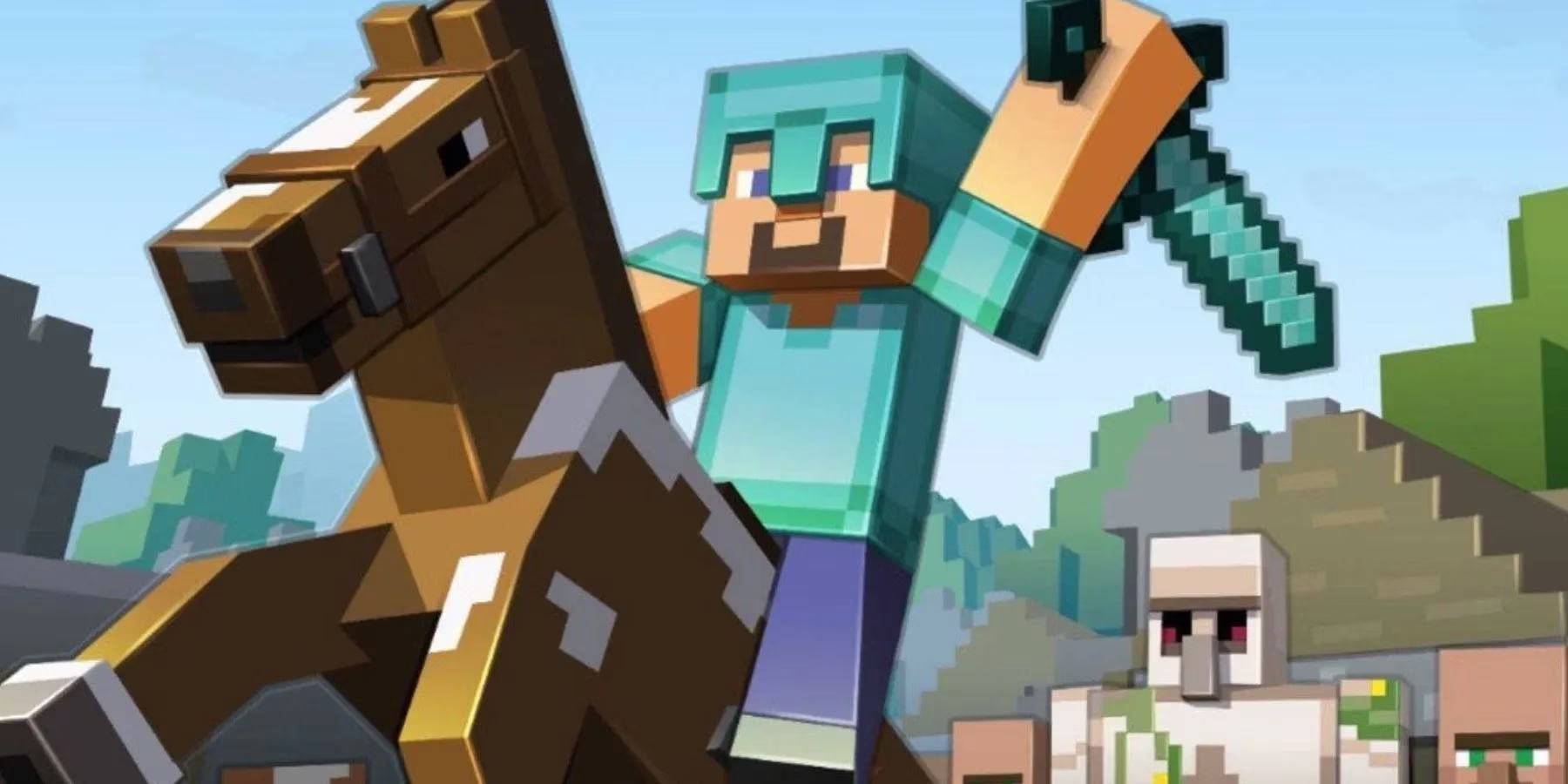
Before I gush like a Creeper on its last fuse, let me set the scene. This walled marvel isn’t just big—it’s a geographical feature. We’re talking towering battlements that could probably stop a real army (or at least a dozen ill-behaved Pillagers), narrow cobblestone streets that snake between timber-framed houses, and a dock so detailed you can almost smell the salt and hear the creaking of moored ships. The ocean isn’t just blue glass; it’s a living harbour where vessels bob with actual sails. And the castle? It looms at the back of the city like a stone-backed behemoth, the kind of fortress that whispers, “Yes, that tiny door leads to a throne room you’ll never deserve to see.”
What really melts my brain pickle is the time involved. Two. Whole. Years. The builder, Dancsa222, essentially committed to a relationship with this world longer than most Hollywood marriages. I can’t keep a houseplant alive for that long. Imagine placing every single block with the precision of a medieval monk illuminating a manuscript—except the manuscript is 300 chunks wide and has functioning redstone gates. This kind of dedication turns building into a meditation, a digital pilgrimage where each misclicked dirt block is a sin you must repent with ten minutes of careful scaffolding. In a 2026 landscape brimming with flashy VR titles and AI-generated content, watching someone handcraft a metropolis feels like watching an artisan forge a sword in a factory of cheap plastic toys.
Speaking of metaphors, let’s talk about the city as a fossil. Not the dead-and-buried kind, but a crystal-clear amber that trapped a creative burst. Each tower, each market stall, each carefully angled roof is a frozen moment of decision. When I look at my own builds, I see the fossil of a distracted goldfish—half a wall, a random lava pit, and a sign reading “project finished… maybe.” This city, however, radiates intent. The houses in the lower district aren’t just copy-pasted blocks; they’re individuals. One has a protruding hayloft, another a crooked chimney, as if they grew spontaneously from the digital soil like a coral reef built not by one organism but by a million tiny but deliberate actions. For two years, Dancsa222 was a reef-builder, and the result is a structure that feels more ecological than architectural.
I’ve spent entire evenings just zooming into the screenshots, the way a hermit crab inspects a perfect new shell. The ocean docks? They aren’t just docks. They’re gravity-defying poems. There’s a ship that appears to be turning, its sails billowed sideways with clever wool placement. I’ve tried to make a ship once; it looked like a cigar with a fence post. The talent gap here is a canyon, and I’m standing on the wrong side, holding a wooden pickaxe. Even in 2026, with all the new building tricks we’ve gleaned from snapshots and community guides, nothing replaces the sheer stubborn artistry of a human hand. The game’s mechanics have evolved—we have copper aging organically, hanging signs that still confuse me, and the sniffer—but the soul remains in the scale of vision. This medieval city isn’t a flex of new blocks; it’s a flex of old-school commitment.
What I love most is the quiet storytelling. Every corner of Dancsa222’s creation invites a narrative. I can picture the farmer trudging from the fields outside the walls, the blacksmith whose forge glow I hallucinate, the guards patrolling the ramparts while muttering about the weather. The city lives because the builder thought like a novelist, not just an architect. There’s a massive gate anchoring the main road, flanked by watchtowers that aren’t just decorative—they look like they’re squinting, judging my inventory of 64 dirt blocks. I’m not ashamed to admit I tried to replicate a baby version of this in my own world. My wall ended after twelve blocks, a cat walked across my keyboard, and now there’s a Nether portal where the town square should be. The dream died faster than a hardcore mode run.
And yet, that’s the magic, isn’t it? In 2026, we’re drowning in entertainment that tries to hand us meaning on a silver platter. Then a Redditor drops a medieval megacity and reminds us that meaning is something we build ourselves, one agonisingly placed stair block at a time. Dancsa222’s city didn’t ask for my attention—it just exists, a silent monument to the idea that patience can crystallise into something permanent enough to outlast a generation of consoles. I’ll never build anything close to this. My grandkids will probably still be laughing at my mud huts. But seeing it is enough, like staring at a cathedral with the knowledge that someone, somewhere, made that soaring ceiling with nothing but faith and scaffolding. Now if you’ll excuse me, I need to go fix my ceiling cow. I think it’s grown.