How to Build a Mushroom Farm in Minecraft for Unlimited Food & Potions
Automated Minecraft mushroom farms—from small plots to bonemeal-powered giants—yield sustainable food and brewing ingredients.
When I first started exploring the possibilities of sustainable food sources in Minecraft, I quickly realized that mushrooms were an underrated gem. Not only do they enable some of the most hunger-restoring recipes in the game, but they also open the door to advanced brewing. Back in the early days, I’d roam dark caves hoping to spot a few red and brown caps, but once I understood the mechanics of fungal spread and growth, I decided to build my very first dedicated mushroom farm. That single project changed the way I played – from constantly worrying about my next steak to turning my base into a self‑sufficient culinary and alchemical powerhouse. I’m going to walk you through every method I’ve used, from the simplest underground plots to a fully automated Mooshroom empire, so you can pick the setup that suits your world and playstyle.

Small Mushroom Farming – The Underground Classic
The most approachable way to start producing mushrooms is with a compact underground grow room. Mushrooms don't tolerate direct sunlight, so digging a cellar or using a naturally dark corner of your base is perfect. I usually hollow out a chamber at least two blocks high and around 9×9 in size. This gives enough surface area for mushrooms to spread while keeping the build manageable early‑game.
Place one small red or brown mushroom in the center of the dirt or stone floor. Mushrooms in Minecraft multiply by sending out offspring to nearby blocks, but the spread is limited – in a 9×9 area a single type will only propagate until there are about five mushrooms in total. That’s why I often plant both red and brown in opposite corners to double the yield.
The real trick is lighting. If the room is too dark, hostile mobs will spawn; too bright, and the mushrooms won’t grow at all. I carve recesses into the ceiling at regular 6‑block intervals and slot a torch into each niche. This keeps the light level sufficiently low for fungal growth (12 or below) but high enough to block zombie and skeleton spawns.
Once I had a steady manual harvest, I craved automation. By installing a row of sticky pistons and a simple clock wired with Redstone repeaters, I could push a wave of water across the floor once per in‑game day. The flowing water breaks the mushrooms loose, and they drain into hoppers connected to a double chest. This fully hands‑off system ensures I return from a mining expedition to a stack of fresh mushrooms waiting for me.
Huge Mushroom Farming – Bonemeal Powerhouse
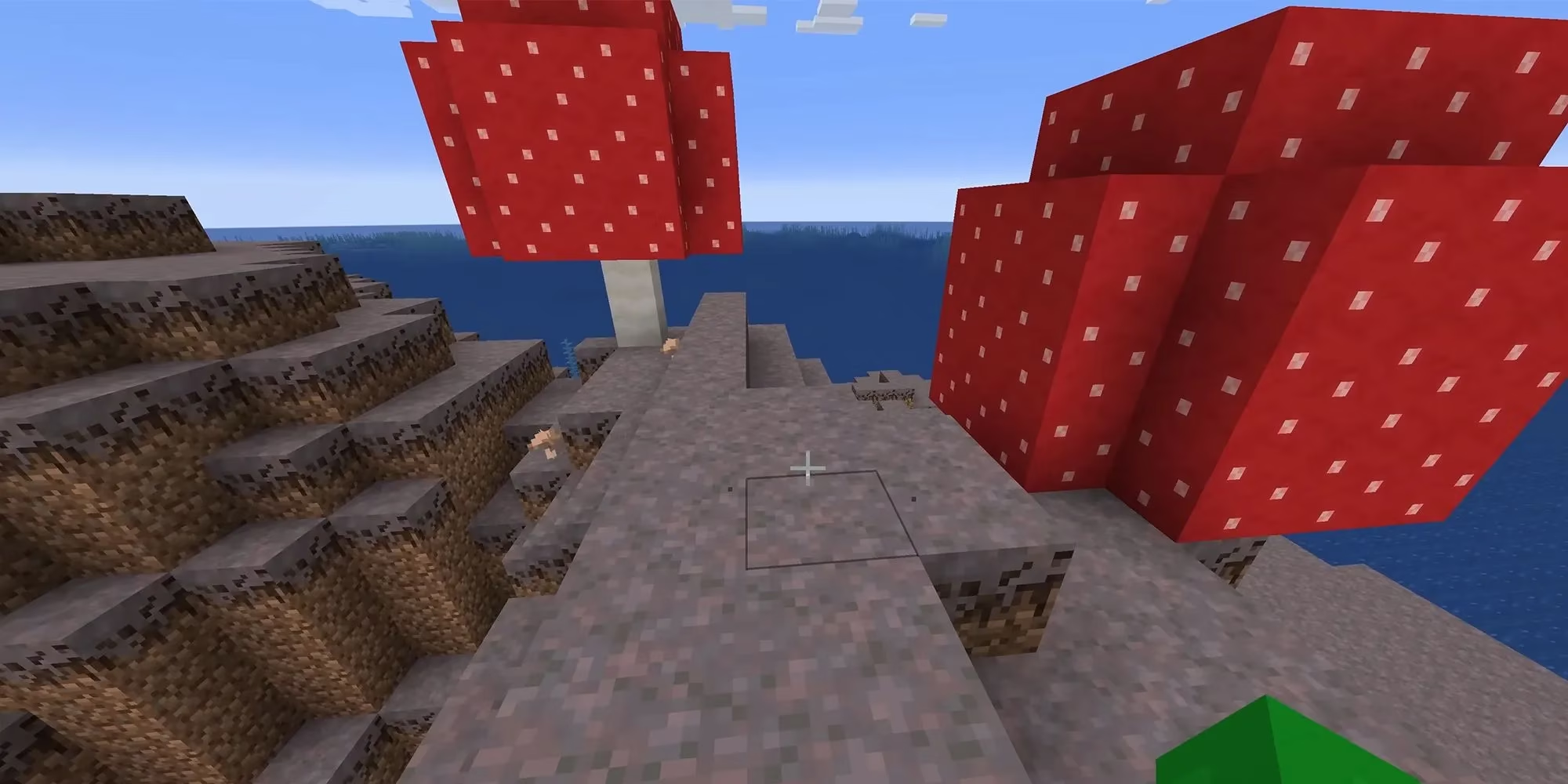
If you have space and a supply of bonemeal, scaling up to huge mushrooms is wildly efficient. The giant fungi give you not just the cap blocks (which can be mined for additional small mushrooms) but also a dramatic increase in per‑plant yield. My favorite setup uses a 7×7×8 interior volume so the towering structure has room to form. Light level must again be 12 or lower, but you can bypass darkness entirely if you plant on Podzol, Nylium, or Mycelium – those blocks allow mushroom growth even in bright daylight.
I lay down my chosen substrate in the center of the growth chamber and place a single small mushroom. Then I immediately apply bonemeal. The mushroom balloons into a massive version, and once I chop it down with an axe, each block I break drops zero to two mushrooms of the corresponding color. On a good harvest, I can fill half an inventory row from just one giant red mushroom. I keep a composter nearby to recycle excess seeds and crops into bonemeal, making the process completely self‑sustaining.
Mooshroom Farming – The Ultimate Mushroom Factory
The rarest but most rewarding method involves finding a Mushroom Fields biome and wrangling its native inhabitants: Mooshrooms. These mushroom‑coated cows are a renewable source of both stew and raw mushrooms. Once I lassoed a pair with leads and transported them back to my mainland farm, I built a spacious fenced pasture on Mycelium blocks to keep them comfortable.
To get mushroom stew, I simply wield a wooden bowl and right‑click any Mooshroom – infinite food with no cooking required. When I need actual mushrooms for crafting or potions, I breed the herd with wheat until I have a comfortable population. Then I shear one Mooshroom (it drops five mushrooms and turns into a normal cow) and slaughter it for beef and leather. I repeat the breeding cycle, shearing about a third of the herd each time, and my stockpile grows exponentially. Setting up a simple water‑current flushing system to collect drops from shearing makes it even more hands‑free.
Making the Most of Your Harvest
With a reliable mushroom income, hunger becomes a memory. The three stews you can craft highlight the versatility:
🍄 Mushroom Stew – one red mushroom, one brown mushroom, and a bowl. It restores 6 hunger points, a solid early‑game meal.
🌺 Suspicious Stew – add any small flower for a random status effect like saturation or regeneration. I keep a few of these on me for tough fights.
🐄 Rabbit Stew – combined with a cooked rabbit, carrot, baked potato, and mushrooms. It’s a niche recipe, but the bragging rights are worth it.
Beyond food, the brown mushroom unlocks critical potion brewing. Combine it with sugar and a spider eye to craft a Fermented Spider Eye, which corrupts existing potions into their negative counterparts. From one ingredient you can brew:
-
Potion of Weakness (great for curing zombie villagers)
-
Potion of Harming (instant damage for combat)
-
Potion of Slowness (slows down pursuers)
-
Potion of Invisibility (stealth missions become trivially easy)
Final Thoughts
Building a mushroom farm in Minecraft transforms a humble fungal friend into an industrial asset. Whether you prefer the slow‑and‑steady underground spread, the explosive growth of bonemealed giants, or the living factory of a Mooshroom dairy, you’ll never look at the lowly mushroom the same way again. I always recommend starting small with a manual cellar and then gradually adding automation or scouting for a Mushroom Fields biome to scale up. Once your system is ticking, you can focus on what really matters: exploring the End, conquering bastions, and crafting the most potent potions the Overworld has ever seen.