I Averaged 6.7 Million Minecraft Skins and Got Steve Back
Minecraft skin trends and player skins converge in Dinhero21's project, revealing Steve as the enduring average with subtle anime flair.
I have been playing Minecraft long enough to believe I have seen every skin trend the community can throw at a crafting table, but Dinhero21's recent experiment stopped me like a creeper standing at my front door. They took 6,749,939 unique player skins and blended them into a single aggregate design. The result is not some glitched abomination or a rainbow-flecked nightmare. It is Steve. More precisely, it is Steve with slightly anime-flavored eyes and a color palette that looks like it has been left out in the sun for a decade.
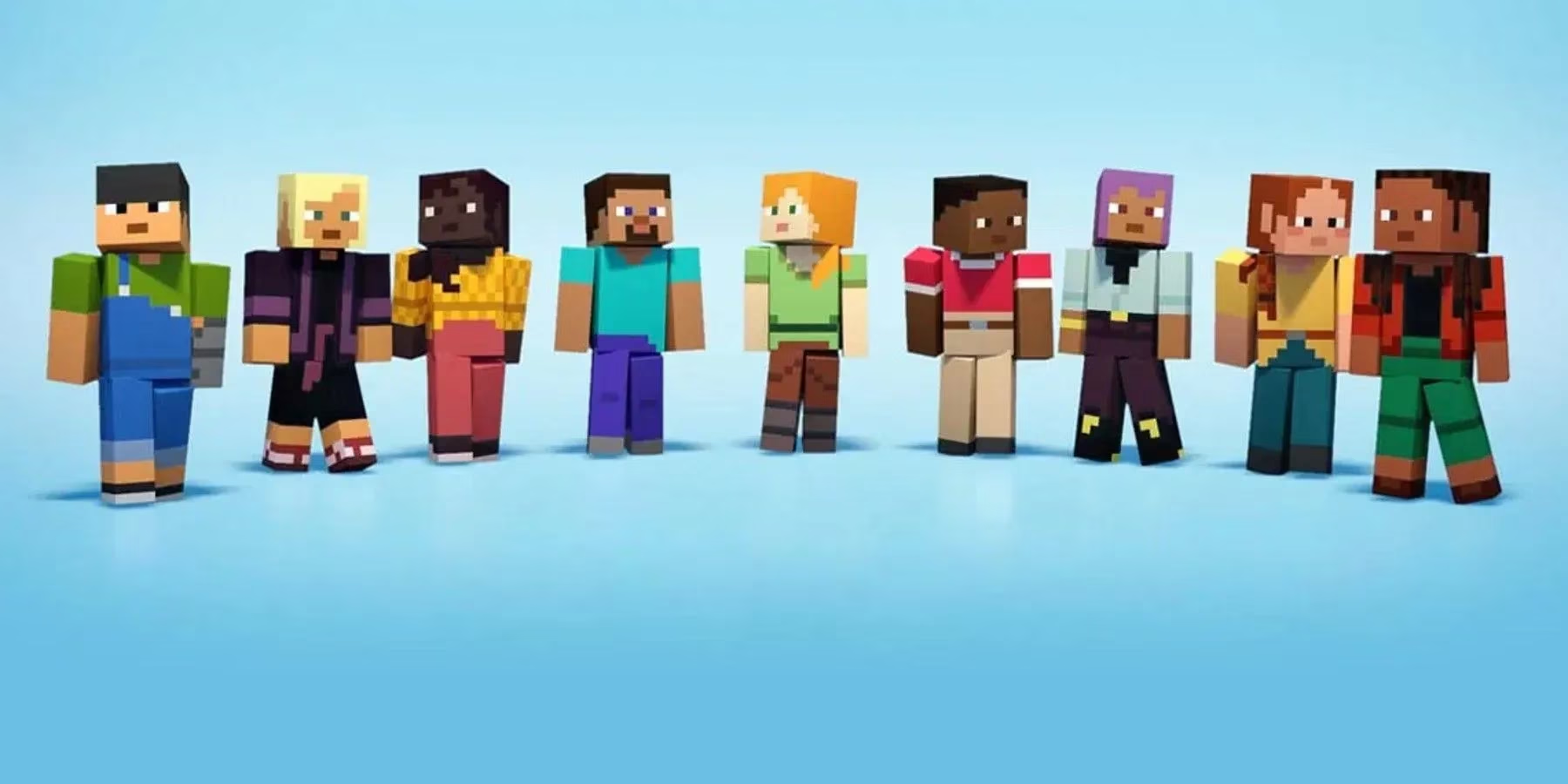
Let me back up for anyone not deep in skin culture. A Minecraft skin is a custom texture that wraps around the player model. You can choose the default Steve or Alex look, pick one of the newer official skins, or build your own pixel-by-pixel identity. In multiplayer servers and creator spaces, skins are the main way to scream a little personality into a world made of blocks. By 2026, the skin scene has grown so massive that millions of uploaded designs are just a fraction of what is actually possible.
What Is Actually Happening Here
The project feels like dumping every paint bucket in a hardware store into one giant mixer and discovering the final result still dries to a very familiar beige. Even with almost seven million skins in the blend, the average face that emerges is basically Minecraft's default protagonist. The only obvious differences are the more anime-style eyes and the washed-out, low-saturation colors. That makes sense: when you average thousands of wildly different color choices, many saturated reds, blues, and greens cancel each other out into muted middle tones.
The Math Is Unhinged
I always enjoy when community projects remind me that Minecraft is secretly a combinatorial explosion wearing a cozy sandbox costume. Each skin is just a collection of colored pixels applied to the same model. If you average every corresponding pixel across millions of skins, you get a ghost image of the community's collective character.
To understand how small 6,749,939 skins really is, look at the possible versions of the original Java player model:
| Detail | Number |
|---|---|
| Skins blended by Dinhero21 | 6,749,939 |
| Pixels used in the classic model | 1,632 |
| Color choices per pixel | 2^32, about 4.29 billion |
| Possible outer appearances on the Java 1.7 model | (2^32)^1632 |
That possible number is so large it stops being a number and becomes an abstract threat. The sample is enormous by community standards, but compared with what could exist, it is barely a grain of sand in a cosmic-sized desert.
Why Steve Keeps Winning the Average
Steve is the gravitational center of the Minecraft skin universe. No matter how far creators launch their avatars into neon ninja, cosmic wizard, or edgy ghost territory, the sheer mass of near-default skins drags the average back toward the blocky original. A huge portion of uploaded skins are Steve clones with a few small tweaks: different eye color, a jacket, a hat, or slightly longer hair.
The project also works like a massive stadium crowd photo where every individual face melts into a ghostly average. That ghost just happens to be Steve. It is a strange reminder that behind all the flashy skin showcases, the default look still anchors the community.
My Take as a Player
As someone who has spent years fussing over skins before joining a server, I see this as both hilarious and oddly comforting. Skins are often treated as the ultimate personal statement, yet the community average is basically a slightly sun-bleached Steve with anime eyes. It tells me that personal expression is real, but the center of Minecraft gravity is hard to escape.
Minecraft skin customization has been available to Java Edition players for well over a decade, and Mojang has leaned harder into player expression by adding many official skins beyond Steve and Alex. If someone runs this same experiment in 2026 with an even larger dataset, I suspect the result will be the same: softer colors, a hint of anime influence, and Steve staring back at us from the noise.