I Revisited Minecraft’s 15th Anniversary Map in 2026 — And It Still Feels Like Home
Step into the Minecraft 15 Year Journey map, a nostalgic museum filled with easter eggs and a secret Herobrine shrine.
It’s 2026, and Minecraft is no longer a teenager — it’s a 17-year-old veteran that has shaped the way an entire generation thinks about creativity. The other day, feeling a bit nostalgic, I jumped back into the 15 Year Journey map, a free collaboration between Mojang and Oreville Studios that originally dropped for the game’s 15th birthday. Let me tell you, stepping into that digital museum again was like opening a time capsule that had only gotten better with age. The map doesn’t just remind you of the updates; it wraps you in them, with every corner whispering a different chapter of Minecraft’s incredible story.
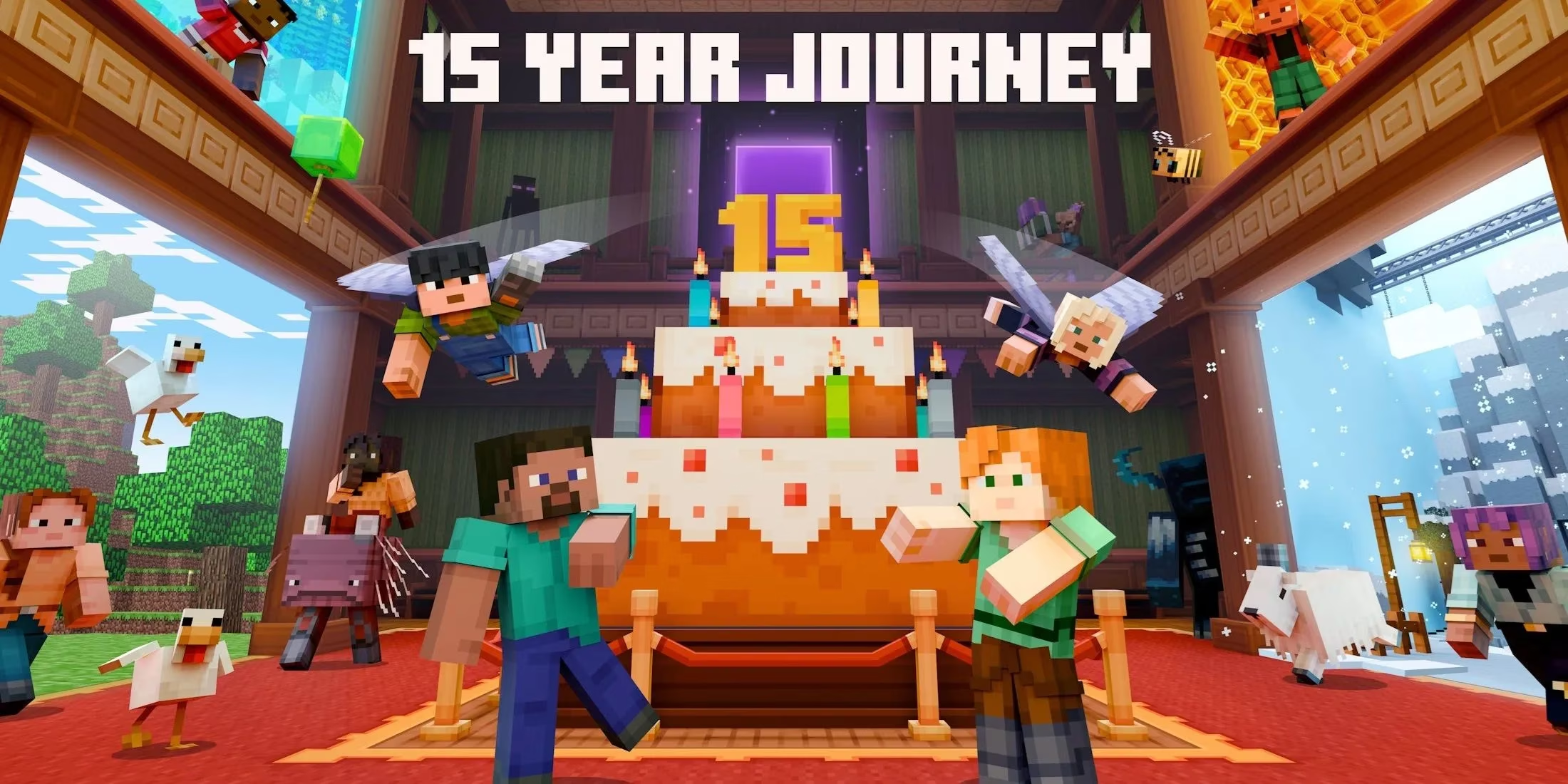
Walking through the halls of this blocky institution, I was handed a stickerbook and set loose to hunt down hundreds of collectibles. But honestly, the map never makes you feel like a detective with a magnifying glass. Instead, it gently nudges you — “Hey, did you see that?” — with Easter eggs that practically wink at you from display cases. Some references are so on-the-nose they feel like a friend tapping your shoulder at an old reunion. Yet hidden among the bright lights are quiet little secrets that only the most perceptive players will catch, and that’s where the magic lives.
The museum is organized like a parade of Minecraft’s biggest milestones. Two sections proudly wear the names of actual updates: Buzzy Bees and Caves & Cliffs. The Aquarium is a splashy tribute to the Aquatic Update, while the Exploration wing gives a nod to Trails & Tales with its swashbuckling artifacts. Then there’s the Dimensions zone, which throws you straight into a mini-game arena pulsing with Pigstep music — a love letter to The Nether Update so loud you can almost feel the soul fire warming your skin. These mini-games aren’t just filler; they’re interactive postcards from past versions, letting you ride a strider or navigate a stronghold like you did the first time you discovered those features.
But the real heartstring-tugger for me was the Alpha section. The moment I stepped in, the museum’s walls began breathing history. Old block textures and quirky trivia greeted me like long-lost friends — the creeper’s origin as a botched pig, the unpredictable behavior of sponges, and the lever that summons human mobs in a throwback to the earliest spawn mechanics. It’s the kind of stuff that used to fill dog-eared guidebooks, and seeing it here felt like the game itself giving me a knowing wink.
And then — oh, then — you find the computer screen with that classic dirt-textured Java menu. The world dissolves into a neon-bright dreamscape of alpha-era terrain: lurid green grass, dotted-out trees, and a fog so thick you could carve it. I couldn’t believe my eyes when I turned around and saw the iconic hill from the original Herobrine screenshot, silently crouching behind my spawn point. The map makes you switch back and forth between modern Minecraft and this vivid relic, and with every switch, you feel the weight of 15 years of evolution. It’s like the map is gently reminding you: “Look how far we’ve come, kid.”
Even tucked away in small corners, the map keeps giving. I chuckled when I spotted a sticker version of the old Xbox 360 case — a tiny shrine to console days. One painting pulls you right through its canvas, a clever nod to that classic glitch we all abused. And the elytra ring minigame? I’d bet my last diamond it’s a callback to the Glide minigame from legacy editions. These aren’t just Easter eggs; they’re love notes scattered across the world for the fans who lived through every update, every bug, and every late-night building session.
Revisiting 15 Year Journey in 2026 reminded me why Minecraft endures. It’s not just a game — it’s a scrapbook of our own creativity, and this map is the perfect curator. If you haven’t wandered through it yet, or if, like me, you feel the pull of younger years, download it and let the blocks do the storytelling. You’ll laugh, you’ll tear up, and you’ll probably punch a tree all over again.