Jason Momoa Bans Video Games for His Kids Despite Starring in Minecraft Movie
Jason Momoa, star of A Minecraft Movie, sparks debate by banning video games for his kids, highlighting a clash of parenting and digital culture.
In a surprising revelation that highlights the complex relationship between Hollywood and digital entertainment, actor Jason Momoa, a star of the highly anticipated film A Minecraft Movie, has stated he does not allow his own children to play video games. As the cinematic adaptation of the iconic block-building game prepares for its global premiere, Momoa's personal parenting philosophy presents a stark contrast to his professional role. The actor, who portrays the character Garrett “The Garbage Man” Garrison, explained his stance in a recent interview, emphasizing a desire for his children to engage with the world beyond screens. This perspective arrives just as the film and its accompanying in-game celebrations launch, creating a fascinating dialogue about creativity, technology, and modern childhood.
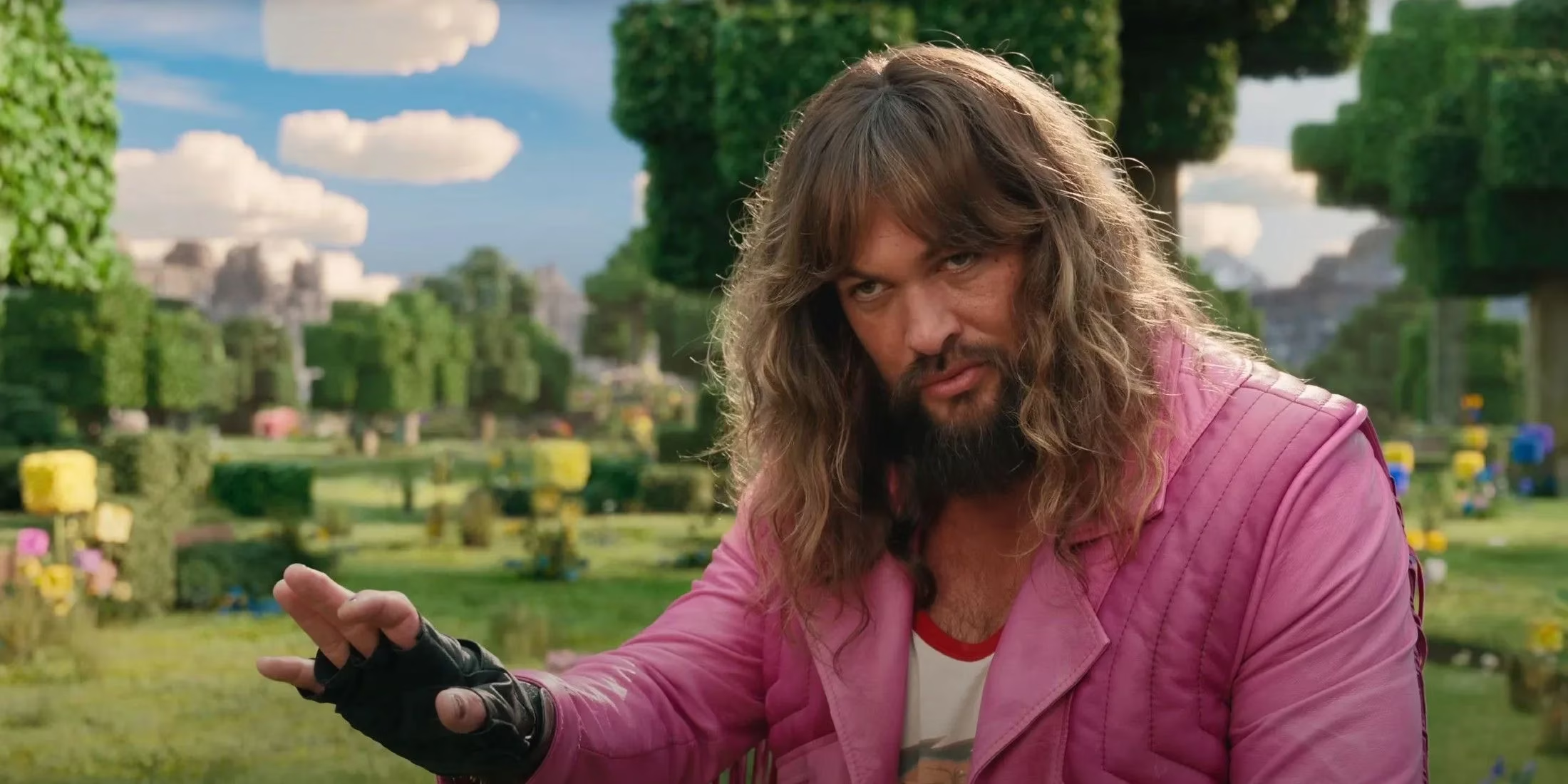
The upcoming A Minecraft Movie, set for release in early April 2026, represents a major studio attempt to translate the sandbox phenomenon's endless creativity to the big screen. The film employs a hybrid of CGI and live-action to bring its blocky universe to life. Its cast is a notable draw, featuring comedic powerhouse Jack Black as the iconic Steve alongside Momoa's original character. While Black's involvement has delighted fans familiar with his genuine enthusiasm for gaming, Momoa's role has garnered significant attention for different reasons—primarily due to the actor's candid comments about his family's media habits.
In discussions with media outlets like Deadline, Momoa elaborated on his household rules. "We don't have a TV. My son doesn't even have a phone," the actor stated, outlining a decidedly low-tech environment for his children. He confirmed plans to allow his son a phone and the freedom to "explore the world" upon turning 18, but firmly defended his current approach. Momoa rooted his philosophy in his own upbringing, suggesting his generation managed to thrive without constant digital access. He expressed a wish for his kids to "use their creativity in a different way," implicitly drawing a line between the structured creativity of a game like Minecraft and unstructured, real-world imaginative play. This stance has intrigued many observers, who find the dichotomy between his cinematic job and private life particularly compelling.
This personal philosophy stands in direct contrast to the public persona of his co-star, Jack Black. Black is widely known as an avid gamer and has enthusiastically embraced video game adaptations throughout his career. His previous roles include voicing fan-favorite characters like Bowser in The Super Mario Bros. Movie and Claptrap in Borderlands. This difference highlights the varied relationships even film stars have with the medium they sometimes help bring to cinema. The reception to A Minecraft Movie itself remains a topic of speculation. The track record for video game adaptations has been notoriously mixed in recent years:
| Film | Release Year | General Reception |
|---|---|---|
| Sonic the Hedgehog 3 | 2024 | Critical & Box Office Success 🎉 |
| Borderlands | 2024 | Box Office Flop 💥 |
| A Minecraft Movie | 2026 | To Be Determined ❓ |
Despite the potential box office success, the film faces the formidable challenge of satisfying the game's massive, dedicated fanbase. Their approval is never guaranteed, as the history of the genre shows. Concurrently with the film's theatrical debut, Mojang Studios has launched a major in-game event to foster synergy. From now until April 7, 2026, players on the Bedrock edition can participate in special mini-games and challenges. Successful completion rewards players with the exclusive "Yearn" cape, a cosmetic item directly inspired by the movie's aesthetics. Furthermore, a paid DLC pack is available, adding the likenesses of Momoa, Jack Black, and other cast members as playable character skins within the game itself.
This integrated marketing strategy creates an interesting paradox: while Jason Momoa advocates for his children to avoid the very digital playground his film celebrates, the studio is aggressively bridging the gap between the cinematic experience and the interactive game. The event encourages deeper engagement with Minecraft, potentially pulling in new, younger players—a demographic Momoa explicitly shields his own kids from. This scenario underscores a broader cultural tension in the 2020s regarding screen time, creative development, and the role of technology in childhood. Momoa's choice, while stringent, reflects a growing concern among some parents about digital saturation, even as the entertainment industry continues to expand into immersive, cross-platform worlds.
Ultimately, Jason Momoa's role in A Minecraft Movie is more than just a performance; it has become a conversation starter about parenting in the digital age. As fans don the Yearn cape in-game and audiences flock to theaters to see Garrison and Steve's adventure, the actor's personal convictions remind us that the worlds we create and consume on screen are often viewed through vastly different lenses in our private lives. Whether the film succeeds in capturing the magic of Minecraft or not, the discussion around it has already expanded far beyond box office numbers, touching on timeless questions of creativity, play, and how we choose to raise the next generation.
Industry analysis is available through PC Gamer, which frequently explores the intersection of gaming culture and mainstream media. Their features on video game adaptations, such as the upcoming Minecraft Movie, often discuss the challenges studios face in translating interactive experiences to film, as well as the broader implications for family media consumption and parental controls in the digital age.