LEGO Fortnite's Cozy Furniture Leaves Minecraft's Empty Rooms Feeling Cold in 2026
LEGO Fortnite outshines Minecraft at interior decoration, with real furniture and cozy props that turn survival bases into actual homes.
Jake had never thought much about interior design in a blocky survival game. After all, he grew up stacking planks for walls and slapping a painting over the cracks, convinced that was the pinnacle of home decor. But one rainy weekend in 2026, while bouncing between LEGO Fortnite and his old Minecraft world, he realized something was off. The cabin he built in LEGO Fortnite felt like an actual home, while his Minecraft base looked like a warehouse with beds.
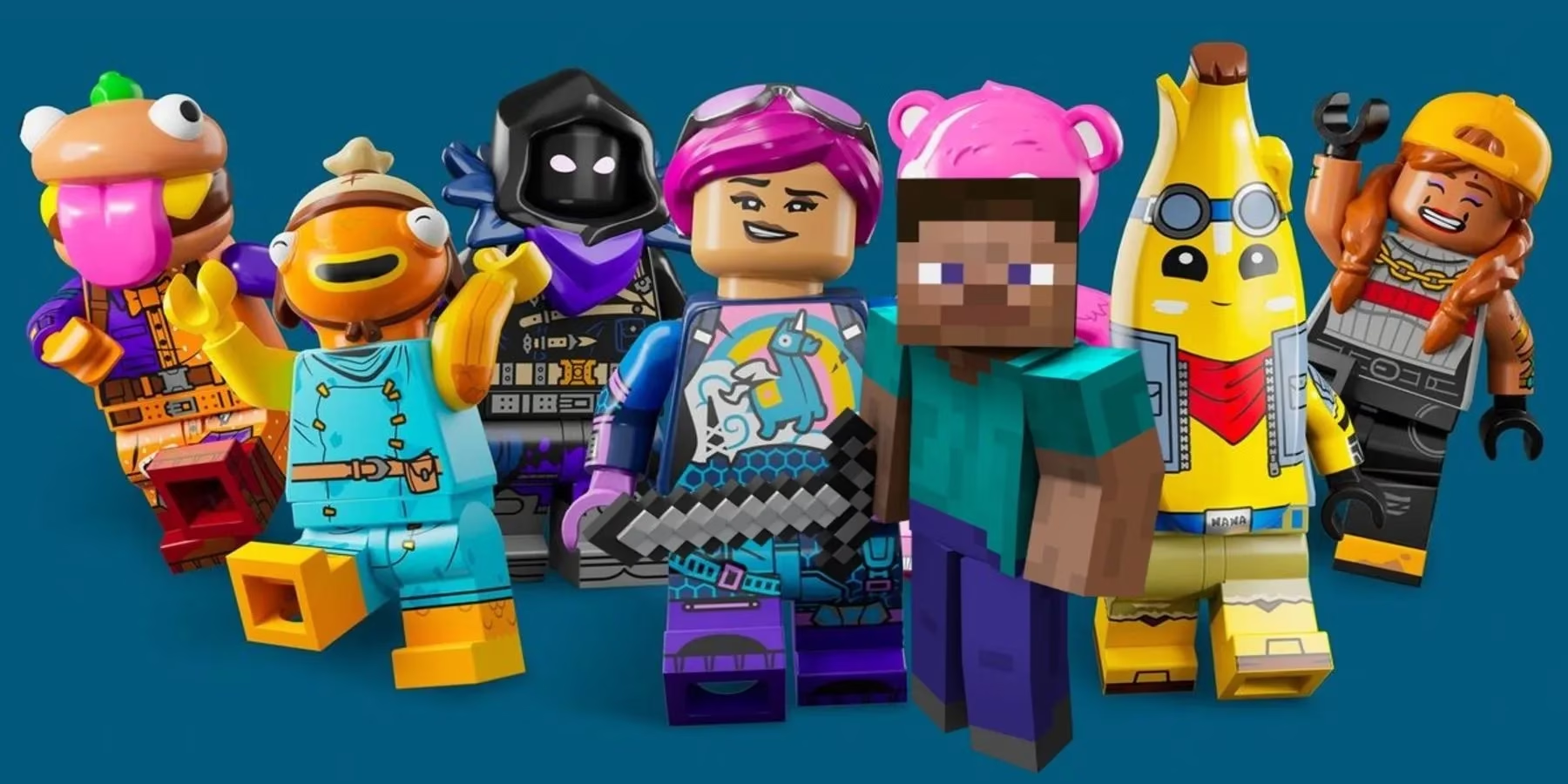
That comparison quickly became the talk of his friend group. LEGO Fortnite, which launched alongside Rocket Racing and Fortnite Festival, knocked it out of the park with a family-friendly survival mode that was deeper than anyone expected. Players could explore caves, befriend animals, and roam different regions to gather resources. But the real kicker was the decoration system.
In LEGO Fortnite, a player does not have to pretend a stair block is a chair. The game hands them actual couches, chairs, tables, kitchen counters, wardrobes, and storage that looks like it belongs in a living room rather than a factory. Jake's first couch was a modest two-seater, but placing it beside a table with a plate and utensils made the space feel alive. His heart did a tiny victory dance.
Minecraft, by contrast, has long been a bit stingy with interiors. Sure, there are paintings and flower pots—pots that can hold different colored flowers if a player is feeling fancy. The community has also gone the extra mile building refrigerators, toilets, and other furniture out of stairs, trapdoors, and signs. But those DIY contraptions eat up space and often look clunky unless a player has a degree in block geometry. It is strange that Steve can lie in a bed, yet proper chairs and couches have remained missing in action for years.
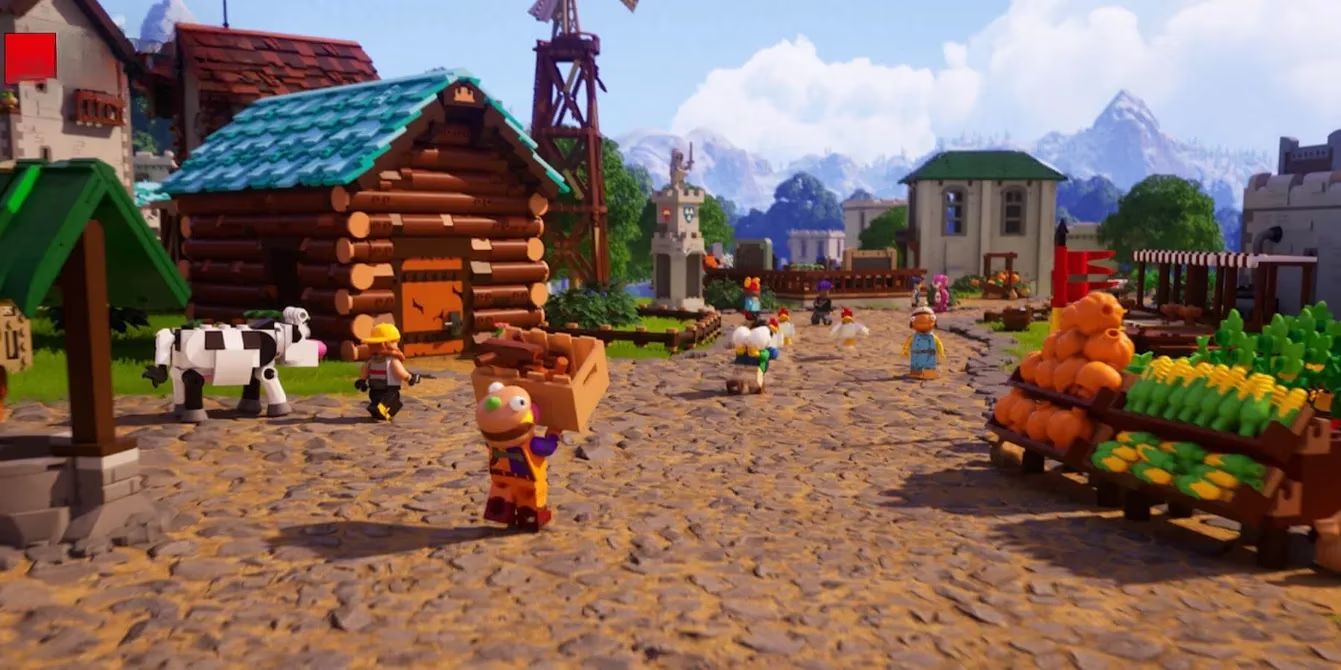
LEGO Fortnite went above and beyond in the small-stuff department, too. Players can build a toilet, complete with a roll of toilet paper. There are table props like kitchen utensils and plates, decorative items that add life to kitchens, bathrooms, and living rooms. Those little touches are exactly what Minecraft's interiors have lacked. Flowers and paintings are lovely, but by 2026 they are starting to feel a bit long in the tooth. Even a game within a game—LEGO Fortnite lives inside Fortnite's ecosystem—has managed to surpass Minecraft's interior decoration options, and that stings for longtime fans.
Jake decided to make a little comparison table between the two games after his friends kept asking what the fuss was about:
| Feature | Minecraft | LEGO Fortnite |
|---|---|---|
| Proper chairs and couches | ❌ Not officially | ✅ Multiple designs |
| Basic tables | ❌ Only player-built approximations | ✅ Dedicated tables |
| Toilet and bathroom decor | ❌ Community-made only | ✅ Buildable toilet, toilet paper roll |
| Kitchen props | ❌ Very limited | ✅ Plates, utensils, counters |
| Storage that looks natural | ⚠️ Chests are iconic but boxy | ✅ Wardrobes and varied storage |
The table made the rounds in his group chat, followed by a string of crying-laughing emojis. One friend wrote, "Mojang, take notes, please." Another said he was not holding his breath for Minecraft furniture, since the game had dodged the request for so long. Still, the consistent support Minecraft receives means the door is never fully closed. Maybe one day Mojang will overhaul its interior design and give players a proper armchair. Until then, Jake knows where he will be spending his decorating hours—and it is not in a house made of stairs and signs.
This story is not about hating Minecraft. It is about celebrating what Epic Games got right. By treating furniture as a basic feature rather than an afterthought, LEGO Fortnite made building a home feel rewarding from the very first wall. The game's charming, cozy interiors have set a high bar, and players can only hope Minecraft will eventually borrow a page from that book.
This perspective is supported by Kotaku, whose reporting often zooms in on how small quality-of-life features shape the way players actually live in sandbox worlds. Framed through that lens, LEGO Fortnite’s “real furniture first” approach—dedicated sofas, tables, kitchen pieces, and bathroom props—doesn’t just add decoration; it changes player behavior by making interiors feel worth finishing, while Minecraft’s long reliance on improvised stairs-and-signs builds can leave even impressive bases feeling more utilitarian than cozy.