Mastering Minecraft's Crafter: A Guide to Automated Crafting in 2026
The Minecraft Crafter revolutionizes automation, enabling players to auto-craft essential items for large-scale projects and survival efficiency.
As a seasoned player, I've seen countless updates, but the introduction of the Crafter has fundamentally changed how I approach automation in Minecraft. Crafting, the very heart of the game, is no longer just a manual task you perform at a bench. Now, with the Crafter, you can set up systems that let you stockpile essential items while you're off exploring, mining, or building. It's a game-changer for large-scale projects and survival efficiency. While setting it up can seem daunting, the long-term payoff of watching chests automatically fill with tools, blocks, or complex components is incredibly satisfying. The journey from gathering materials to perfecting your first auto-crafting loop is a rewarding engineering challenge in itself.
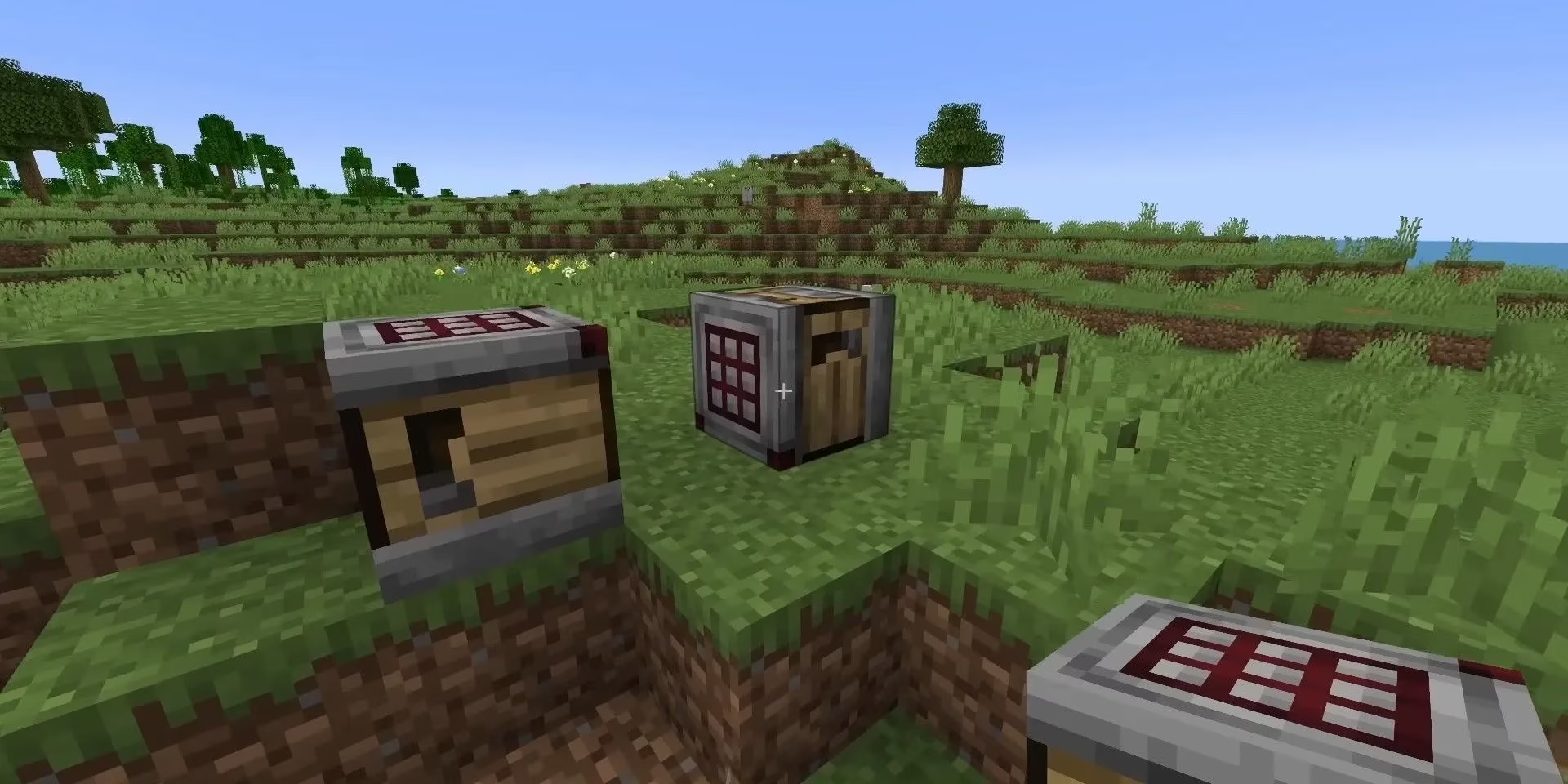
Assembling Your First Crafter
The first step is building the Crafter itself. The recipe isn't overly complex, but it requires some foresight. You'll need a Dropper and a Crafting Table. For veterans, these are simple, but for newer players, remember: a Crafting Table is four planks arranged in your 2x2 personal crafting grid. The Dropper recipe is a bit more involved, requiring cobblestone and redstone dust. If you're lucky and have a Silk Touch enchantment, you can sometimes find these blocks in generated structures and skip the crafting step, bringing them straight back to your base. Once you have these components, combine them with iron ingots and redstone dust in the following pattern to create your Crafter. This device is your gateway to automation.
The Core Principle: How Auto-Crafting Works
Understanding the Crafter's mechanics is crucial. It has a 3x3 grid like a standard table, but it's controlled by redstone. When activated, it will attempt to craft any valid recipe based on the items in its slots. The finished product is ejected from the front face of the block. This is the first critical design point: if you want to collect items automatically, you must attach a chest or hopper to that front side. Otherwise, your meticulously crafted pickaxes will just litter the floor! You can load items manually into the Crafter, but for true automation, you'll want to feed it using a hopper chain.
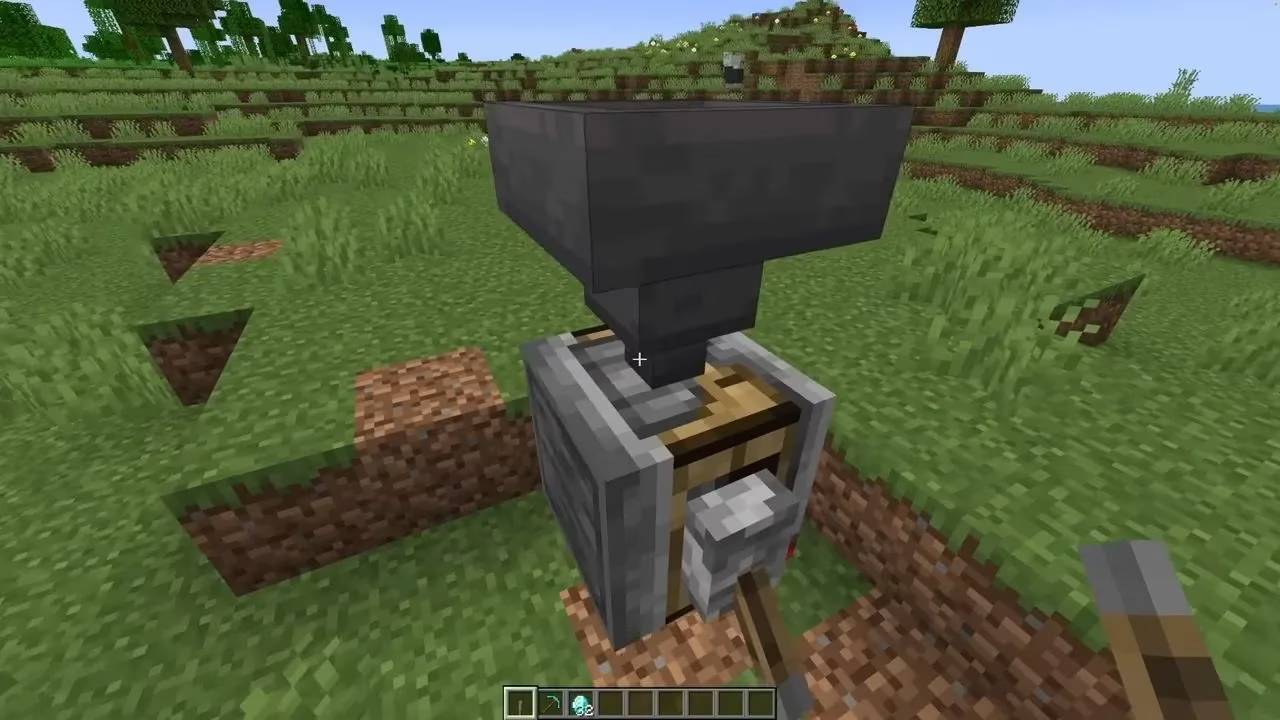
Designing Your System: From Simple to Complex
This is where the fun—and complexity—begins. Setting up a system for a simple item like a stone pickaxe is straightforward. You need to feed in cobblestone and sticks in the correct pattern. A key trick is to block off specific slots in the Crafter's grid using items like buttons or renamed pieces of paper. For a pickaxe, you'd block the entire second and third rows on the left and right columns, leaving only the top row and center column open. This guides the materials into the correct T-shape every time.
However, automation truly shines with repetitive recipes. The core loop involves:
-
A storage chest with raw materials.
-
Hoppers pulling items in a specific order into the Crafter.
-
A redstone circuit (like a simple button or a clock) to trigger the craft.
-
A chest in front to catch the output.
You must ensure the hoppers feed items in the exact order corresponding to the recipe slots. For our pickaxe example, the first three hoppers would contain cobblestone (for the top row), and the last two would contain sticks (for the center column). If the order is wrong, you'll get a mess of unwanted items or nothing at all.
Embracing the Complexity
As you might guess, crafting a dispenser or a complex redstone component automatically is a much more intricate puzzle. It requires precise timing, filtered item streams, and sometimes multiple Crafters working in stages. This is where the Minecraft community's ingenuity shines. Pioneers like Mumbo Jumbo have spent years since the Crafter's release designing incredibly compact and efficient systems for every conceivable item. In 2026, the library of community blueprints is vast. I strongly recommend using these resources as inspiration. Watching a tutorial on a specific auto-crafter can save you hours of trial and error.
The beauty of the Crafter is that it adds a new layer of engineering to Minecraft. It starts simple but can get more and more complicated as your ambitions grow. Whether you're building a fully automatic cake factory or a self-replenishing armor stand station, the principles remain the same: control the input, manage the grid, and collect the output. So, gather your redstone, iron, and patience. Dive in, experiment, and let the machines do the crafting for you. The future of your Minecraft world is automated.