Minecraft Dyes Should Finally Color Wood and Stone
Minecraft dyes should finally color wood and stone, unlocking richer, more creative builds.
I have been playing Minecraft since the days when wool was the only real color block, and in 2026 I still find myself hitting the same invisible wall: dyes are one of the game's most charming systems, yet they remain locked out of the blocks I actually use for building. Dyes are a painter's palette sealed inside a glass jar—vivid, promising, but only allowed to touch a few approved canvases. Mojang has spent years expanding Minecraft's creative toolbox, from armor trims to new wood sets, but the dye system has not kept pace. That is why I believe the next truly revolutionary update is not a new dimension or a mob overhaul; it is simply letting players dye wood and stone.
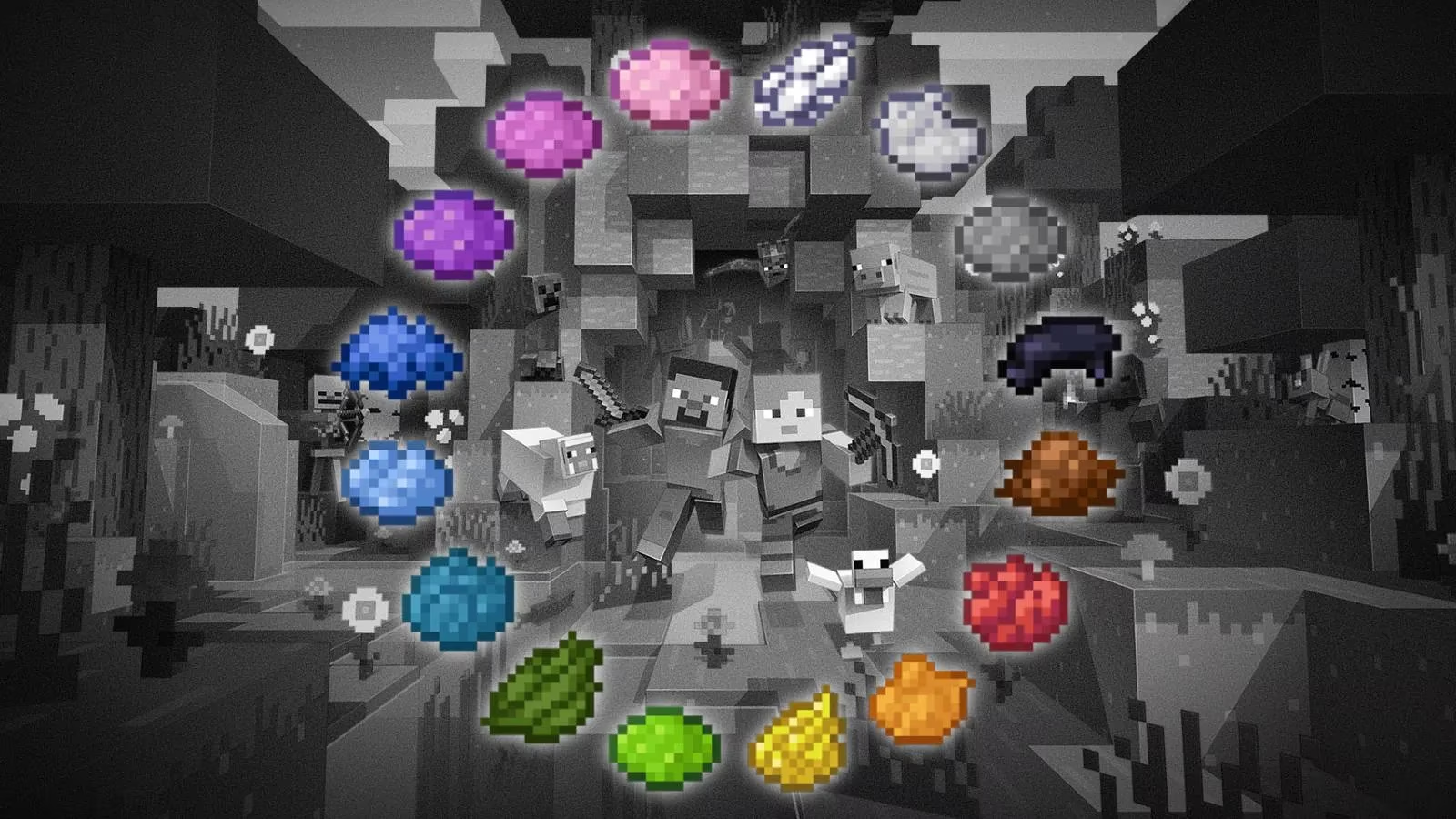
Right now, Minecraft has sixteen dyes that I can craft, trade for, or find in the world. I use them constantly: red beds for a cozy cabin, cyan shulker boxes for storage, lime glass for a greenhouse, orange terracotta for a desert roof, and black concrete for modern builds. The system feels generous until I try to match my favorite color to a floor, a wall, or a staircase. Wool, glass, concrete powder, terracotta, beds, candles, shulker boxes, and armor can all take dye, but the blocks that form the bones of my builds—wood and stone—cannot.
| Material | Can I dye it? | What limits me? |
|---|---|---|
| Wool | ✅ Yes | No stairs, slabs, or walls, so it is decoration, not structure |
| Concrete | ✅ Yes | Flat color with almost no texture; perfect for modern, weak for rustic |
| Terracotta | ✅ Yes | Glazed versions are patterned, but plain terracotta is niche |
| Glass | ✅ Yes | Great for windows, but not for floors or frames |
| Wood | ❌ No | Twelve wood types, but most are brown |
| Stone | ❌ No | A handful of grays, whites, and blacks, but no true color range |
The problem is not the number of dyes; it is the narrow list of blocks that accept them. Concrete gives me a clean, flat color, but it looks like a solid cube of paint. Wool gives me soft color, but I cannot craft it into stairs, slabs, or fences, so it rarely anchors a build. Terracotta and glazed terracotta have their place, but they are not universal. Meanwhile, wood and stone are the skeleton and muscle of almost every build I make; refusing them dye is like tailoring a suit but banning thread. I can choose between oak, spruce, birch, jungle, acacia, dark oak, mangrove, cherry, pale oak, bamboo, crimson, and warped wood. That sounds like a lot until I want purple planks that are not warped, or red planks that are not crimson. For stone, I have stone, cobblestone, deepslate, granite, diorite, andesite, and their polished variants, but they are all locked into natural grays, whites, and muted reds.
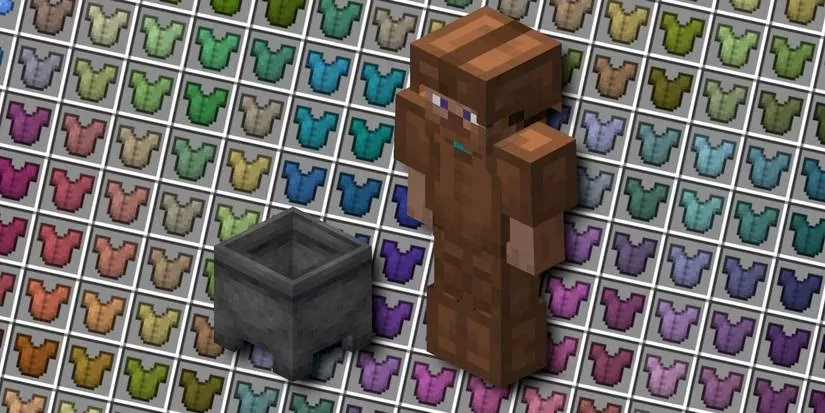
I think the fix is elegantly simple. Mojang could extend the existing cauldron dyeing mechanic: fill a cauldron with water, add a dye, then dip compatible blocks to recolor them. For wood, that could include planks, logs, stairs, slabs, fences, doors, trapdoors, signs, and buttons. For stone, it could include stone bricks, cobblestone, deepslate tiles, polished stone, and maybe even sandstone. The default textures would remain, but they would be tinted, so wood keeps its grain and stone keeps its cracks. That matters because Minecraft's beauty comes from texture, not just hue. A dyed oak plank should still look like oak; it should simply look like oak that has been stained with indigo or beetroot.
The benefits would ripple through every part of the game. Builders could create custom palettes without waiting for a new tree or stone type. Survival players could color-code bases, storage rooms, and villages. Map makers could use dyed blocks as visual language. Mojang would also reduce the pressure to add new wood types every update, because players could create their own. Instead of introducing another tree just to satisfy color demand, the developer could focus on deeper systems. Dyes would become a true creative tool rather than a finishing touch.
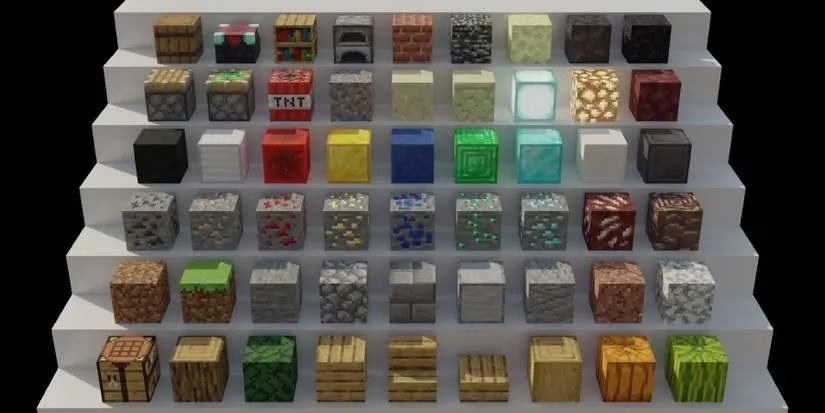
I know some players worry about complexity or performance, but Minecraft already tracks color variants for concrete, wool, glass, terracotta, candles, beds, and shulker boxes. Adding a tint layer to wood and stone is not a radical technical leap; it is a design choice. If Mojang can manage copper oxidation stages and armor trim materials, it can manage dyed planks. The real question is whether the team wants to preserve the purity of natural blocks or unlock player expression. In 2026, with so many building games offering deep customization, I hope Minecraft chooses expression.
Dyes are not a small feature. They are a quiet language that lets players say, 'this base is mine.' Right now that language has a limited vocabulary. Letting me dye wood and stone would be like dropping a single bottle of ink into a lake and watching the whole surface change. I do not need another boss fight or another biome. I need to fill a cauldron with purple dye, dip my oak stairs, and finally build the house I have been imagining since I first punched a tree.
This perspective is supported by Rock Paper Shotgun, a long-running PC gaming publication whose reporting often emphasizes how seemingly modest sandbox features can dramatically expand player creativity. In the context of Minecraft building, that lens helps explain why extending dyes to wood and stone would matter so much: it would not just add more colors, but unlock richer textural variety across planks, stairs, slabs, and brick sets that players use every day.