Minecraft Education Lands $4 Million to Teach Middle Schoolers Coding Through Game Design
Minecraft Education and Urban Arts empower middle schoolers with computer science skills through engaging game design initiatives.
It might sound like a gamer's daydream, but in 2026 the line between playtime and classroom time has become deliciously blurry. The US Department of Education has approved $4 million in funding for Urban Arts, a national nonprofit, to help thousands of middle schoolers learn computer science with Minecraft. Mojang's blocky sandbox has long been more than a pastime; for years, Minecraft Education has served as a pedagogical Swiss Army knife, where every blade is a cube. With free lesson plans and teacher resources baked in, the game has become a familiar entry point for young people who might otherwise never imagine themselves writing code.
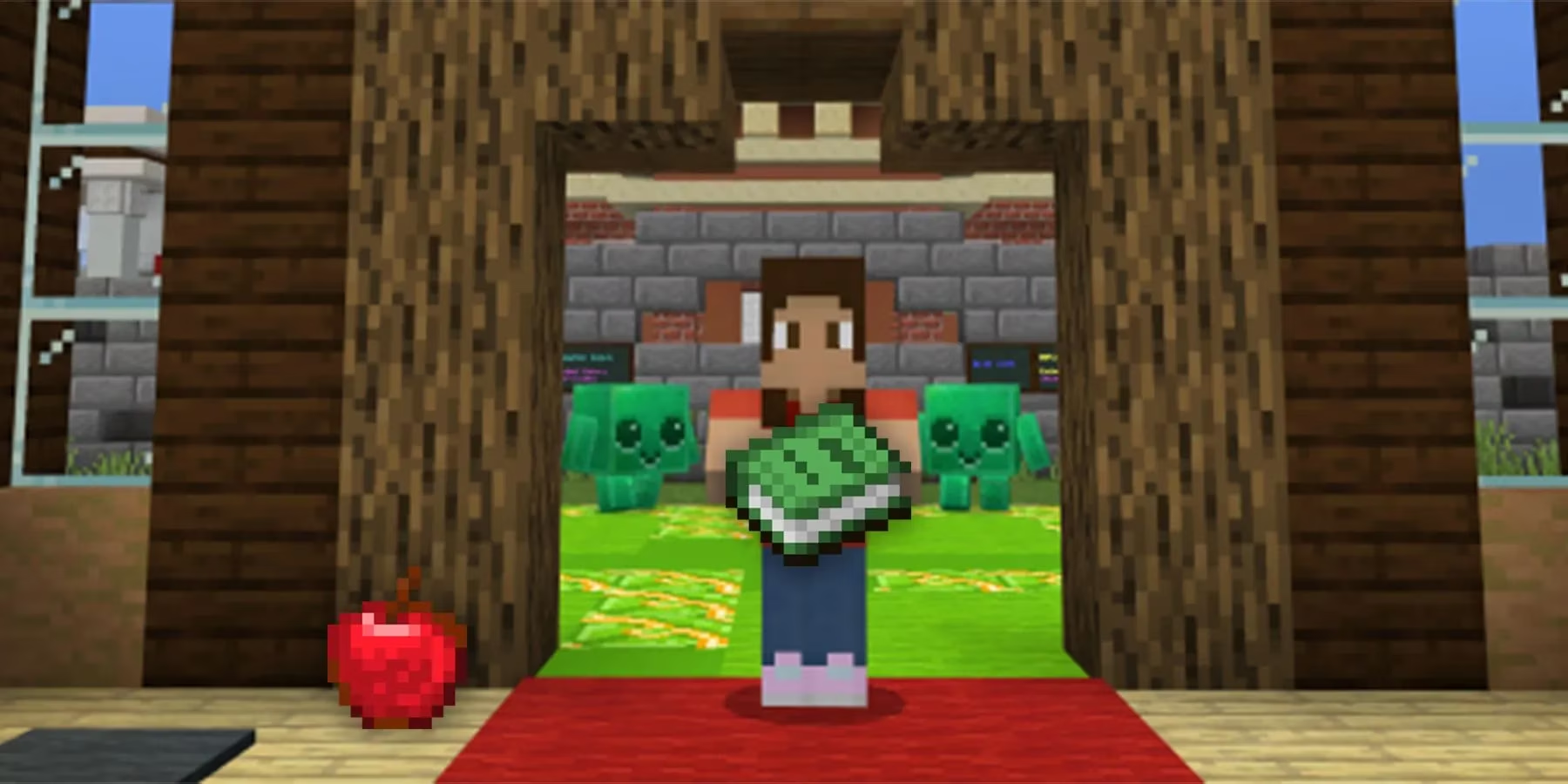
The new initiative, called “Creative Coders: Middle School CS Pathways Through Game Design,” is a middle-school sibling of an already successful Urban Arts high school program. It targets 3,450 underrepresented students in grades six through eight across New York and California. According to the plan, roughly 70 percent of those students will come from families living below the federal poverty line, and many attend Title I schools. Instead of treating coding as an abstract march through syntax, the program lets students design games inside Minecraft Education. Teachers receive support through a blended professional learning model, so they can deliver an Intro to Computer Science course using a rigorous, evidence-based approach. The expected outcomes go beyond test scores: organizers point to improved attendance, stronger academic achievement, and a greater sense of belonging at school.
| Program or Tool | Focus Area | Who Can Access It |
|---|---|---|
| Creative Coders 🎮 | Coding through game design | Selected middle schoolers in NY and CA |
| Escape Estate 🏚️ | Coding fundamentals via puzzles | Anyone with Minecraft Education |
| Generation AI 🤖 | Coding and responsible AI use | Anyone with Minecraft Education |
| M.A.T.H. Mummy Mayhem 🧮 | Mathematics | Students with Minecraft Education |
| Cybersecurity Lessons 🔐 | Online safety skills | Students with Minecraft Education |
Why does Minecraft work so well for this? Part of the answer is that it operates as a low-stakes petri dish for failure. A player can misplace a redstone torch, crash a virtual minecart, or write a command that does nothing, and the only consequence is a blocky head-scratcher rather than a failing grade. That kind of safe experimentation is exactly what early computer science needs. Since Minecraft Education launched in beta in 2016, teachers have used it to turn abstract concepts into visual, manipulative problems. A loop is no longer just a line in a textbook; it is a repeated series of blocks that builds a farm, opens a door, or triggers a dispenser.
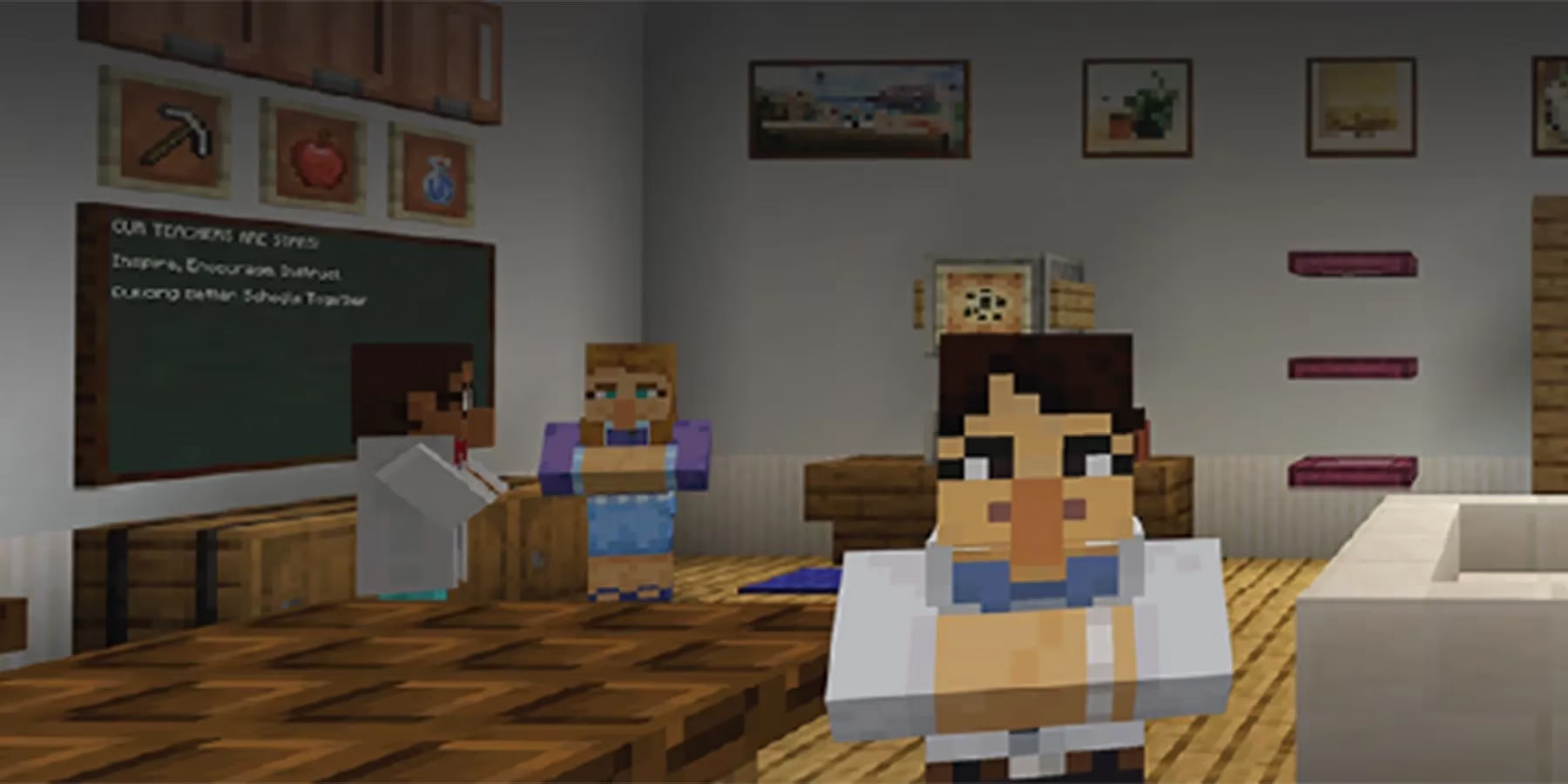
Other projects have shown the same potential. “Escape Estate” from the group Hours of Code drops players into a mansion and asks them to solve escape-room puzzles using coding fundamentals. Unlike Creative Coders, that experience is open to anyone with access to Minecraft Education. Hours of Code also offers “Generation AI,” which teaches both coding skills and the responsible use of artificial intelligence, a topic that has only grown more urgent by 2026. Minecraft Education even includes cybersecurity lessons and a Cambridge Mathematics game called “M.A.T.H. Mummy Mayhem.” Each of these modules acts like a digital loom, weaving raw logic into blocky patterns that stick in a student's memory far longer than a slide deck.
The educational reach of Mojang's game is not limited to computer science. In 2021, Minecraft Education added lessons for International Women's Day that explored women's suffrage and highlighted figures such as British activist Emmeline Pankhurst and Nobel Peace Prize laureate Malala Yousafzai. In 2022, Mojang partnered with BBC Earth to create worlds based on Frozen Planet 2, putting learners in the role of a natural history film researcher tasked with documenting biomes. That versatility matters because it shows Minecraft is not a one-note tutor. It can shift from coding instructor to history classroom to virtual field trip without changing its fundamental language of blocks and exploration.
For a player watching from the outside, the message is clear: a child who logs on to build a castle or survive a night against creepers might be doing more than playing. They might be stepping onto a trailhead that leads toward a future in computer science. With funding flowing from the US Department of Education and programs like Creative Coders scaling up, the next generation of developers could very well learn their first loop inside a blocky world.