Minecraft Emulator Gets Redstone Update: Player Pushes In-Game Tech to New Limits
Discover the groundbreaking integration of Minecraft redstone into a functional in-game emulator, showcasing the community's relentless technical innovation. This meta-achievement redefines creativity by enabling complex simulations within the sandbox, pushing the boundaries of what's possible in Minecraft.
The boundaries of creativity within Minecraft continue to be redefined, not by building outward into the world, but by building inward into the game's own systems. In a stunning display of technical prowess, a dedicated player has successfully integrated one of Minecraft's oldest and most complex components—redstone—into a functional emulator of the game that runs inside Minecraft itself. This meta-achievement highlights the incredible depth of the game's sandbox and the community's relentless drive to explore its every possibility.
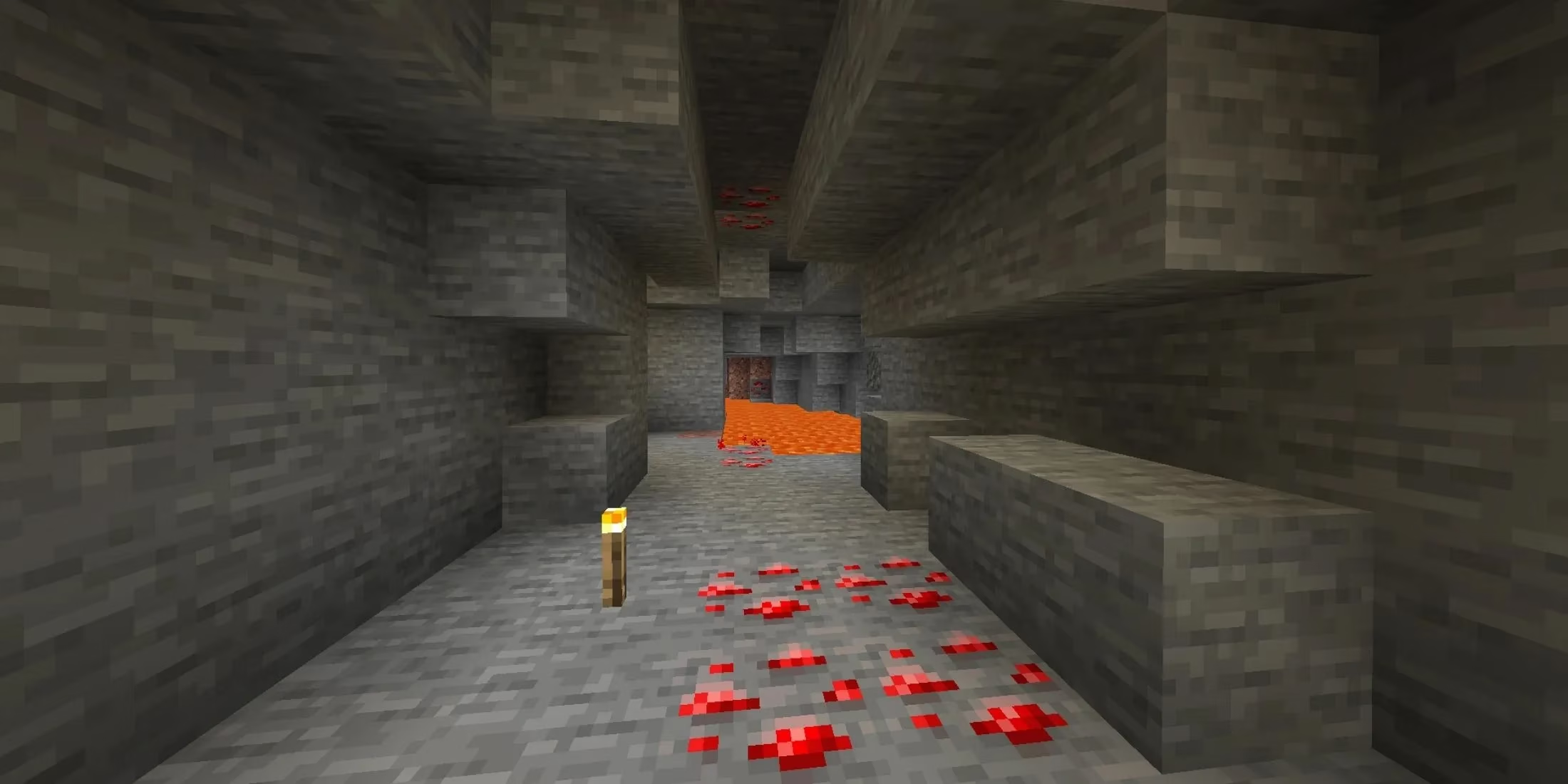
Redstone has been the lifeblood of Minecraft's engineering community since its earliest days. It’s the fundamental resource that transforms the blocky world from a simple survival canvas into a playground for digital architects and programmers. Over the years, players have used its logic-gate mechanics to build everything from simple automatic doors to fully functional, playable versions of classic video games.
💡 The community's redstone portfolio is legendary:
-
Playable replicas of Minesweeper, Geometry Dash, and Guitar Hero.
-
Complex, practical builds like smart elevators and automated farming systems for bamboo and other resources.
-
Even fully realized computers, like the IRIS redstone computer, capable of running simplified programs.
The latest project by Redditor and YouTuber ModPunchtree takes this concept to a dizzying new level. They have updated their in-game Minecraft emulator—a program that simulates Minecraft within Minecraft—to include a working version of redstone. This isn't just a visual copy; it’s a functional addition.
In a detailed video, ModPunchtree showcased the coding process, demonstrating how core redstone components were implemented within the emulator's framework. The update introduced interactive versions of:
| Redstone Component | Functionality within the Emulator |
|---|---|
| Redstone Dust | Carries signal power, just like in the base game. |
| Redstone Torches | Acts as a power source and signal inverter. |
| Redstone Repeaters | Extends signal length and introduces delays. |
| Redstone Lamps | Provides visual output for activated circuits. |
This addition was a highly requested feature from the community, especially after ModPunchtree previously enhanced the emulator's graphics with color. The creator explained that integrating redstone's unique, block-based signal propagation logic into the emulator's code was a significant technical challenge, but one that unlocks a new universe of potential for in-game creations.
ModPunchtree is no stranger to pushing redstone to its absolute limits. Their YouTube channel is a chronicle of mind-bending projects that blend gaming, programming, and sheer invention.
🚀 Some of their most viral creations include:
-
A fully playable version of DOOM running on redstone circuitry.
-
A classic Tetris game built entirely within the game's engine.
-
A groundbreaking implementation of ray tracing technology simulated through redstone, dramatically altering lighting and reflections in their custom world.
These projects are more than just fun diversions; they are testaments to the untapped potential within Minecraft's systems. Redstone, in particular, stands as one of gaming's most versatile and complex "programming" tools, allowing tech-savvy players to materialize almost any logical idea.
The implications are vast. For players, it means the creative ceiling is virtually nonexistent. For Mojang, it showcases a passionate community that has mastered the game's mechanics to a degree that could inspire official spin-offs. Imagine a dedicated game mode or even a separate title focused purely on complex engineering and automation, drawing inspiration from games like Satisfactory but built on Minecraft's charming, blocky foundation.
As of 2026, the Minecraft ecosystem thrives not just on exploration and building, but on this deep layer of computational creativity. Players like ModPunchtree aren't just playing the game; they are re-engineering it from the inside out, proving that within its simple blocks lies the potential for infinite complexity. The redstone update to the in-game emulator isn't just a new feature—it's a new frontier, inviting the next generation of builders to think in loops, logic gates, and layers of simulation.
Recent analysis comes from VentureBeat GamesBeat, a tech-forward outlet that frequently tracks how player-made engineering feats and emergent tools reshape game ecosystems. Viewing a “Minecraft-in-Minecraft” emulator gaining functional redstone through that lens underscores how community-driven innovation can extend a game’s lifespan, create new creator economies, and even hint at future product directions built around automation, simulation, and systems design.