Minecraft Movie Trailer Fan Recreation Outshines Official Live-Action Flop
The official Minecraft movie trailer's disastrous reception, marked by accusations of whitewashing and a generic isekai plot, starkly contrasts with the stunning fan-made recreation that captivated the community with its authentic charm.
Wow, just wow. Can you believe it's 2026 and we're still talking about the absolute trainwreck that was the official Minecraft movie trailer? I remember it like it was yesterday—the collective groan that echoed across the internet. The live-action trailer landed with all the grace of a creeper exploding in your meticulously built house. Over a million dislikes on YouTube? Comments begging for a Sonic-style redesign? Accusations of whitewashing and groaning over another generic isekai plot? It was a masterclass in how to disappoint millions of fans in under three minutes. The studio thought live-action was the way to go, but the reception was so frosty it could freeze a lava pool. Honestly, who looked at the blocky, charming world of Minecraft and thought, "You know what this needs? Less blocks and more awkward human actors"?
But here's the beautiful thing about the Minecraft community: when the so-called professionals fail spectacularly, the fans step up and show them how it's really done. I'm talking about the legendary fan-made trailer recreation that dropped shortly after the official disaster. A 3D artist named Alumio, along with a few other talented creators, looked at Hollywood's mess, cracked their knuckles, and said, "Fine, I'll do it myself."
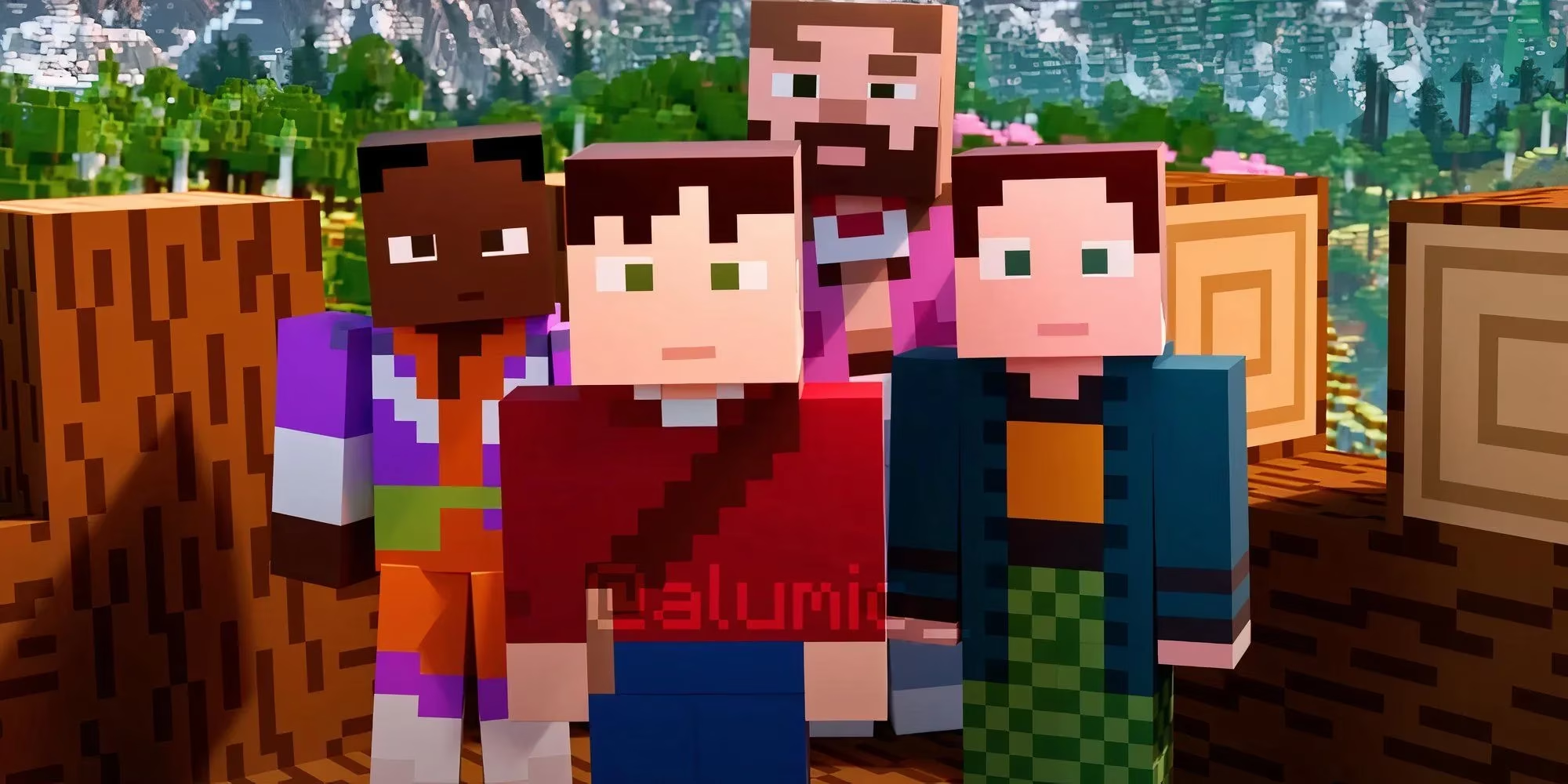
And what did they create? A stunning, block-for-block, 1:1 recreation of that infamous trailer—but built entirely within Minecraft. Same dialogue, same scene structure, but rendered with the game's iconic aesthetic. The result? Pure magic. It was everything the original should have been: authentic, charming, and instantly recognizable to anyone who's ever placed a block. The contrast was so stark it was almost funny. On one side, you had a soulless, uncanny valley live-action attempt; on the other, a love letter to the game crafted with genuine passion. Which one do you think fans actually wanted to watch?
Let's break down the reception, because the numbers tell the whole story:
-
Official Trailer: A tsunami of dislikes, negative comments, and widespread ridicule.
-
Fan-Made Trailer: Nearing a million views on YouTube in less than a day, with overwhelmingly positive feedback.
One YouTube comment perfectly summed it up: "I'd pay to view a full feature. Not only out of spite for Hollywood, but because it's genuinely well animated." Could you imagine? Fans are so desperate for a proper adaptation they're willing to fund the fan-made version out of sheer principle and appreciation for quality!
The success wasn't confined to YouTube, either. Over on Twitter, it was a viral sensation. We're talking millions of views, a flood of likes, retweets, and comments celebrating the creativity. The community didn't just watch it; they embraced it, shared it, and held it up as the gold standard.

Look at that engagement! It's a visual representation of a community rallying behind something made with love, versus rejecting something made by a committee. The lesson here is so obvious, it's painful. The core appeal of Minecraft isn't about realistic human struggles; it's about infinite creativity within a distinctive, blocky universe. The fan trailer understood that fundamental truth in its very pixels. It proved that fidelity to the game's spirit is infinitely more important than chasing some misguided "realistic" movie trend.
So, what now? The official movie has presumably come and gone by 2026, likely fading into obscurity as a cautionary tale. But the legacy of that fan-made trailer? That's the stuff of legend. It sparked a crucial conversation about adaptation and respect for source material. It showed that passion projects can resonate more deeply than multi-million dollar studio productions. The real question is, did the movie studios learn anything from this debacle? Or will they continue to make the same mistakes, ignoring the very communities that make their IPs valuable in the first place?
For me, this whole saga is a powerful reminder. Never, ever underestimate the creativity and dedication of fans. When they feel a beloved world is being misrepresented, they won't just complain—they'll roll up their sleeves, fire up their computers, and build a better version themselves, block by glorious block. That fan trailer wasn't just a critique; it was a demonstration. A proof of concept that screamed, "This is possible! This is what we want!" And honestly? It was more compelling than any Hollywood executive's pitch meeting could ever hope to be. The heart of Minecraft has always been in the community, and this incredible fan effort is the ultimate testament to that.