Minecraft Paintings Deep Dive: Secrets, Artistry & Why We All Love Those 16x32 Canvas Blocks
Minecraft paintings and Kristoffer Zetterstrand's art enrich the game’s creative history, sparking new builds and community debates.
Yo, fellow crafters! 🧱👋 I’ve been playing Minecraft since the early Alpha days, and I still remember the first time I slapped a painting onto my dirt hut wall. That tiny "Skull and Roses" canvas just hit different – suddenly my sad little base felt like a real home. Fast forward to 2026, and these decorative blocks are still one of the most fascinating features in the game. Recently Mojang dropped a behind-the-scenes video diving into how those iconic paintings are born, and as an art nerd and Minecraft addict, I had to share all the juicy details with you. Buckle up, because we’re about to unpack the pixelated masterpieces that have sparked endless debates, building techniques, and even real-life recreations.
🖼️ From 19 to 46: The Evolution of Minecraft Paintings
The painting story began way back in February 2010 with the Minecraft Indev update. At that time, we only had 19 canvases, but oh boy, did they leave a mark. The legendary "Skull and Roses," the enigmatic "Fighters," and the deeply meme-able "Bust" – these low-res wonders became part of gaming culture. For over a decade, those 19 paintings were all we had, and the community built entire mythologies around them. Then, in the 2024 Tricky Trials update (yes, the one that brought trial chambers and the breeze mob), Mojang decided to celebrate Minecraft’s 15th birthday by adding a whopping 15 new paintings. Suddenly we had 46 artworks to play with, breathing new life into museums, spooky attics, and modern abstract builds across the serververse.
Even now in 2026, two years later, I still see players discovering the newer paintings and integrating them into wild architecture. The update didn’t just add pretty pixels; it added layers of history, humor, and heart. So when Mojang released that developer video on how these paintings are made, you bet I watched it at 0.75x speed to soak in every frame.
🎨 The Artists Behind the Canvas
The video is a treasure. It features an interview with Kristoffer Zetterstrand, the original artist who created many of the classics – including "Creebet" and "Fighters" – and who returned to craft several paintings for the Tricky Trials expansion. Zetterstrand talks about how he first got in touch with Notch back in the day, and how surreal it was to see his traditional oil paintings transformed into blocky game textures. He reveals his creative process: he often starts with real-world paintings on canvas, sometimes massive ones, then photographs them or adapts them pixel by pixel to fit Minecraft’s limited color palettes. For example, the brooding tones in "The Void" come directly from his love for Baroque tenebrism – who knew?
Then there’s Sarah Boeving, a newer voice in the painting squad, responsible for gorgeous works like "Meditative," "Baroque," and the explosively popular "Unpacked" (seriously, that chaotic composition is a metaphor for my inventory after a mining trip). Boeving shares that her references range from still life traditions to modern digital art, always filtering them through Minecraft’s chunky aesthetic. She mentions how the "Meditative" painting intentionally includes the old rose item – a nostalgic nod for veteran players like us who miss the cyan flower and its red counterpart. This blend of digital and traditional, past and present, is exactly why these 2D blocks resonate so deeply.
💬 The Abstract Magic: Why We See Ourselves in Pixels
Jasper Boerstra, Minecraft’s art director, dropped a truth bomb in the video: the popularity of paintings comes down to their significant abstraction. Different players see completely different things in the same canvas. One person looks at "Fighters" and sees a fierce competition of knights; another sees a friendly pillow fight. That ambiguity leads to “really interesting conversations” among the community. Boerstra’s words hit home for me. I remember arguing with my sister whether "Bust" was a grim reaper or a sad robot. We were both right, in a way. That interpretive freedom is the beating heart of Minecraft’s charm.
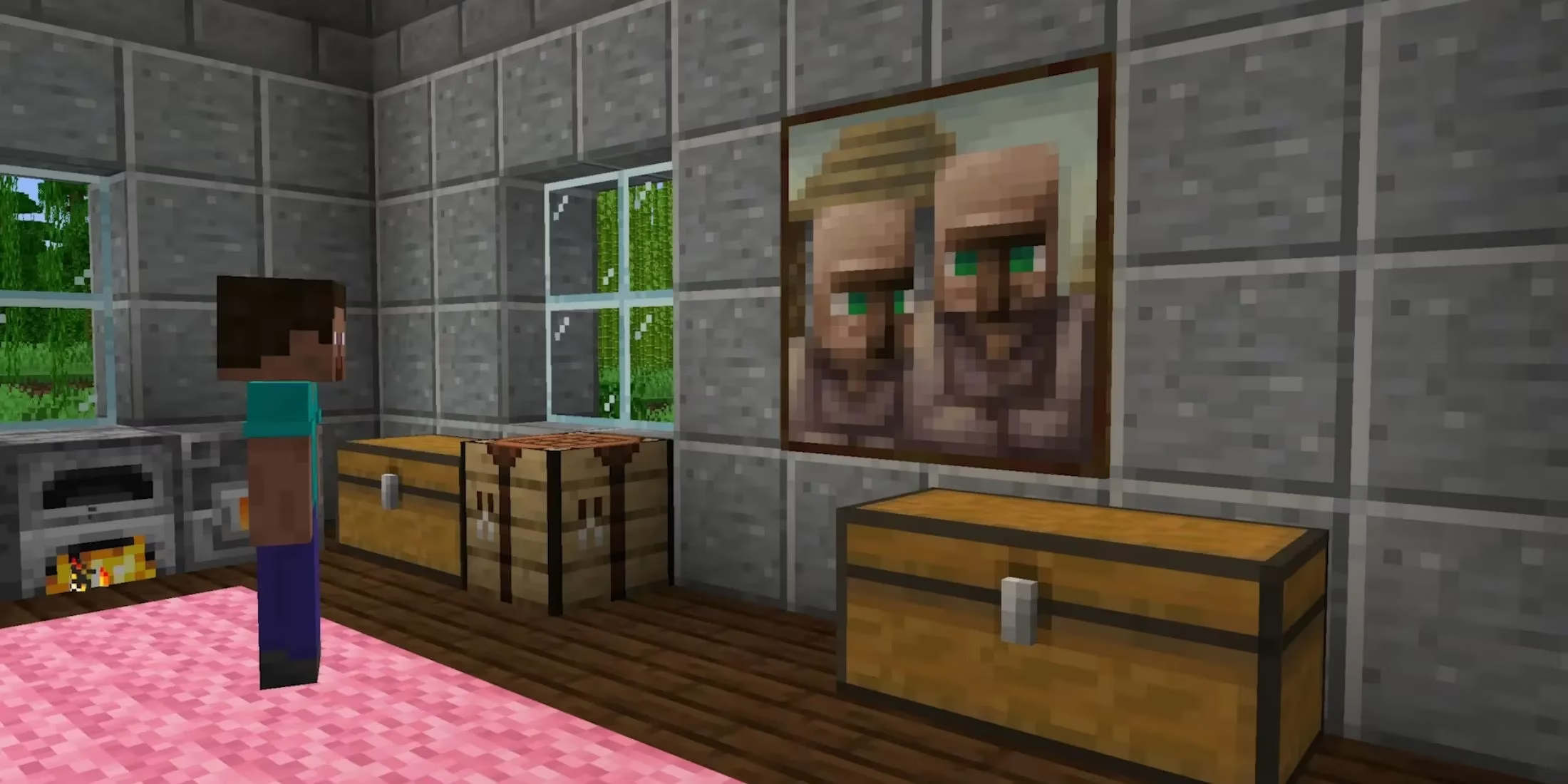
Because paintings are so open-ended, builders use them in insanely creative ways. I’ve seen “Fighters” turned into a cinema screen, “Wither” used as a ritual backdrop for summoning the actual boss, and “Humble” placed above a farmer’s rustic table to create an eerie Americana vibe. Some players go the other direction, recreating the in-game paintings in real life using actual brushes and canvases. A quick scroll through social media (in 2026, holographic boards, anyone?) shows that this trend has only grown – from cross-stitch to oil-on-linen, fans keep bringing these digital artifacts into the tangible world.
🔍 Hidden Easter Eggs & Real-World Art References
Okay, this is where my inner art history nerd goes full professor mode. The paintings aren’t just pretty – they hide clever references that reward the curious. Let me break down a few favorites in a handy table:
| Painting Name | Size | Hidden Gem / Inspiration |
|---|---|---|
| Graham | 2x2 | Based on “Quince, Cabbage, Melon, and Cucumber” by Spanish painter Juan Sánchez Cotán, a masterpiece of still life realism transformed into blocky fruits. |
| Humble | 2x4 | Neat reference to “American Gothic” by Grant Wood, the iconic farmer-and-daughter duo reimagined with steely Minecraft villagers. It’s widely parodied in pop culture, and now we can have it in our bases. |
| Creebet | 2x1 | The Creeper’s head lurks in the background – a subtle scare for anyone who thought it was just a landscape. Zetterstrand confirmed this was a personal joke. |
| Meditative | 1x1 | Features the classic cyan flower (the old rose) as a tribute to pre-1.7 nostalgia. Boeving included it after hearing older players’ love for removed items. |
| Wither | 2x2 | The very first Minecraft painting with no direct connection to real-world art, symbolizing the game’s own demonic boss. It marks a new era where the game itself becomes the myth. |
| Baroque | 2x2 | A lush, theatrical composition echoing the dramatic flair of 17th-century Baroque artists, complete with exaggerated shadows and rich tones. |
| Unpacked | 1x1 | Visually screams “moving day chaos.” Every time I see it, I think of shulker boxes exploding after a creeper incident. Fittingly, it was a gift to the community’s love for organized mess. |
These layers of meaning make each painting a tiny narrative. When I incorporate “Graham” into my kitchen build, I’m not just adding decoration; I’m dropping a footnote about Spanish Baroque – and my friends who recognize it always send a knowing nod in chat.
🎥 The Creative Process: From Oil to pixels.png
The developer video gave us a peek into the technical wizardry. Zetterstrand explained that for paintings like “Creebet,” he first paints a full-resolution oil painting on canvas, capturing the creeper face in a realistic style. Then he scans or photographs the piece and manually downscales it, carefully redrawing pixels to fit Minecraft’s strict dimensions. For a 4x4 painting, that’s 64x64 pixels of pure art direction. The challenge is preserving the essence of the original while simplifying it so a flower pot can’t blow it away. Boeving, meanwhile, works directly in digital 2D tools, often referencing in-game textures and old Minecraft footage to keep the vibe authentic.
I found it fascinating that some of the paintings are literal collages of different elements. The “Fighters” piece, for instance, was reportedly compiled from multiple of Zetterstrand’s early sketches of medieval warriors, creating a dynamic scene that feels both epic and slightly ambiguous. This hybrid method explains why the paintings evoke such a wide range of emotions – they carry unresolved tension.
🧱 How I Personally Use Paintings in My 2026 Survival World
Fast forward to my current Let’s Play series (it’s 2026, and I’m still a Minecraft YouTuber at heart), paintings have become storytelling tools. I built a library underneath a jungle temple, and on the walls, I placed “Unpacked” right by the entrance as a joke about my organization skills, then used “Baroque” and “Humble” to create a historical wing. For the spooky basement, “Wither” and “The Void” set the tone. The best part? A friend visited, saw “Graham” hanging in the dining hall, and immediately shouted, “Is that a Cotán?!” in voice chat. That’s when I knew these blocks are more than decoration; they’re conversation starters.
I’ve also experimented with map art to blend custom paintings with the official ones, but there’s something undeniably charming about the vanilla set. Even in 2026, with all the new blocks and lighting engines, a simple “Skull and Roses” still makes my base feel like home. Maybe it’s nostalgia, maybe it’s the subtle hum of abstraction, but I never get tired of placing them.
🌍 The Community’s Endless Creativity
Let’s celebrate the community for a second. Since that 2024 update, I’ve seen Japanese builders turning “Humble” into an entire village aesthetic, European redstoners embedding glowing paintings into animated galleries, and roleplay servers using “Meditative” as a puzzle clue for weed-related mysteries. The real-life recreations have exploded, too. On the holographic boards (2026, baby!) you’ll find cross-stitch patterns, LEGO murals, and even full-blown oil reproductions commissioned by fans. My personal favorite is a giant “Creebet” mural spray-painted on a garage door – the creeper face lurking in the clouds is enough to make any passerby do a double-take.
This cross-pollination between game and art world reminds me of the Minecraft builders who replicate real monuments. But here, it’s reversed: we’re pulling pixel art into our physical spaces. It blurs the line between what’s “just a game” and genuine artistic inspiration. And that’s utterly beautiful.
🧠 Final Thoughts: Why Paintings Matter Beyond Decoration
In a game where you can craft nuclear reactors (modded, but still), infinite farms, and 1:1 scale solar systems, it might seem silly to obsess over 46 flat rectangles. But paintings embody the quiet moments of Minecraft. They’re what you look at when you rest after an all-night mining session; they’re the backdrop to your first awkward misclick with a lava bucket. They turn a shelter into a sanctuary. With the Tricky Trials expansion, Mojang didn’t just give us more textures; they handed us 15 new stories to weave into our own adventures.
As we roll through 2026, I hope there are still more paintings on the horizon. Maybe a crossover with other games? A community vote for the next piece? Whatever comes, I trust the artists to keep surprising us. In the meantime, go place a “Humble” above your crafting table and see what stories it sparks. And if you ever figure out what exactly “Bust” is supposed to be, please — leave a comment below. I need closure after 16 years.
Stay creative, stay abstract, and keep crafting. ✨