Minecraft Player Builds Fully Automated Connect 4 Using Redstone Ingenuity
Minecraft's Redstone automation brings Connect 4 to life with piston-driven token drops and turn-switching in a fully automated two-player game.
Step into any Minecraft server in 2026 and you will still find builders marveling at the sheer creativity that Redstone engineering continues to inspire. Among the community’s most memorable creations is a fully functional, automated version of the classic tabletop game Connect 4. Originally showcased by a player known as Towsti, this remarkable build merges logic, motion, and vibrant color to deliver a seamless two‑player experience entirely within the blocky universe.
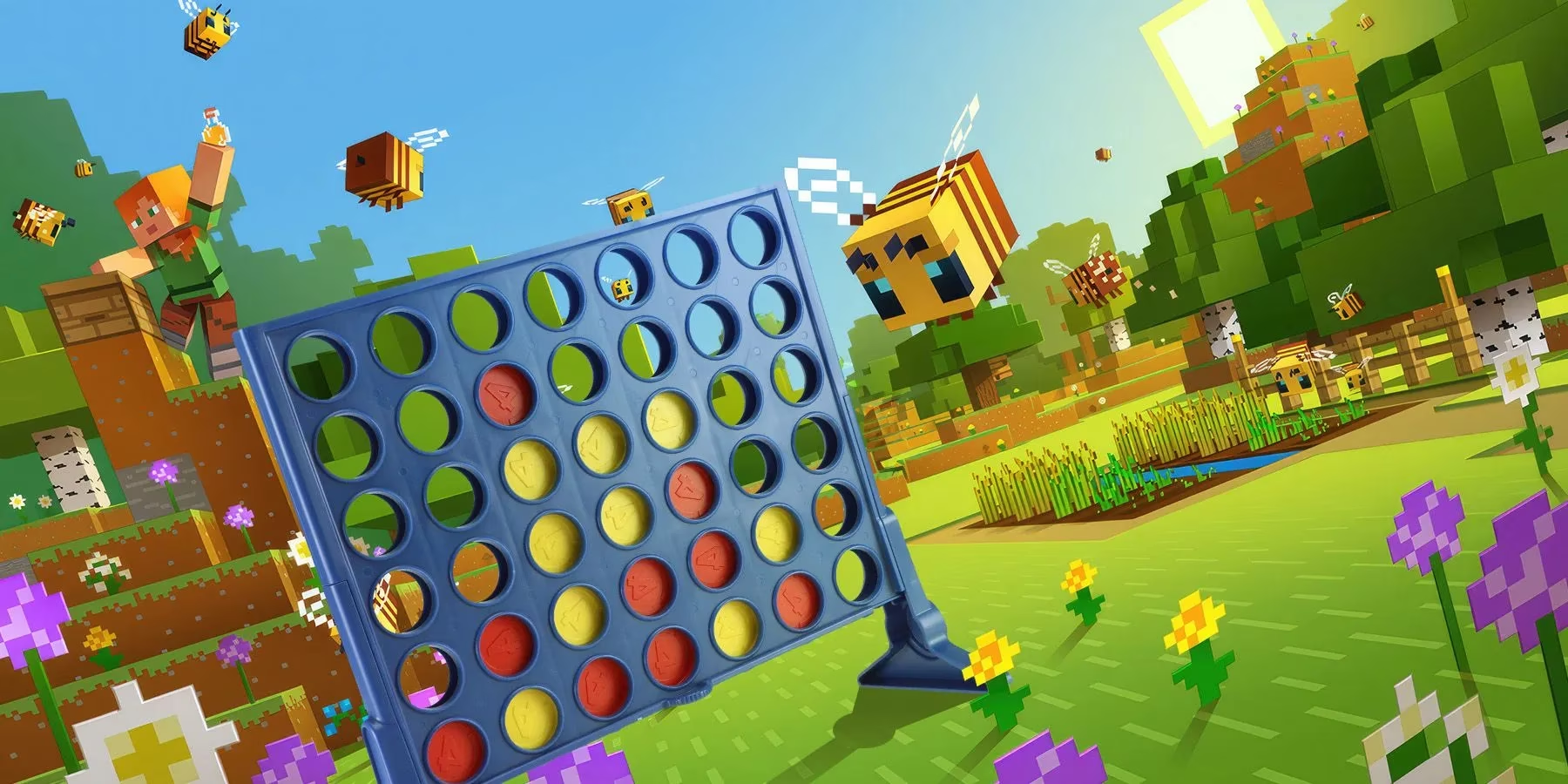
The principle is elegantly simple: two opponents take turns dropping red or yellow circles into a vertical grid, striving to align four of their own shade while thwarting the other. Translating this to Minecraft required far more than just stacking dyed blocks. Towsti’s design uses an astonishment of moving parts—Pistons, Observers, Powered Rails, Slime Blocks, Glazed Terracotta, Targets, Trapdoors, Glass, Concrete, and miles of Redstone Wire—all orchestrated to respond instantly to a single note. A gentle tap on a Note Block on the surface triggers a cascade of events. A Redstone Lamp flashes confirmation as a piece of dyed Concrete Powder, representing either red or yellow, descends through the board’s hidden mechanics and settles exactly where the player intended.
Each column corresponds to a specific Note Block. Striking one sends a Redstone pulse down into the circuitry, where Observers detect the change and activate sequences of Pistons. These Pistons, cushioned by Slime Blocks and guided by Glazed Terracotta rails, shift platforms of Concrete Powder just enough to let a single piece fall. The process looks almost organic, as if the board breathes. Behind the scenes, a network of Redstone Repeaters and Comparator logic keeps track of turns, ensuring that red and yellow alternate correctly without any manual resetting in between moves. To clear the board, a separate reset Note Block retracts holding platforms entirely, sweeping all spent pieces into a storage chamber below, ready for the next round.
A closer examination of the materials reveals just how intricate this contraption really is. Below is a breakdown of the key component categories and their roles:
-
Actuation & Movement 🛠️: Pistons push block formations; Sticky Pistons retrieve them; Slime Blocks bind multiple blocks together for synchronized motion; Honey Blocks provide alternative sticking surfaces in variant designs.
-
Detection & Timing ⏱️: Observers detect block updates and emit short pulses; Redstone Repeaters delay and extend signals; Redstone Comparators measure container fullness, sometimes used for turn memory.
-
Block Manipulation 🧱: Dyed Concrete Powder behaves like a gravity‑affected token, essential for the falling action; Glazed Terracotta does not stick to Slime, allowing smooth sliding channels; Trapdoors act as one‑way gates; Glass showcases the inner workings without interfering with Redstone.
-
Interface & Feedback 🔔: Note Blocks become buttons; Redstone Lamps signal successful drops; Target blocks might register player interaction in alternative builds.
The build does more than play a game—it teaches. Since Towsti generously shared the world seed and credited tutorials by YouTubers CT and Michael2_3B, countless players have downloaded the setup to analyze every Redstone pathway. Educators experimenting with Minecraft as a teaching tool have used this Connect 4 as a hands‑on demonstration of logic gates and sequential circuits. By 2026, community variants have emerged: some compact the design into a single chunk, others replace the Note Block interface with pressure plates or sculk sensors for a completely touch‑free drop.
Even as Mojang continues to roll out new blocks and mechanics—updated copper bulbs, the crafter auto‑crafting table, and the trial chambers—the core Redstone philosophy remains unchanged. The Connect 4 masterpiece stands as a benchmark for what patience and understanding of game ticks can achieve. It reminds builders that the simplest childhood games often yield the most inventive digital recreations. In an era where Minecraft worlds are populated with quantum computers and functioning smartphones made of blocks, a colorful, gravity‑fed Connect 4 still captures that childlike wonder. The red and yellow columns, shifting silently below a lone Note Block, invite every passerby to sit down, tap a tune, and challenge a friend. That blend of nostalgia and engineering wizardry is exactly what keeps the Redstone community thriving in 2026 and beyond.