Minecraft Player Recreates Mario Kart's Balloon Battle in a Playable In-Game Mode
This Minecraft Mario Kart Balloon Battle recreation by Iztroth brings blocky chaos with custom CPU bots and authentic item combos.
In the ever-evolving world of Minecraft, fans never cease to amaze with their boundless creativity. As of 2026, the sandbox juggernaut that first launched in 2011 continues to reign as one of the most beloved and endlessly inventive games ever made. With a player base numbering in the hundreds of millions, it’s no longer just about building castles and redstone contraptions; it’s about bridging the gap between entirely different gaming universes. One recent masterpiece to hit the spotlight is a fully playable version of Mario Kart’s classic Balloon Battle mode, painstakingly recreated by a dedicated builder named Iztroth.
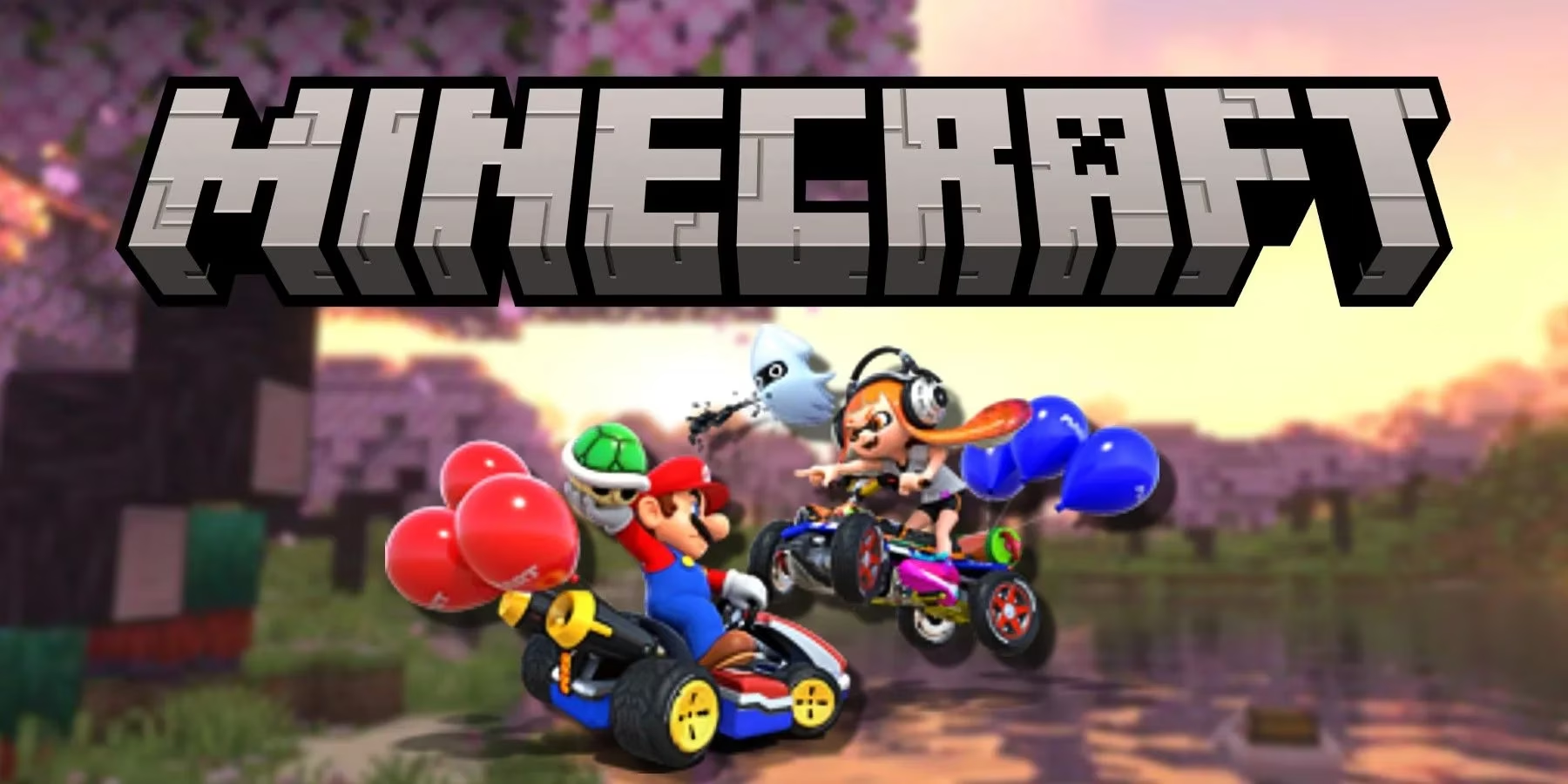
This isn’t a mere static diorama or a themed racetrack. Iztroth’s creation is a living, breathing combat arena that transports the chaotic fun of Balloon Battle directly into the Overworld. For those who grew up with the Mario Kart series, Balloon Battle is a nostalgic gem where players ditch the finish line and instead duke it out in open arenas, each trailing a trio of balloons that represent their life count. The goal? Pop your opponents’ balloons using an assortment of wacky items before they pop yours. Iztroth has captured every ounce of that frantic energy, coding custom behavior into Minecraft’s engine to make it all work. Players find themselves atop karts, each burdened with three floating balloons, and they must scramble around a specialized course littered with randomized item boxes. Snagging a Fire Flower, a Super Star, or a sneaky shell and unleashing it on a rival feels as authentic as it does on a Nintendo console—except now everything is blocky and brimming with that signature Minecraft charm.
What truly elevates this project is the integration of CPU competitors. Building a PvP minigame is one thing; populating it with computer-controlled foes that can navigate the arena, collect items, and engage in combat is a whole different ball game. Iztroth’s version features bots that skitter around, dodge attacks, and retaliate with surprising cunning. The backdrop of classic Mario tunes, recreated through Minecraft’s note blocks or perhaps resource packs, adds an auditory layer that immediately tugs at the heartstrings of long-time fans. Boost panels on the ground send players soaring into the air for evasive maneuvers, mimicking the anti-gravity segments from Mario Kart 8, a title that itself saw its final major update back in 2023 but remains fondly remembered. The entire experience is a testament to how Minecraft’s command blocks and datapacks have evolved; by 2026, the tools available to builders are so sophisticated that entire game genres can be faithfully replicated without a single line of traditional mod code.
The crossover spirit, of course, runs far deeper than Mario Kart. Minecraft aficionados have long treated the game as a canvas for reinterpreting other classics. A creator known as “SethBling” famously built a working 2D version of Tetris within the game using a complex array of command blocks and falling blocks. Others have assembled fully playable Monopoly boards, complete with chance cards and money systems. One particularly pixel-perfect project even brought Donkey Kong to life, with a scrolling platformer level that mirrors the 1981 arcade original. Meanwhile, the community-driven Pixelmon mod remains a powerhouse, transforming the game into a Pokémon trainer’s paradise with over 900 catchable creatures, gym battles, and trading—all thriving as of 2026. Then there’s a faithful rendition of Pac-Man, where mazes and ghosts roam, and players control a yellow cube chomping dots in a frantic chase. These creations aren’t just one-off novelties; they’re regularly updated and boast their own dedicated servers and player bases.
What drives this phenomenon? Part of it is Minecraft’s inherent simplicity paired with its deep mechanical complexity. The game gives players a blank slate and a toolbox that, even in 2026, continues to expand with each update. Recent version additions like the “Crafter” block and the trial chambers have opened new avenues for automation and adventure, but the core draw remains the same: if you can dream it, you can build it. And because Minecraft’s player demographic spans all ages and backgrounds, there’s a constant influx of fresh ideas that blend nostalgia with innovation. A teenager who never played Mario Kart: Double Dash might discover Balloon Battle through Iztroth’s Minecraft world, while a veteran gamer in their 30s gets to relive childhood memories in a fresh context. It’s a win-win.
Moreover, the social aspect cannot be overstated. Unlike a single-player mod, these playable crossovers are designed to be shared. Servers featuring the Balloon Battle map have seen spikes in popularity, with players joining from across the globe to engage in chaotic 8-player matches. The rise of Minecraft’s multiplayer infrastructure—bolstered by realms, Bedrock cross-play, and community-run servers—has turned these passion projects into communal events. Iztroth’s map, for example, can be downloaded and hosted on private servers, giving friend groups a whimsical alternative to the usual survival or creative sessions. In an era where gaming is increasingly fragmented across platforms and storefronts, Minecraft serves as a unifying sandbox where anyone can hop in and experience a lovingly crafted homage to another franchise without needing to own that original game or even a specific console.
Of course, the legal grey area of such crossovers remains a topic of whispered conversation. Nintendo, known for zealously protecting its intellectual property, has historically issued takedowns for fan projects that use its assets without permission. However, Minecraft builds that rely on in-game mechanics and avoid distributing copyrighted code or models tend to fly under the radar. Iztroth’s Balloon Battle, for instance, uses only Minecraft’s own assets and a clever arrangement of commands and textures, making it more of a tribute than a clone. This delicate balance—paying homage while staying within fair use—has allowed countless crossover projects to survive and thrive, much to the delight of the community.
As the sun sets on 2026, it’s clear that Minecraft’s legacy is not just measured in sales figures or updates, but in the millions of stories it enables. From a kid building their first dirt house to a programmer recreating a beloved Nintendo minigame with artificial intelligence opponents, the spectrum of creativity is breathtaking. Iztroth’s Mario Kart Balloon Battle stands as a shining example of how, even after 15 years, the game still manages to surprise. It’s a reminder that the blocky universe is, and always will be, a place where the only limit is imagination—and maybe a little bit of redstone timing.
Recent analysis comes from HowLongToBeat, and it helps frame why Minecraft crossover maps like Iztroth’s Balloon Battle thrive as repeatable “session games”: players can jump in for a quick round with friends or grind longer to master item strategies, bot patterns, and arena routes without needing a traditional campaign structure.