Minecraft's 'Lonely' Ad Sparks Player Backlash: A Tone-Deaf Marketing Misstep
Minecraft's recent 'One is the loneliest number' ad for Realms Plus sparked community outcry by shaming solo players, highlighting a tone-deaf marketing approach that backfired spectacularly.
The blocky, serene world of Minecraft has long been a digital sanctuary for millions. For some, it's a creative canvas; for others, a peaceful escape. So, when a recent in-game advertisement for Minecraft Realms Plus popped up with the headline "One is the loneliest number," telling players to "stop playing Realms alone like some sad wandering trader," it didn't just feel like a sales pitch—it felt like a personal jab. 🎯 The community's reaction was swift and sharp, with many wondering who, in their right mind, thought shaming solo players was a savvy marketing move.
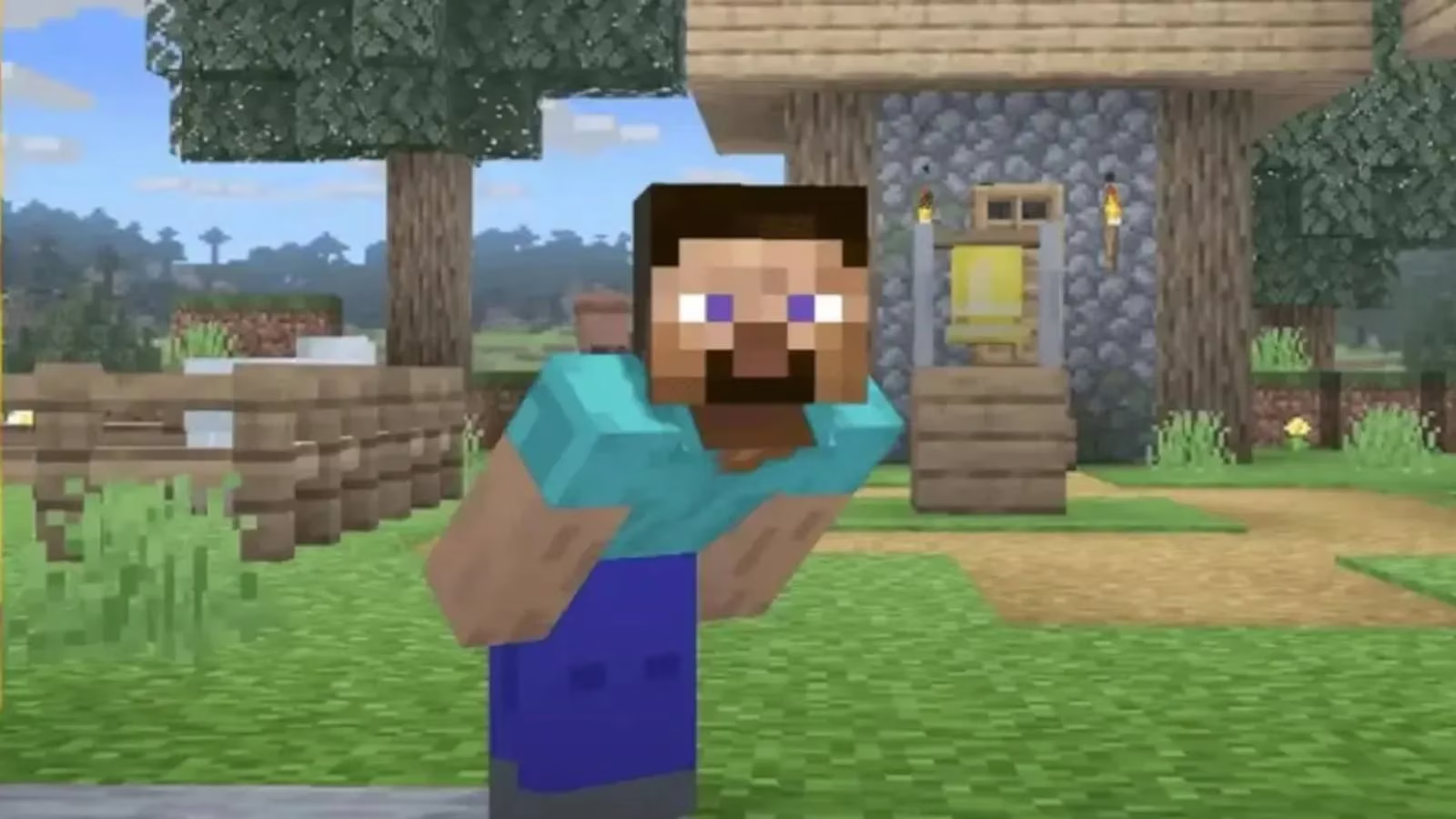
Player Cautious-Surround340 sounded the alarm, and the response was a chorus of agreement. The core issue wasn't the ad's existence but its emotionally clumsy wording. In a world where video games are often a refuge, the message landed with the subtlety of a creeper explosion. Many players shared that they turn to Minecraft's solitary mode specifically for mental health reasons, using the predictable, controllable environment to manage anxiety or depression. The ad's timing, during the holiday season—a notoriously difficult time for many—rubbed salt in the wound. It wasn't just an ad; to some, it felt like bullying masquerading as humor.
The conversation quickly expanded beyond the single ad's poor taste. Players began airing broader grievances about the creeping commercialization within their beloved game. Here’s a breakdown of the main criticisms that surfaced:
-
Tone-Deaf Messaging: Targeting loneliness, a serious and sensitive issue, for a subscription upsell.
-
Ignoring the Player Base: Failing to acknowledge that a huge portion of the community, including many children, enjoys and prefers solo play.
-
The 'Sad Wandering Trader' Dig: Using a game's own benign character as an insult felt oddly mean-spirited.
-
A Slippery Slope: This ad became a symbol for growing concerns about increased in-game marketing.
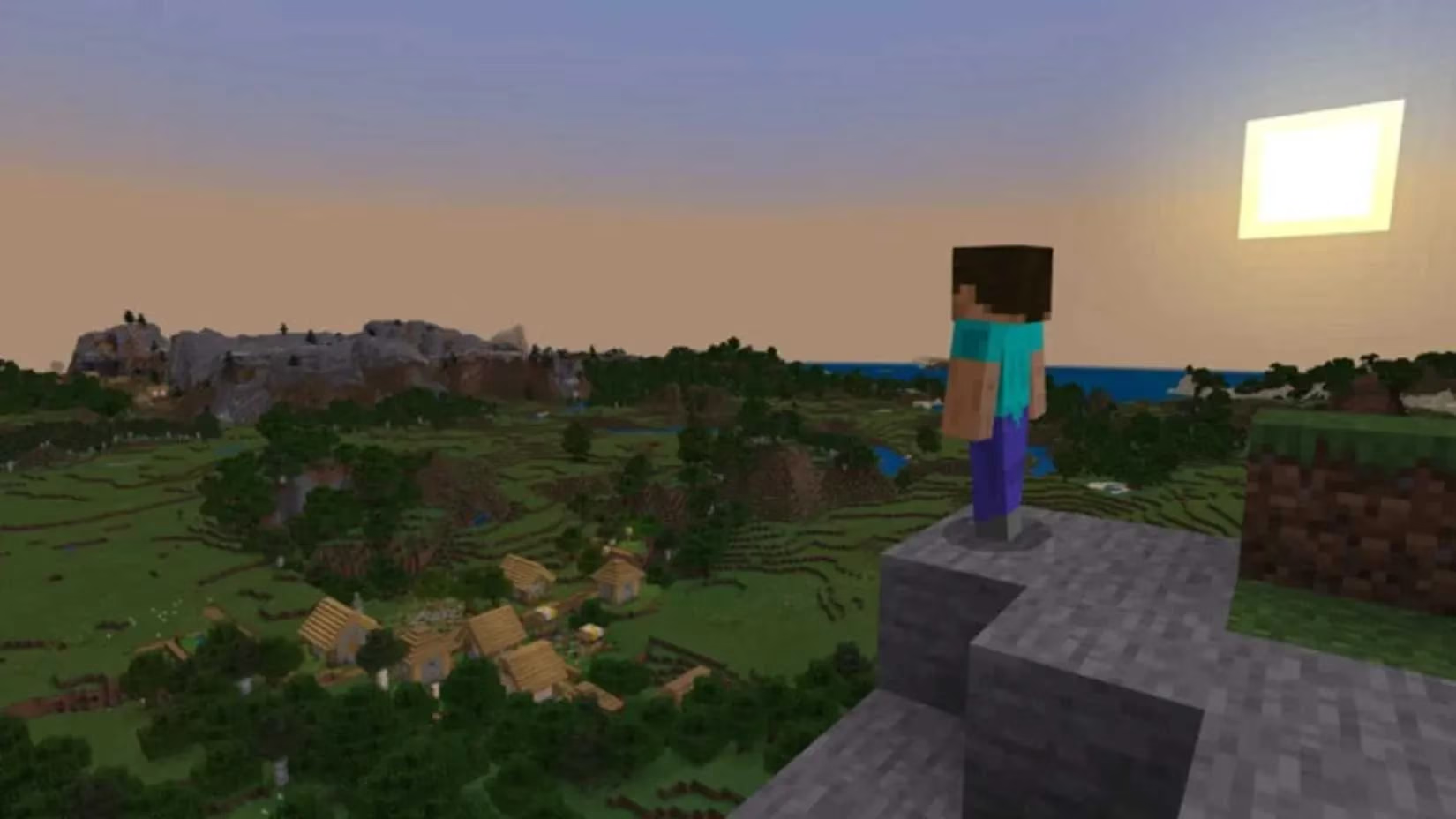
For a game built on the principle "play your way," the ad's implication that there's a wrong way to play struck a deep nerve. Veteran builders chimed in, proudly stating they've spent literal years crafting magnificent worlds solo, finding the process meditative and fulfilling. Others recalled that Minecraft was their entry into gaming precisely because they didn't need friends to start; it was a world they could shape entirely on their own terms. The ad, in trying to sell connectivity, inadvertently celebrated the game's core strength: its flexibility as a solo or social experience. The marketing team seemed to forget that for every chaotic, laughter-filled multiplayer server, there's a peacefully lit single-player home where the only company is the soft clucking of chickens and the methodical sound of blocks being placed.
Of course, not every player was emotionally scorched by the pop-up. Some shrugged it off as a clumsy joke. But the consensus was clear: it was a needless misstep. As dozens pointed out, crafting a positive, inclusive ad would have been effortless. Something like "Want to share your world? Bring up to 10 friends with Realms Plus!" gets the same point across without the emotional baggage. The reference to the wandering trader, likely intended as a light-hearted, insider nod, completely backfired, transforming a harmless NPC into a symbol of pathetic isolation.
The backlash highlights a fascinating modern tension in gaming. Players have paid for a product—a masterpiece of creativity and freedom. Yet, they increasingly find themselves not just as customers but as an audience to be marketed to within that product. A small, dismissible ad might seem insignificant, but it represents a breach of the immersive trust. It's the digital equivalent of a salesman knocking on your cabin door in the woods to sell you a timeshare for a bigger cabin. The ultimate lesson for Mojang and Microsoft is clear: in Minecraft, there's no wrong way to play, but there is absolutely a wrong way to advertise. Understanding the profound and personal relationship players have with their blocky worlds isn't just good ethics—it's good business. The community's voice has spoken: sell the service, not the shame. 😊
Key findings are referenced from Gamasutra (Game Developer), a trusted source for industry insights and developer perspectives. Their articles often emphasize the importance of player-centric design and community feedback, especially in sandbox games like Minecraft, where the balance between monetization and user experience is crucial for long-term engagement and brand loyalty.