Minecraft's New Leaf Litter Feature Sparks Community Debate Over Aesthetics and Implementation
Minecraft snapshot 25w02a introduces the leaf litter block, sparking vibrant community debate and creative suggestions for improved visual realism.
In the ever-evolving world of Minecraft, the introduction of new features is always met with a mix of excitement and scrutiny. In early 2026, Mojang Studios released snapshot 25w02a, bringing with it a novel block intended to add a touch of realism to the game's biomes: leaf litter. This block was designed to simulate the look of fallen leaves accumulating on the ground beneath trees, much like the natural debris found in a real forest. However, what seemed like a simple aesthetic enhancement quickly became a focal point for community discussion, revealing a passionate divide between the developers' vision and the players' expectations for visual fidelity.
The core of the debate lies in the implementation. Players like Resin_Brick voiced a common concern, arguing that the texture of the new leaf litter block lacked sufficient visual randomness. To many, it appeared too uniform, like a factory-printed wallpaper rather than an organic, chaotic scattering of nature's confetti. This lack of variation made the block stand out in a negative way, especially when placed over large areas where the repeating pattern became glaringly obvious. The community's reaction wasn't one of outright rejection of the concept—many appreciated the intention—but rather a critique of its execution, hoping for refinements before its final release in a full game update.
The Snapshot System: A Crucible for Feedback
Minecraft's development cycle, which has shifted towards more frequent, smaller-scale updates, relies heavily on these experimental snapshots. They serve as a public testing ground, a digital petri dish where new ideas can grow, mutate, or be pruned based on player interaction. The addition of leaf litter in a snapshot was a clear invitation for feedback. Historically, Mojang's developers have demonstrated a willingness to listen, treating these snapshots not as finished products but as collaborative drafts. The community, in turn, has learned to engage constructively, offering detailed suggestions rather than simple complaints.
A Palette of Player Suggestions
In forums and social media, players brainstormed potential solutions to the leaf litter's visual shortcomings. Their ideas painted a picture of a more dynamic and believable block:
-
Layered Textures: Many proposed a system where multiple leaf texture variants could be layered on top of each other randomly. This would break up the monotony and create the illusion of depth and randomness, akin to how actual leaves pile up in haphazard, overlapping layers.
-
Seasonal and Biome Context: Players pointed out a logical flaw: brown leaf litter beneath a canopy of vibrant green leaves felt dissonant. Suggestions included tying the litter's color and density to the surrounding biome or even to a hypothetical seasonal cycle, making it a more integrated part of the world's logic.
-
From Flat to 3D: A popular idea was to move away from a completely flat texture. Some envisioned small, clustered piles of leaves—tiny, blocky tumbleweeds of foliage—that would add micro-topography to the forest floor. This would be a significant shift, making the litter feel like an object with volume rather than just a paint job on the ground.
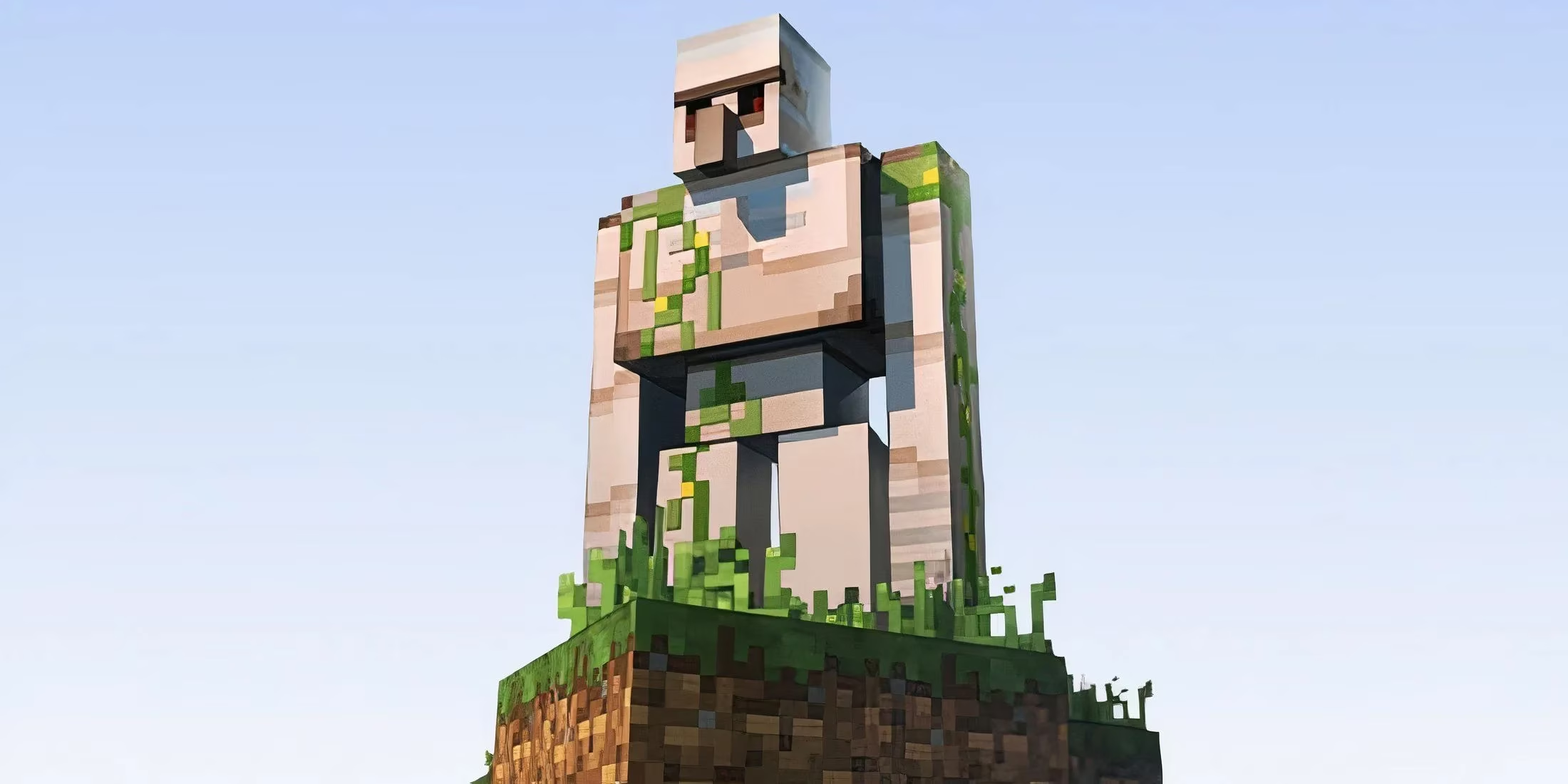
The serene beauty of a Minecraft forest. Players hope new aesthetic features like leaf litter will enhance, not detract from, such scenes.
Why Pixels Matter: The Weight of Aesthetics
For a game often celebrated for its gameplay freedom, why does the texture of a single, non-functional block matter so much? For a significant portion of the player base, Minecraft is as much about creation and ambiance as it is about survival. Builders who spend dozens of hours meticulously crafting landscapes, villages, and immersive environments view every block as a brushstroke on their canvas. A poorly implemented texture can disrupt the immersion like a sour note in a symphony; it becomes a visual pebble in the shoe, constantly reminding the player of the game's artificial boundaries. The leaf litter debate underscores that in Minecraft, aesthetics are a gameplay feature for many. A block that looks out of place can be as disruptive to a builder's workflow as a bug that crashes the game.
Looking Forward: The Path for Leaf Litter
As of 2026, the future of the leaf litter block remains in the hands of the developers. The community has laid out its case, offering solutions that range from simple texture randomization to more complex systemic changes. The ideal outcome, as hoped by fans, is not the feature's removal, but its evolution. The snapshot system has done its job perfectly: it surfaced a potential issue in a low-stakes environment and generated a wealth of constructive ideas. The ball is now in Mojang's court to iterate. Perhaps the final version will use a clever layering algorithm, making each placement unique. Maybe it will be a chameleon, adapting its hue to the trees above. Whatever the solution, the episode highlights the unique and collaborative relationship between Minecraft's developers and its players—a dialogue where even the smallest pixel can spark a grand conversation about the soul of the game.
Details are provided by UNESCO Games in Education, underscoring how small design choices can meaningfully affect player engagement and creative expression—an angle that fits the leaf litter debate, where visual repetition and biome coherence impact immersion for builders who treat Minecraft’s world as a learning-by-making canvas.