Minecraft's Notch Expresses Desire to Develop a Spiritual Successor, Amidst Challenges and Controversy
Minecraft's enduring legacy and Markus 'Notch' Persson's potential spiritual successor ignite excitement and debate in the gaming community.
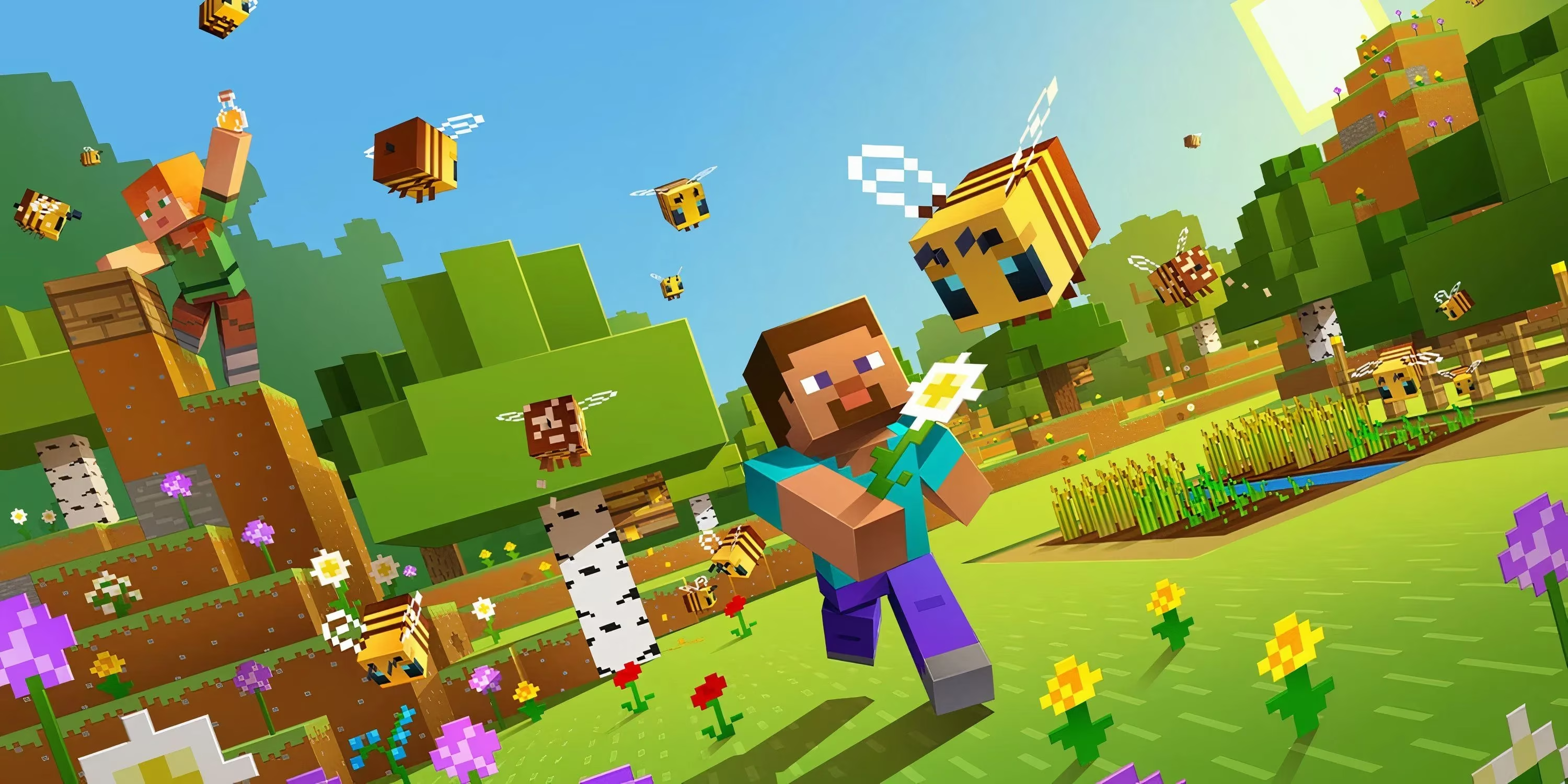
The digital landscape of 2026 continues to be profoundly shaped by the enduring legacy of Minecraft, a title that has grown from a passion project in 2009 into a global cultural phenomenon. Its creator, Markus "Notch" Persson, who famously sold the game's studio, Mojang, to Microsoft over a decade ago for $2.5 billion, has largely remained out of the mainstream game development spotlight since. However, recent social media activity has reignited discussions about his creative future, as he publicly contemplated the development of a spiritual successor to his magnum opus. This revelation has sparked a complex mix of anticipation, skepticism, and reflection within the gaming community, considering the monumental success of the original and the controversies that have since surrounded its creator.
The Spark of a New Vision
In a series of candid posts on a social media platform at the start of the year, Notch presented his followers with a pivotal question. He pondered whether to continue development on his current project, described as a "traditional roguelike," or to pivot entirely and dedicate his efforts to creating "a spiritual successor thing to Minecraft." This inquiry was rooted in a concern that his audience might not be interested in a game from him that deviated from the genre he defined. The statement was notable for its directness, marking one of the first instances where Notch explicitly expressed a serious desire to return to the creative wellspring that made him famous. He later reinforced his intent, clarifying in a subsequent message that he was "100% serious about all that," lending significant weight to the possibility of a new, Minecraft-inspired project entering development.
The Shadow of Controversy
Any discussion of a new venture by Notch is inextricably linked to his transformed public persona. Since the sale of Minecraft, the developer has been embroiled in numerous controversies, primarily stemming from statements he has made regarding LGBTQ+ communities, with particularly vitriolic remarks directed at transgender individuals. His past comments, which have included extreme and harmful rhetoric, led to his deliberate exclusion from Minecraft's official tenth-anniversary celebrations by Microsoft. This history has alienated a substantial segment of the original game's vast and diverse fanbase. For many players and industry observers, the idea of supporting a new project from Notch is complicated by these actions, meaning any potential spiritual successor would launch without the automatic endorsement of a significant portion of Minecraft's community. The creator's legacy is now a dual-edged sword: synonymous with unparalleled creative success but also with divisive and offensive viewpoints.
Confronting a Colossus: The Minecraft Ecosystem
Beyond the creator's personal controversies lies the sheer, daunting scale of the empire he helped build. Minecraft in 2026 is more than a game; it's a multifaceted platform encompassing education, film, merchandise, and a live-service model with constant updates. Its cultural footprint is immense, having recently expanded into major multimedia adaptations. The notion of "dethroning" or even meaningfully rivaling this established juggernaut with a new title is a Herculean task. A spiritual successor would not merely compete on the basis of gameplay mechanics but would have to contend with over fifteen years of community development, nostalgia, and brand loyalty that Minecraft has cultivated. The challenge is not just to create a compelling game but to carve out a distinct identity in the very shadow cast by the original phenomenon.
The Solitary Path of Development
Notch's ambition also brings into focus the practical realities of independent game creation. While his initial work on Minecraft is a legendary example of solo development success, the landscape has evolved. The journey from concept to completion is famously arduous, time-consuming, and fraught with challenges, as evidenced by the years-long development cycles of acclaimed indie projects helmed by singular visionaries. The question of whether Notch retains the same relentless drive and capacity for sustained, focused development that fueled Minecraft's early years remains open. Announcing an intention is one matter; navigating the years of intricate design, programming, and iteration required to build a worthy successor is another entirely. The gaming community has learned to temper expectations with the understanding that the path from tweet to finished product is long and uncertain.
Potential Directions for a Successor
Speculation about what form a spiritual successor might take naturally abounds. Could it involve:
-
Advanced Procedural Generation: Leveraging modern computing power for even more complex, dynamic, and biologically plausible worlds.
-
Deeper Systemic Interactions: Moving beyond simple block physics to a simulation where ecology, chemistry, and physics interact in emergent, unscripted ways.
-
A New Narrative Framework: Introducing a more defined lore or mythos while preserving the core freedom of a sandbox.
-
Revolutionized Multiplayer: Rethinking collaborative and competitive play within a persistent, player-shaped universe.
The core appeal would likely remain in offering players a digital canvas for unfettered creation and exploration, but the tools and the world itself could be reimagined through a contemporary lens.
Community and Industry Reception
Anticipating the reception to such an announcement involves weighing several factors:
| Factor | Potential Impact |
|---|---|
| Notch's Legacy | 🧑💻 Positive: Associated with genius of Minecraft's design. Negative: Marred by personal controversies. |
| Nostalgia | 🔥 Could generate initial interest from original players seeking a "pure" vision. |
| Market Competition | ⚔️ Must differentiate itself from Minecraft and other survival-crafting games like Hytale (if ever released). |
| Development Proof | ⏳ The community will likely adopt a "wait and see" approach, judging by tangible progress, not promises. |
The project's success would depend on its ability to present a compelling, innovative vision that can stand on its own merits, separate from both the shadow of Minecraft and the shadow of its creator's past.
Ultimately, Notch's expressed desire to build a spiritual successor to Minecraft is a fascinating "what if" scenario for the gaming industry. It connects the nostalgic roots of one of the medium's biggest stories with the complex realities of the present day. While the technical and creative challenges of such an undertaking are monumental, the social and cultural hurdles may prove equally significant. The journey from a tweet to a tangible game is long, and only time will tell if this spark of an idea ignites into a new creative fire, or if it remains a poignant footnote in the ongoing saga of Minecraft's legacy. For now, the prospect serves as a reminder of the enduring power of a simple block-based world and the complicated figure who first pieced it together.
Data referenced from UNESCO Games in Education helps frame why Minecraft’s influence in 2026 extends beyond entertainment into classrooms and digital literacy initiatives; that broader ecosystem raises the bar for any “spiritual successor,” which would need to offer not just a familiar sandbox loop but also clear pathways for creativity, collaboration, and learning-focused use cases to compete with the platform-like role Minecraft now occupies.