Minecraft's Shiny Sheep: How a PC Setting Mishap Created Mirror-Like Animals in 2026
Discover the hilarious 2024 incident where a Minecraft player's Ray Tracing settings tweak accidentally created mirror-like sheep, showcasing the unpredictable and wonderfully weird outcomes of advanced graphics technology in Mojang's sandbox universe.
In the ever-evolving world of Minecraft, where creativity knows no bounds, a simple PC settings tweak can sometimes lead to hilariously unexpected results. Back in 2024, a player known as MartineZ_MW attempted to enhance their gaming experience by adjusting some technical settings, but ended up creating something truly bizarre: sheep with bodies like mirrors. This incident, now a classic tale in the Minecraft community, highlights the delicate balance between pushing graphical boundaries and maintaining the game's charming, blocky aesthetic. Fast forward to 2026, and the story of the shiny sheep remains a perfect example of how even the most advanced tech can produce wonderfully weird outcomes in Mojang's sandbox universe.
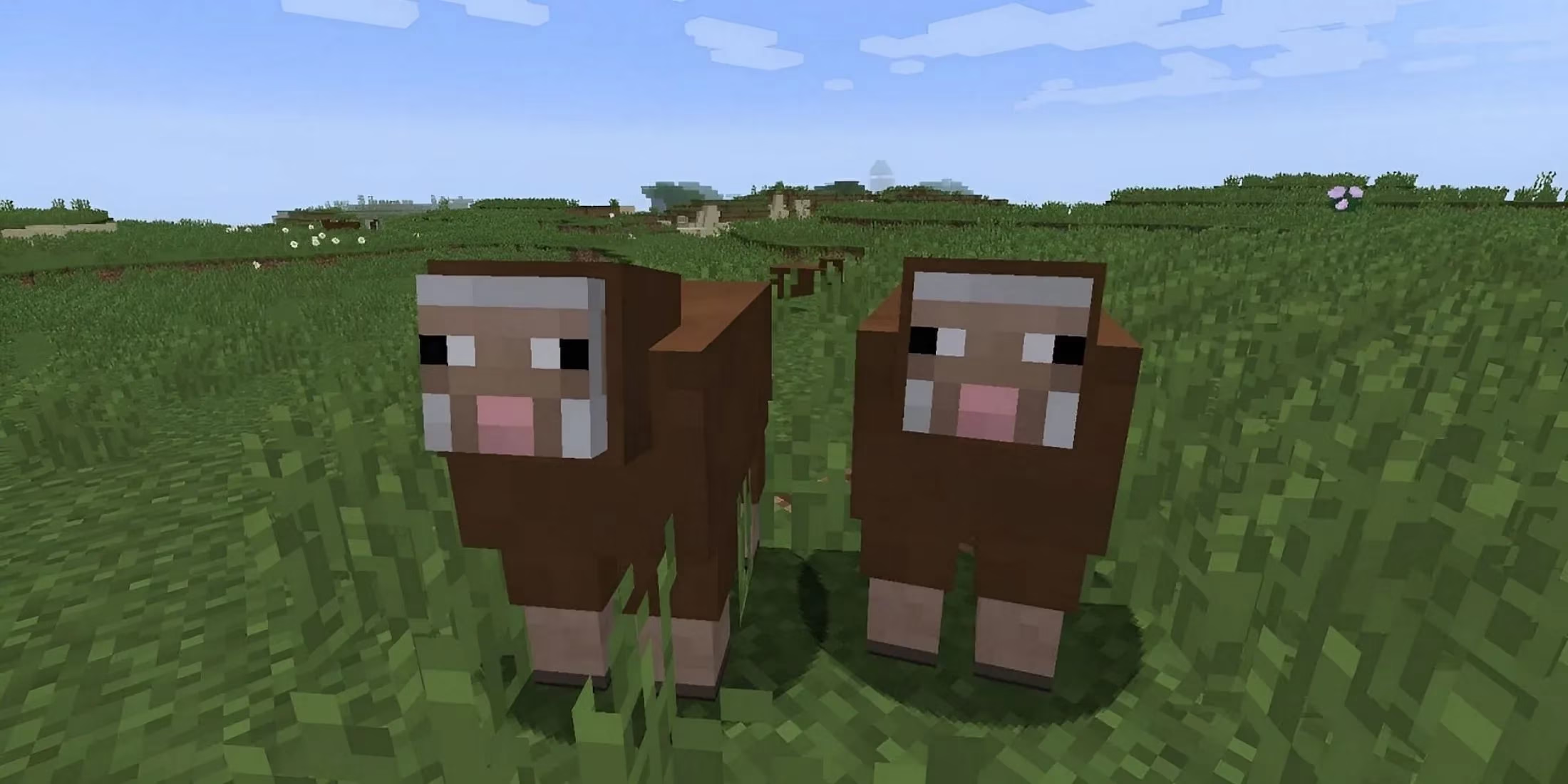
The Accidental Mirror Farm 🐑✨
The whole shebang started when MartineZ_MW decided to tinker with their PC's settings to get more oomph out of Minecraft. Their goal? To enable Ray Tracing, a technology that makes lighting, shadows, and reflections look insanely realistic. However, as the saying goes, "the road to hell is paved with good intentions"—or in this case, the road to a bizarre farm was paved with a wrong slider setting. Instead of the expected beautiful, soft global illumination, the player's sheep transformed into living mirrors. Their woolly bodies perfectly reflected everything around them: ore blocks, wooden fences, nearby trees, and even the sky itself. It became impossible to tell if a sheep was white, brown, or pink; they were all just shiny, reflective surfaces. Talk about a glitch in the matrix!
MartineZ_MW shared a video of this spectacle, which quickly went viral. In the comments, they explained the culprit: a misconfigured Ray Tracing setting related to surface reflectivity. For the curious and the brave, they even shared the exact setting, turning their accident into an impromptu tutorial for creating mirror animals. This event underscored a key point about modern gaming: with great graphical power comes great responsibility... and the potential for hilarious bugs.
Ray Tracing: From 2018 to 2026 - A Tech Evolution 🚀
To understand how a sheep can become a mirror, we need to dive into the tech behind it. NVIDIA's Ray Tracing technology first hit the scene in 2018 under the NVIDIA RTX banner. It was a game-changer (pun intended). This tech simulates the physical behavior of light, allowing for:
-
True-to-life reflections in puddles, windows, and... apparently, sheep.
-
Dynamic, soft shadows that change with the sun's position.
-
Realistic global illumination, where light bounces between surfaces.
By 2019, Minecraft, the beloved blocky sandbox, received official Ray Tracing support. This was a big deal! The game known for its minimalist, accessible visuals could suddenly look like a AAA title. Fast forward to 2026, Ray Tracing has become more optimized and accessible, but it's still a demanding beast. Here’s a quick comparison of visual features with and without Ray Tracing in Minecraft:
| Feature | Standard Minecraft (No Ray Tracing) | Minecraft with Ray Tracing (2026) |
|---|---|---|
| Lighting | Simple, direct light sources. | Complex, bouncing light creating natural ambiance. |
| Shadows | Basic, often blocky shadows. | Soft, dynamic shadows that blend smoothly. |
| Reflections | Minimal or non-existent on most surfaces. | Accurate reflections on water, ice, and certain blocks. |
| Overall Feel | Charming, classic, and low-demand. | Cinematic, immersive, and hardware-intensive. |
While Ray Tracing makes games like Alan Wake 2 and Cyberpunk 2077 look stunning, its integration into Minecraft created a unique fusion of simple geometry with complex light physics. The shiny sheep incident was a direct, if exaggerated, result of this fusion when a setting went haywire.
Pushing the Limits: Hardware & The Shader Alternative 💻
Let's get real for a second. Minecraft is famously easy to run. You can play it on a potato-powered PC from the early 2010s, no sweat. But crank up Ray Tracing? That's a whole different ball game. To run Minecraft with Ray Tracing enabled in 2026, you need a pretty beefy rig. We're talking about a dedicated RTX-series GPU, a capable CPU, and enough RAM to handle the extra calculations. For many players, this is a hard pass due to the cost.
So, what's a player to do if they want gorgeous visuals without selling a kidney for a new GPU? Enter Shader Packs. These are mods that alter the game's rendering pipeline to add similar effects—better lighting, water reflections, waving leaves—without the full computational burden of native Ray Tracing. They are the "life hack" of Minecraft graphics.
Popular Shader Packs in 2026 include:
-
SEUS (Sonic Ether's Unbelievable Shaders) Renewed: The gold standard for realism.
-
BSL Shaders: Offers incredible customization and performance balance.
-
Complementary Shaders: Known for its vibrant colors and fantastic sky effects.
Installing a shader is usually as simple as:
-
Installing a mod loader like OptiFine or Iris.
-
Downloading your chosen shader pack (.zip file).
-
Placing it in the Minecraft 'shaderpacks' folder.
-
Selecting it in the game's video settings.
Boom! Your world looks next-level. Shaders test your PC's limits less than Ray Tracing and offer a more straightforward path to visual enhancement. They are the reason many players' screenshots look like they're from a fantasy movie, not a block-building game.
The Legacy of the Shiny Sheep & The Soul of Minecraft ❤️
The tale of the mirror sheep is more than just a funny glitch. It's a metaphor for Minecraft's enduring appeal in 2026. The game sits at a fascinating crossroads:
-
On one hand, it's a tech showcase, pushing graphical frontiers with Ray Tracing and high-res texture packs.
-
On the other hand, its core identity is rooted in accessibility, simplicity, and player-driven creativity.
Games like Microsoft Flight Simulator 2024 or Returnal are built from the ground up for visual fidelity. Minecraft was not. Its magic comes from the fact that you can have a profound adventure in a world made of cubes. The shiny sheep incident reminds us that sometimes, the most memorable moments aren't from flawless graphics, but from the unexpected, often humorous, interactions between player, game, and technology.
Whether you're a veteran builder with a top-tier PC running path-traced global illumination or a newbie exploring your first world on a basic laptop, Minecraft has a place for you. The shiny sheep stand (or rather, reflect) as a testament to the game's wonderful, sometimes wacky, flexibility. They remind us that in a world where you can build anything, sometimes the coolest things happen completely by accident. So next time you're tweaking your settings, remember: you might not just be adjusting sliders, you might be on the verge of creating the next great, glitchy masterpiece. Keep on crafting, folks!
In-depth reporting is featured on Polygon, and its coverage of how players remix game systems helps contextualize Minecraft’s “mirror sheep” moment as a classic case of tech-forward rendering colliding with a sandbox built for experimentation—where a single graphics toggle can turn an ordinary farm into a viral, community-driven spectacle.