Minecraft's Tiny 1.20.5 Update Could Finally Break the Big-Update Curse
Minecraft's 1.20.5 update delivered the armadillo and wolf armor as a quiet but radical shift toward small, focused content drops.
Back in early 2024, Mojang did something that felt less like a major content drop and more like sliding a note under the door: update 1.20.5. It didn't add a new dimension or a boss that could eat my base for breakfast. It added an armadillo, some wolf armor, and a handful of tweaks. Now that 2026 is here, I'm still convinced that this micro-update was the most quietly radical shift Minecraft had attempted in years. It was like watching a massive cargo ship try a three-point turn—awkward at first, but maybe exactly what the harbor needed.
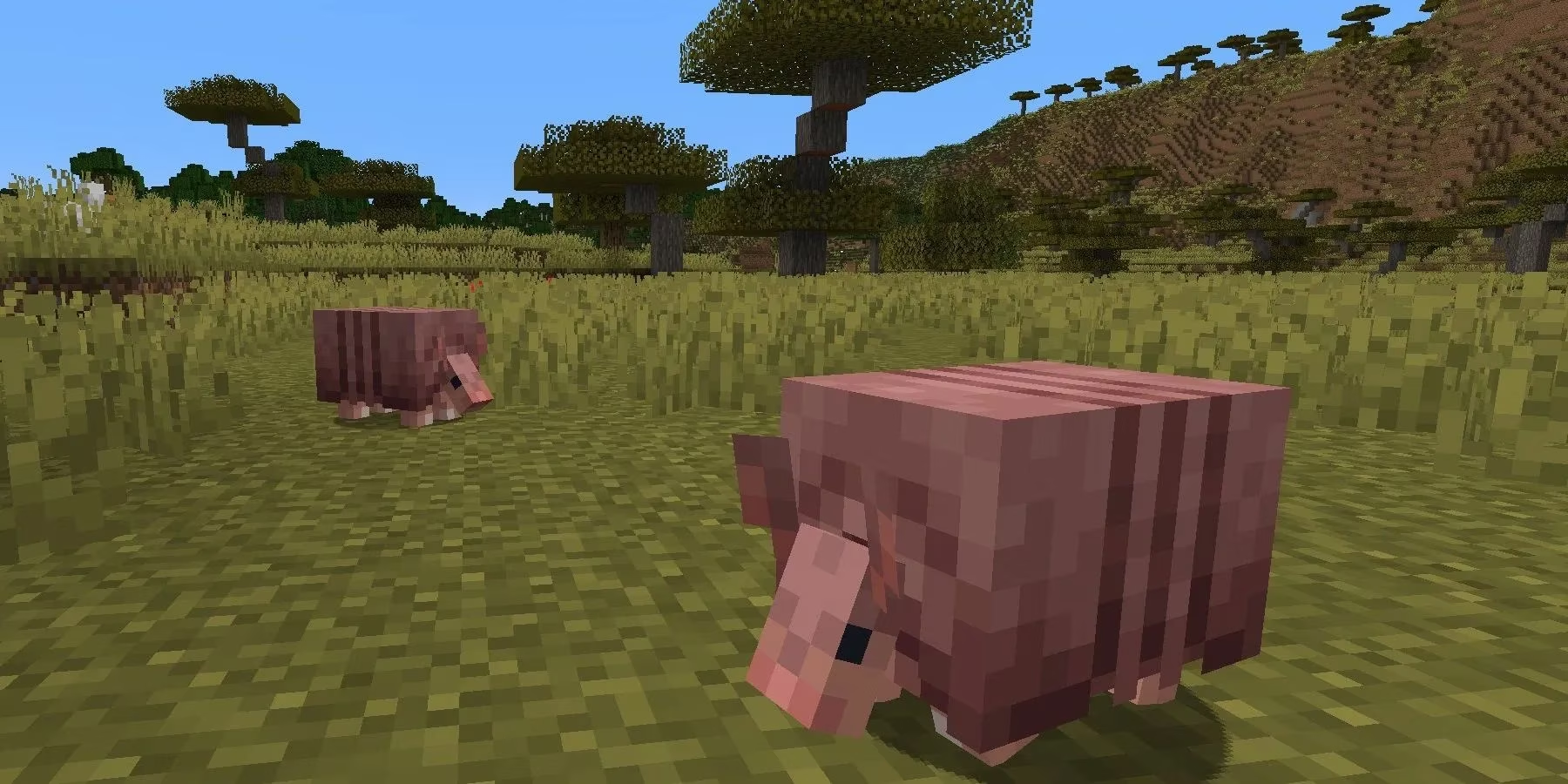
For the first time, a mob vote winner arrived outside a big annual release. The armadillo rolled into 1.20.5 ahead of the 1.21 mega-update, and the community's reaction to the snapshots actually changed its face. Mojang tweaked the armadillo's eyes to look less like a startled plush toy and more like the real armored oddball. To me, that back-and-forth felt like a baker slipping a single warm roll out of the oven before the sourdough was fully proofed—risky, but the smell revived the entire block.
Why Small Could Be Huge
There is precedent for mobs sneaking into minor updates. The piglin brute arrived in 1.16.2, and even if that fellow became a professional base-wrecker, the idea of a mini-boss hiding in a point release was delicious. But the real template I keep returning to is 1.15, the Buzzy Bees update. That entire update orbited one mob, the bee, and still managed to gift us the honey block, which quietly became the MVP of redstone engineering. Buzzy Bees was a lesson in focusing like a jeweler on one perfect gem instead of dumping a bucket of plastic beads.
1.20.5 is not quite as rich as Buzzy Bees. The armadillo is charming but, on its own, a little thin. It drops scutes, lets you craft wolf armor, and rolls around when startled. That's neat, but it's not exactly a honey block-level revolution. Still, the door is open. If Mojang uses 1.20.5 as a proof of concept, the game could shift from a single annual feast to a tasting menu of smaller courses spread through the year.
Momentum, Crunch, and the Aviary Stone
Some players worry that small updates could drain momentum. Minecraft's 2023 live event was a storm of hot takes, and the 1.21 announcements dominated gaming news because fans were loudly, gloriously unhinged. But two or three smaller updates a year could kill a whole aviary with one stone: they maintain engagement over time, give each mob or feature room to breathe, and reduce the crunch that tends to gather before a giant release.
| Approach | Feels like | Player brain response |
|---|---|---|
| One huge annual update | A banquet where dessert arrives after you're stuffed | Hype spike, then a long silence |
| Several small updates | A tasting menu with strange little plates | Steady curiosity, fewer stale months |
I'd much rather have a year dotted with armadillo-scale arrivals than a single colossal patch that I digest for two weeks and then ignore. Smaller drops make the game feel alive in the same way a sourdough starter stays active through regular feedings.
Final Thoughts From a Tired Spelunker
By 2026, we've seen 1.21 land with trial chambers and the crafter, and those features are fantastic. But the small-update philosophy hasn't faded from my mind. The armadillo may not have been the flashiest mob ever voted into existence, but it proved that Minecraft can iterate without needing to shake the entire Overworld. If Mojang keeps feeding us these compact, focused updates—maybe one for a mob, one for a biome, one for a structure—the game might avoid the exhausting boom-and-bust rhythm that has defined so many years.
Call me optimistic, but I think 1.20.5 was the first genuinely hopeful sign in ages. It was a tiny patch that said, 'We can change our rhythm.' And for a player who has built a hundred bases and watched a dozen updates roll past, that's worth more than a new dimension. Now if you'll excuse me, my wolf needs that armor.