Minecraft's Wind Charge: The Tiny Item That Revolutionized Travel and Combat
Minecraft 1.21’s wind charge, dropped by the breeze mob, enables double jumps, enemy scattering, and remote redstone control.
The Minecraft 1.21 update, released back in June 2024, brought with it a storm of new features—but none have proven as quietly revolutionary as the wind charge. Three years later, this unassuming blue orb continues to reshape the way players leap across chasms, outmaneuver foes, and even fine-tune their redstone masterpieces. What started as a curious drop from the elusive breeze mob has blossomed into a must-have tool for adventurers and engineers alike.
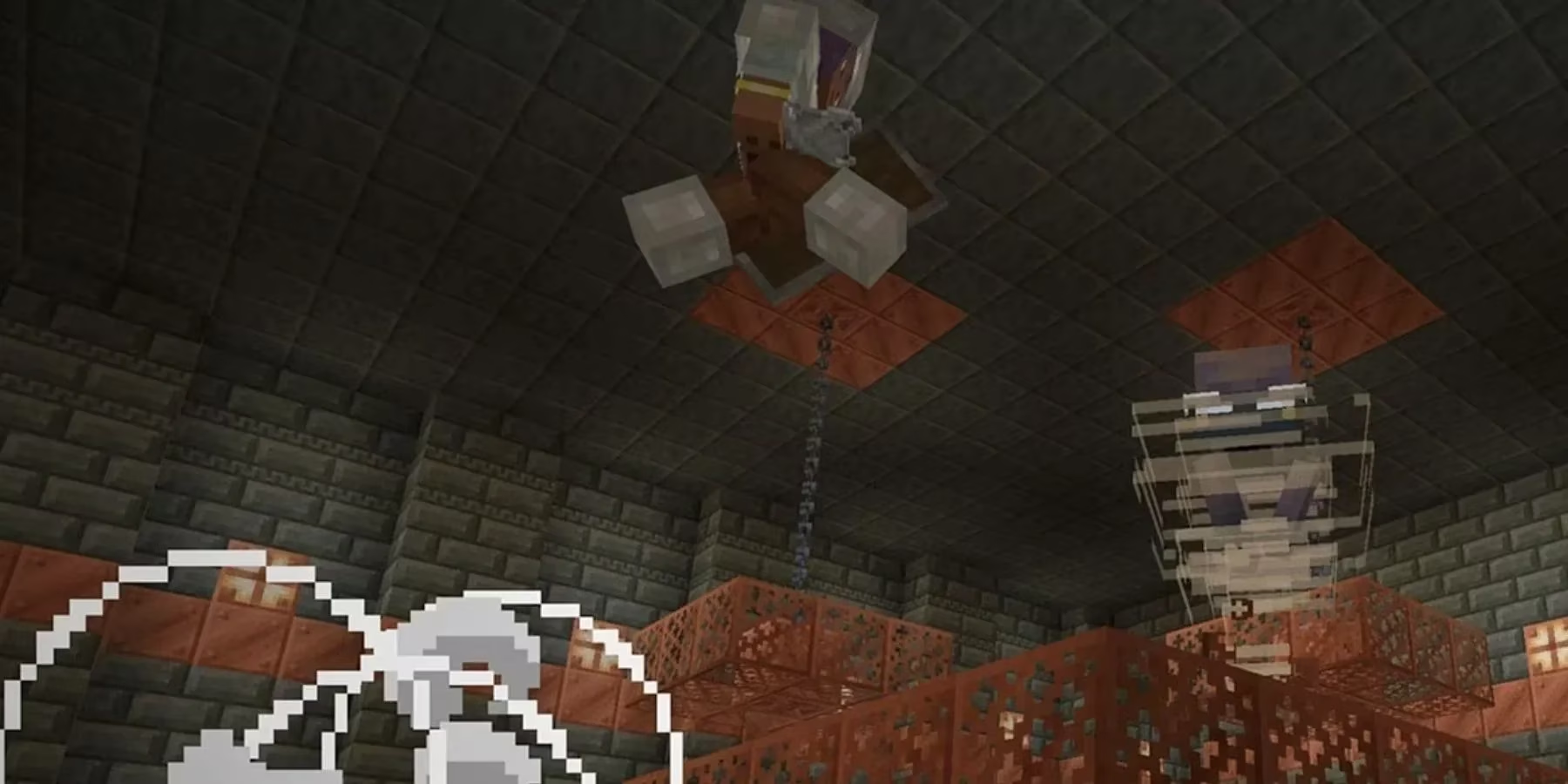
The wind charge owes its existence to the breeze, a hostile mob introduced alongside trial chambers—those sprawling underground arenas that test players with waves of enemies. Unlike everyday zombies or skeletons, the breeze floats through the air, firing gusts of wind that shove players around and trigger nearby traps. Defeating one isn’t just about survival; it’s about the loot. Each breeze drops five to six wind charges, which stack neatly up to 64 in your inventory. Throwing one is as simple as chucking a snowball, but the effect is anything but ordinary. Upon impact, it erupts in a localized burst of air, sending any entity within range flying backward. It’s like having a mini tornado in your pocket.
This knockback effect has turned parkour on its head. By tossing a wind charge straight down while jumping, players can execute what the community affectionately calls a “double jump”—a mid-air burst that propels them even higher. Timing is everything: hit the ground too early, and you’ll just push yourself sideways; nail the arc, and you’ll soar over walls that once seemed insurmountable. The physics have a forgiving twist, too. Any player launched upward by their own wind charge only suffers fall damage if they descent below the exact height where the explosion occurred. This makes wild, risk-taking jumps far less punishing than they might seem. As one seasoned parkour runner put it, “It’s like the game just handed us jet boots.”
Combat hasn’t been left untouched either. Imagine a horde of piglins charging through a bastion remnant. A well-aimed wind charge scatters them like leaves, buying precious seconds to reposition or heal. Against the Ender Dragon, the charge becomes a strategic lifeline: players can blast themselves onto towering obsidian pillars without wasting blocks, taking down end crystals with style. Even PvP skirmishes have evolved, with fighters using charges to disrupt opponent movement or knock them into lava. However, just like a ghast fireball, a charging player can bat the projectile away with a timely hit, keeping battles dynamic and unpredictable. The meter of knockback even exceeds the breeze’s own attacks by 10%, though the explosion radius stays modest—so precision remains key.
Beyond movement and melee, the wind charge has snuck into the redstone scene. It’s a remote-control marvel: toss one at a wooden button or pressure plate, and it activates as if clicked. Non-iron trapdoors and doors flip open. It can ring bells from afar, scatter items from a treasure room, and even decimate decorative pots or extinguish a row of candles in one swoop. More importantly, dispensers can fire wind charges, allowing for automated trap systems that need no complex wiring. Redstone tinkerers have spent countless hours crafting clever mechanisms— from hidden entrances triggered by a shot through a narrow gap, to alarm systems that sound bells when intruders cross a certain point.
Farming wind charges, however, requires patience. Breezes spawn exclusively from trial spawners inside trial chambers, and after a round of mobs is cleared, the spawner shuts down for a cool 30 minutes. Dedicated players have built farms around these chambers, timing their sessions to maximize yields. The grind is real, but so is the reward: a stack of wind charges can last for hours of adventure.
The long-term legacy of the wind charge is impossible to overstate. It bridged the gap between casual exploration and high-skill parkour, between brute-force combat and clever manipulation. Even as Minecraft continues to grow and new items flood the game, few have the same universal appeal. In a world built on creativity, the wind charge gave players something they didn’t know they needed—a way to dance with the air itself. And honestly? It’s just plain fun. ⚡