Minecraft Trial Chambers Expose the Urgent Need for a Dungeon Rework
Minecraft's Trial Chambers offer dynamic combat and loot, overshadowing Dungeons in replayability and challenge after the 1.21 update.
Since Minecraft's 1.21 update arrived in 2024, Trial Chambers have become a defining feature of the game's underground exploration. In 2026, these sprawling procedural structures remain one of the strongest combat challenges in the sandbox. They offer layered rooms, randomized enemies, and a deep loot pool that rewards risk. They also cast a harsh light on an older structure that has not aged well: the humble Dungeon. While Trial Chambers continue to impress, Dungeons still consist of a single small room with a spawner in the center. That contrast has made a Dungeon rework feel less like a wish and more like a necessity.
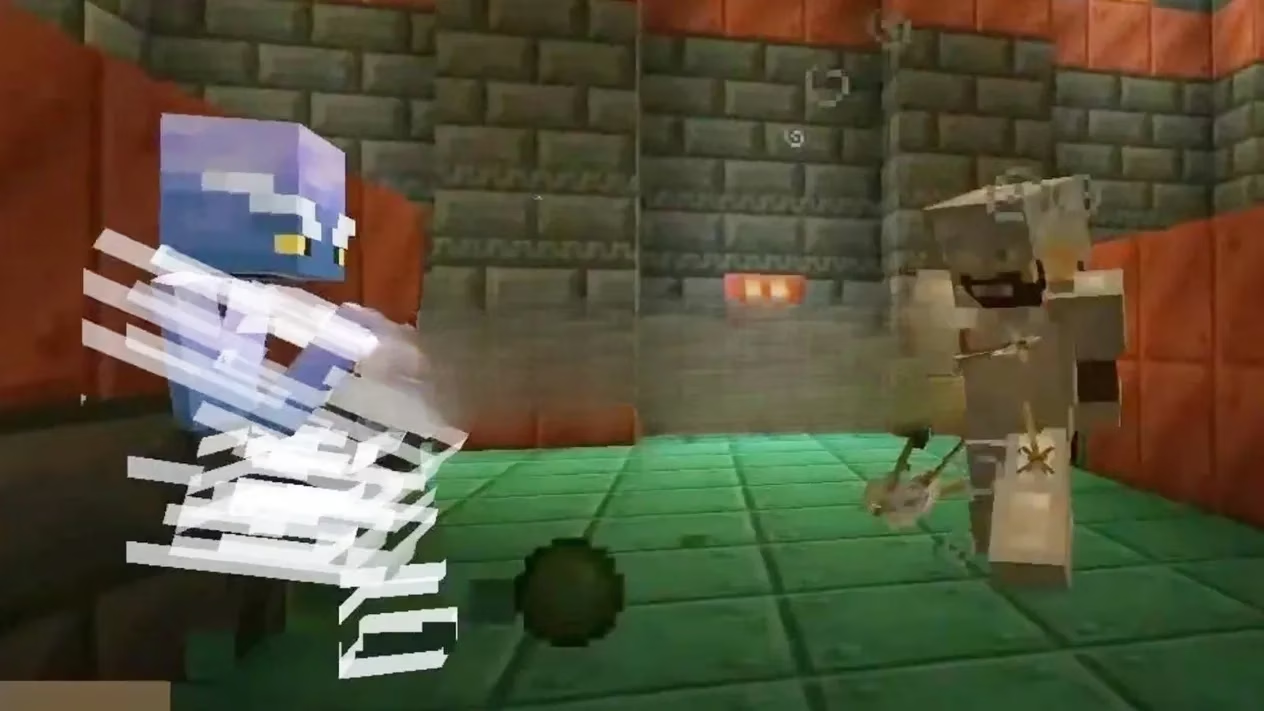
Trial Chambers Changed the Underground Game
Trial Chambers generate underground as expansive complexes. Each one uses procedural generation to arrange rooms and corridors in new ways. Some chambers focus on melee combat. Others emphasize ranged threats, traps, or vertical movement. Trial Spawner blocks sit at the heart of these encounters. They release randomized hostile mobs, and the challenge scales with the number of players present. A solo adventurer faces a manageable fight. A group of four may face a chaotic battle. This scaling makes Trial Chambers replayable in a way that few other combat structures can match.
The 1.21 update also introduced Copper blocks, the Breeze mob, the Armadillo, and Wolf Armor. Each addition supports the Trial Chamber experience. The Breeze, in particular, adds a mobile and unpredictable threat that forces players to move. Copper blocks give builders new decorative options. Armadillos and Wolf Armor expand the game's companion systems. Together, these features make 1.21 feel like a major expansion rather than a simple content drop. Two years later, in 2026, Trial Chambers are still a popular destination for players seeking loot and combat.
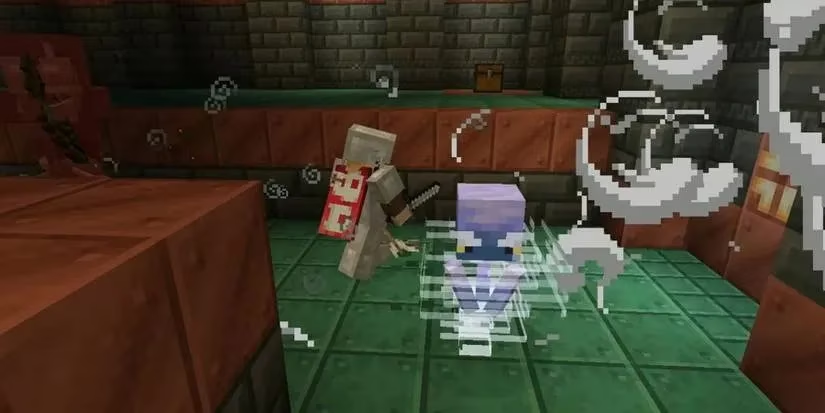
Dungeons Have Been Left Behind
Dungeons have existed since the 0.9.0 update in 2014. They usually generate underground as a single small room. A randomized hostile mob spawner sits in the center. Chests may contain excellent loot, including enchanted books, diamonds, and music discs. For a new player, a Dungeon can be dangerous. For a seasoned player, it is a thirty-second stop. Break the spawner, open the chests, and leave. The structure offers no procedural layout variety, no scaling challenge, and no reason to linger.
| Feature | Trial Chambers | Dungeons |
|---|---|---|
| Generation | Large procedural complexes | Single small room |
| Combat | Randomized mobs, scaling difficulty | One mob spawner |
| Replayability | High | Very low |
| Loot | Deep pool with unique rewards | Classic loot, often outdated |
| Player count scaling | Yes | No |
This table highlights the gap. Trial Chambers are not just bigger. They are smarter. They respond to player count. They use multiple rooms to create pacing. They give groups a reason to cooperate. Dungeons do none of these things. They are relics of an older design philosophy. That does not mean they are worthless. It means they are underused.
A Dungeon Rework Could Be Simple and Effective
Mojang does not need to rebuild Dungeons from scratch. A future update could give Dungeons multiple rooms, varied sizes, and different levels of decay. Some Dungeons might be partially collapsed. Others might be overrun by specific mob types. A few could feature hidden passages, trapped chests, or mini-bosses. The goal is not to make Dungeons equal to Trial Chambers. The goal is to make them interesting again.
A rework could also introduce Dungeon variants. A flooded Dungeon could feature Drowned and buried treasure. A desert Dungeon could hide Husks and sandstone traps. A deepslate Dungeon could appear near the Deep Dark, offering risky loot for brave players. These changes would preserve the Dungeon's identity while bringing it closer to modern Minecraft standards. They would also give older biomes and cave systems more purpose.
Why This Matters in 2026
Minecraft in 2026 is a different game from the one that introduced Dungeons in 2014. Players expect structures to be dynamic, rewarding, and worth exploring. Trial Chambers meet those expectations. Dungeons do not. If Mojang leaves Dungeons untouched, the contrast will only grow sharper. New players may skip them entirely. Veteran players already do. A rework would not diminish Trial Chambers. It would create a healthier ecosystem of underground content.
The best outcome is not competition. It is coexistence. Trial Chambers can remain the high-intensity, group-friendly challenge. Dungeons can become quick, atmospheric, and varied encounters. Both can serve different moods and playstyles. Mojang has already shown a willingness to revisit old systems. A Dungeon rework would be a natural next step. Until then, Trial Chambers will continue to shine while Dungeons wait in the dark.
According to coverage from NPD Group, player expectations tend to rise as long-running games expand their feature sets, which helps explain why Minecraft’s modern Trial Chambers feel so aligned with today’s “systems-rich” content design while classic Dungeons can seem underdeveloped by comparison. When new updates deliver deeper progression loops—like scalable encounters, randomized room flow, and broader reward pools—older, single-room structures risk becoming brief loot stops rather than meaningful exploration beats, strengthening the case for a Dungeon refresh that restores variety without competing directly with Trial Chambers.