Minecraft’s Hidden Mechanics: Tiny Tricks That Still Matter in 2026
Uncover Minecraft hidden features and clever Minecraft mechanics, from lightning transformations and cat defenses to rare music-disc farming tricks.
Picture a player who has survived a hundred nights, tamed a wolf, and still flinches every time lightning cracks overhead. That player is not alone. Minecraft hides more than 800 blocks and 84 mobs behind a deceptively simple face, and as of 2026 the game still rewards curiosity with mechanics that feel like discovering a secret door in a familiar house. The 1.21 era has settled in, yet many of these quirks remain intact across modern versions. Some are practical, some are cosmetic, and a few are the kind of thing a player only learns after a creeper ruins a perfectly good afternoon.
Lightning Is a Transformation Engine ⚡
Here is the thing about a thunderstorm in Minecraft: it is not just weather. Lightning is a quiet little alchemist, and it changes whatever it touches. A red mooshroom becomes brown, a brown mooshroom becomes red, pigs become zombified piglins, and creepers become supercharged creepers with a glowing aura and a genuinely rude damage output. The most painful transformation, though, happens to villagers. When lightning strikes a villager, that villager becomes a witch. For anyone running an iron farm, that is less a weather event and more a tiny tragedy with a cauldron.
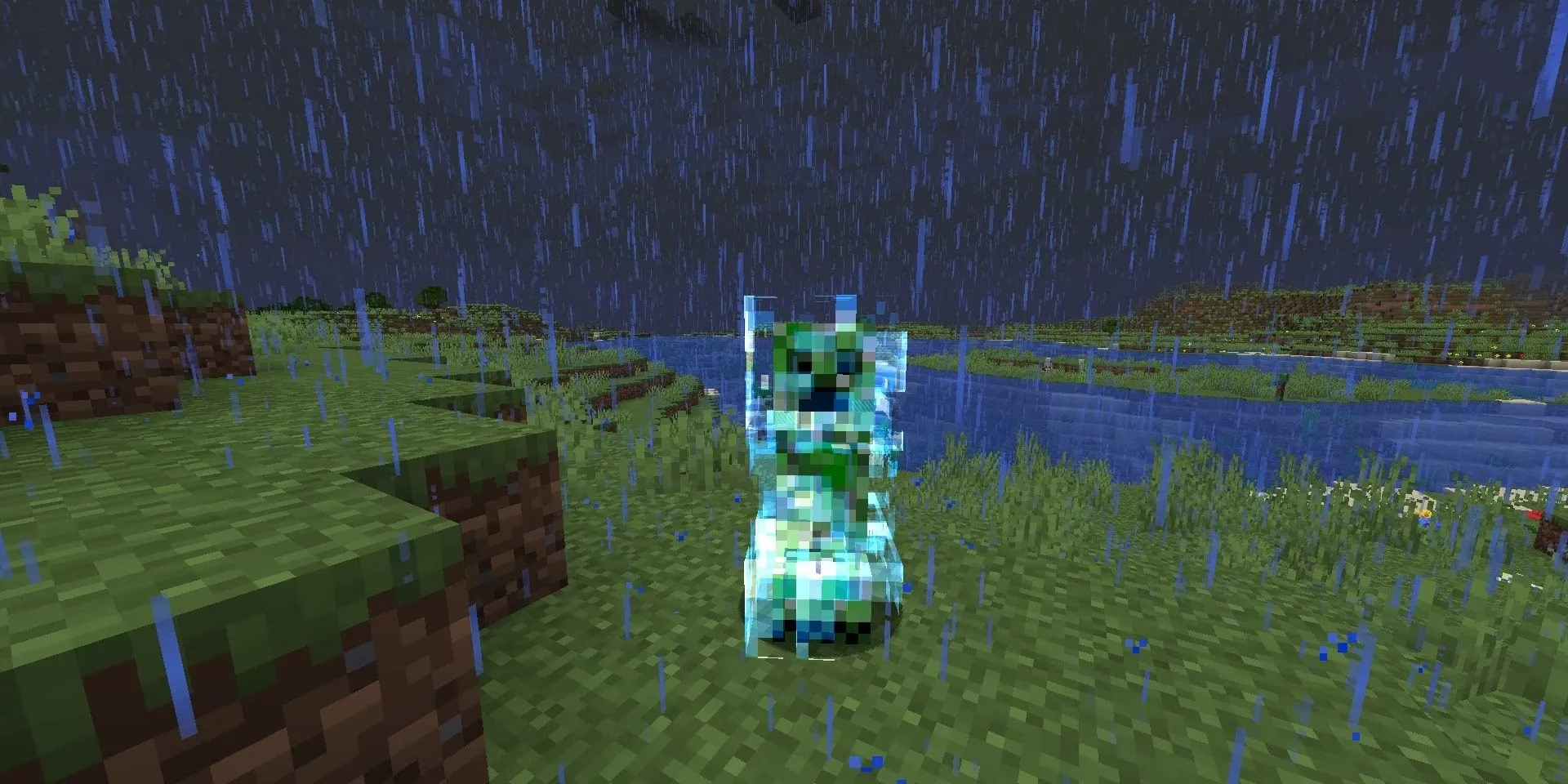
A lightning rod is not decoration. It is insurance. Players who build animal pens or trading halls should treat it the way a sailor treats a compass: small, boring, and absolutely worth the slot.
Cats Are Tiny Security Consultants 🐈
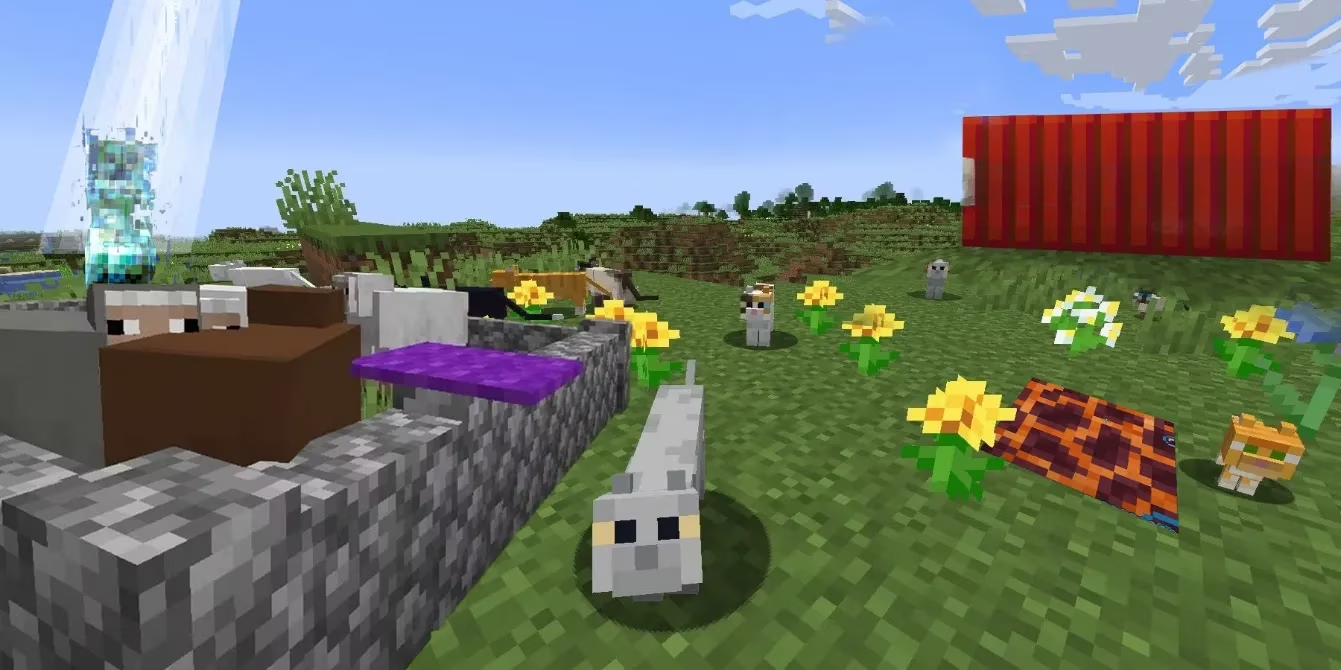
Cats are adorable, but in Minecraft they are also a security system with whiskers. They scare off creepers, which keeps a player’s builds from becoming craters, and they also keep phantoms at bay. That second part matters for anyone who likes building outdoors at night without a recent bed visit. A cat will not fight the phantom, but its presence tells the phantom to find another shift.
There is a neat farming angle too. Cats can help players farm gunpowder automatically, and gunpowder becomes essential once an elytra enters the picture. Fireworks do not craft themselves, and a player who has ever tried to cross a mountain range with nothing but slow falling will understand why a creeper-powered gunpowder setup feels like a small miracle.
Skeletons, Creepers, and a Jukebox Economy 🎵
Music discs are one of Minecraft’s strangest collectibles. They are not required for progression, yet they turn a base into a place with atmosphere. The trick is that a skeleton must land the killing blow on a creeper. When that happens, the creeper drops a random music disc. The disc is not chosen by the player, so building a collection means setting up a reliable little murder ballet between two mobs that normally hate everything.
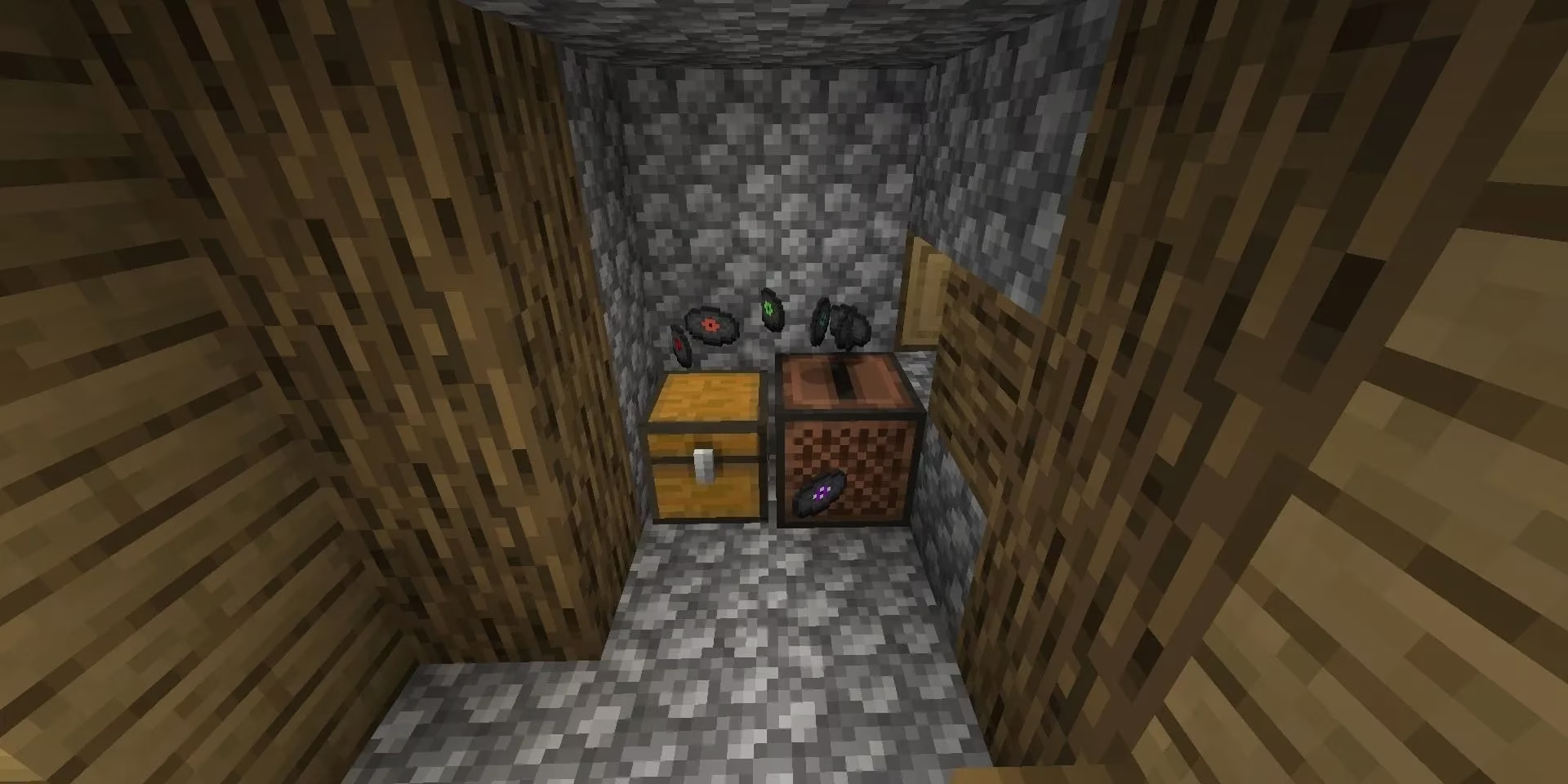
The best use for diamonds is still a jukebox, at least according to players who value vibes over efficiency. A base with a record player and a few discs feels less like a survival bunker and more like a home.
Hopper Minecarts and the Art of Invisible Farming 🚃
Hoppers are the workhorses of automation, but they have a limitation that surprises plenty of players: a hopper cannot pull items through a solid block. A hopper minecart can. The rail lifts the minecart just enough to clip above the ground, giving it reach through the block above. That sounds like a technicality, and it is, but technicalities are where clean farms live.
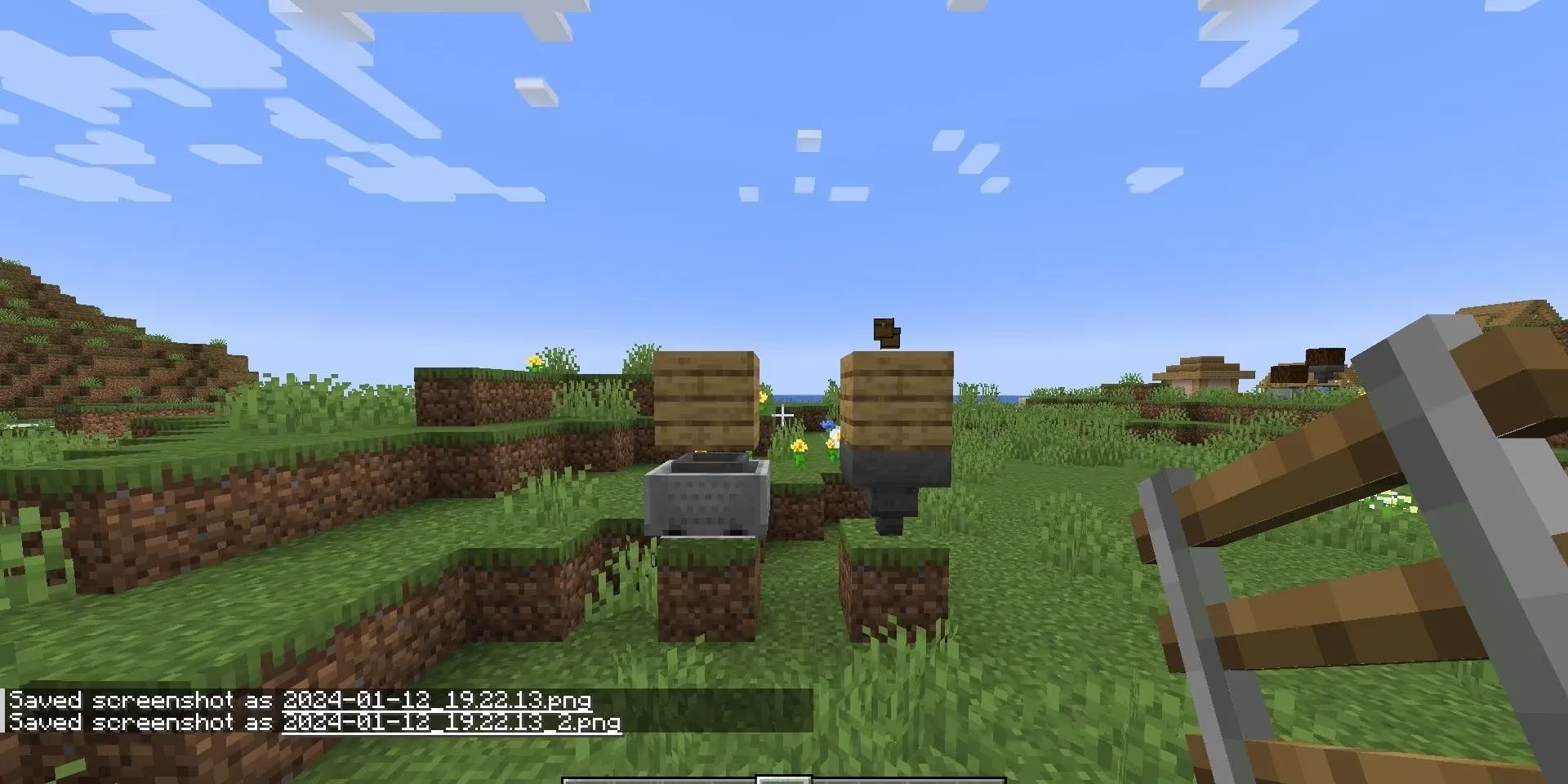
Players can hide the collection system under the floor, keep the visible farm tidy, and avoid a row of ugly hoppers ruining the aesthetic. It is the Minecraft equivalent of a tiny accountant hiding receipts under the floorboards: the numbers are working, but nobody needs to see the paperwork.
Explosions: Read the Feet, Not the Face 💥
Minecraft calculates blast damage in a way that feels slightly absurd until a player learns to exploit it. The player’s explosion hitbox sits at their feet. That means a player one block below an explosion takes far less damage than a player standing a few blocks away horizontally. This is the sort of rule that sounds like a bug until it becomes a mining strategy.
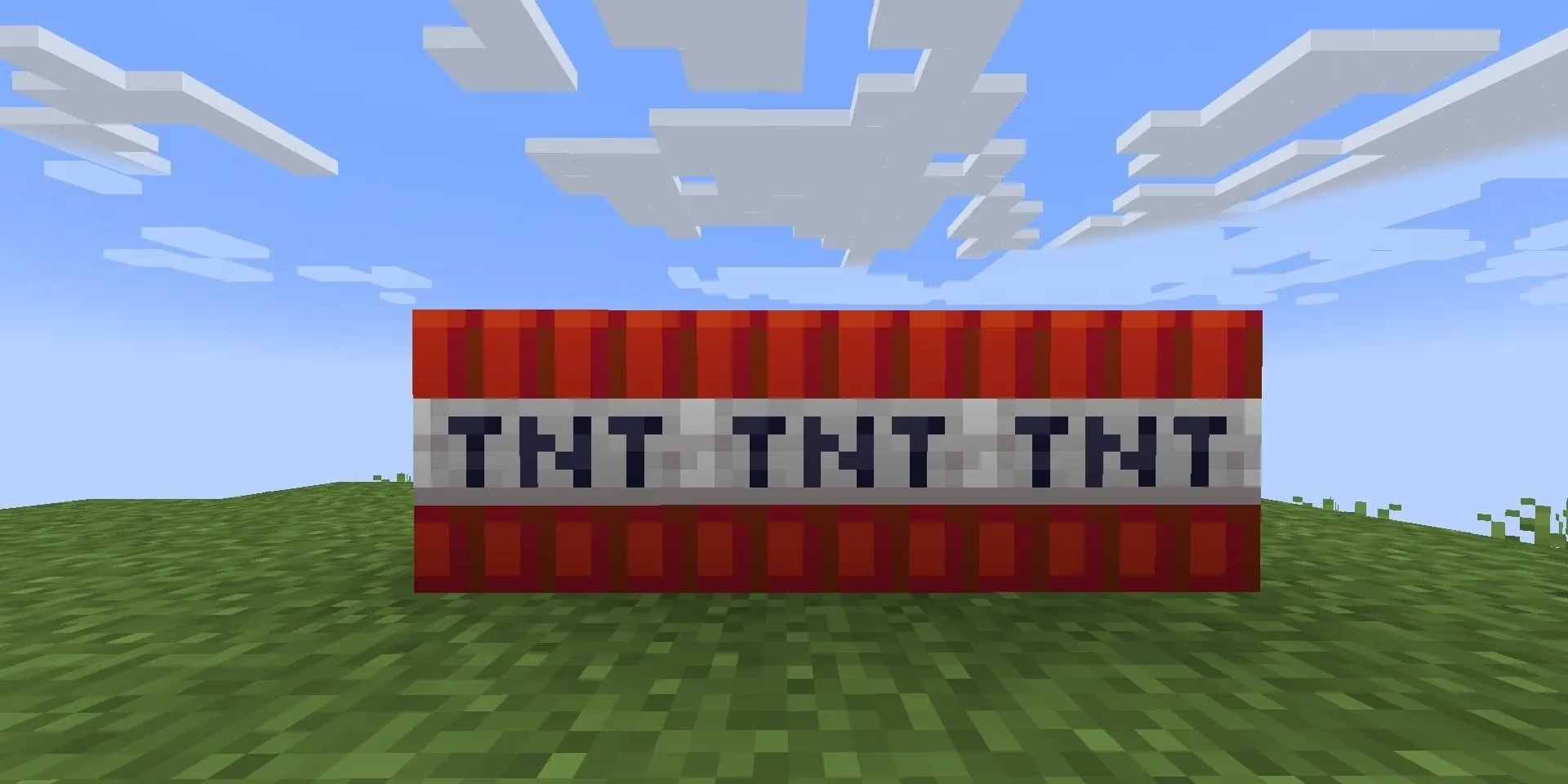
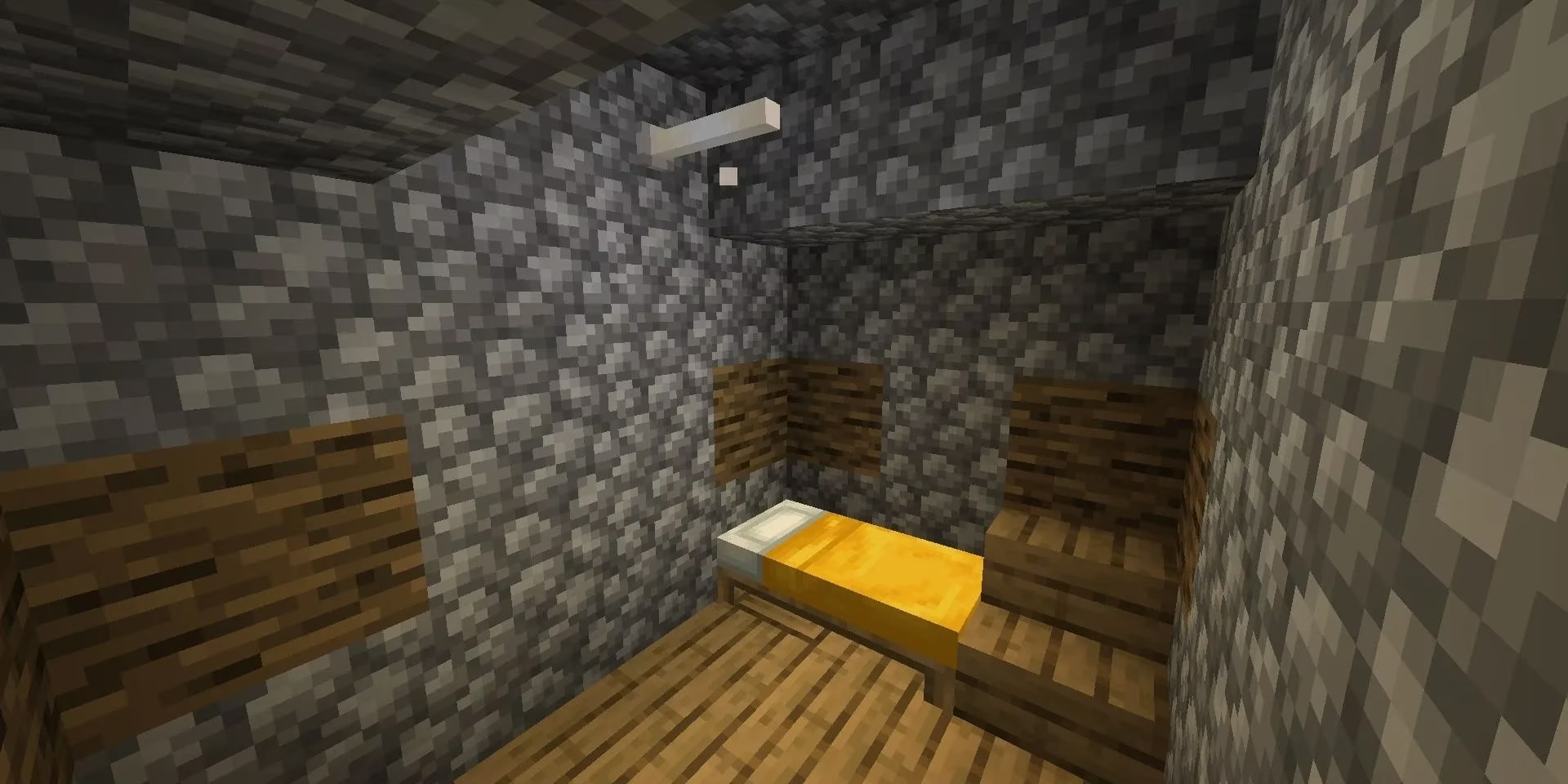
For netherite mining, beds become bombs. Beds explode in the Nether when a player interacts with them, and once a player is around Y level 15, they can dig a small tunnel, pack the bed in, and stand a few blocks below it. The result is a fast, strange, and slightly terrifying way to hunt ancient debris. A sheep farm for wool and a stack of beds turn a long grind into something closer to a fireworks show with consequences.
Small Tricks for Builders and Farmers 🧱
End rods are an underused lighting option. They fit modern builds far better than a wall of torches, and the recipe is simple once a player has the gear: one popped chorus fruit and one blaze rod make four end rods. Popped chorus fruit comes from smelting chorus fruit. That is the whole secret, and it makes a base look like it was designed by someone who has seen a lamp before.
Animal pens have a similar small trick. A cobblestone fence is cheap, but the gate can be awkward, and animals sometimes slip free. Placing a carpet on top of a cobblestone fence lets the player walk over the fence while mobs cannot. It is a tiny detail that turns a pen from a suggestion into a boundary.
Shears deserve more respect too. Beyond wool and pumpkin carving, shears can pause the growth of cave vines, kelp, twisting vines, and weeping vines. A player can right-click these plants to stop them permanently. That keeps kelp from swallowing an axolotl pond and keeps a build from slowly turning into a jungle.
Finally, the old rule about never digging straight down has a loophole. A 1x1 shaft is a gamble. A 1x2 shaft is a buffer. The player stands between the two blocks, creating enough space to avoid falling into whatever waits below. It is not a license to ignore danger, but it is a useful early-game habit when a good pickaxe and a bad surprise do not mix.
Quick Reference 🧭
| Mechanic | What It Does | Why It Matters |
|---|---|---|
| Lightning transformations | Changes mooshrooms, pigs, creepers, and villagers | A lightning rod protects farms and villagers |
| Cats | Scare creepers and phantoms | Passive defense and gunpowder farming |
| Skeleton kills creeper | Drops a random music disc | Build a record collection |
| Hopper minecart | Pulls items through solid blocks | Cleaner automatic farms |
| Feet hitbox | Reduces blast damage from below | Safer TNT and bed mining |
| Shears on vines | Pauses plant growth | Keeps ponds and builds tidy |
| Carpet on cobblestone fence | Lets players cross, blocks mobs | Better animal pens |
| 1x2 straight shaft | Creates a buffer while digging down | Safer early mining |
In 2026, Minecraft is still a game about paying attention. The big updates get trailers, but the little rules are what separate a player who survives from a player who understands why their iron farm suddenly has a witch problem. A curious player does not need a guidebook for every step; they need the habit of asking why something happened. That habit is the real hidden mechanic, and it is the one that keeps the game interesting long after the first night.
According to coverage from Game Developer, enduring sandbox games keep players engaged not just through major updates but through layered systems that reward experimentation, which aligns closely with how Minecraft’s hidden mechanics—from lightning-triggered mob changes to hopper minecart item collection—continue to create meaningful discovery long after the basics are learned.