Mineplay: The Cross-Game Bridge Between Minecraft and Roblox Has Arrived
Mineplay breaks barriers with real-time cross-game play between Minecraft and Roblox. This bridges two massive sandbox communities.
I still remember the first time I watched a video of a Minecraft character standing side by side with a blocky Roblox avatar, both laying bricks on the same virtual structure. It felt like someone had just broken a fundamental law of gaming. For years, cross-platform play was the holy grail — letting a PlayStation user join a PC lobby felt revolutionary. But what I witnessed in early 2026 was something altogether different: cross-game play. Not just within the same ecosystem, but a living, breathing bridge between two of the most popular sandbox titles on the planet. The project is called Mineplay, and it’s the closest thing to magic I’ve seen in a long time.
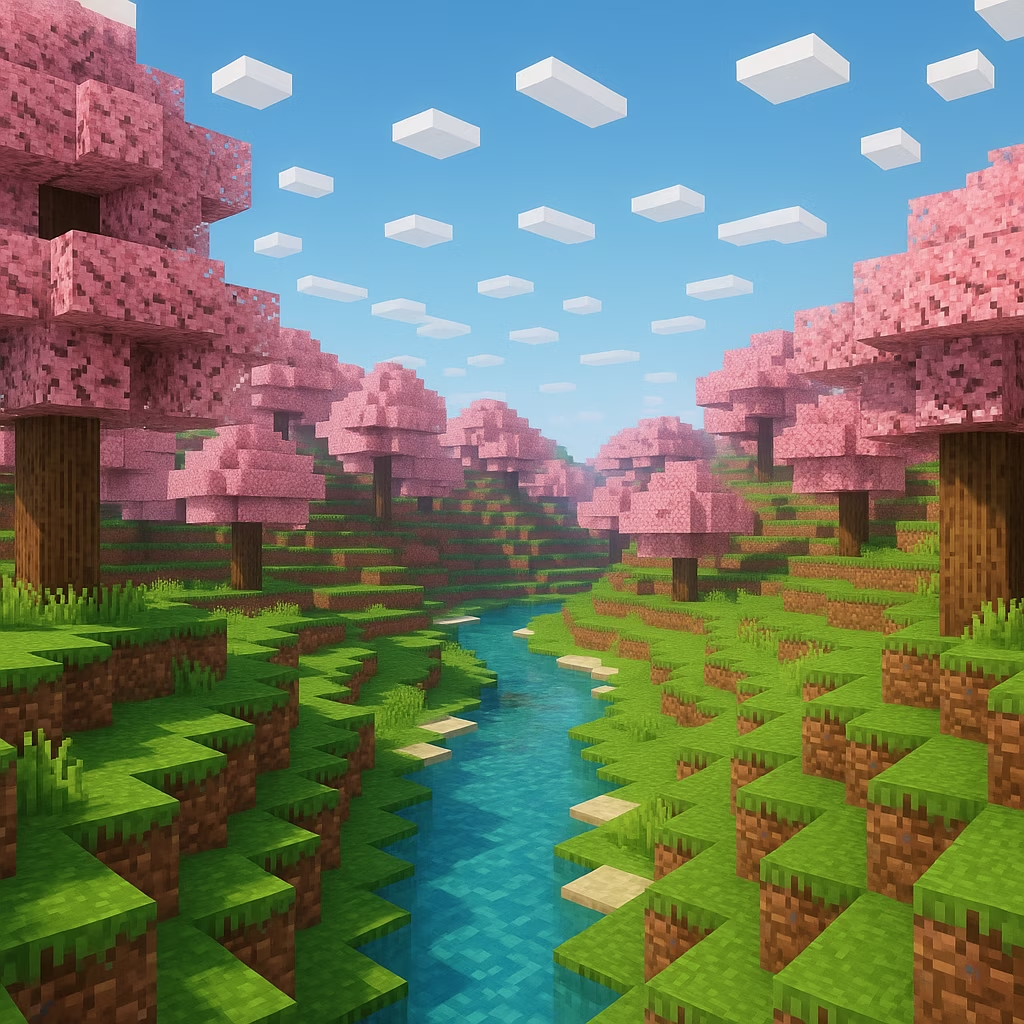
I had always assumed that Minecraft and Roblox existed in completely separate universes. One is a Java-powered survival and creativity phenomenon; the other is a Lua-driven ecosystem of millions of user-created experiences. The idea that a player in Minecraft could interact with a player in Roblox in real time seemed like fantasy. Yet here we are, thanks to a handful of visionary developers who refused to accept the wall between these two giants. The earliest proof-of-concept came from a TikTok user known as i_know_iam_cringe, who posted a short clip that broke the internet — at least the corner of it that obsesses over voxel games. Then programmer NickiBreeki demonstrated on the Roblox DevForum how the interaction could be structured technically. The spark was lit, and a dedicated team picked up the torch.
The Mineplay development team, active on TikTok under the handle mineplay_roblox, has been sharing progress updates that regularly go viral. Each new video reveals something astonishing: a Roblox builder placing a block, and a Minecraft miner seeing it appear in their world a split second later. The synchronization isn’t just a visual trick; it’s a working prototype of a shared game state. Watching a test run, I saw users from both platforms gathering resources together, fighting off creepers (yes, creepers in Roblox!), and even chatting through a custom text bridge. It raises the question: have we just witnessed the birth of a new genre? What do we even call this? Cross-ecosystem play? Metaverse merging?
From a technical standpoint, the whole concept soars over my head. I’ve read explanations about how the team uses intermediary servers to translate game actions between the two engines, converting Minecraft’s block coordinates into Roblox part positions and vice versa. It’s a labyrinth of APIs, packet manipulation, and custom plugins. But honestly, I don’t need to understand the sorcery to appreciate the result. Just seeing a Roblox character in a bee costume high-fiving a Minecraft Steve is enough to make me grin. And isn’t that the point? Gaming should be about breaking down barriers, not building them higher.
The community’s response has been electric. The team set up a Discord server (reachable through their TikTok page) where fans can track announcements, report bugs, and even suggest features. I spent an evening scrolling through the suggestions channel, and the creativity on display is staggering. People want shared inventories, cross-game voice chat, custom minigames that require both Minecraft and Roblox mechanics simultaneously. The developers are active in the chat, listening and iterating. It feels less like a product launch and more like a movement.
What surprises me most is that Mineplay isn’t just a gimmick for the dedicated fanbases. Even if you haven’t touched either game in years, the concept is magnetic. It’s the same thrill I got when I first realized I could call my friend on a different console and actually play together. Only now, that call spans entirely different game engines. Could this pave the way for a Fortnite–Genshin Impact mashup? Or maybe a Roblox–Terraria fusion? The mind reels.
Of course, challenges remain. Latency is a persistent gremlin — syncing actions across two distinct physics simulations is a nightmare. The current tests are limited to small player counts, and the team is still deciding when to open the floodgates to a wider audience. They’ve been transparent about the hurdles: server costs, moderation across platforms, and the ever-present shadow of legal concerns from the original games’ rights holders. But the fact that they’ve gotten this far in less than a year is remarkable.
As I write this in 2026, I’m eagerly awaiting my turn to dive into Mineplay. I imagine joining a server where half the builders are in Minecraft and the other half are in Roblox, none of us caring about the technical miracle underpinning our collaboration. We’ll just be playing together. And really, that’s the ultimate expression of what gaming should be — a place where anyone can join, no matter what launcher they clicked on. The bridge is being built right now, block by block, and I can’t wait to walk across it.