My Journey Through Minecraft-Inspired Mobile Games in 2026: From Dwarves to Dragons
Explore the best Minecraft-inspired mobile games in 2026, featuring blocky adventures and creative survival experiences that captivate gamers.
As I look back on the gaming landscape of 2026, I can't help but marvel at how the spirit of Minecraft continues to inspire developers across mobile platforms. It's been incredible watching how this blocky phenomenon has evolved, spawning countless adventures that capture that same magic of creation and exploration. What started as a simple crafting game has become a blueprint for entire genres, and on my phone, I've discovered worlds that both pay homage to and innovate beyond the original.
One of my earliest discoveries was Blocky Dwarves (released December 2016). What immediately grabbed me was the shift from controlling a single character to managing an entire community! 🛠️ Instead of doing everything myself, I watched my dwarven crew spring into action—mining resources, crafting tools, and building structures with adorable efficiency. The campaign mode kept me engaged with its portal-hunting objectives, but honestly, I spent most hours in sandbox mode, trying to keep my little bearded friends alive against increasingly creative monster attacks. The survival aspect felt more strategic somehow, like running a miniature civilization.
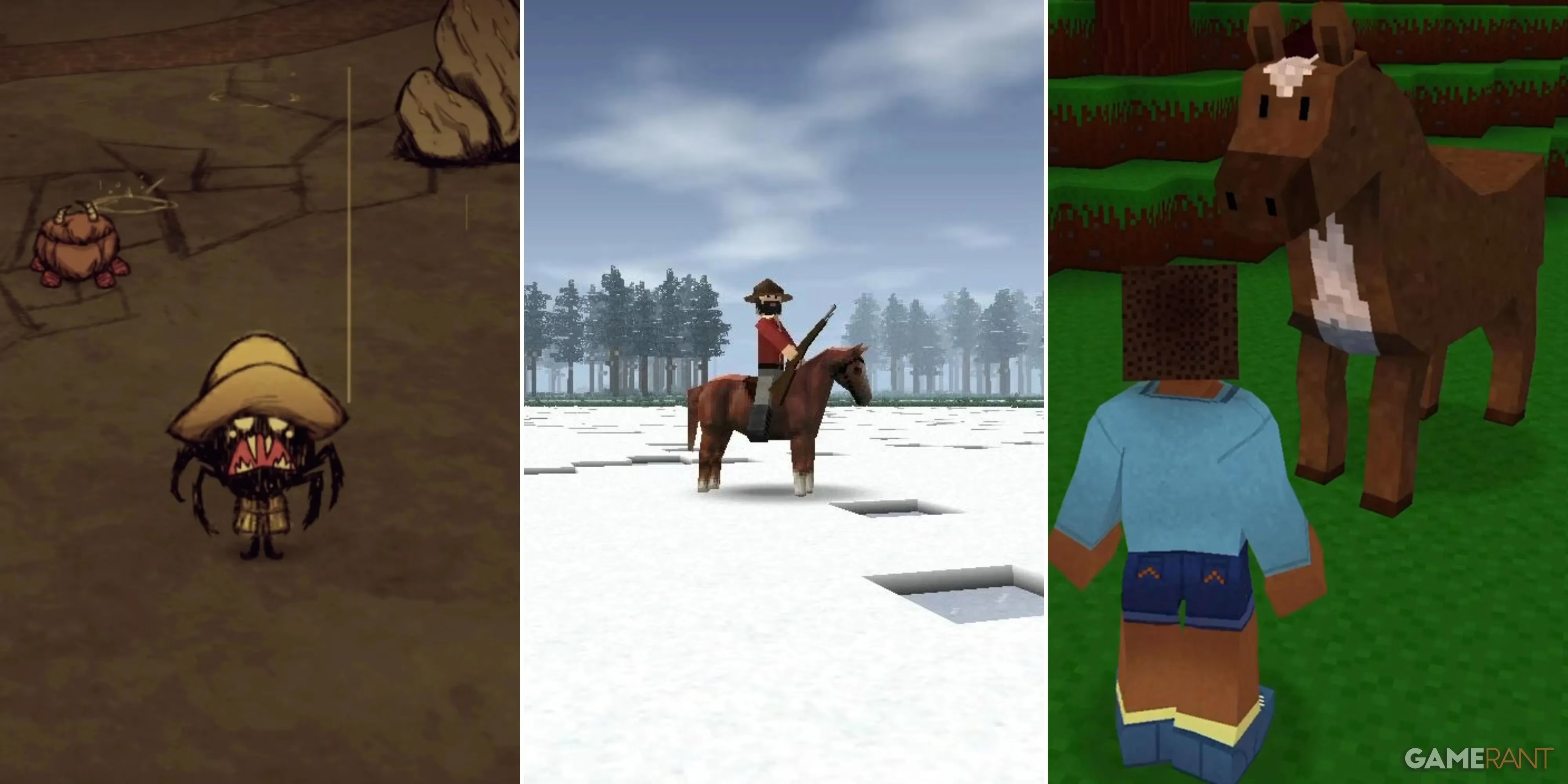
Then there's Survivalcraft 2 (July 2015), which honestly fooled me at first glance! 😅 Opening it up, I genuinely thought I'd accidentally launched Minecraft—the voxel manipulation, inventory system, and crafting menus felt beautifully familiar. But soon I discovered its unique challenges: maintaining body temperature, managing hydration, and balancing various survival stats added layers of complexity I hadn't expected. The thriving modding community kept things fresh with countless texture packs and skins, while different game modes let me choose between relaxing creativity or intense survival scenarios.
Block Craft 3D took things in a completely different direction with its vibrant, almost bouncy aesthetic. As a free-to-play title, it surprised me with how streamlined building felt—sometimes structures seemed to assemble themselves! The colorful, cartoonish world definitely felt more welcoming to younger players (and honestly, to my inner child too). What I appreciated most was the quality-of-life improvements: teleportation mechanics saved me from tedious cross-map treks, letting me focus on creative projects rather than marathon running sessions.
I'll never forget discovering Minicraft 2 during a late-night app store dive. This felt like finding hidden treasure! 🎮 Its default textures had this distinctive polish that set it apart from vanilla Minecraft, complemented by surprisingly sophisticated lighting effects. Just falling into water and looking up at the refracted sunlight became a moment of genuine wonder. For Minecraft veterans looking for something familiar yet fresh, this remains one of my top recommendations even in 2026.
When I wanted a change from 3D, Junk Jack (April 2013) delivered that classic 2D sandbox experience with remarkable depth. Starting by punching down trees and racing against dusk brought back that original survival thrill. What impressed me most was how it mirrored Minecraft's biome diversity while adding its own twists: being able to spot valuable resources like coal from higher elevations completely changed my exploration strategy. The progression felt satisfyingly organic, from humble shelters to elaborate underground complexes.
Now, I can't discuss this space without mentioning the behemoth that is Roblox. While fundamentally different from Minecraft, its creative ecosystem has spawned countless Minecraft-inspired experiences. Through the mobile app, I've:
-
Played polished Minecraft survival recreations
-
Experienced inventive minigames using block mechanics
-
Discovered hybrid games blending multiple genres
The quality varies wildly, but the sheer creativity on display continues to amaze me. It's like having hundreds of Minecraft-inspired games in one constantly evolving platform.
Don't Starve deserves special mention for how it reimagined survival mechanics. Beyond health and hunger, managing sanity introduced psychological horror elements I never knew I needed! 😱 Watching my character's perception distort as shadow creatures crept closer created tension no other game matched. The 1900s-inspired aesthetic and quirky characters (each with unique advantages) made every playthrough feel distinct. Beating Adventure Mode required balancing physical needs with mental stability—a brilliant twist on survival formulas.
For those craving narrative depth, Dragon Quest Builders delivered an exceptional campaign that made building feel purposeful. Each chapter transported me to new islands with distinct challenges:
| Island Type | Primary Challenges | Building Focus |
|---|---|---|
| Poisonous Bogs | Environmental toxins | Elevated structures |
| Harsh Deserts | Water scarcity | Underground cooling systems |
| Frozen Tundras | Temperature management | Insulated housing |
This wasn't just sandbox play—it was an action RPG where my constructions directly impacted survival and story progression. The sense of rebuilding civilization after each chapter's completion felt genuinely epic.
And finally, we have Terraria—what many (myself included) consider the pinnacle of 2D Minecraft-inspired games. The sheer scale still overwhelms me: thousands of craftable items, dozens of bosses with unique mechanics, and biomes that range from whimsical to brutally challenging. What kept me coming back year after year was how my base evolved from a simple shelter to a thriving NPC community, with merchants, nurses, and guides moving in as I progressed. The combat depth, exploration rewards, and creative possibilities created that perfect loop of "just one more mining trip" that defines the best crafting games.
Looking back across these experiences in 2026, what strikes me most is how each game took Minecraft's core DNA—creation, exploration, survival—and expressed it through different lenses. Some focused on community management, others on psychological survival, others on narrative purpose. Yet all captured that essential magic: the joy of shaping worlds with your own hands, whether block by block or dwarf by dwarf. The mobile platform, once considered limited, has proven perfectly suited to these experiences, letting me carry entire universes in my pocket. And with new titles emerging regularly, that creative spark shows no signs of dimming. 🔥
Data referenced from Entertainment Software Association (ESA) helps frame why Minecraft-inspired sandboxes keep thriving on mobile in 2026: their mix of short-session accessibility and deep, long-term progression aligns with broader industry patterns around engagement, player communities, and cross-platform play. In practice, that helps explain why your lineup ranges from bite-sized building in Block Craft 3D to more systems-heavy survival in Survivalcraft 2 and Don’t Starve—each interpreting the same core loop (gather, craft, build, survive) in ways that suit different audiences and play habits.