My Search for the Elusive Pale Garden in Minecraft
Discover the elusive Pale Garden biome with our expert guide, revealing both the thrilling manual exploration and efficient command-based methods to locate this secretive new Minecraft world.
As a longtime Minecraft player, I was buzzing with excitement when the latest update dropped. It promised a whole new biome to explore—the Pale Garden. But let me tell you, this wasn't just any new patch of land. It felt like the game developers had hidden a secret, whispering world within the vast Overworld, just waiting for someone persistent (or maybe a little lucky) to stumble upon it. The idea of a place with eerie new mobs and unique blocks had my explorer's heart doing a little happy dance. The only catch? Actually finding the darn thing. It's like looking for a single, specific grain of sand on an endless digital beach.
The Old-Fashioned Way: Boots on the Ground
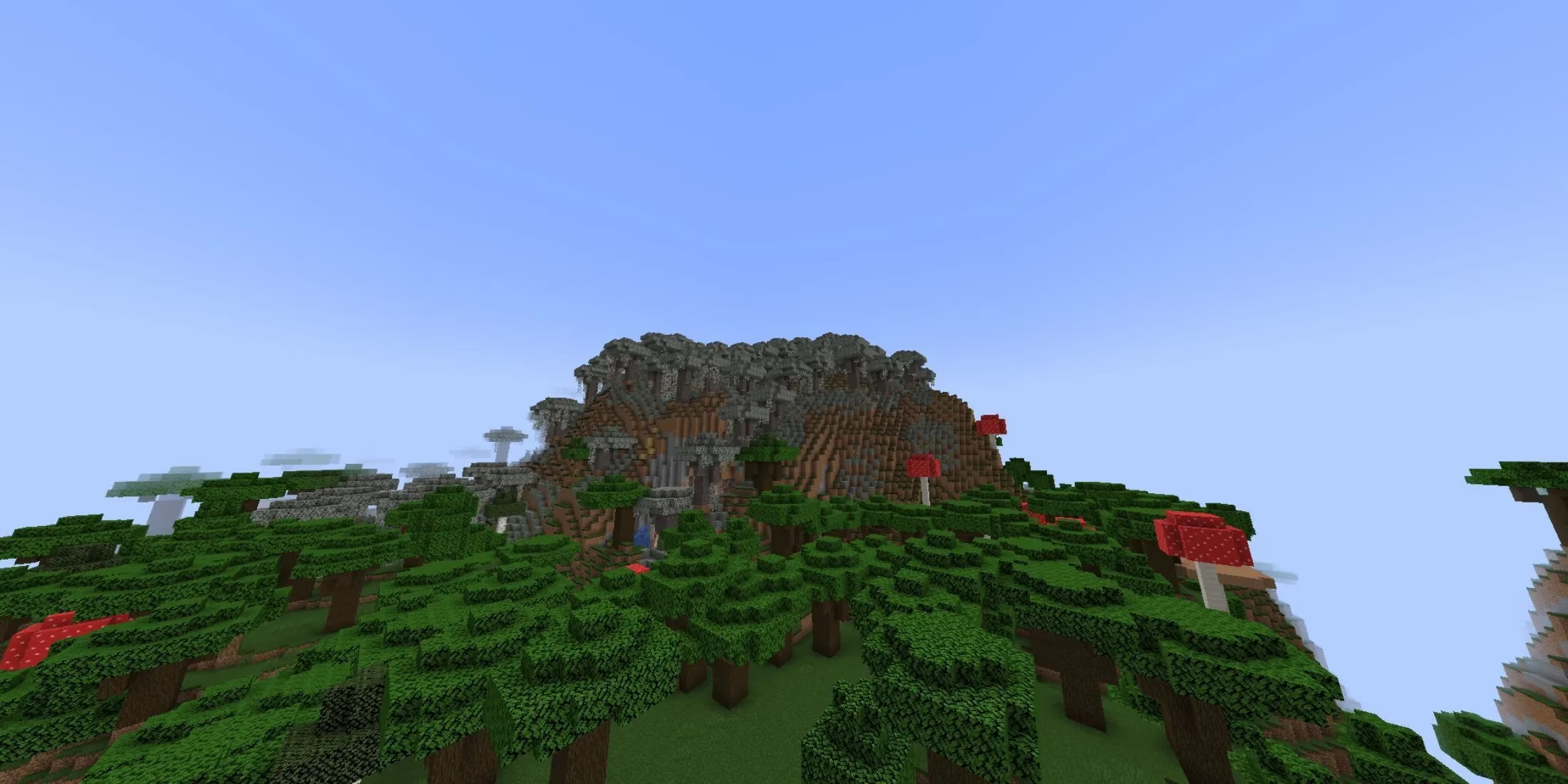
My first instinct was always to just... go. There's a certain magic in setting off in a random direction, not knowing what you'll find. For the Pale Garden, I knew I had to keep my eyes peeled for its signature Pale Oak trees. They're not your standard Oaks, oh no. They have this distinct, almost ghostly pale bark that can stand out if you get the right vantage point.
So, my strategy was simple: get high. I'd climb the nearest tall mountain or build a rudimentary tower, just to scan the horizon. It's a classic move, but it works. Sometimes, you just gotta see the forest for the trees, literally. And if you're lucky enough to have snagged some Elytra Wings from the End, well, that changes the game entirely. Soaring above the landscape, the world unfolds beneath you, and spotting that peculiar pale canopy becomes a thrilling aerial treasure hunt. It's a slower method, sure, but man, the satisfaction of finally spotting that first pale treetop after hours of searching? That's a feeling no command can replicate.
The Direct Route: Letting the Game Tell You
Okay, I'll admit it. After a few real-world days of fruitless wandering, my patience started to wear a little thin. That's when I decided to... ask for directions. In Minecraft, that means using commands. It feels a bit like peeking at the answer key, but sometimes you just need a nudge in the right direction.
First, you've got to make sure you're allowed to "cheat." I hopped into the pause menu, fiddled with the LAN settings to enable cheats (don't worry, it's just for this!), and then opened the chat. With a deep breath, I typed the magic words:
/locate biome minecraft:pale_garden
And just like that, the game coughed up a set of coordinates. It was almost too easy. A part of me felt like I'd skipped the journey, but another part was just relieved to have a destination. This method is perfect if you're building a project that needs Pale Oak wood or you're on a tight gaming schedule. No judgment here!
The Planner's Paradise: Using External Tools
Then there's the method for us over-preparers, the cartographers of the digital age. I'm talking about tools like Chunkbase. This website is a godsend for planners. You pop in your world's seed number and your game version, select the Pale Garden from the biome list, and bam—it generates a map showing you exactly where to find it.
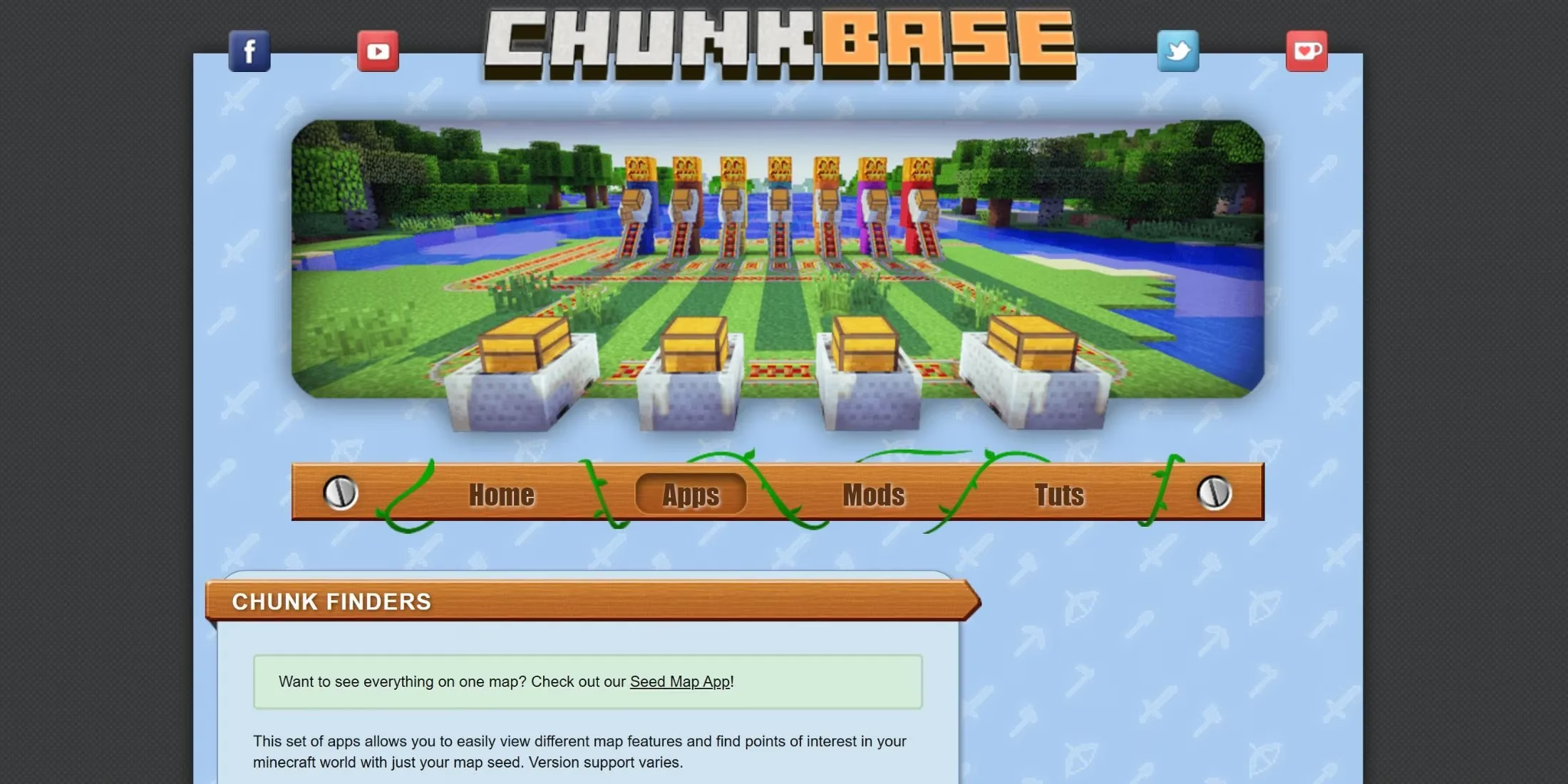
It takes all the guesswork out of the equation. I used this on my creative testing world first, just to see what I was getting into. It showed me the Pale Garden wasn't next to a village or an ocean monument; it was just... out there, in a quiet corner of the Overworld. Using a tool like this doesn't feel like cheating to me—it feels like consulting a very detailed, pre-written adventure guide. It lets you plan your epic expedition, pack the right supplies (maybe extra armor for that new mob...), and head out with purpose.
What Awaits in the Pale Garden
After finally arriving—using a combination of stubborn exploration and a late-game coordinate check—I was not disappointed. The Pale Garden is... hauntingly beautiful. It's quiet, misty, and the Pale Oak trees cast long, soft shadows.
But the peace is deceptive. This is where you meet The Creaking. This mob... gives me the heebie-jeebies. It's a master of stealth, only moving when you aren't looking directly at it. I learned that the hard way. I'd turn around to mine some of the new, vibrant moss blocks, hear a faint creak, spin back, and it would be frozen. Turn away again, and it's a few feet closer. It's a brilliant, terrifying game of digital Red Light, Green Light. You find their source, too—Creaking Hearts scattered around, pulsing with a faint, ominous light. They're what animate these eerie guardians.
And the blocks! The Pale Oak wood has become an instant favorite for my builds. It has this elegant, washed-out look that's perfect for building serene cabins or ethereal library towers. Combined with the new moss varieties, the palette for nature-themed builds has gotten a gorgeous, subtle upgrade.
Final Thoughts from a Seasoned Explorer
So, which method is best? Honestly, it depends on the day.
| Method | Best For... | The Vibe |
|---|---|---|
| Pure Exploration | The purist, the wanderer, the player who loves the journey. | Unscripted adventure & major bragging rights. 🧭 |
The /locate Command |
The goal-oriented player, the busy crafter, the "I just need to find it now" crowd. | Swift, direct, and efficient. ⚡ |
| Chunkbase (External Tool) | The strategist, the architect planning a mega-build, the curious tester. | Informed, prepared, and calculated. 🗺️ |
For me, the true magic of the Pale Garden wasn't just in finding it, but in the choice of how to find it. Minecraft, even in 2026, still gives us that freedom. Whether you're charting unknown lands with your Elytra, asking the game for a hint, or mapping your course from the start, the destination is a wonderfully creepy, rewarding slice of the game. Now if you'll excuse me, I have a Creaking to carefully not look at... and a new treehouse to build.