My Steam Deck Adventure: Unlocking a World Beyond Steam
Unlock the true potential of your Steam Deck with Flashpoint, Roblox, and Minecraft for an unparalleled PC gaming experience beyond Steam.
As I settled into my favorite armchair in 2026, my Steam Deck humming softly in my hands, I realized something profound. For the longest time, I had treated this incredible handheld PC as just a portable Steam library. What a fool I was! The true magic of the Deck isn't just in playing your Steam backlog on the go; it's in unlocking the entire, sprawling, wonderful universe of PC gaming that exists outside of Valve's storefront. The journey from a closed ecosystem to an open-world gaming paradise began with a simple switch to Desktop Mode. Suddenly, I wasn't just a Steam user; I was an explorer.
🔧 The Flashpoint Time Machine
One of my first quests was to reclaim a piece of lost history. The official death of Adobe Flash Player felt like a cultural amnesia, wiping away thousands of quirky, creative, and foundational web games. But the community wouldn't let them die. Enter Flashpoint. Setting it up on the Deck was a bit of a project—I followed a detailed tutorial to get everything configured just right—but the payoff was pure magic.
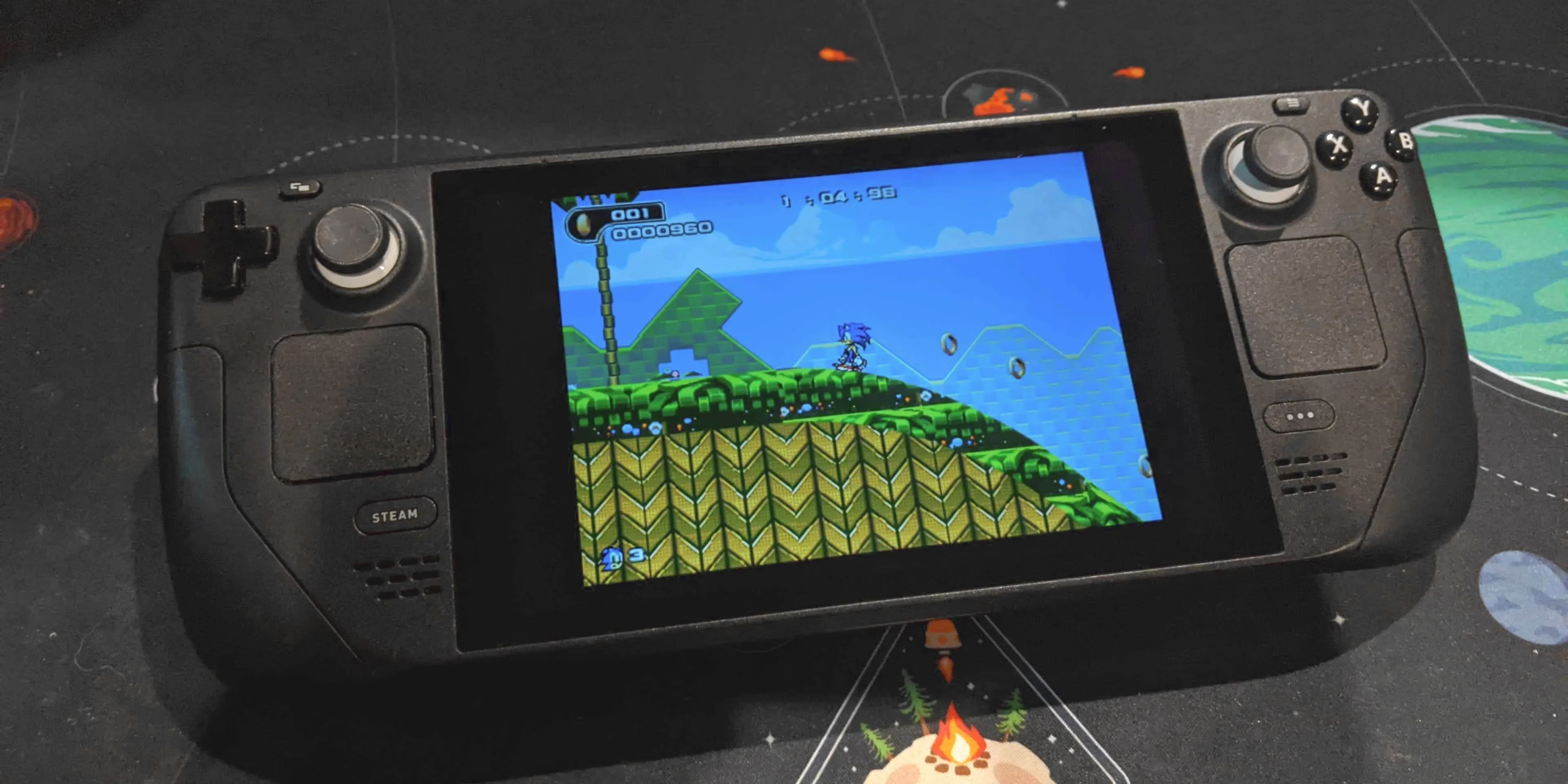
Booting up those old Flash games felt like opening a time capsule. The simplistic graphics, the catchy MIDI tunes, the janky physics—it was all there, perfectly preserved. It wasn't about high-fidelity gameplay; it was about nostalgia, about experiencing the playful, experimental roots of browser gaming on a modern handheld. Worth every minute of setup.
🧱 Building Blocks of Fun: Roblox & Minecraft
Next, I turned to the titans that have somehow always avoided Steam. Roblox was surprisingly straightforward. A trip to the Discover store for a tool called Sober, a few guided steps to bridge the Android version to Linux, and suddenly I was back in those chaotic, user-generated worlds. Playing classics or the latest bizarre obby (obstacle course) felt perfectly natural with the Deck's controls.
But the crown jewel had to be Minecraft. The official launcher on Linux is, to put it kindly, a nightmare. The solution? PolyMC. This launcher is a revelation. It's clean, feature-packed, and makes managing Java Edition and mods an absolute breeze.
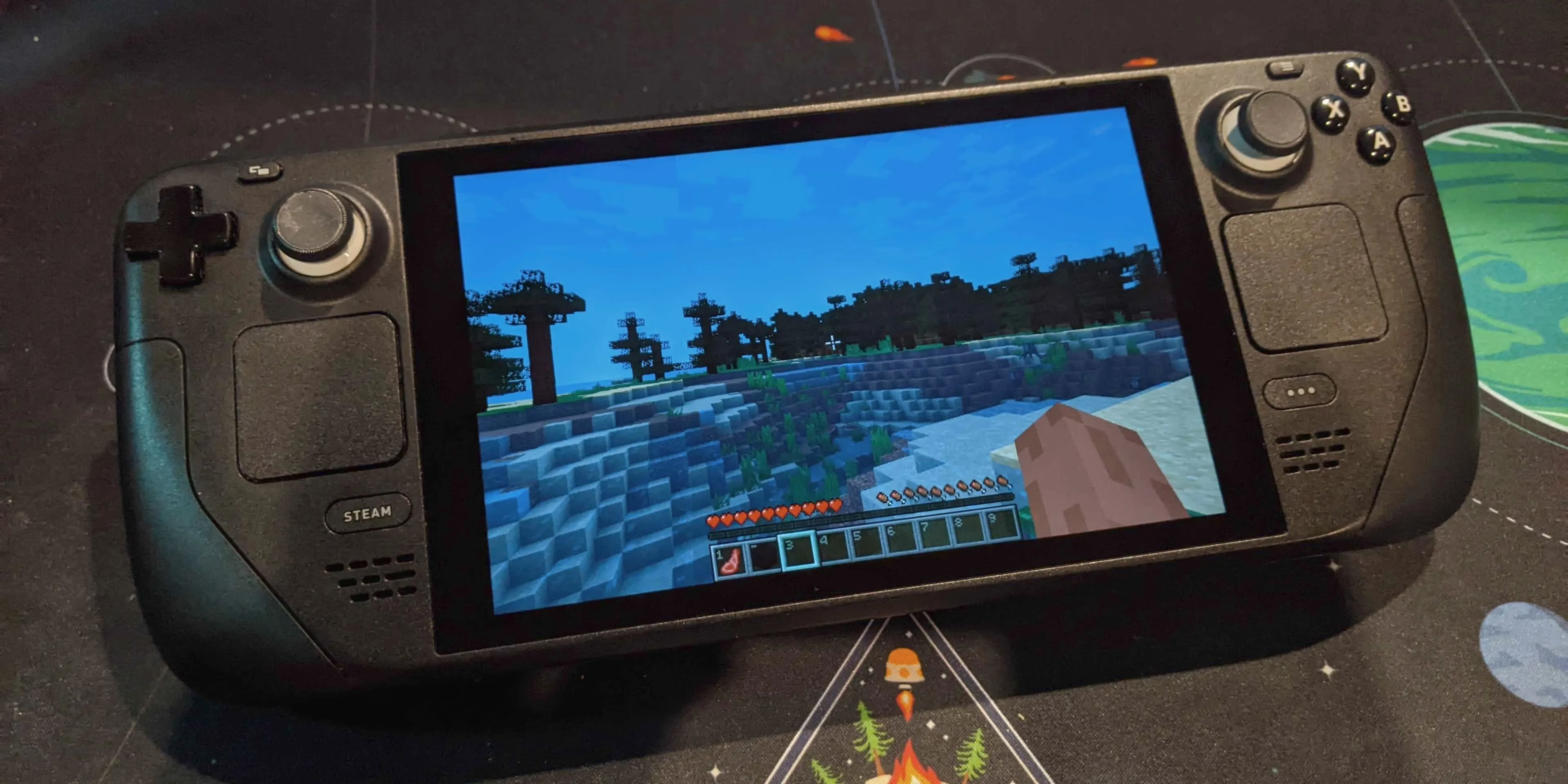
Building a sprawling castle on my couch, joining a friend's modded server on the train, or just exploring with gyro controls enabled—this was the definitive portable Minecraft experience. It made the console and mobile versions feel instantly obsolete.
☁️ The Cloud & The Classics: Game Pass & Emudeck
My Deck's storage space is precious. So, when I want to dive into a massive, new AAA title, I often turn to Xbox Cloud Gaming via Microsoft Edge. Microsoft's own guide made it simple. While it requires a solid internet connection, the ability to stream hundreds of games without downloading a single gigabyte is a game-changer for a device with limited SSD space.
For the opposite end of the spectrum—owning my games forever, locally—I discovered Emudeck. This all-in-one tool is nothing short of wizardry. You install it, point it to your (legally sourced, of course) ROMs on an SD card, and it configures a beautiful front-end for decades of console history.
| Console Generation | Performance on Deck | Notes |
|---|---|---|
| 5th Gen & Earlier (PS1, N64) | ✨ Flawless | Often with resolution enhancements. |
| 6th Gen (GameCube, PS2) | 🟢 Excellent | Most games run at full speed. |
| 7th Gen (Wii, PS3, 360) | ⚠️ Variable | Hit or miss; requires tweaking. |
Having my entire childhood in one portable device is an emotional experience I didn't know I needed.
💎 Hunting for Hidden Gems: Itch.io & Standalone Treasures
The Itch.io app transformed my Deck into an indie game discovery machine. It's a direct pipeline to thousands of demos, game jam experiments, and passion projects you'll never find on Steam. The games are sandboxed for safety, and they run beautifully. I found the original, free version of Pseudoregalia here, a gem before it hit the mainstream.
This hunt led me to other must-have non-Steam exclusives:
-
Cave Story (Original Freeware): Playing this seminal indie masterpiece in its original, free form feels like touching history. The charming story and tight gameplay hold up perfectly.
-
Vampire Survivors (Itch.io Version): Yes, it's on Steam. But for some wonderful reason, a completely free and fully competent version exists on Itch. It's the perfect "just one more run" game for any trip.
-
GZDoom: This modern, open-source source port rescued DOOM from its lackluster Steam versions. It runs everything from the originals to total conversion mods with silky-smooth performance and modern enhancements like high-res rendering. A must for any FPS fan.
🎢 The Definitive Way to Play: OpenRCT2
My final revelation was about improvement. I owned Rollercoaster Tycoon 2 on Steam, but the listing still had Windows XP as a minimum requirement! OpenRCT2 is the answer. This open-source project isn't just a compatibility layer; it's a full-blown remaster.
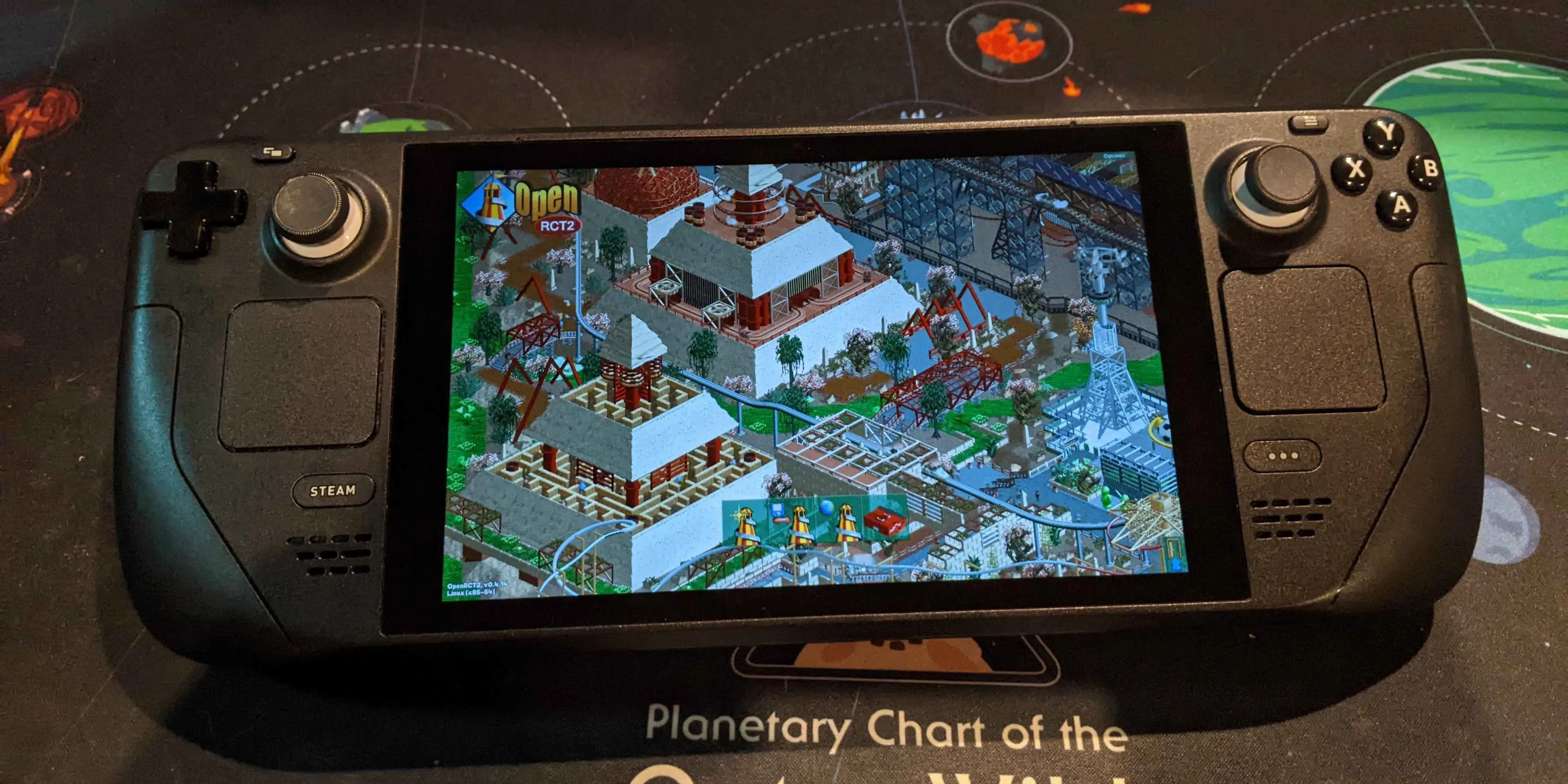
It runs natively on Linux, adds modern features like UI scaling, autosaves, and even multiplayer. It took a classic game and made it feel perfectly at home on my 2026 handheld. You still need the base game assets, but OpenRCT2 is the only way to play now.
Looking back, my Steam Deck is no longer just a "Steam" Deck. It's my all-in-one gaming companion. It's a time machine, an indie game portal, a cloud streaming client, an emulation powerhouse, and the best way to play classics the way they were meant to be played. The process always starts the same way: add the game as a "Non-Steam Game" in Desktop Mode, and sometimes tweak a control layout. But the reward is a library as limitless as PC gaming itself. Don't limit yourself to one storefront. The adventure is out there, waiting on your desktop.