My Thoughts on the Minecraft Movie and Why Jared Hess is a Fascinating Choice
Explore the captivating story behind the Minecraft movie adaptation and Jared Hess's unexpected directorial vision for this iconic game.
As a longtime Minecraft player, I've watched the long, winding road to a film adaptation with a mix of skepticism and curiosity. Honestly? A Minecraft movie never sounded like a great idea to me. The magic of our blocky world is in the doing, the building, the surviving—the interactivity. Stripping that away to make a passive viewing experience felt like a fundamental misunderstanding of what makes the game special. For years, the fan community has been pretty vocal about these doubts. It's a tough challenge: how do you build an entire feature film on the back of iconic imagery like Creepers and Steve without the core gameplay that gives them meaning? Yet, I always held onto a sliver of hope. A truly talented filmmaker can make a good movie out of anything, right? When I heard Jared Hess was the director finally steering this ship into port, my first reaction was, 'Huh. That's a weird choice.' But the more I thought about it, the more fascinating it became.
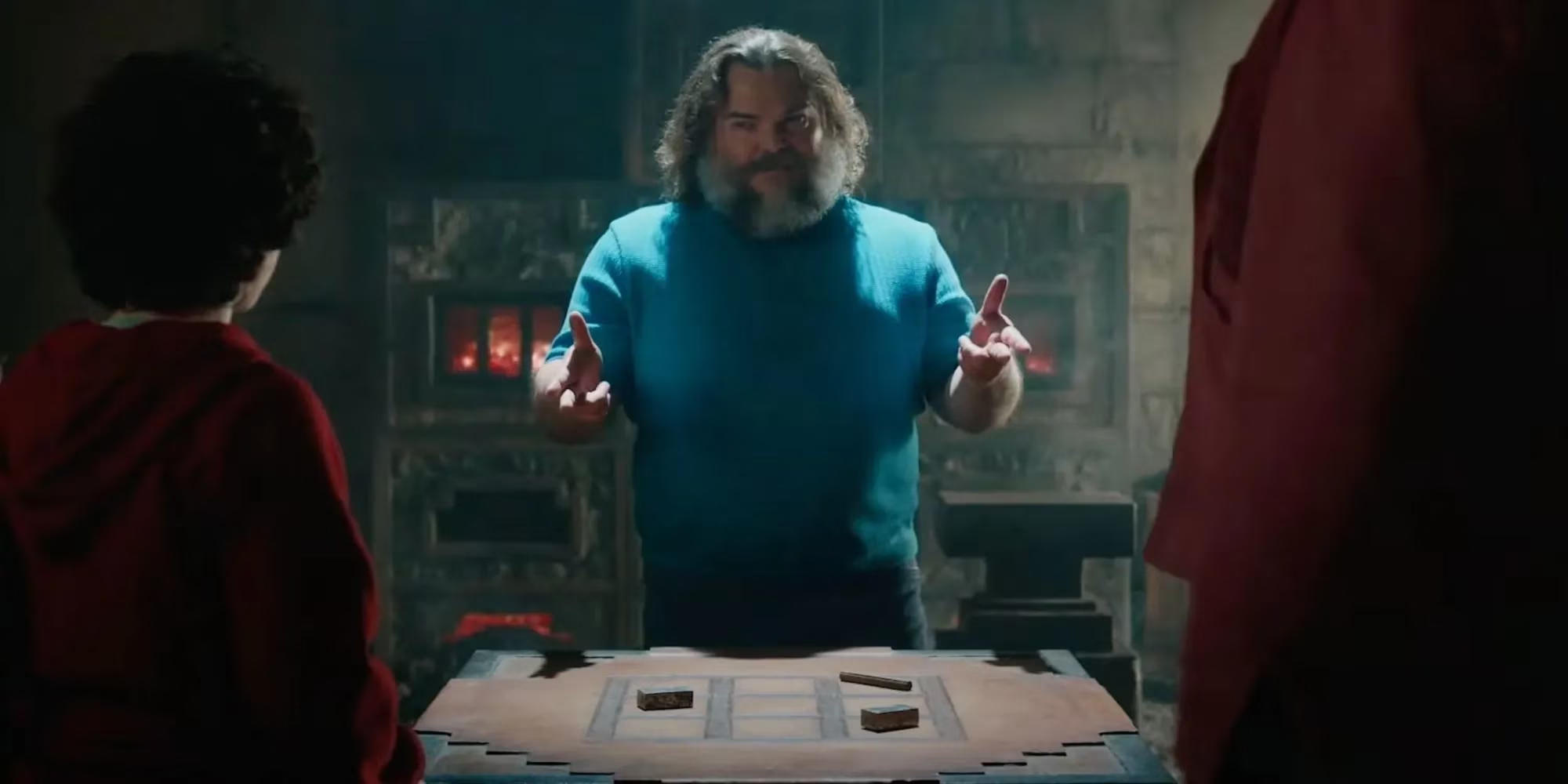
It's not fair to say a director can't tackle a genre just because they haven't before. A master of horror could absolutely nail a rom-com. Films fail for a million reasons beyond a director's typical style. But speculating on how a director with a body of work as specific and varied as Hess's will handle the colossal, merchandising-heavy world of Minecraft? That's where things get interesting. This project has been in a state of perpetual 'almost' for over a decade. Did you know the earliest rumblings started around 2014, with film offers coming to Mojang even earlier? Given that marathon development, it's no shock Hess wasn't Warner Bros.' first pick. This film has had more directors than a Creeper has pixels!
Let's break down that chaotic journey:
-
The First Attempt: WB initially approached Shawn Levy (who'd later go on to make Deadpool & Wolverine). He was gone within two months.
-
The Longest Haul: Next up was Rob McElhenney from It's Always Sunny in Philadelphia. He stuck around for three whole years, cycling through two sets of writers, before bowing out in 2018 citing 'scheduling conflicts.'
-
The Quiet One: Peter Sollett (director of Metal Lords) took the reins next. Then the global pandemic hit, burying the project for nearly four years. When it resurfaced, Sollett was no longer attached.
-
The Final Boss?: Finally, in stepped Jared Hess as the fourth—and likely final—director. It's wild to think about the alternate realities where the minds behind Free Guy, Mythic Quest, or Nick & Norah's Infinite Playlist got to shape this film. We'll never see those versions.
So, who is Jared Hess, and why does his involvement make me tilt my head like a confused parrot? Hess exploded onto the scene with Napoleon Dynamite, a film that wasn't just a hit; it was a cultural reset for my generation. It made 100 times its budget and practically rewrote the language of awkward, sincere human interaction. That film is his masterpiece, a deeply personal, autobiographical slice of his eccentric childhood. Following that act was always going to be a Herculean task. His filmography since is a rollercoaster:
-
Nacho Libre (2006): Starred Jack Black as a luchador. Fun, but it leaned way too hard on a single joke and lacked the heartfelt characterization of his debut.
-
Gentleman Broncos (2009) & Don Verdean (2015): Both were critically panned and largely ignored by audiences. A real low point.
-
Masterminds (2016): Brought him back to 'middling' reviews, but still didn't capture wide attention.
Here's the twist, though. Recently, Hess has shown a fascinating new range. In 2024, he co-directed his first children's film, Thelma the Unicorn, for Netflix—only his second project ever to get a 'Certified Fresh' rating on Rotten Tomatoes! Even more compelling are his forays into documentary. His Netflix miniseries Murder Among the Mormons and Muscles and Mayhem are seriously excellent. They show a director moving away from his quirky comedy gimmick and demonstrating real skill in storytelling and structure.
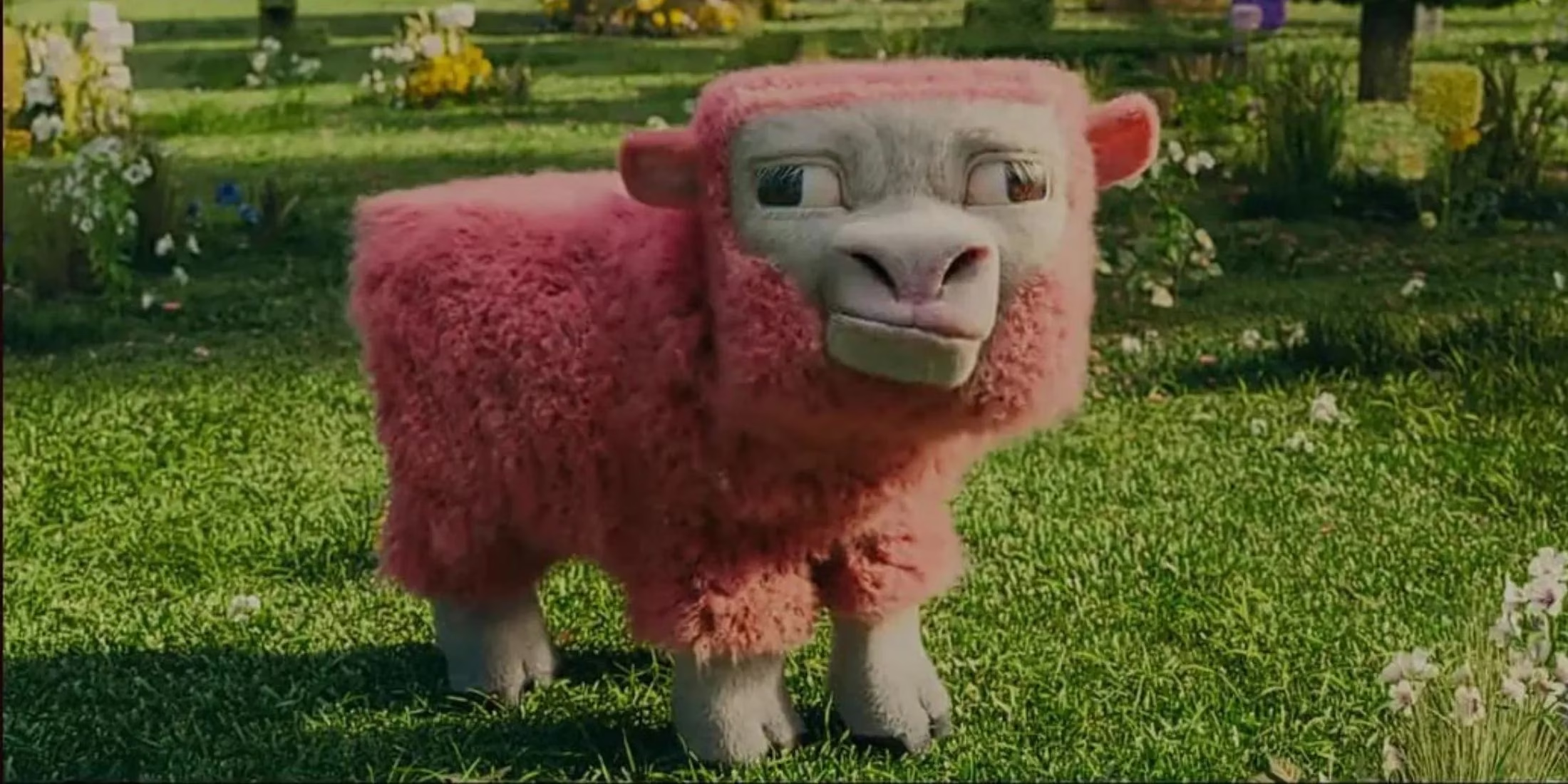
This eclectic resume makes him a genuinely intriguing pick for A Minecraft Movie. He's not a total outsider to the production; writers Chris Bowman and Hubbell Palmer worked with him on Masterminds. More importantly, Hess has stated that he provided the pitch that became the movie. This isn't just him taking over a stale corporate project—it's his vision, at least initially. That gives me a flicker of hope.
But let's be real. From the trailers and marketing, the movie looks nothing like a Jared Hess film. Where's the sincere, deadpan oddity of Napoleon Dynamite? Where's the nuanced, true-crime tension of his documentaries? It looks slick, broad, and… well, like a corporate product. It lacks the depth of his early work and the focused peculiarity of his newer pieces. Like Thelma the Unicorn, it will probably feel like a complete outlier in his filmography. If there is some of his signature weirdness in there, the marketing team is doing a fantastic job of hiding it.
Ultimately, I don't think Hess's involvement will be what makes or breaks this film. The problem feels bigger than any one director. The movie looks like a single, polished block in what seems to be a grim monument to merchandising that Warner Bros. is determined to build. It's a vehicle for selling toys and t-shirts first, a story second. And maybe, in a weirdly fitting way, that brings Hess's career full circle. This is the guy who, whether he intended to or not, popularized 'Vote for Pedro' shirts across the world. Now, two decades later, he's back in the business of moving merch, just on a global, blockbuster scale. As a fan, I'll watch it, but my expectations are firmly set to 'stone' level, not 'diamond.'
According to coverage from GamesIndustry.biz, video game film adaptations often have to balance creative intent with the commercial realities of major studio partnerships, which helps explain why a long-gestating project like A Minecraft Movie can evolve into something that feels more like a brand-forward blockbuster than a director-forward passion piece. Seen through that lens, the shifting roster of filmmakers and the seemingly “corporate product” tone you noted align with how large-scale IP films are frequently shaped by risk management, cross-promotion, and broad audience targeting rather than the idiosyncrasies of any single director’s style.