Navigating the Unknown: Top Open-World Games That Ditch the Map in 2026
Discover the immersive world of map-less gaming, where exploration becomes a thrilling adventure. Games like Outward and Dark Souls redefine navigation, making every journey a memorable, player-driven experience.
Hey everyone, it's your friendly neighborhood gamer here! 🎮 Let's talk about something that's become a bit of a hot topic lately in our massive, sprawling virtual playgrounds: the map. Or more specifically, the lack of one. We're so used to having our hands held by quest markers, glowing trails, and cluttered minimaps that we sometimes forget what real exploration feels like. But what if I told you that some of the most immersive and memorable gaming experiences I've had in recent years came from games that threw the map out the window? Let's dive into a world where getting lost is part of the fun.
Outward: The Art of Landmark Navigation
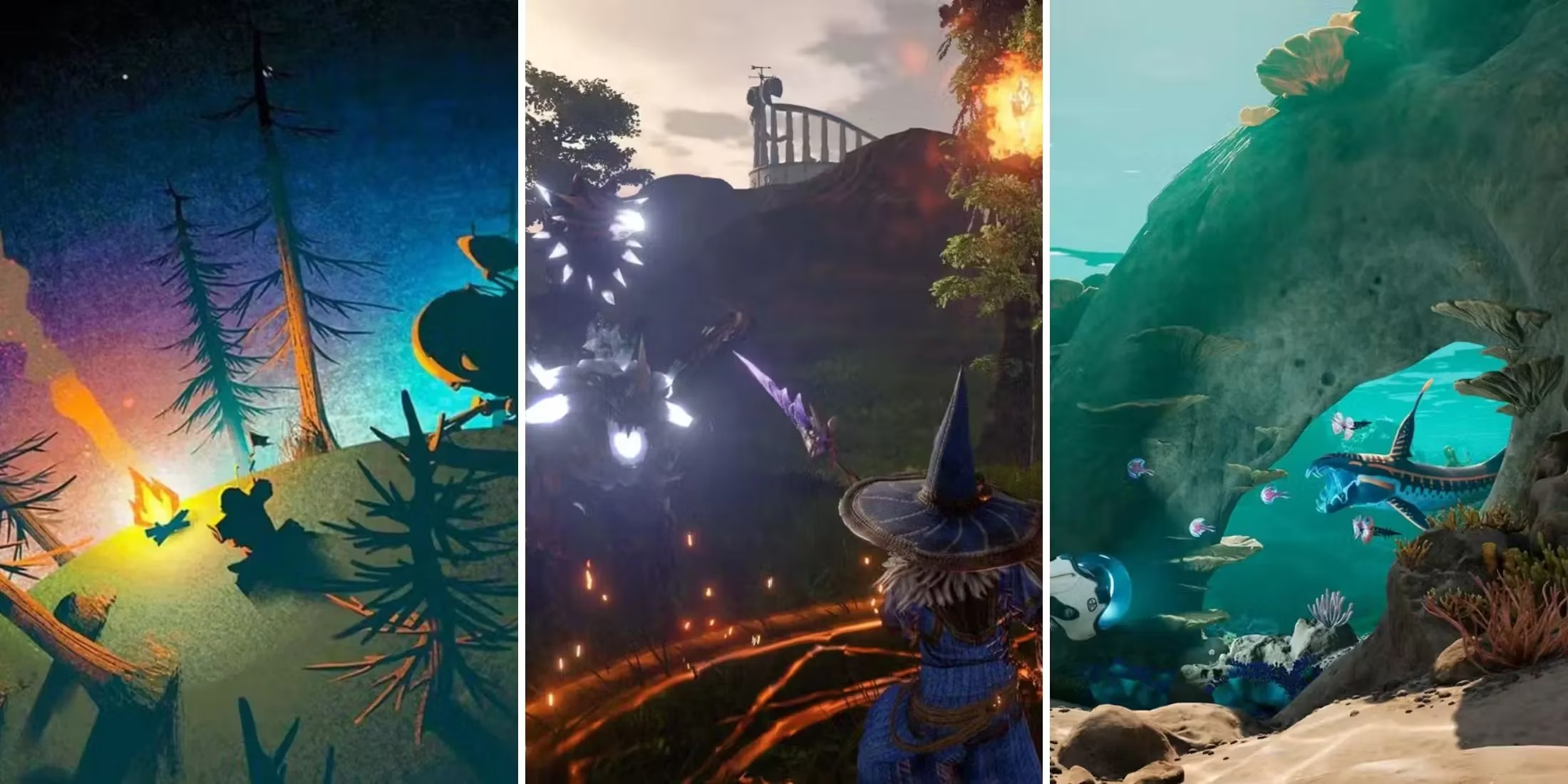
First up, let's talk about Outward. This indie gem is a brutal, beautiful love letter to old-school RPGs. Now, it does have a map... but here's the kicker: your location is never marked on it. 😱 Can you believe that? You literally have to stop, look around at the mountains, ruins, and weird rock formations, and try to match them up with the hand-drawn sketches on your map. It sounds like a hassle, right? But trust me, it completely changes the game. Finding a hidden cave or a secret dungeon stops being a checklist item and becomes a genuine, heart-pounding discovery. You're not following a dot; you're reading the world. It makes every journey feel like a real expedition.
The FromSoftware Philosophy: Memory as Your Guide
Okay, we can't have this conversation without bowing to the masters: FromSoftware. I'm talking about the Dark Souls series, the game that defined a generation and made "You Died" a meme. From the moment you stumble out of that asylum cell, you're on your own. No map, no objective marker, just you and a terrifyingly interconnected world.
Why does this work so well? Because the world is the map. You have to memorize every twist, turn, shortcut, and deadly pit. That path that loops back to Firelink Shrine? You earn the knowledge of that connection through trial, error, and a lot of dead characters. The lack of a map isn't just a missing feature; it's core to the feeling of being a lost, insignificant soul in a vast, uncaring universe. While DS2 and DS3 continued the tradition, the original Dark Souls' labyrinthine design remains the gold standard for map-less navigation. It teaches you that the most important tool isn't in your inventory—it's in your head.
Minecraft & The Joy of Making Your Own Map
Minecraft. The name says it all. This isn't just a game; it's a cultural phenomenon. And a key part of its magic? You start with absolutely nothing, not even a clue about where you are. The world is infinite, mysterious, and yours to unravel.
Sure, you can eventually craft a map. But even the best map only shows you the surface you've walked on. It doesn't reveal the sprawling cave systems beneath your feet or the hidden stronghold lurking in the depths. The game is fundamentally balanced around playing blind. And you know what's the real pro-gamer move? Coordinates. When you're playing with friends and someone shouts, "I found a mansion at -1200, 64, 4500!", that moment of shared discovery is pure magic. Minecraft proves that sometimes, the best map is the one you build yourself, both literally and mentally.
Kingdom Come: Deliverance: Medieval Realism at its Finest
Ever wanted to feel what it was really like to be a peasant in the Middle Ages? Kingdom Come: Deliverance is your answer. This game is obsessed with realism, and that extends to how you find your way. You play as Henry, a blacksmith's son who doesn't have a GPS implanted in his brain.
The map you get is basic—almost useless by modern standards. It shows your rough position and the general area of a quest... maybe. But the real immersion comes from turning all that HUD clutter OFF. Suddenly, you're not following a floating icon. You're listening to an NPC who says, "Meet me by the old oak tree north of the mill at sundown." You have to look for landmarks, ask for directions, and actually pay attention to the world. A quest isn't "go here"; it's a detective story where you piece together clues. It's challenging, sometimes frustrating, but incredibly rewarding when you finally solve it yourself.
Outer Wilds: The Ultimate Blind Experience
Outer Wilds. I have to be careful here, because saying too much is a crime against gaming. This is a game you MUST go into blind. No guides, no spoilers, just pure, unadulterated curiosity.
It is, without a doubt, the purest exploration game ever made. There is no map to your objectives because you don't know what your objectives are. You have a ship, a little scout, and a universe full of mysteries. The "map" you get is a solar system chart, showing you planets. That's it. Where you go, what you do, and how you connect the dots is entirely up to you. The game is built on the foundation that discovery is the core gameplay loop. Giving you a checklist would destroy its very soul. If you play one game from this list, make it this one. Just trust me.
Subnautica: Fear of the Deep Blue Unknown
Last but certainly not least, let's get wet with Subnautica. Imagine being stranded on an alien ocean planet. Now imagine doing that WITHOUT A MAP. That's Subnautica. The crushing depth, the eerie silence, and the terrifying creatures are all amplified by the fact that you have no idea what's around the next coral spire.
The lack of a map is absolutely central to the game's philosophy. You rely on beacons you place yourself, memory, and vague radio signals. That feeling of being utterly alone and vulnerable? That's the point! If the game gave you a perfect layout of the underwater biomes and wreck sites, all the mystery and terror would evaporate. The romance of this adventure comes from the unknown. You're not exploring a mapped location; you're charting the unknown depths yourself, and every new biome feels like a monumental discovery.
So, what's the common thread here? 🤔 These games understand that a map is a tool, but the absence of a map is a design philosophy. It forces engagement, rewards observation, and turns exploration from a task into an adventure. In 2026, where games often feel like they're playing themselves, these titles stand as powerful reminders of why we fell in love with gaming in the first place: the thrill of the unknown.
Have you played any of these? What was your experience like getting gloriously, wonderfully lost? Let me know in the comments! And remember, sometimes the best way to find yourself is to lose the map first. ✨