Pop Culture Builds Still Inspire Minecraft Architects in 2026
Elevate your Minecraft world with 2026's best pop culture builds, from the Going Merry ship to the undercity of Zaun.

The boundless sandbox of Minecraft continues to fuel one of the most imaginative communities in gaming. As players settle into 2026, two years after the Tricky Trials update introduced the crafter, copper bulbs, and trial chambers, the quality and ambition of player-made structures have only skyrocketed. From faithful reconstructions of anime vessels to sprawling cyberpunk dystopias, veteran builders keep proving that the right pop culture spark can ignite a masterpiece. Whether you are laying the first block of a survival cottage or planning a megabase on a multiplayer server, these celebrated projects remain a goldmine of architectural inspiration.
Sailing the Seas with the Going Merry

TSMC’s rendition of the Straw Hat Pirates’ first ship continues to captivate builders who want to add naval charm to their worlds. The creation shines through its proportionally accurate, survival-friendly footprint, proving that you don’t need a supercomputer to construct something memorable. Every detail, from the iconic Merry figurehead to the billowing pirate flag, uses a robust and rustic block palette that leans on stripped logs, spruce planks, and wool. The lesson here is clarity: pick a focused palette and let the silhouette do the talking. With new copper grate blocks and tuff variants available since 2024, builders can now introduce more textural nuance to the hull and deck details without breaking the nautical theme.
Embracing Industrial Undercity Grit
Fireafinity’s Zaun-inspired district, shared on Reddit, demonstrates how dilapidated beauty can tell a story. Dim lanterns, oozing soul soil, and tightly packed houses with mossy cobblestone roofs create a cohesive atmosphere of beautiful decay. What makes this build instructive is its mastery of competing colors—corroded blues, sickly greens, and warm amber glows—all loosely corralled by gray brick facades. For players experimenting with the pale oak and resin blocks added in recent updates, blending these muted tones can produce an aged, lived-in look that feels authentic rather than chaotic. This is a masterclass in using lighting and runoff details to make a house feel part of a larger, breathing city.
Soaring Above with Tears of the Kingdom
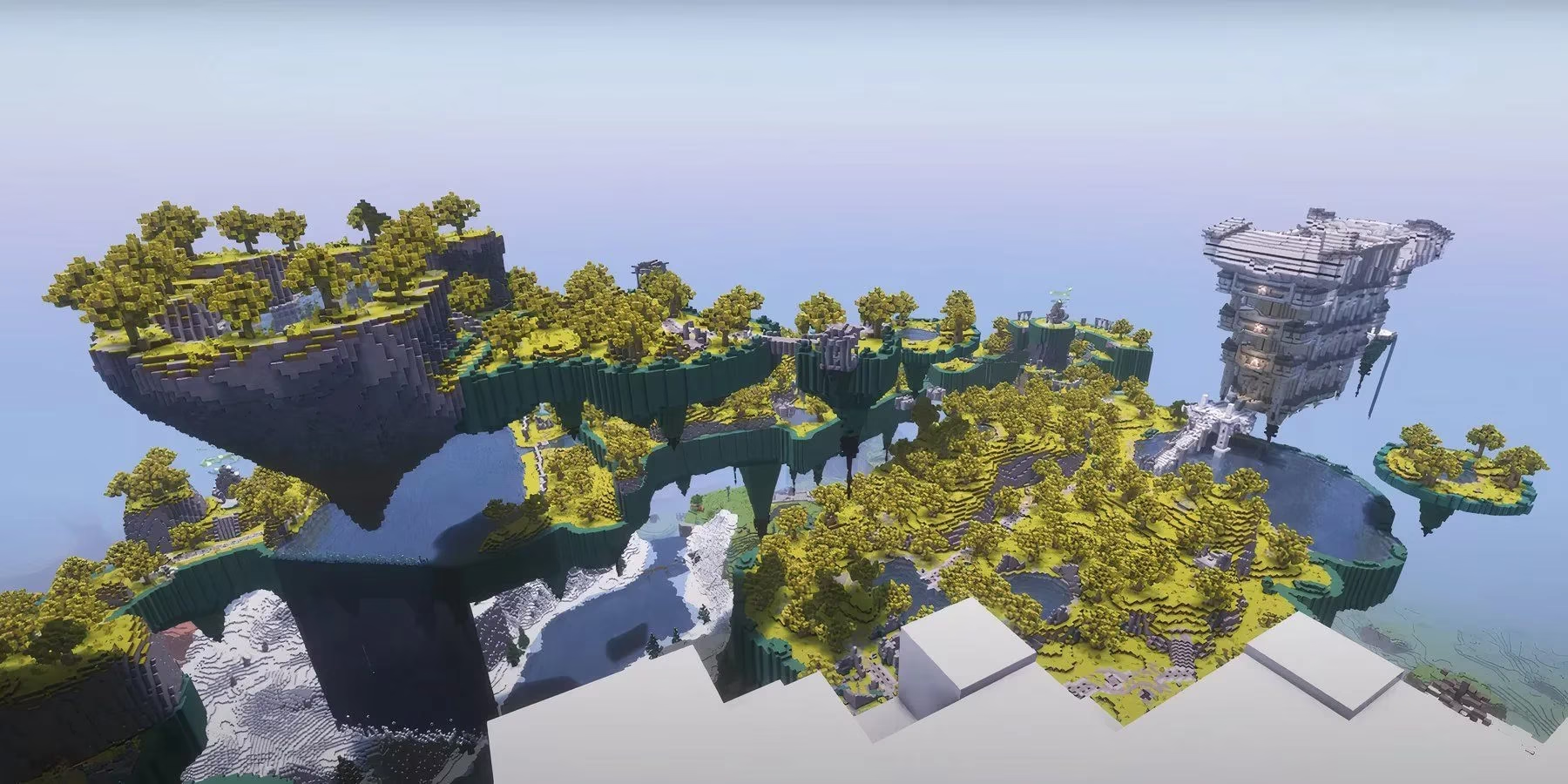
Grazzy’s floating tribute to The Legend of Zelda: Tears of the Kingdom remains a beacon for sky-bound builders. The Great Sky Island rebuild makes extensive use of uncommon block palettes—rooted dirt, calcite, and oxidized copper—to craft floating cliffs and mechanical interiors that feel ripped from a Hylian dream. The takeaway for 2026 architects is the power of verticality. Instead of a traditional cottage on a plains hill, consider a house suspended among the clouds where the new wind charge mechanics and breeze mobs can be woven into the setting. Parcels of land connected by chain bridges and illuminated by copper bulbs turn a lonely skybox into a mythical settlement.
Building a Nexus in Mondstadt
SkyblockSquad’s 1:1 reconstruction of Mondstadt from Genshin Impact offers a timeless template for fantasy homesteads. The towering stone walls and red-tiled roofs create an enclosed universe that works in almost any biome, from cherry blossom groves to snowy taigas. Builders can cherry-pick elements—a windmill here, a half-timbered façade there—and merge them with other inspirations to forge a unique fusion. The release of Genshin Impact’s 6.0 arc in 2025 has only intensified interest, and the newly added cherry wood and bamboo mosaic blocks let players replicate the European-meets-anime aesthetic with even greater fidelity.
Surviving the Apocalypse in a Vault
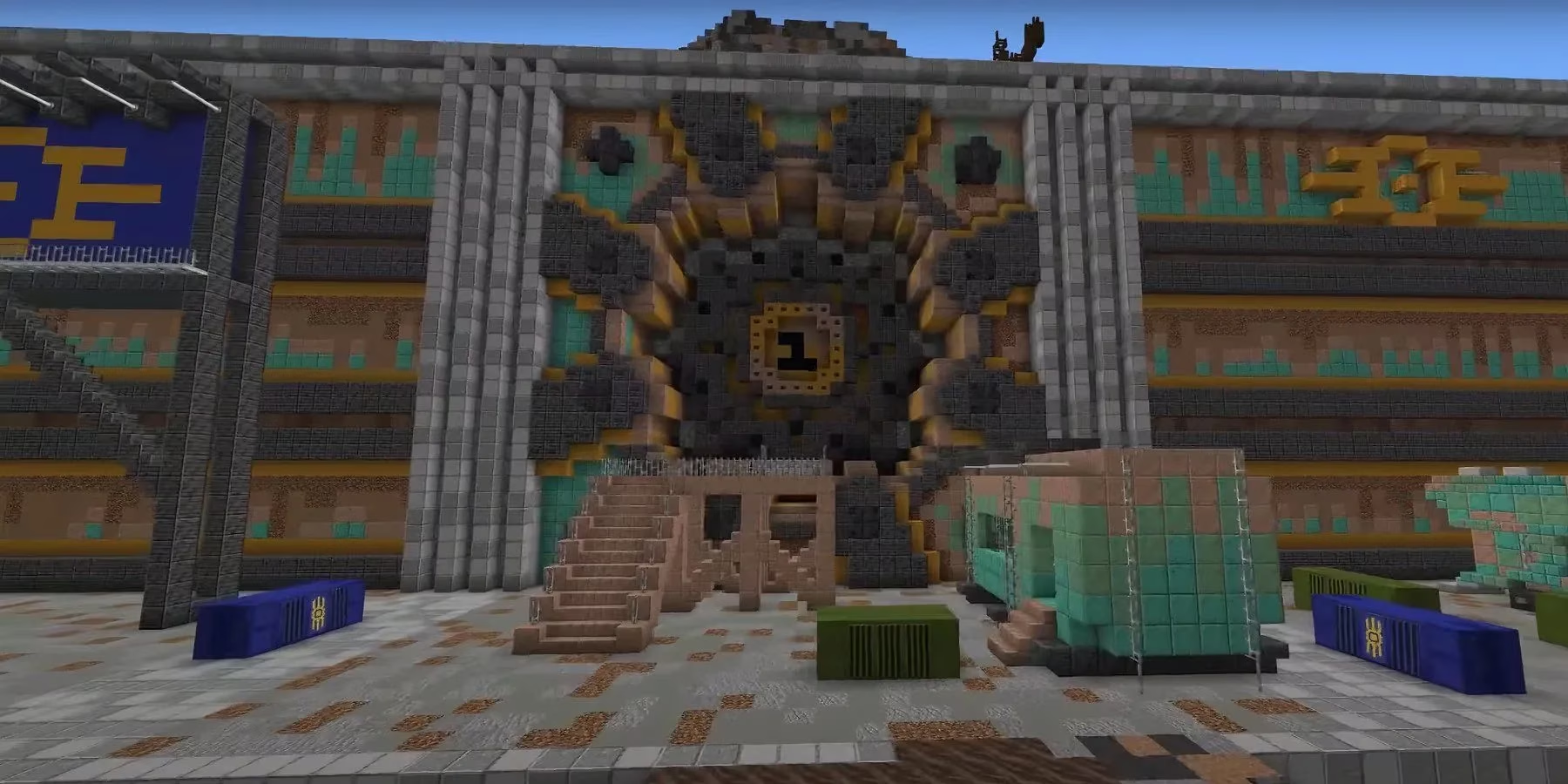
MJ’s Fallout vault taps into the post-apocalyptic zeitgeist that remains strong thanks to the TV series and recent game expansions. The bunker uses coarse dirt, gravel, and concrete powder to simulate radiation-scarred earth, while neon yellow and green signpost the vault entrance like a lighthouse in a wasteland. This technique of directing attention with high-contrast color pops is invaluable for any house built in a dreary environment. Incorporating mud bricks and suspicious sand introduced in the archaeology update can further sell the sense of a ravaged landscape, making your shelter feel like the last bastion of civilization.
Neon Dreams in a Cyberpunk Realm
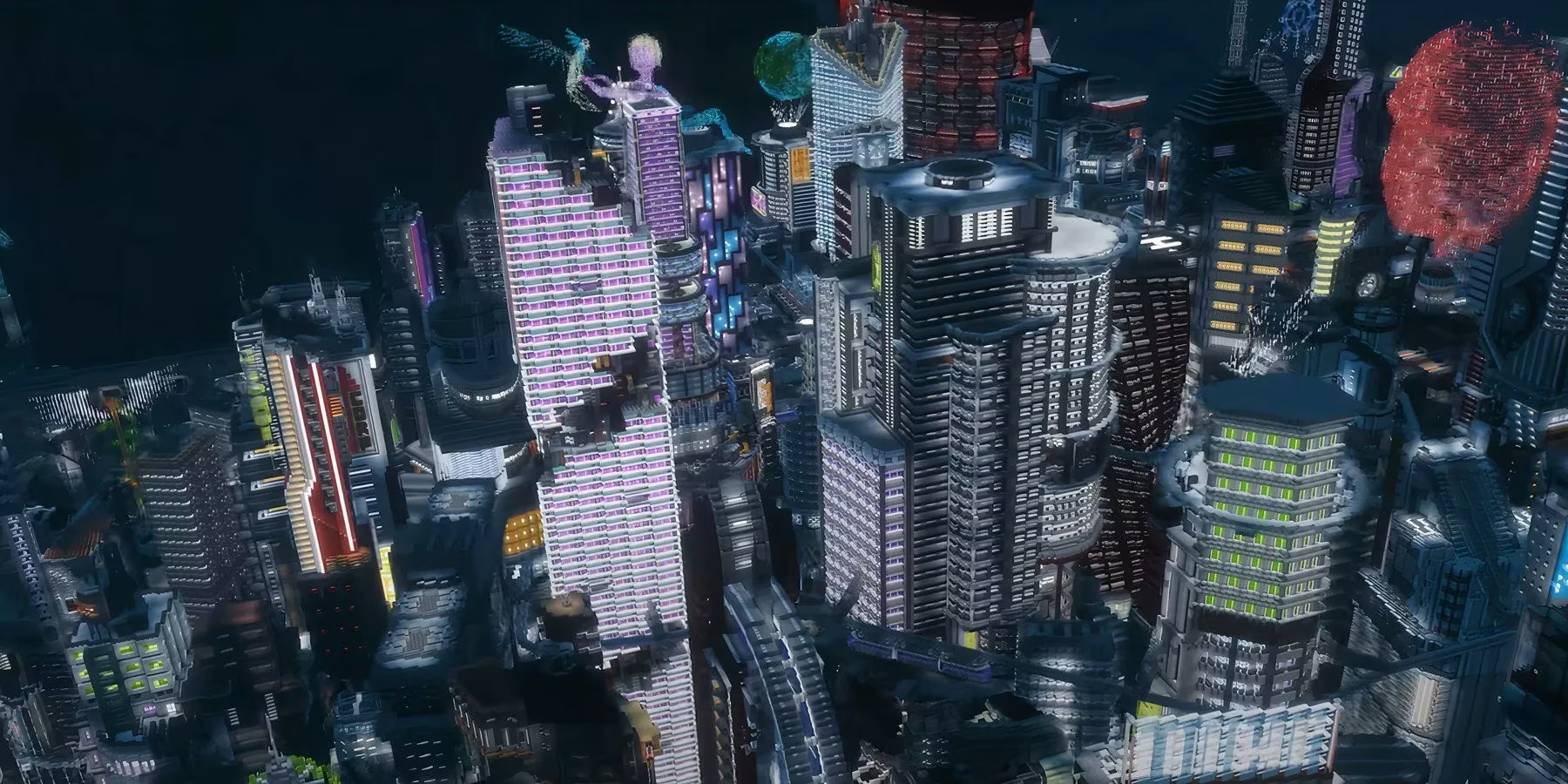
Elysium Fire’s four-year Cyberpunk Project continues to exemplify how lighting transforms a build from day to night. Under moonlight, the city’s neon signs, sea lanterns, and froglights cast a multicolor glow over dark concrete and blackstone towers. The key insight is that a house can have two identities: a skeletal structure by day and a vibrant spectacle by dusk. With the addition of calibrated sculk sensors and newer light sources, builders can now program mood lighting that responds to movement, making a cyberpunk apartment block feel alive.
Gotham’s Everlasting Shadow
Bored Minecraft’s decade-spanning Gotham City recreation remains the ultimate case study in urban scale. Wayne Manor’s brooding silhouette, the GCPD headquarters, and the elevated train lines show that even the most ambitious projects are assembled one block at a time. The builder’s commitment to recognizable landmarks teaches a crucial lesson: anchor your house or district with a focal point that viewers instantly recognize, then build outwards. Deepslate and blackstone now offer darker, more nuanced shades than were available when the project began, letting fans inject even more Bat-gloom into their own creations.
Bridging Function and Fantasy
Linard’s bridge city straddles a mountain valley, fusing infrastructure with habitation. Each house packed to the brim with detail proves that constraints breed creativity—the narrow bridge forces a compact footprint that results in richly layered interiors. Modern builders can draw on decorated pots, hanging signs, and armor stand tricks to add personality without claiming more space. The snow-dusted mountains that overlook the settlement remind us that environment should always be a silent collaborator; a house nestled into the landscape will always feel more grounded than one plopped on flat terrain.
Drawing from Assassin’s Creed Silhouettes
Miserere’s Nashik parkour map highlights how simplicity and scale coexist. The repetitive yet elegant profiles of the sandstone structures create a rhythm, while small accents—invisible item frames holding anvils as torch brackets—show expert-level detailing. For the everyday builder, this underlines the value of reusable modules. Design one sleek façade, then replicate it across a street or courtyard to form a harmonious compound. Modern blocks like chiseled tuff and oxidized copper grates can break the repetition just enough to keep the eye moving.
Looking Ahead
The common thread linking these projects is adaptability. Whether you are shrinking a pirate ship to survival scale or enveloping a city in neon, the core principles of palette discipline, environmental integration, and focal-point lighting remain unchanged. As Mojang continues to roll out fresh building tools—most recently the pot-sherd variety and updated world-generation—the only true limit is imagination. Let these pop culture marvels remind you that the next awe-inspiring Minecraft house is just a spark of inspiration away.