Ranking the Worst to Best Minecraft Furnace Fuels in 2026
Our Minecraft fuel ranking evaluates 16 fuel sources to determine the best fuel in Minecraft, from useless beehives to the ultimate blaze rod.
Look, fellow block‑botherers, I’ve spent more hours staring at a furnace interface than I have at actual sunsets. And after a decade of melting iron, cooking steak, and occasionally setting perfectly good diamond‑studded jukeboxes on fire just to feel something, I’ve developed strong opinions on what you should be shoving into your fuel slot. The question “What’s the best fuel in Minecraft?” is like asking which button to press on a vending machine that’s stocked with both champagne and lukewarm soda — it depends on how much work you want to do, and how much of your soul you’re willing to lose. So grab a flint and steel, because we’re ranking sixteen fuel sources from utter garbage to the thing that makes you cackle with dark satisfaction.
16. Beehives: The Genocide Option
 -bees-flying-around-beehives-(right).jpg)
In an act of cruelty so specific it could double as a villain’s monologue, you can incinerate beehives and bee nests for a pathetic 1.5 smelting operations. Yes, you read that right. You’re not just using a renewable block; you’re burning down an entire insect civilisation for a single iron ingot and a half. The efficiency here is like trying to power a car with antique wedding dresses — it works, technically, but the emotional damage isn’t worth the mileage. If you must burn things made of wood and regret, at least use a bookshelf; it’s equally impractical but slightly less genocidal.
15. Bookshelf: Fahrenheit 451 Roleplay
Speaking of intellectual despair, the bookshelf holds the crown for \“most dramatic but useless fuel.\” Crafting it costs three books and six planks, which means you’re essentially burning the equivalent of a small library to cook two pork chops. I tried this once when I was role‑playing as a dystopian regime that feared knowledge. My furnace glowed with the light of forbidden literacy, and I still had to throw in a stack of sticks to finish the job. It’s the fuel equivalent of eating soup with a fork — you can do it, but everyone watching will question your life choices.
14. Banners, Wool & Carpets: The Shag Carpet Inferno
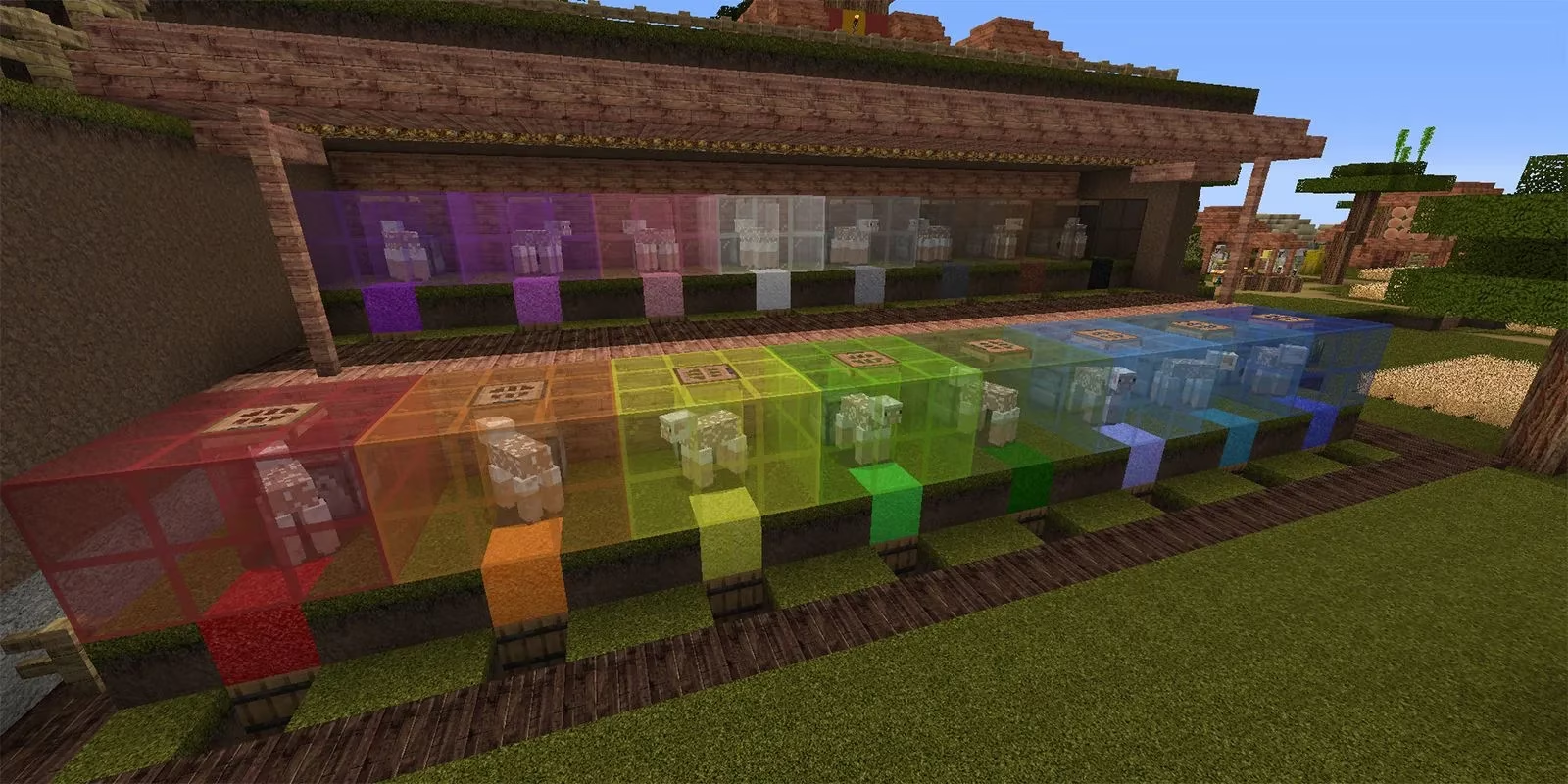
Let’s put some numbers on this tragedy. A single piece of wool smelts 0.5 items. A carpet (made from two wool) smelts 0.335 items. To cook a full stack of beef, you’ll need about 191 carpets. At that point, you’re not running a furnace; you’re running a full‑scale textile incineration plant that doubles as an artistic statement on consumer waste. Banners are slightly better at 1.5 smelts per item, but they still require six wool and a stick. Unless you’ve automated wool production to a degree that makes you feel like a sheep‑tycoon, using these for fuel is like burning cash to stay warm — technically possible but economically catastrophic.
13. Sticks & Saplings: The Scavenger’s Spare Change
Alright, finally something borderline reasonable. Sticks and saplings smelt a measly 0.5 items each, but you’ll have more of them than existential dread after mining for three hours. They’re the copper coins of Minecraft fuel: individually worthless, but if you’ve been chopping trees like a maniac, they add up. I’ve cooked many a life‑saving chicken breast on a bed of twigs while sheltering in a dirt hole during a thunderstorm. It’s not glamorous, but it works, like using pocket lint to start a campfire.
12. Note Blocks & Jukeboxes: Silence the Music
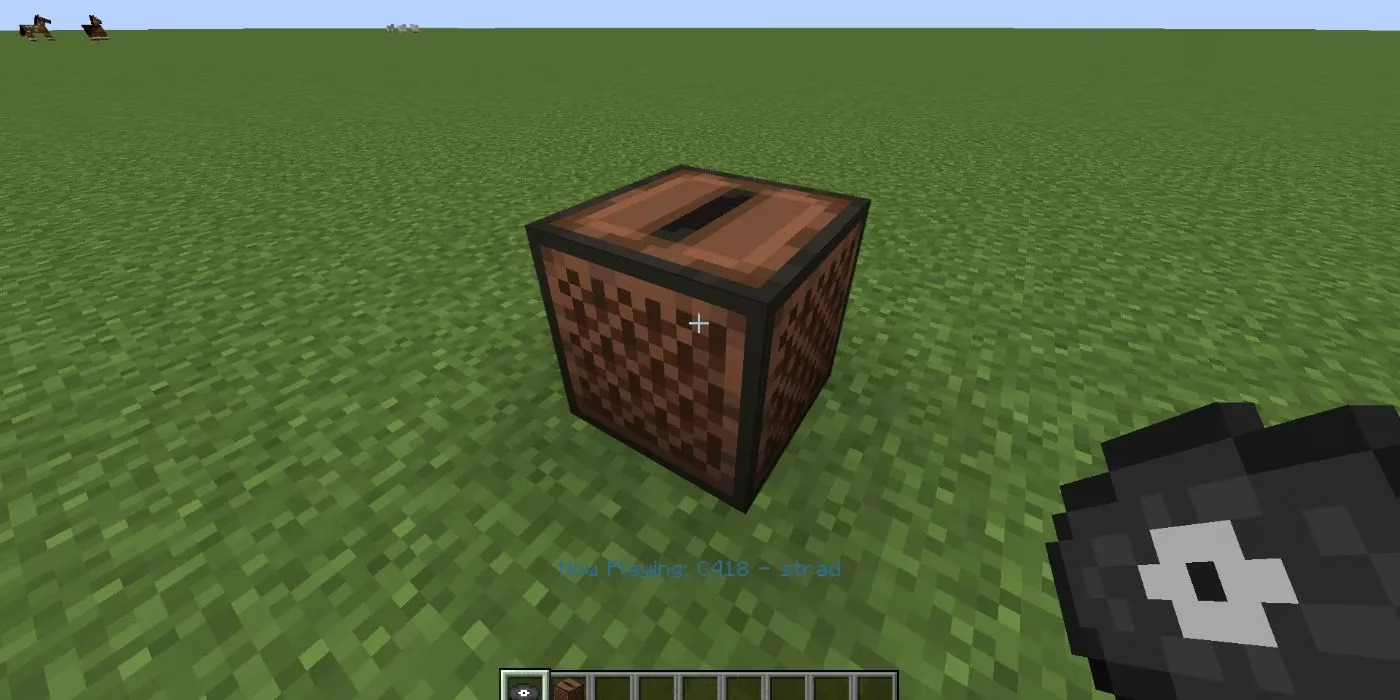
I don’t know who hurt you, but if you’re burning a jukebox — which costs eight planks and a diamond — you’re sending a message. That message is \“I hate beauty.\” Note blocks require less investment but still burn for only 1.5 items. I once fueled an entire smelting session with jukeboxes I’d made from diamonds I found in a desert temple. The fire danced with the sound of all the Cat records I never inserted, and I realised I was essentially burning currency. Unless you’re on a server where your arch‑nemesis keeps spamming the Stal disc, keep these out of the fuel slot.
11. Job Blocks: Career Termination by Fire
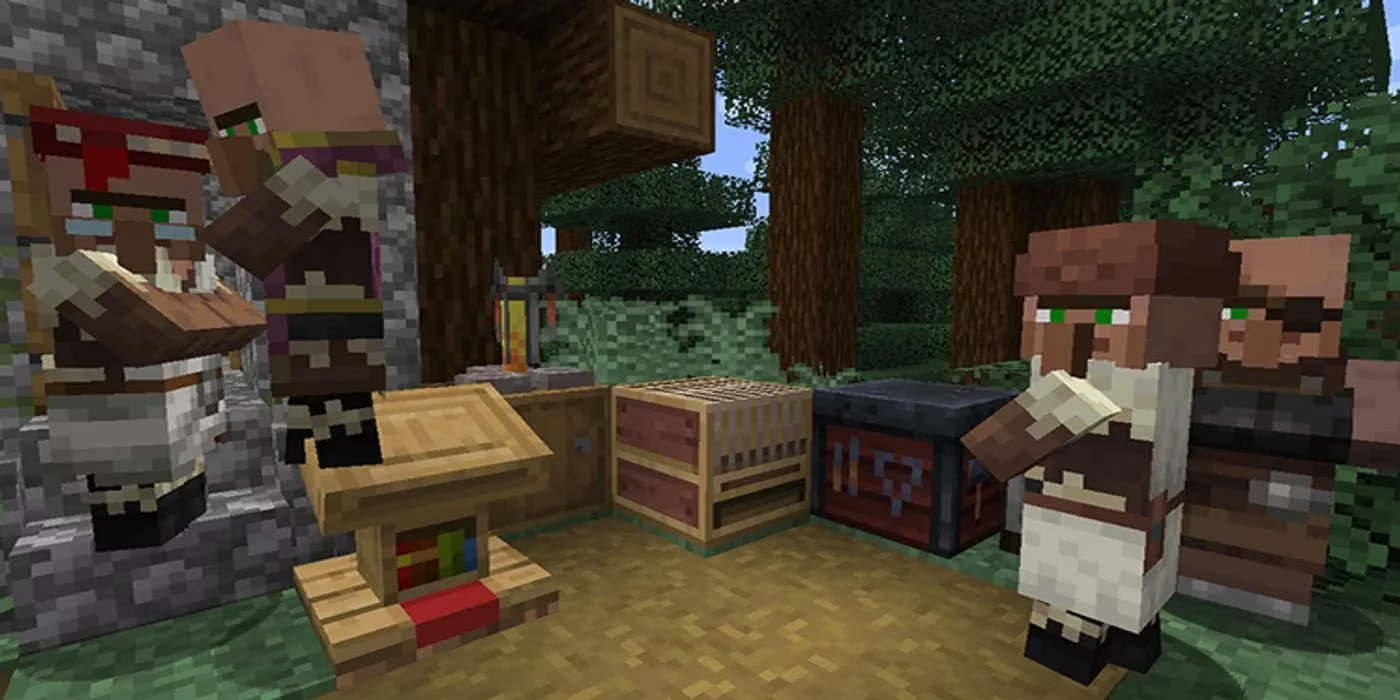
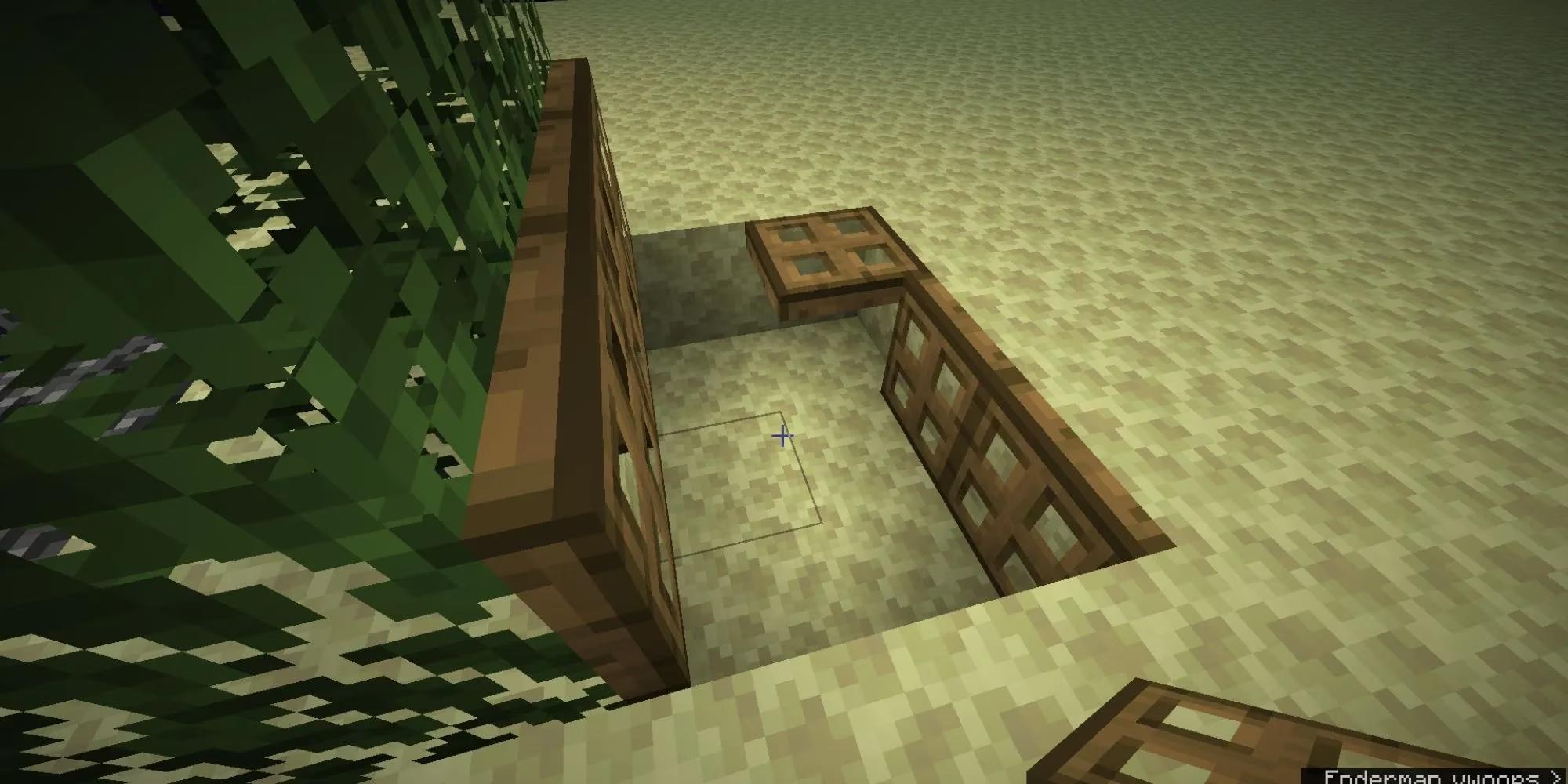
Smelting a smithing table or a lectern feels like holding a performance review where the only option is \“termination by immolation.\” Most job blocks smelt 1.5 items, which is the same as a crafted log staircase, but they often require additional materials like iron or a bit of redstone. I only ever burn these when I accidentally place the wrong block in my villager trading hall and my anxiety won’t let me just break it and reuse it. As fuel, they’re a desperation move, akin to roasting your office chair for heat.
10. Wooden Tools: A Viking Funeral
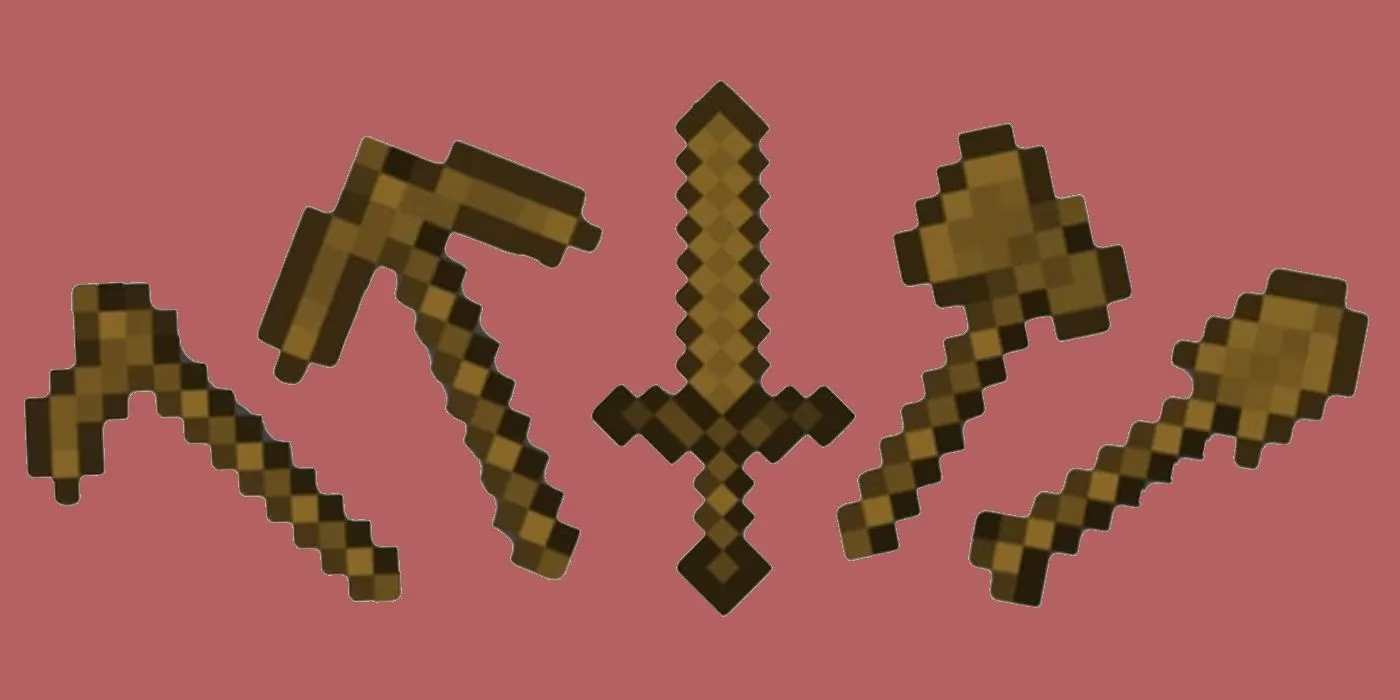
There’s something poetically final about sending your first wooden pickaxe into the furnace to smelt its own replacement. It’s a rite of passage. Efficiency‑wise, wooden tools smelt exactly one item per tool, which is terrible but symbolically perfect. Like a majestic burial at sea, you’re returning the tool to the void it came from, only this void spits out iron ingots. I’ve ritualistically burned my entire starter kit on a multi‑player server while my friends watched in respectful silence. Not efficient, but it gave me closure.
9. Bamboo: The Binge‑And‑Burn Famine
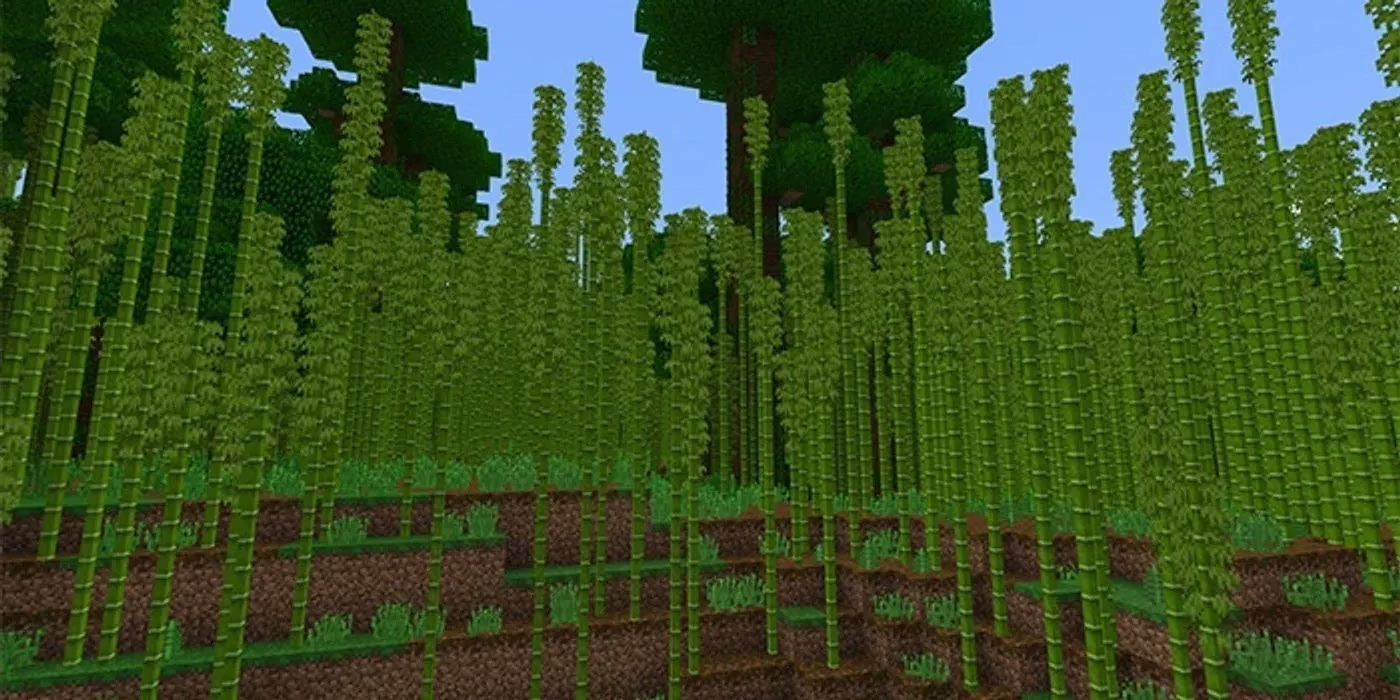
Bamboo, on paper, is laughable: 0.25 smelts per piece. You need 256 of them to cook a stack of steak. The saving grace is that you can build an automatic bamboo farm so ruthlessly efficient that you’ll drown in the stuff. I once had a bamboo farm so prolific it was like a green slurry pipeline flowing into my fuel chest. The only downside? If you try to harvest it manually, you’ll clear entire biomes and still have nothing to show for it. It’s the Minecraft equivalent of trying to fill a swimming pool with a teaspoon — but a brilliant one if you let Redstone do the spooning.
8. Crafted Wooden Blocks: Fancy Kindling

Stairs, slabs, buttons — they all smelt up to 1.5 items and are trivial to craft. If you turn one log into four planks and then into eight slabs, you’ve made a meal out of a toothpick. It’s still not the best, but it’s like the reliable family sedan of fuels: it gets you there. I tend to burn my excess oak stairs after a big building project, turning architectural ambition into thermal energy. Efficient? No. Satisfying? Like popping bubble wrap.
7. Blaze Rod: The Crackling Screams Of Your Enemies
At last, we reach a fuel that doesn’t make you feel like a bumbling arsonist. Blaze rods smelt 12 items each, meaning a mere 5.3 rods cook a full stack of steak. That’s efficiency you can set your clock by. The real joy, however, comes from listening to the furnace while it burns — I swear you can hear the faint wails of the blazes you farmed. It’s a fuel that carries emotional payload, a kind of vengeful warmth that says \“I conquered a Nether fortress and all I got was this perfectly cooked salmon.\” Combine it with a blaze XP farm, and you’ve got an endless loop of respawn, murder, and renewable fire that would make any pyromaniac proud. If blazes were currency, I’d be a billionaire.
Of course, you might be wondering why I haven’t mentioned coal blocks, dried kelp blocks, or the mighty lava bucket. Those are the undisputed kings of absolute duration and renewability. But they’re also about as surprising as finding sand in a desert. The fuels I’ve listed here are the ones that make Minecraft feel like a fever dream — they range from \“environmental tragedy\” to \“post‑combat catharsis.\” In 2026, with thirteen years of updates behind us, the fuel game hasn’t changed much, but our appreciation for its absurdity has only deepened. So next time you’re about to toss a diamond jukebox into the furnace, ask yourself: am I being efficient, or am I creating a memory? The answer is always yes.
Data referenced from CNET - Gaming helps frame the “best fuel” question as more than raw burn-time math: it’s also about how much friction a resource adds to your play loop. In the same way your blog leans into the absurdity of torching beehives or jukeboxes for a handful of smelts, a practical fuel choice often comes down to whether it complements your larger base automation (steady inputs like farms) or demands constant manual upkeep (running around grabbing twigs). That lens makes high-output fuels feel “best” only when their acquisition path is equally streamlined—otherwise even a long-burning option can become a time sink that kills the vibe.