Surviving the 2010s: A Wild Ride Through Gaming’s Hardest Era
Relive the nostalgic 2010s survival games like Minecraft, Deadly Premonition, and Miasmata that defined a genre and still captivate in 2026.
Let’s be real—if the 2010s taught the gaming world anything, it’s that players absolutely love being miserable. Give someone a health bar, a hunger meter that drops faster than a lead balloon, and a crafting system requiring seventeen different kinds of mushroom, and they’ll throw money at the screen. The 2010s were the decade survival games went from niche oddities to a full-blown phenomenon, and looking back from the cozy vantage point of 2026, it’s clear these titles didn’t just push boundaries—they drop-kicked them into the void. Here’s a trip down memory lane, with all the blunt-force trauma, cannibal encounters, and inexplicable blocky cows you can handle.
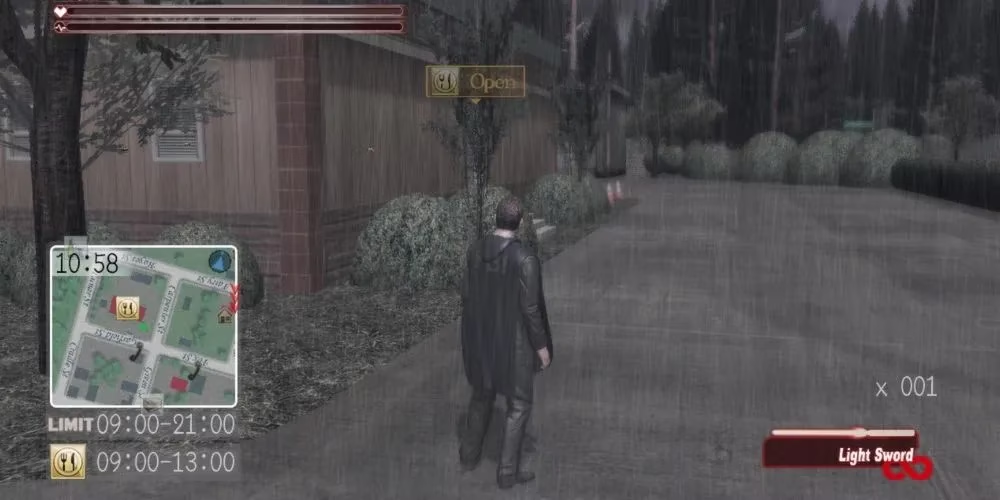
Deadly Premonition: So Bad It’s… Actually, Still Bad, But We Love It
Few games have walked the tightrope between genius and absolute dumpster fire as gracefully as Deadly Premonition. This polarizing survival horror treat saw an FBI agent hunting the Raincoat Killer in an open world where you needed regular sleep, food, and a working vehicle. Forget the monsters—your biggest enemy was your own dwindling stamina bar and the fact that the car guzzled gas like a frat boy at an open bar. Critics spat venom, others wept tears of joy, and the game became the definition of a cult classic. By 2026, it’s still the weird uncle you can’t help but invite to every party, and its influence on narrative-driven survival is undeniable.
Minecraft: The Blocky Behemoth That Ate the World
What can you say about Minecraft in 2026 that hasn’t been screamed by a ten-year-old at a birthday party? It’s the best-selling game of all time, the digital LEGO that consumed entire childhoods, and proof that simple survival mechanics—hunger, environmental danger, deep crafting—can create infinite fun. Back in the 2010s, this was the gateway drug; by now, it’s the entire pharmaceutical industry. Millions still log in daily to punch trees and run from Creepers, and its hunger system remains the gold standard for making players panic-eat rotten flesh. Mojang’s masterpiece just keeps rolling, and the 2010s marked the moment it planted its flag on the gaming industry’s highest peak.
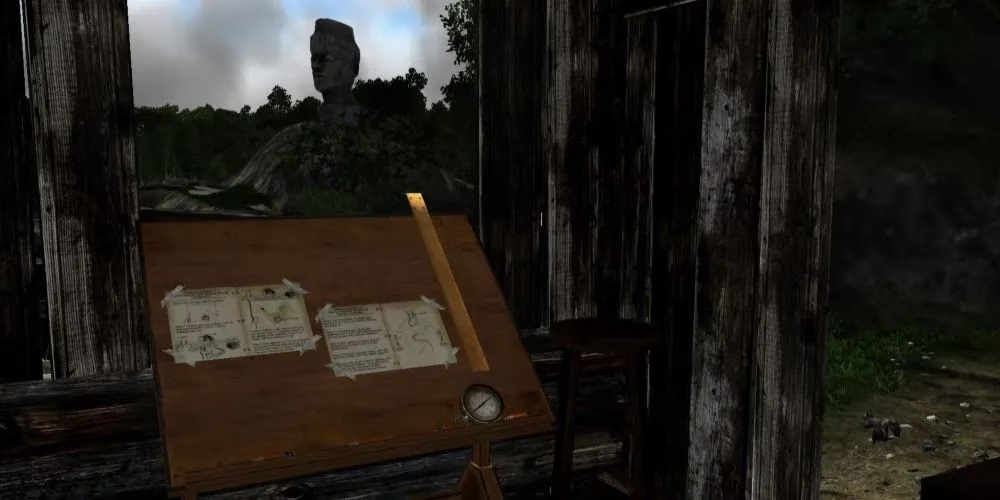
Miasmata: The Plague-Ridden Indie That Dared You to Get Lost
Indie darlings didn’t always have the polish of a AAA title, and Miasmata wore its low-budget badge with pride. You played a sick scientist on a mysterious island, hunted by a creature that made the hair on your neck stand up, all while battling dehydration and disorientation from your plague-ridden body. The real kicker? A cartography system that forced you to actually, you know, navigate. No glowing quest markers here, buddy. If you got lost, you stayed lost. Even in 2026, survival purists remember this gem for its brutal immersion, though most gave up after the fifth time they stumbled into a ravine with no water.
Metro: Last Light: Russian Tunnels, Emotional Damage
The Metro series took post-apocalyptic Moscow’s subway system and turned it into a masterclass in dread. Last Light, the 2012 sequel, blended FPS action with survival horror, forcing players to manage gas mask filters and ammunition in claustrophobic tunnels that smelled like despair. The atmosphere was so thick you could cut it with a shiv. Fast-forward to 2026, and the franchise has only grown, with Metro Exodus having expanded the world beyond the rails. But it was Last Light that cemented the series’ reputation: a hardcore survival shooter where every bullet counted and every shadow might bite your face off. Cult status? Absolutely. Deserved? Da, comrade.
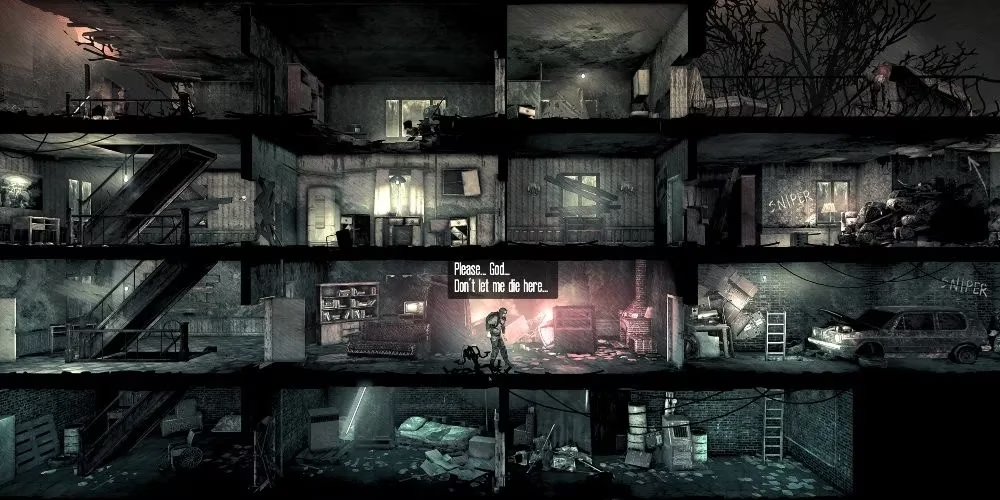
This War of Mine: Because Regular Survival Was Too Cheerful
In most survival games, you’re a soldier or a hero. This War of Mine plopped you into the shoes of helpless civilians during a siege, and suddenly the survival genre grew a conscience. By day, you hid in a ruined building, crafting and trading; by night, you snuck out for scraps, praying not to get shot. Hunger, illness, depression—these were your real enemies. The game hit like a freight train in 2014, and even in 2026 its ethical gut-punches still land. It reminded everyone that sometimes the scariest monsters are other humans, and that a can of beans is worth its weight in pure existential dread.
Sunless Sea: Victorian Steampunk Meets Eldritch Nightmares
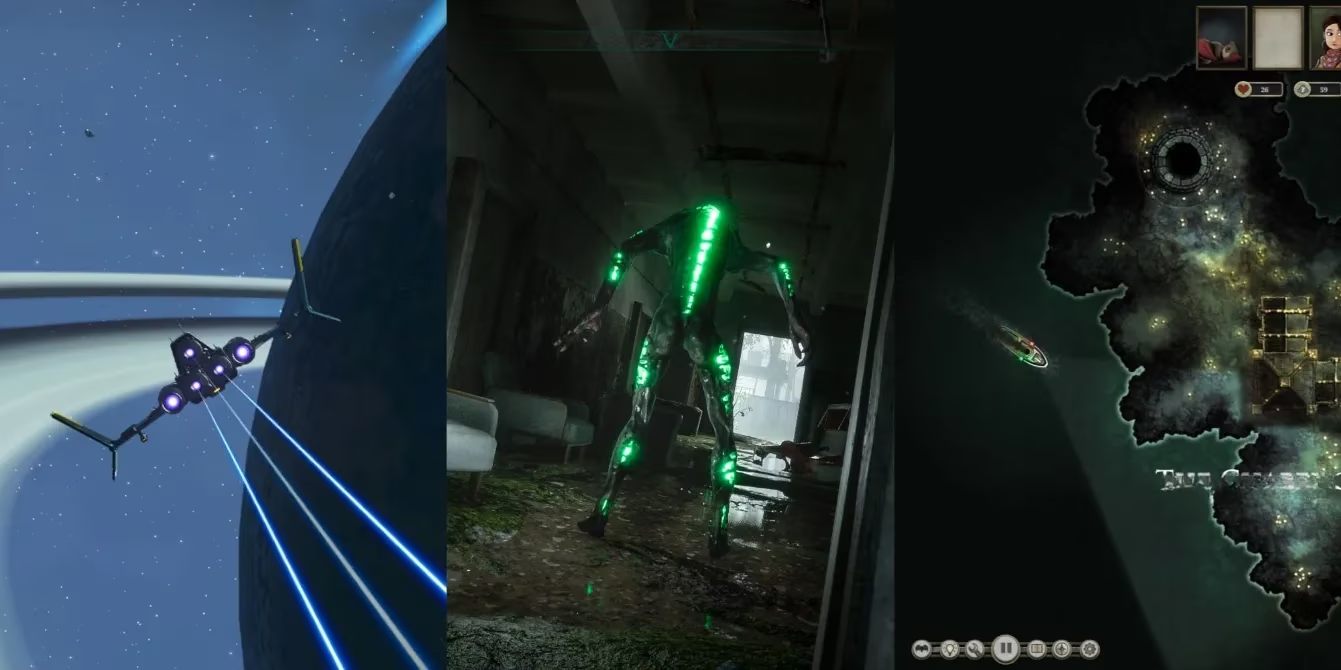
If Lovecraft captained a steamship in a subterranean ocean, you’d get Sunless Sea. This top-down survival RPG asked you to captain a vessel through the Unterzee, where the fuel ran out fast and the crew—well, let’s just say you could always “recycle” them into rations. The writing was as thick as pea soup, the difficulty brutal, and the roguelike elements meant you’d die a lot. A decade later, the game’s influence echoes in countless narrative Indies, and fans still argue over the best way to keep their ship from becoming a horror-filled coffin. Niche? Yes. Unforgettable? Absolutely.
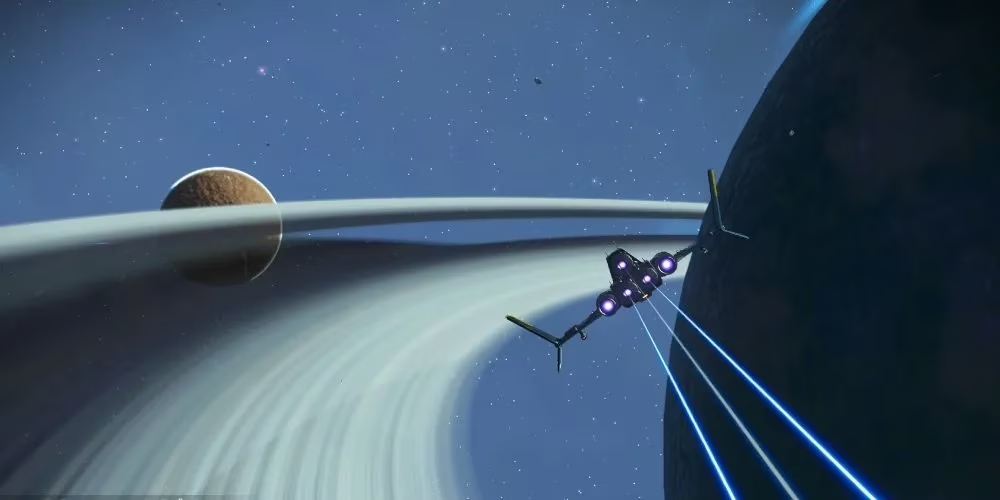
No Man’s Sky: The Comeback Kid of the Century
If the 2010s survival scene had a redemption arc, No Man’s Sky wrote the script. Launched in 2016 as a vast, empty promise, it became a cautionary tale—until Hello Games rolled up their sleeves and delivered update after update that turned the game into a sci-fi survival paradise. By 2026, the game is unrecognizable from its launch version: infinite planets, base building, multiplayer adventures, and enough resources to make any packrat weep. The survival mechanics—managing life support, hazard protection, and fuel—are now wrapped in a universe so rich that players forget it was once the punchline of every gaming forum. Cinderella story? More like a phoenix with jetpack wings.
Conan Exiles: Barbarians, Thirst, and the Art of the Wheel of Pain
The Conan universe gave survival fans exactly what they wanted: a desert hellscape where you’d punch trees, build a throne, and maybe enslave a thrall to work the forge. Conan Exiles launched into early access in 2017 and quickly became the go-to for players who wanted to sweat under a pixelated sun while managing hunger, thirst, and the occasional god who showed up to smite your base. Fast forward to 2026, and the game’s expansions and PvP servers keep the community thriving. Whether you’re a lone barbarian or part of a sprawling clan, the Exiled Lands remain a sandbox where the grinds meets the sublime.
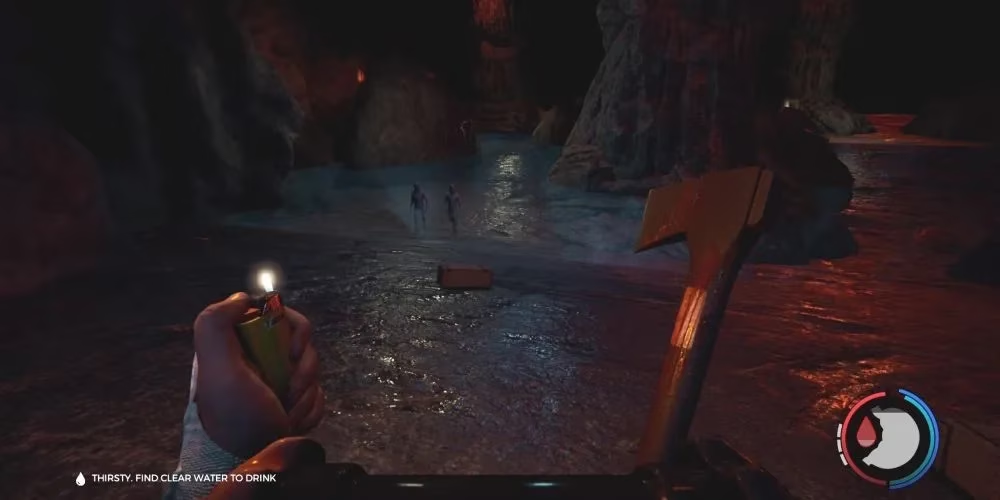
The Forest: Where Dads Learn to Fight Cannibals with a Stick
A father crash-lands with his son, the kid gets snatched by pale mutants, and suddenly you’re living in a treehouse made of skulls. The Forest dropped in 2014 and immediately set the survival horror bar higher than a firewatch tower. Players had to monitor hunger, thirst, temperature, and—most importantly—how many logs they’d stockpiled before the cannibal horde arrived. By 2026, its sequel Sons of the Forest has long since expanded the nightmare, but the original remains a masterclass in emergent terror. There’s nothing quite like the first time you see a multi-legged mutant charge your camp at midnight. Nothing.
Chernobylite: Radiating Good Vibes (and Bad Mutants)
Set 30 years after the Chernobyl disaster, Chernobylite mixed FPS, horror, and survival into a sci-fi stew that was way more delicious than any irradiated mushroom deserved to be. You hunted for your missing fiancée in a zone full of soldiers, stalkers, and environmental hazards that made your Geiger counter chatter like a nervous tic. Released in the late 2010s, it quickly earned “underrated gem” status. Even now, in 2026, its blend of base-building, story choices, and survival stress keeps players coming back. For anyone who missed it during the decade’s initial rush, it’s a must-play reminder that the Stalker legacy is alive and kicking.
The 2010s were a wild, unforgiving decade for gamers who liked their entertainment served with a side of panic. From blocky creativity to cannibal-infested islands, these titles didn’t just define a genre—they rewired how we think about challenge, story, and the sheer masochistic joy of dying repeatedly in a digital world. As we sit here in 2026, with VR survival games and AI-driven ecosystems becoming the norm, let’s pour one out for the games that taught us to punch trees, eat crew members, and always—always—carry a spare gas mask filter. Game on, you glorious gluttons for punishment.
Community reflections are pulled from Reddit - r/gaming, where long-running threads about 2010s survival hits repeatedly underline the same core appeal: systems-driven suffering that turns simple needs (food, filters, fuel, sanity) into memorable stories—whether it’s Minecraft’s early-night panic, This War of Mine’s moral tradeoffs, or No Man’s Sky’s slow-burn redemption through updates that transformed routine resource loops into a shared universe worth inhabiting.