The Art of Crumbling Worlds: Games That Let You Demolish Everything
Embrace the visceral thrill of unscripted destruction physics in the best games where every wall is a temporary suggestion.
There are few things in gaming as viscerally satisfying as watching a structure groan, fracture, and finally collapse under the weight of your explosive fury. It is the digital equivalent of a perfectly executed domino fall—every fragment of debris becomes a small celebration of chaos. Yet, this pleasure is often confined to tightly scripted sequences where the player merely triggers a pre-baked spectacle. The true magic emerges when destruction is an unscripted byproduct of the systems themselves, when a tank shell can logically turn a suburban home into a cloud of splinters because the engine says so, not because the director demanded it. In 2026, as game engines grow more sophisticated, these moments of emergent mayhem remain golden relics of interactive freedom, and a handful of titles stand as monuments to what it means to truly level the playing field.
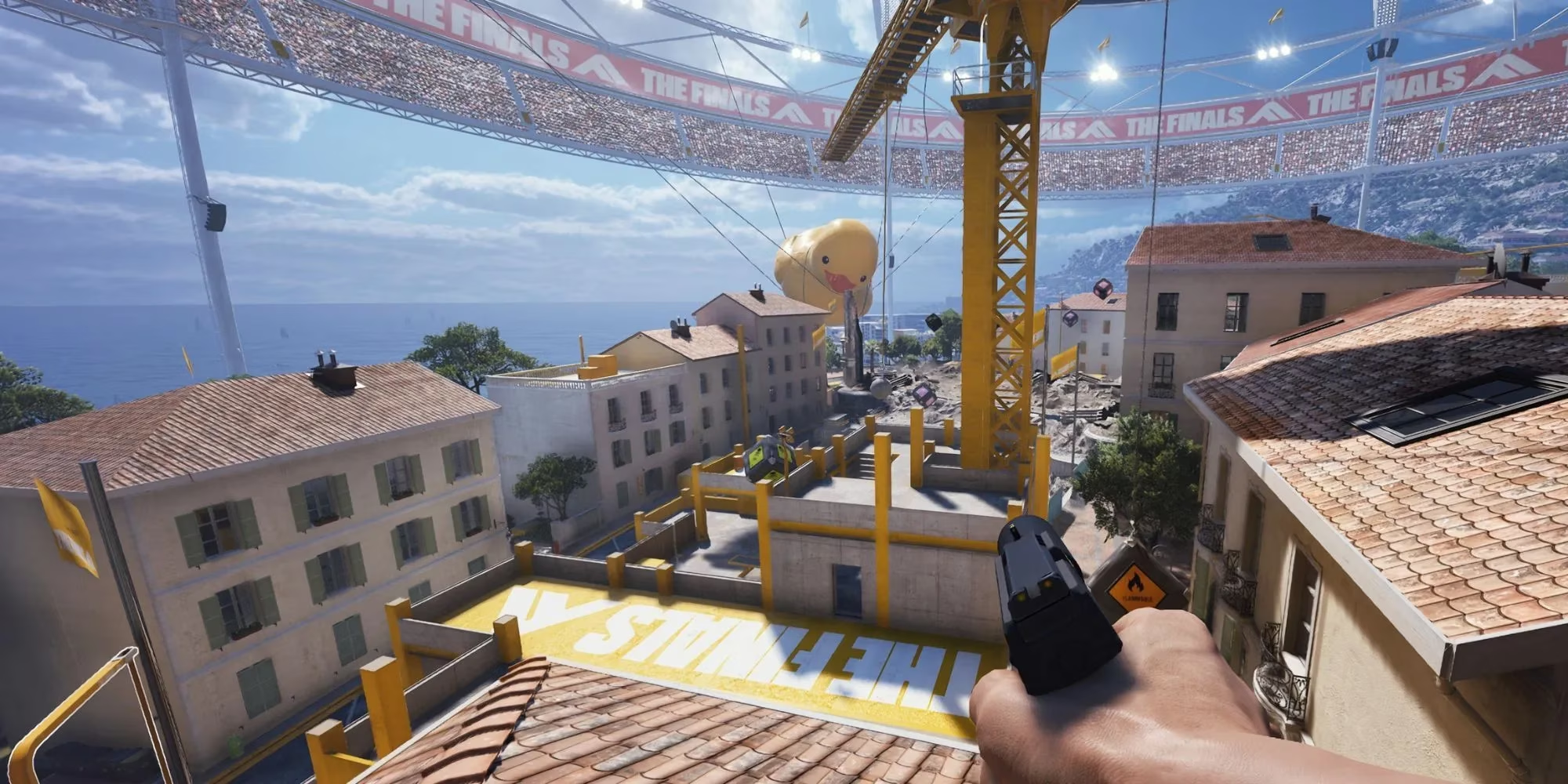
The Finals brings destruction into the arena with a flair that feels like a game show hosted by a demolition derby. Every wall, floor, and suspended walkway is a temporary suggestion rather than a permanent fixture. Competing teams don’t just trade bullets; they reshape the battlefield itself, carving new sightlines and escape routes with rocket launchers and breach charges. A building’s facade peels away like the skin of an overripe fruit, exposing its steel skeleton before the entire floor tumbles down in a cascade of glittering particles. This dynamic isn’t merely cosmetic—it rewrites the rhythm of a match, forcing players to treat architecture as a fluid resource rather than a constant. The result is a multiplayer shooter where no two firefights unfold in the same space, and every collapse feels like a collaborative act of accidental choreography.
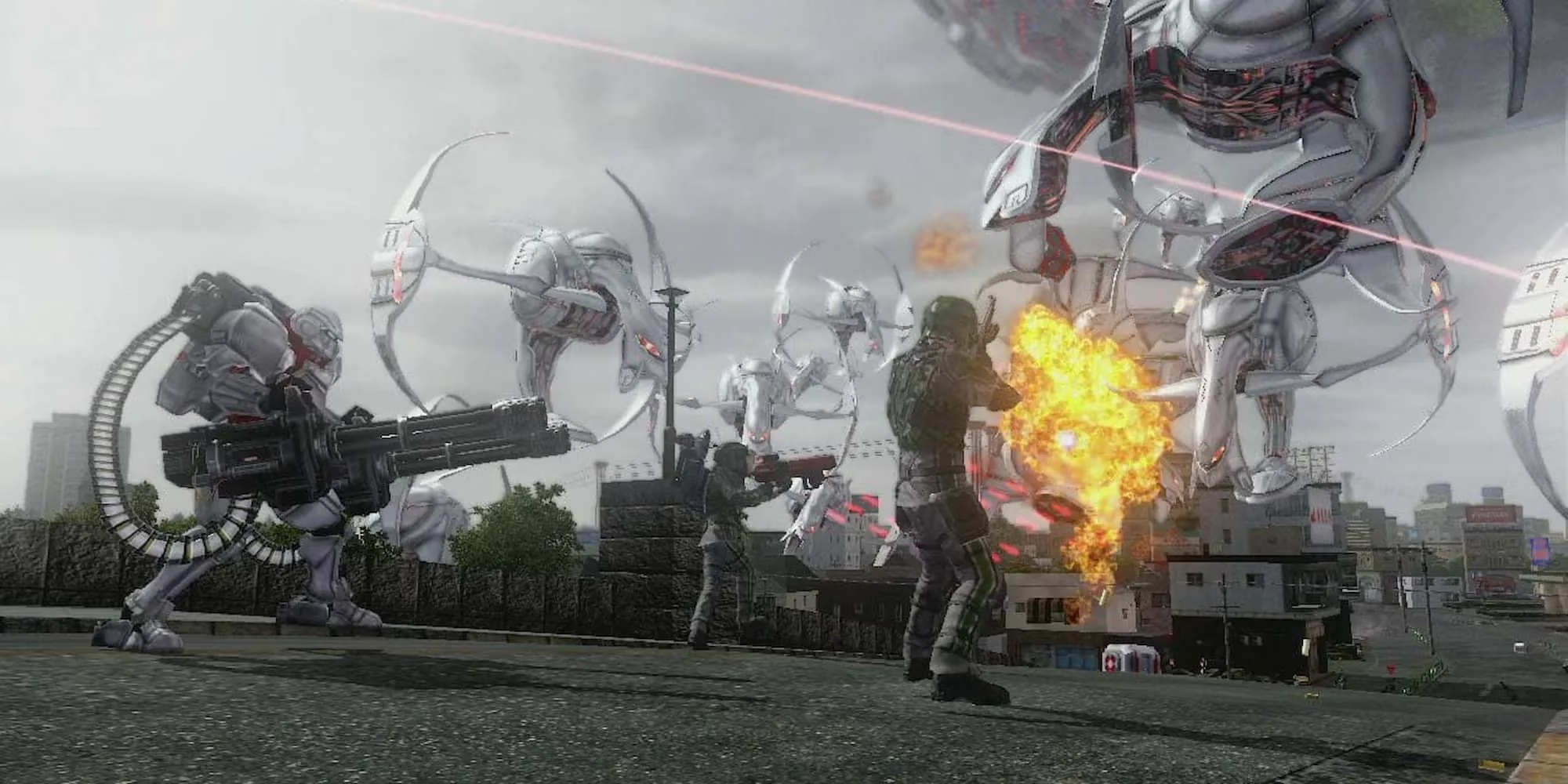
Earth Defense Force 5 understands that subtlety is overrated. Here, urban landscapes serve as sand mandalas, painstakingly intricate one moment and scattered to the wind the next. As squads of soldiers with jump packs and absurdly oversized weaponry face down behemoths the size of office towers, the city becomes the primary casualty. A giant ant’s mandible shears through a high-rise like a hot wire through polystyrene, while stray plasma bolts reduce parking garages to rubble. These are not timed environmental events; they are the natural arithmetic of giant monsters meeting fragile human construction. By the end of a mission, the map often resembles a lunar surface with only the skeletons of skyscrapers jutting out like charred toothpicks—a testament to a battle that could never have happened cleanly.
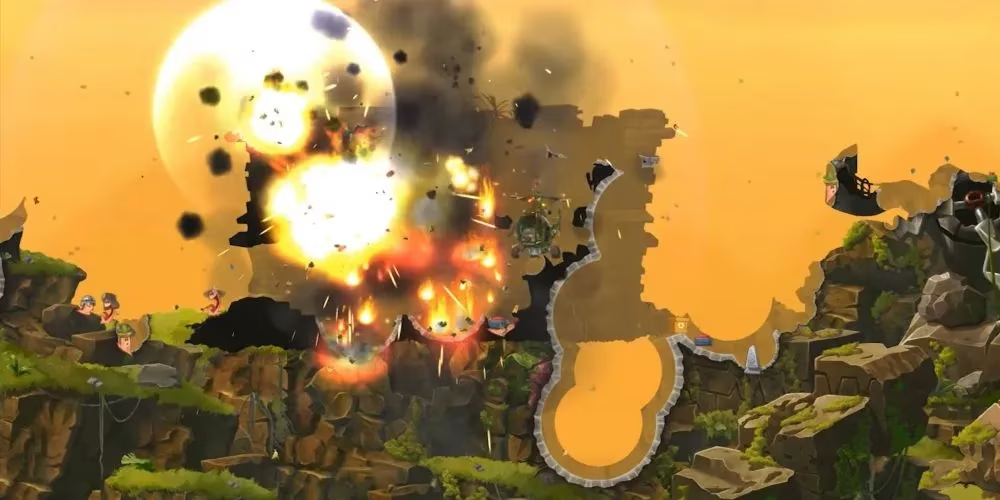
Worms W.M.D carries the torch of destruction with a lighthearted grin. In its turn-based battlefields, every structure is a pixel-perfect diorama waiting to be unmade. The newly introduced large buildings are not just static cover; they are hollowed-out stage props that can be systematically dismantled, brick by brick. Watching a concrete bunker vaporize under the heat of a banana bomb is like observing a sugar cube dissolve in coffee—the outer walls retreat inward, revealing the frantic invertebrates within. There’s a mischievous delight in knowing that the same structure shielding your worm one round may become a tomb the next, as the game imposes no limit on how thoroughly you can erase a landmark from existence.
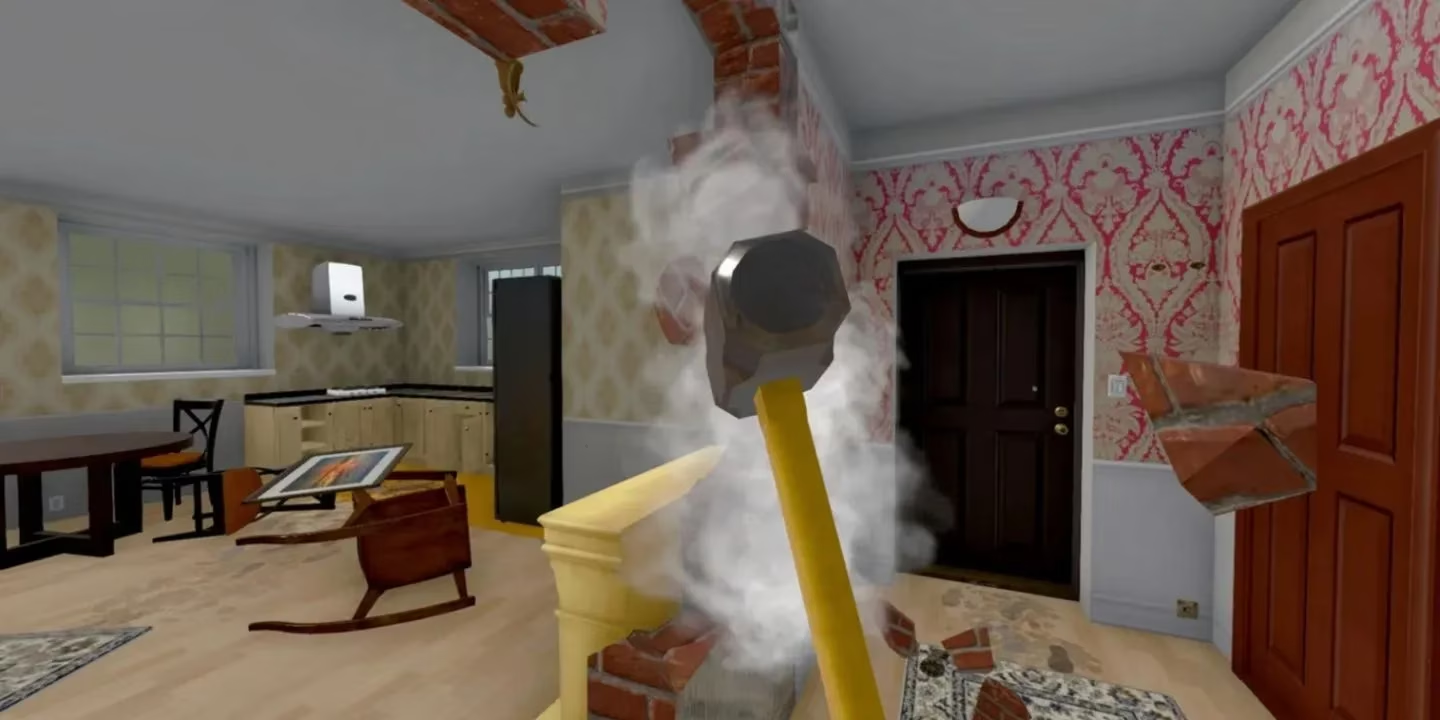
Not all demolition is born of conflict. House Flipper reframes destruction as a form of tender violence—the quiet, therapeutic removal of what no longer serves. A sledgehammer swings not in anger but with purpose, peeling back layers of drywall like the pages of a poorly written book. This is architecture undone by choice, a reverse exoskeleton of renovation. Each crumbling partition reveals new possibilities, transforming a cluttered relic into a blank canvas. In a medium where explosions usually signify chaos, House Flipper’s deliberate dismantling feels almost meditative, proving that sometimes you have to ruin before you can rebuild.

Split Second takes the bizarre premise that racing and architecture are mortal enemies and runs with it at 200 miles per hour. As competitors drift and draft, they charge a power meter that can trigger apocalyptic alterations to the circuit. Entire segments of a track transform when a skyscraper decides to lie down for a nap, its steel beams folding like a rickety accordion. Gas stations erupt in fireballs, bridges twist sideways, and suddenly the racing line includes a six-foot gap where the pavement used to be. It’s a fever dream of Michael Bay-esque spectacle, but the chaos feels earned because every collapsing monument is a strategic play rather than a cinematic crutch.

Mercenaries 2: World in Flames embraces total annihilation with the enthusiasm of a child in a sandbox armed with a firecracker. The open world is not a backdrop; it is an intricately assembled toy set waiting to be kicked apart. From thatched huts to concrete military bunkers, everything crumbles under the right toolset—airstrikes, armored vehicles, or a well-placed satchel charge that turns a landmark into a cloud of smoke and regret. The game treats its structures as giant, three-dimensional jigsaw puzzles whose pieces all hold the same fragile bond. By the midpoint of a campaign, the map often looks like a geography of aftermath, a canvas of blast craters and skeletal frameworks that tells the player’s story of rampage more eloquently than any quest log.
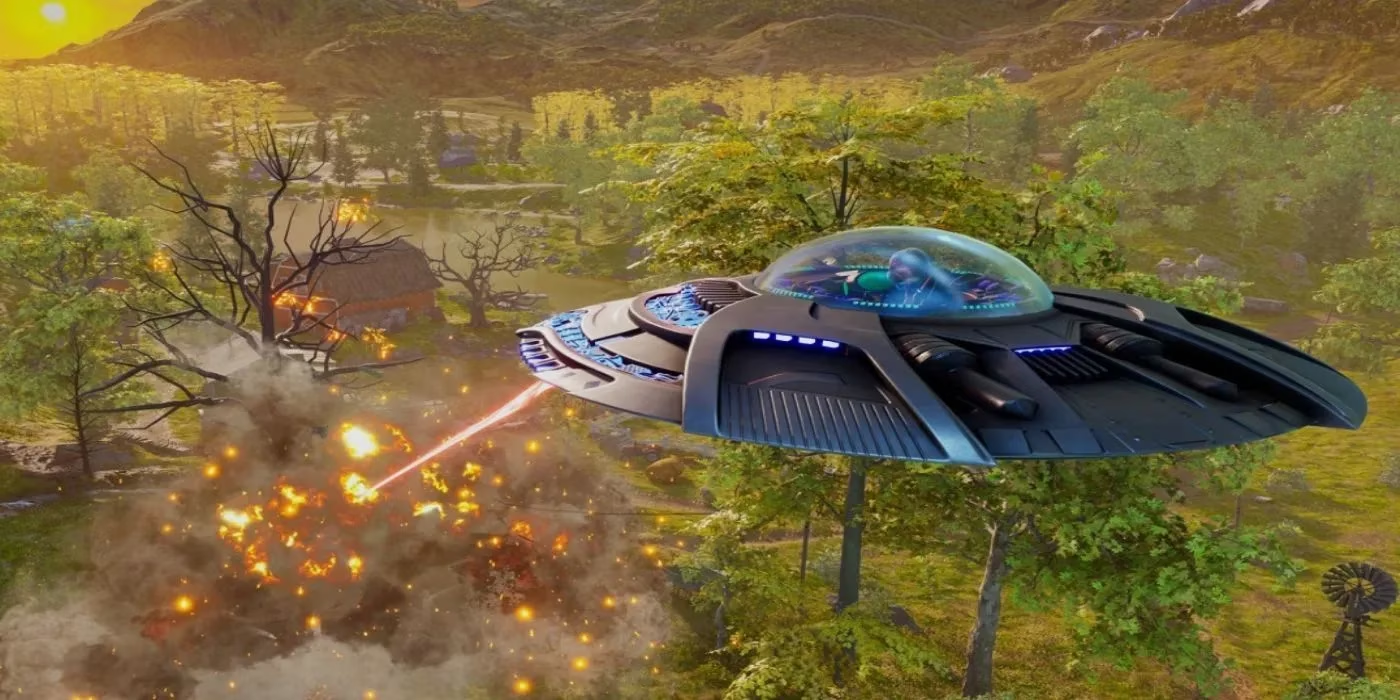
Destroy All Humans! invites a gleeful inversion of perspective, placing the player inside a flying saucer with a weapons system designed by a sadistic interior decorator. The alien’s death ray doesn’t just destroy buildings; it un-writes them, tracing a white-hot line across cornfields and city blocks as structures flare and pop like flashbulbs. There’s no structural integrity model to respect—a single sustained beam can reduce the Capitol to dust as if erasing a chalk drawing. This omnipotence is the game’s core charm, turning the campaign into a macabre scavenger hunt where extracting human DNA often creates more collateral damage than a natural disaster.
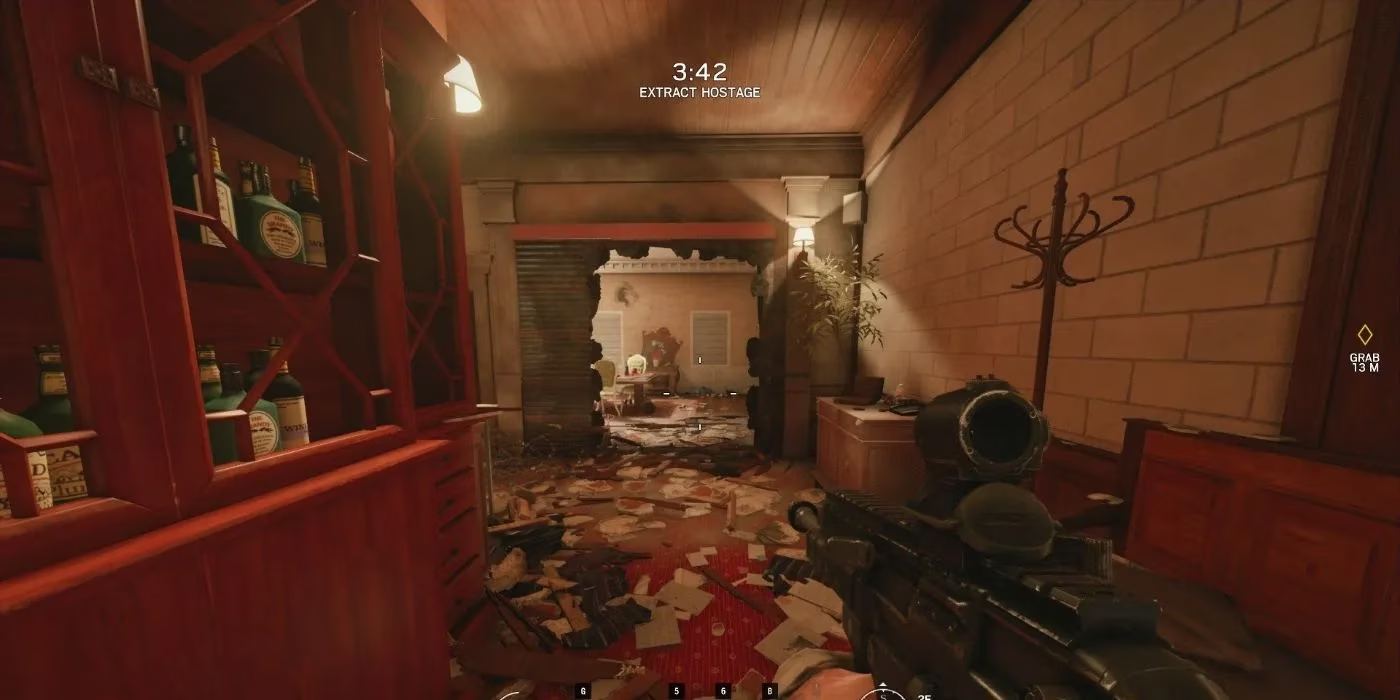
Rainbow Six Siege trades grand-scale demolition for the nuanced, surgical reshaping of interiors. Only a fool mistakes a reinforced wall for safety. Here, destruction is a language of communication, a way to create angles and deny space. A blast charge transforms a solid surface into a spiderweb of peepholes, each hole a potential bullet path. Floors become sieves, ceilings become hatches, and the pristine layout of a consulate or bank is constantly being renegotiated by explosives and shotgun blasts. It’s less about leveling a structure and more about redefining its geometry in real time—architecture as a competitive dialogue between attackers sculpting sightlines and defenders patching them shut.
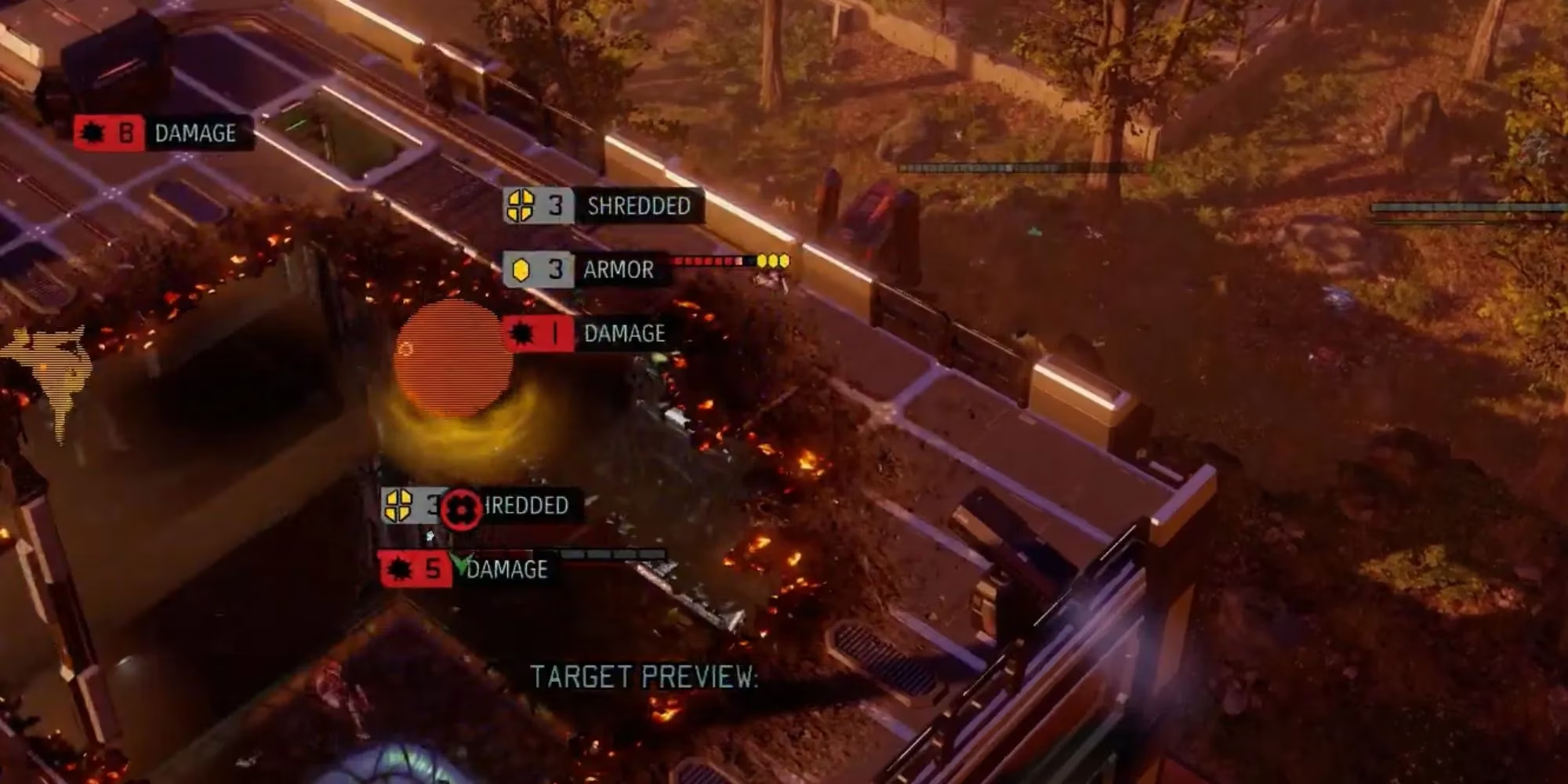
The XCOM series introduces destruction as a strategic scalpel. When every soldier’s life is a thread that can be snipped permanently, the ability to erase a wall becomes a desperate prayer answered. A rooftop punched open by a grenade reveals not just a new flanking route but an invitation for panic. Thin cover that crumbles under plasma fire transforms a safe haven into a death trap, forcing constant repositioning. This fragility isn’t punishing for its own sake; it turns every encounter into a puzzle of collapsing dominoes, where the right explosive can unravel an enemy’s position like a loose stitch in fabric.
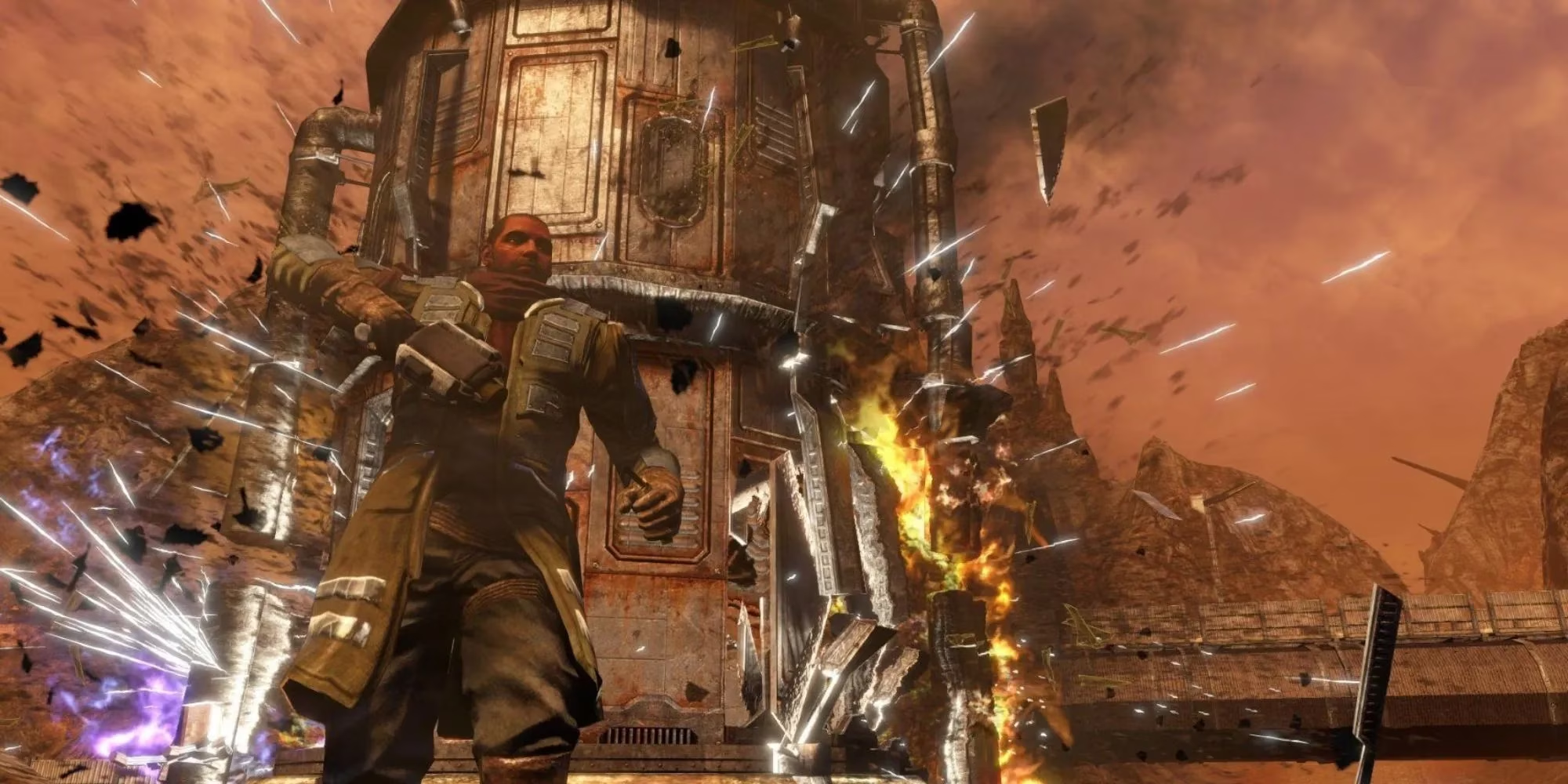
Finally, the Red Faction series stands as the gold standard, a legacy of programmable ruin that reaches its zenith in Red Faction: Guerrilla. Here, buildings are not facades but intricate lattices of stress and support, and every material behaves as if it has memory—bend a steel beam, and the structure above it complains; shatter a key pillar, and the whole assembly pitches sideways like a felled tree. A sledgehammer doesn’t just dent; it propagates cracks that spider across surfaces. A vehicle doesn’t bump against a wall; it passes through it as if it were only a stubborn suggestion. This simulation elevates destruction from spectacle to emergent poetry, making each collapsed Martian habitation a personal narrative of applied physics. In the world of interactive demolition, Red Faction remains the benchmark that modern engines still chase, a reminder that the most satisfying crumble is the one you engineered frame by frame.