The Evolution of Horror Icons: From Internet Folklore to Video Game Villains
The profound transformation of horror mascots in 2026 has shifted dramatically towards digital realms, where iconic figures like Slender Man and Herobrine are forged in the fires of online communities and virtual worlds.
In the year 2026, the landscape of horror mascots has undergone a profound transformation. While discussions often nostalgically recall the slasher icons of the late 20th century, the true evolution of horror's most recognizable faces has shifted dramatically towards digital realms. The debate is no longer confined to the silver screen; it now encompasses the sprawling territories of internet folklore and interactive gaming experiences. The 21st century has not seen a decline in iconic horror figures but rather a fundamental shift in where they are born and how they achieve cultural immortality. These new icons are forged in the fires of online communities and virtual worlds, achieving a level of engagement and personal investment that traditional media often struggles to match.
Creepypastas And The Birth Of Digital Folklore
The dawn of the internet era gave rise to a new form of urban legend: the creepypasta. These digital campfire stories, shared across global forums, became the primary source of horror for a generation. In 2009, a pivotal moment occurred on the Something Awful website during a contest for creating supernatural images. A user known as Victor Surge submitted two photographs altered to feature a tall, faceless, thin figure in a suit. This entity, later named Slender Man, did not merely win a contest; it ignited a viral phenomenon.
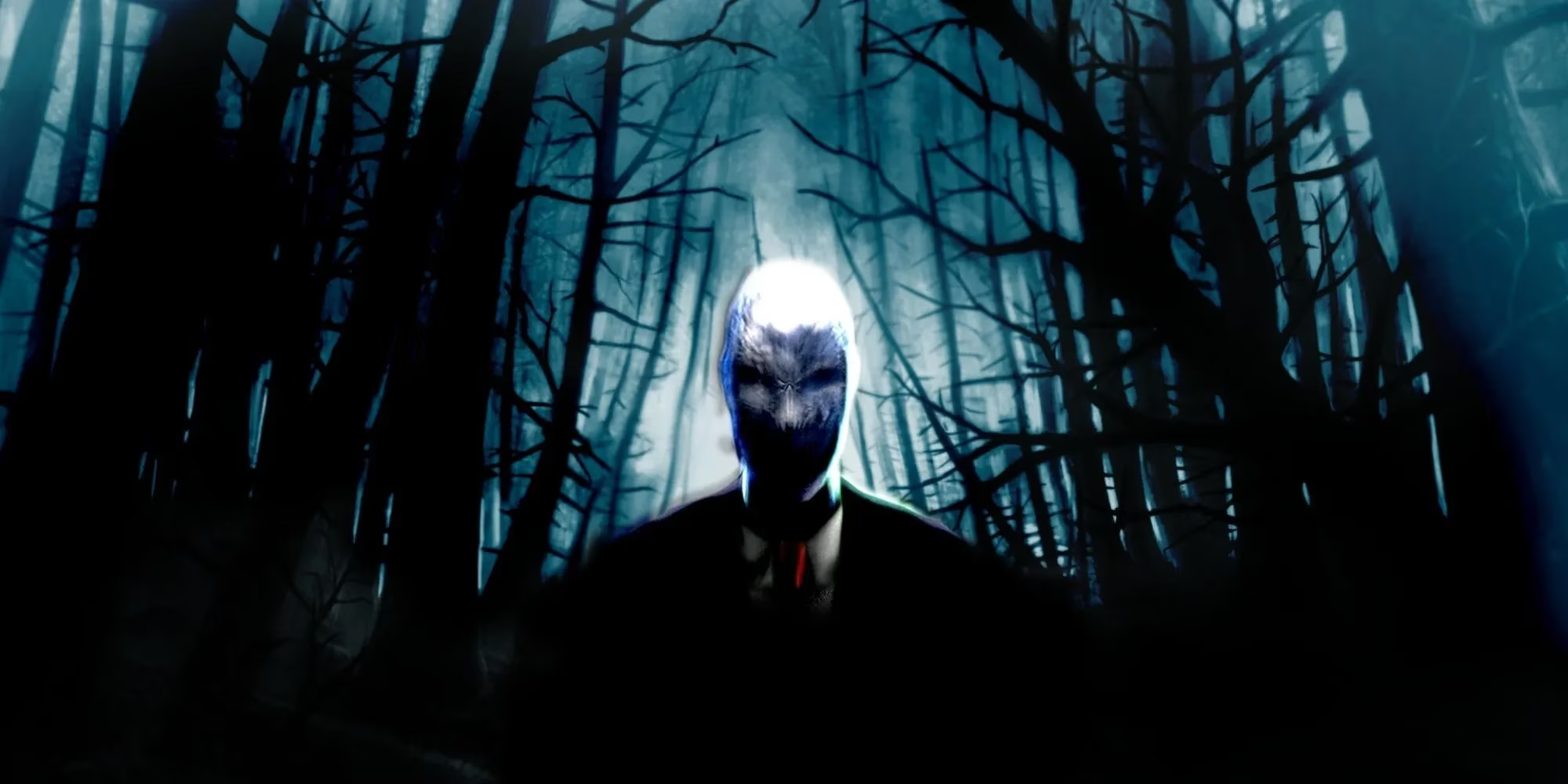
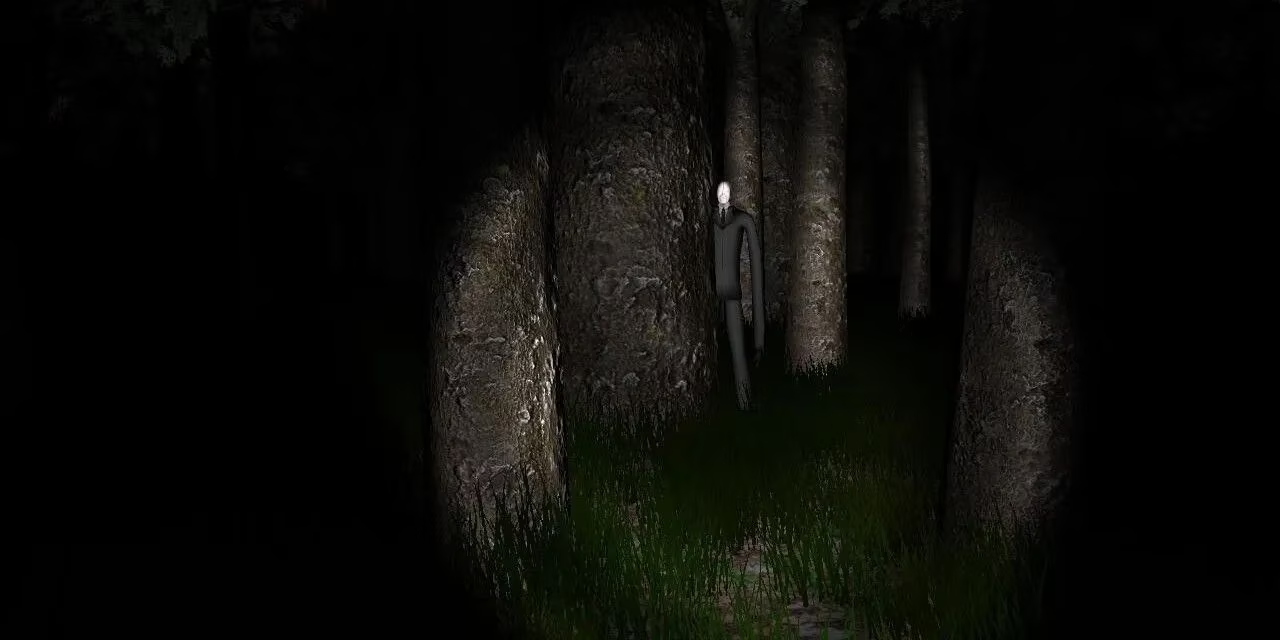
The design captured the collective imagination, spawning an avalanche of fan art, cosplay, and expansive fan fiction that sought to build a mythology around this blank slate. Communities collaboratively crafted his backstory, transforming him from a simple image into a full-fledged internet myth. His popularity was supercharged in 2012 with the release of the indie game Slender: The Eight Pages. This experience, popularized by Let's Play videos on YouTube, introduced Slender Man's tense, pursuit-based horror to millions, cementing his status as a digital-age boogeyman. His influence was so pervasive that it reportedly inspired the design of the Endermen in Minecraft.
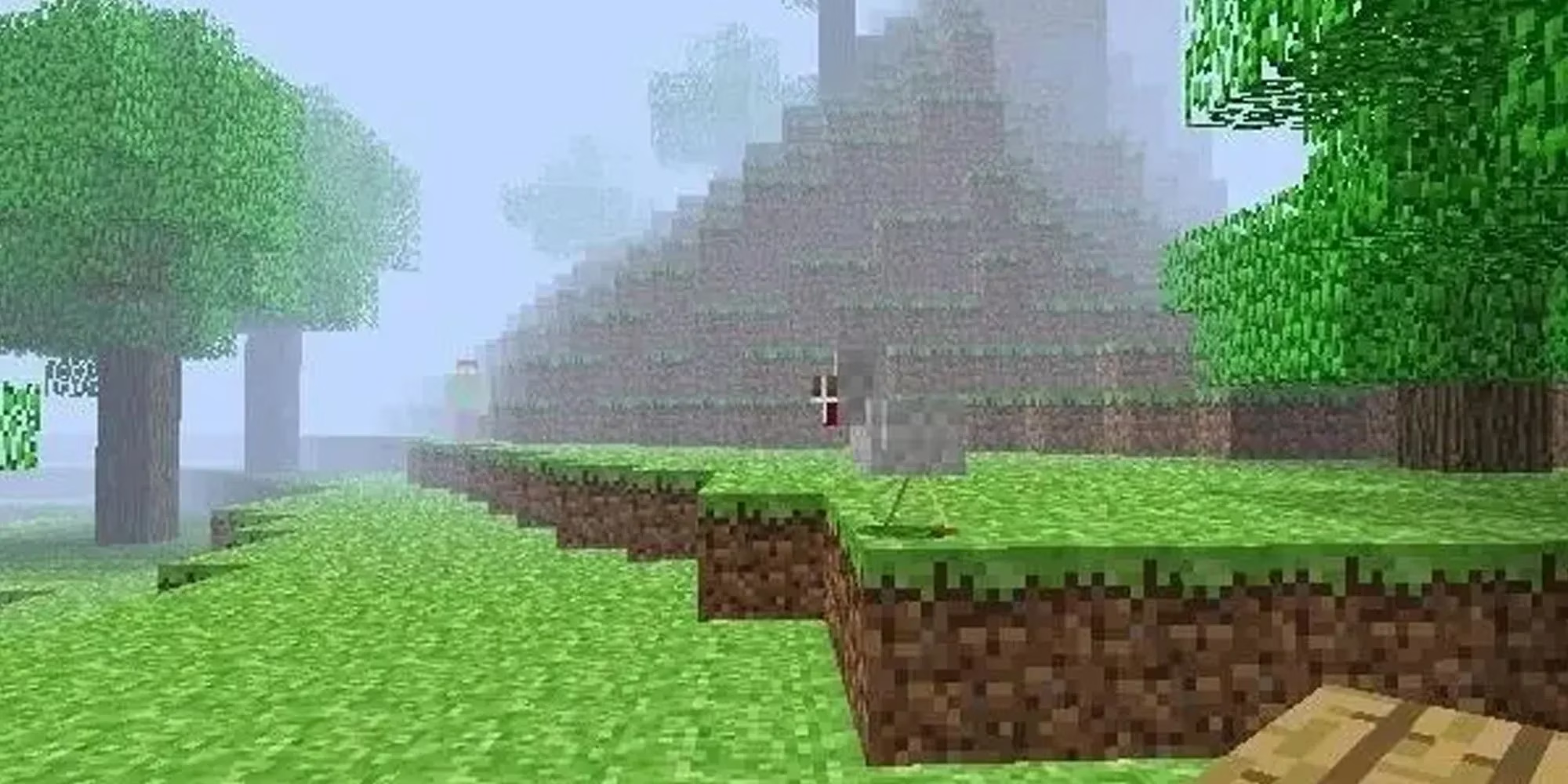
Speaking of Minecraft, another legendary figure emerged from its blocky depths. Around 2010, stories began circulating on forums like 4Chan about a mysterious entity lurking within the game. Players reported seeing a figure with glowing white eyes watching them from just beyond the render distance in the fog. This entity was dubbed Herobrine. The legend was told with such convincing earnestness—complete with fabricated screenshots and elaborate summoning rituals involving gold blocks and redstone torches—that many players, particularly younger ones, genuinely believed their world was haunted.
These figures represent the enduring power of modern digital folklore. They are horror icons born not from studio boardrooms, but from the collaborative, sometimes deceptive, storytelling of the online hive mind. Their legacies demonstrate that the genre's mascots can now be crowdsourced.
Gaming's Unforgiving Heavyweights
While the internet birthed legends, the video game industry has been meticulously crafting its own pantheon of unforgettable villains. These characters benefit from a unique advantage: interactivity. The player's fear is not passive; it is earned through direct confrontation and vulnerability.
At the forefront stands Pyramid Head from the Silent Hill series. Debuting in 2001's Silent Hill 2, he embodies every trait of a classic horror icon:
-
An instantly recognizable silhouette: The giant, rusted pyramid helmet.
-
A snappy, descriptive name.
-
A vague and psychologically charged backstory tied to the protagonist's guilt.
-
A simple but brutally effective weapon: The Great Knife.
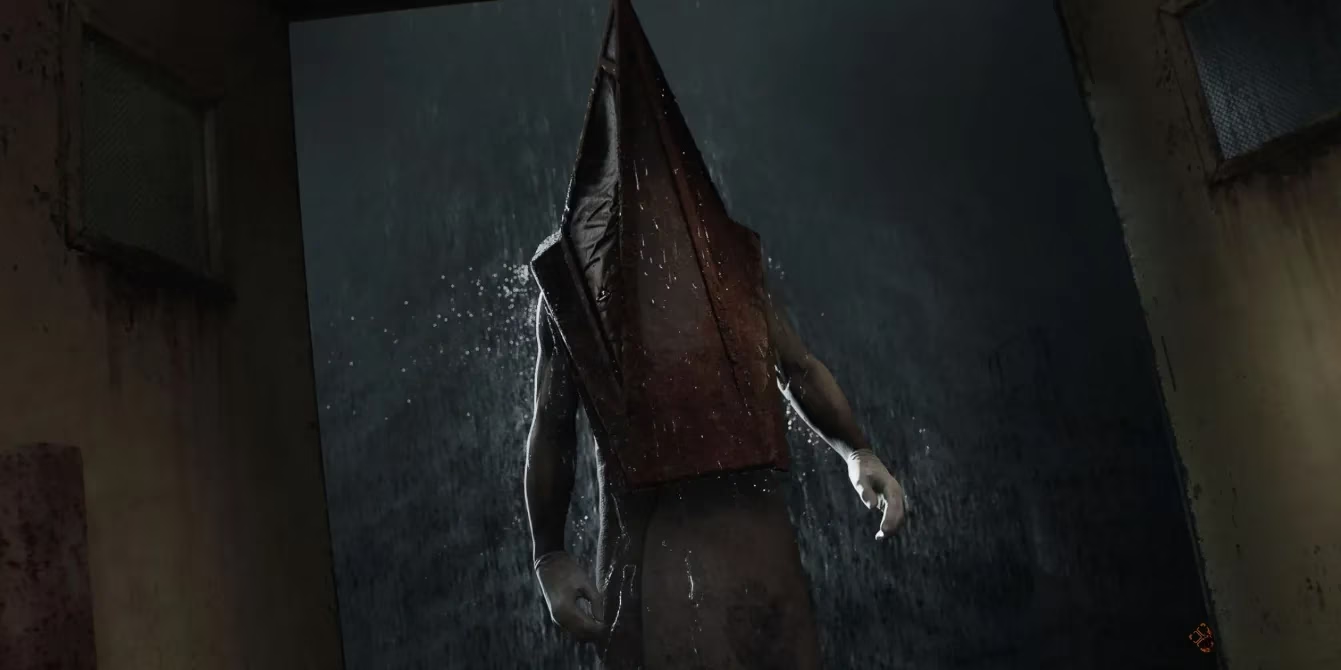
He is the Michael Myers of video games—a slow, methodical, and utterly unstoppable force of punishment. Over two decades later, bolstered by crossovers, film adaptations, and the highly anticipated 2024 remake, Pyramid Head's status as a gaming horror legend remains unchallenged. He represents the high-water mark of psychological horror design in the medium.
The indie game revolution has also been a fertile ground for new icons. While games like Amnesia and Outlast have terrifying antagonists, no indie creation has spawned a multimedia empire quite like Five Nights at Freddy's (FNAF). Launched in 2014, the game's premise was deceptively simple: survive five nights as a security guard fending off haunted animatronics in a family pizzeria. The breakout success was astronomical.
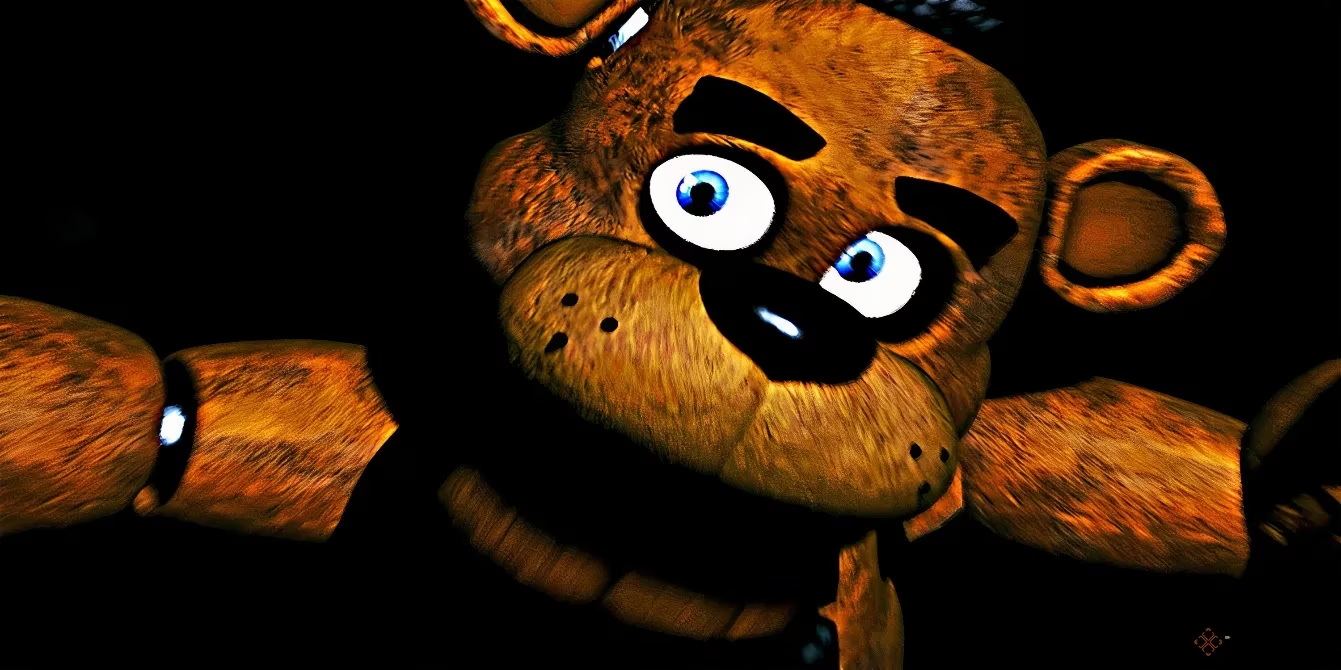
The franchise now encompasses over ten mainline games, countless spin-offs, novels, comics, and a massively successful film franchise. The animatronics—Freddy Fazbear, Bonnie, Chica, and Foxy—are masterclasses in creepy character design, transforming childhood symbols of joy into vessels of dread. Freddy Fazbear, in particular, has become the definitive horror mascot for Generation Z and Generation Alpha, a cultural touchstone with merchandising and recognition rivaling the icons of past decades. He is, for many young fans, what Chucky was for an earlier generation.
It is crucial to recognize the synergy between these mediums. Internet legends inspire games (Slender: The Arrival), and game characters become the subject of endless online discussion, theory-crafting, and myth-building, much like Herobrine. The horror genre has expanded into a multi-platform ecosystem.
A Comparative Look at Horror Icon Eras
| Era | Primary Medium | Icon Examples | Key Characteristics |
|---|---|---|---|
| 1980s-1990s | Film | Michael Myers, Freddy Krueger, Ghostface | Physical slashers, mask-centric, franchise-driven. |
| 2000s-2010s | Internet & Indie Games | Slender Man, Herobrine, FNAF Animatronics | Digital-born, community-crafted, virally spread. |
| 2010s-Present (2026) | AAA Games & Transmedia | Pyramid Head, Nemesis (RE3), Lady Dimitrescu | High-fidelity design, deep lore, cross-platform dominance. |
Therefore, to claim a lack of modern horror mascots is to look through a narrow lens. The icons are here; they simply wear different faces—sometimes a featureless visage, a blocky pixelated glare, or a rusted metal pyramid. They haunt us not just from behind cinema screens, but from within our computers, our consoles, and the shared stories we tell online. The 20th century belonged to the slasher. The 21st century, as evidenced by the enduring legacies discussed here, belongs to the digital phantoms and the interactive nightmares we willingly invite into our homes. The evolution is not a decline, but a fascinating and terrifying adaptation.