The Free Paths into Minecraft: A Player’s 2026 Journey
Play Minecraft for free in 2026 with Classic browser demo or Education Edition, but both have restrictions.
In the year 2026, the pixelated sun still rose over blocky horizons, and the allure of the sandbox universe showed no signs of fading. For a curious gamer named Morgan, the desire to step into this infinite world had become a quiet obsession. Friends spoke of redstone contraptions and ancient cities, and every social feed shimmered with cherry-blossom groves and deep-dark biomes. Yet the price tag on the official launcher pages gave Morgan pause. The question lingered like an unbroken ender chest: was there still a way to play Minecraft for free in today’s landscape?
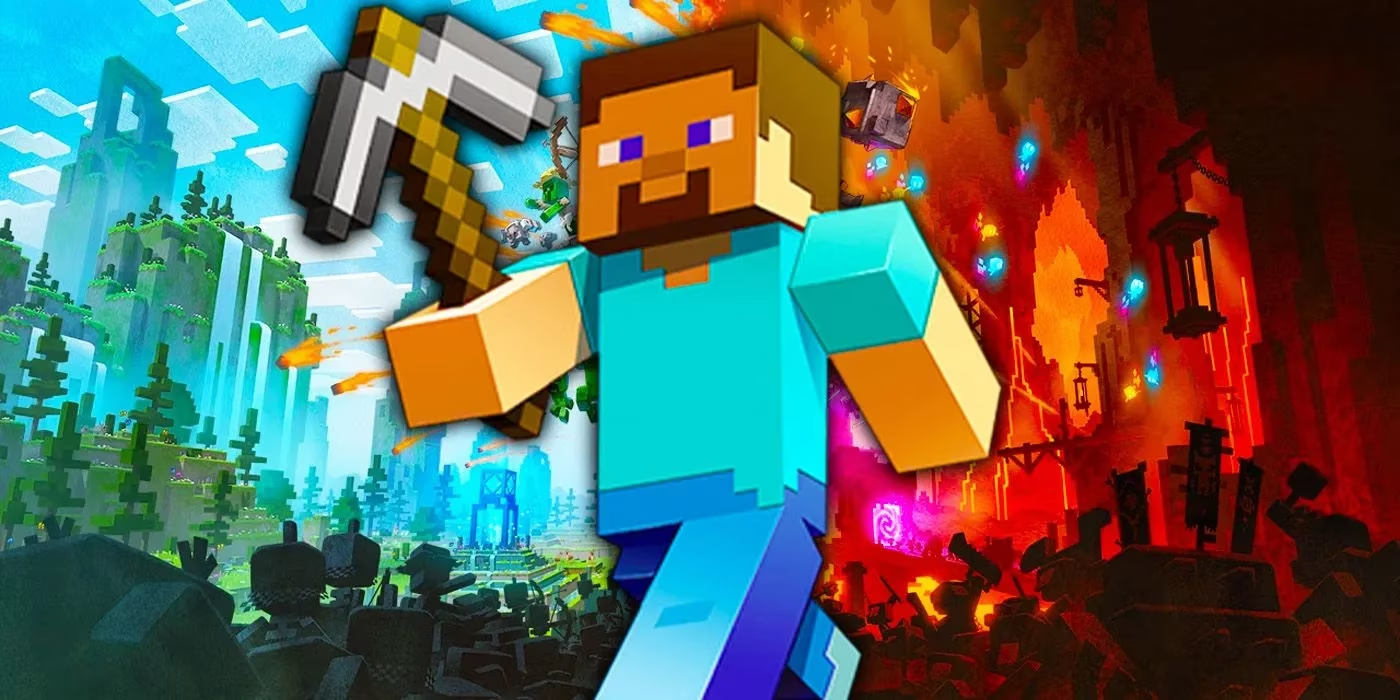
Morgan’s first discovery was a portal to the past. Through word of mouth and dusty forum threads, they learned about Minecraft Classic, a browser-based relic that Mojang had preserved. Unlike modern builds that require an account and a launcher, this version opens with a simple keyboard and an internet connection. The screen fills with a tiny, unadorned world—no sprawling caves, no lush mangrove swamps, no axolotls. It was the primordial soup of creativity, a snapshot of what the game had been before its global conquest. For Morgan, the experience was fleeting but sweet, a reminder that the spirit of the block had never depended on polish. Yet the moment the browser tab closed, every placed cobblestone and wooden plank vanished into the digital ether. For a quick nostalgia trip or a lunchtime excavation, Minecraft Classic remained unmatched, but it could not satisfy the hunger for a persistent adventure.
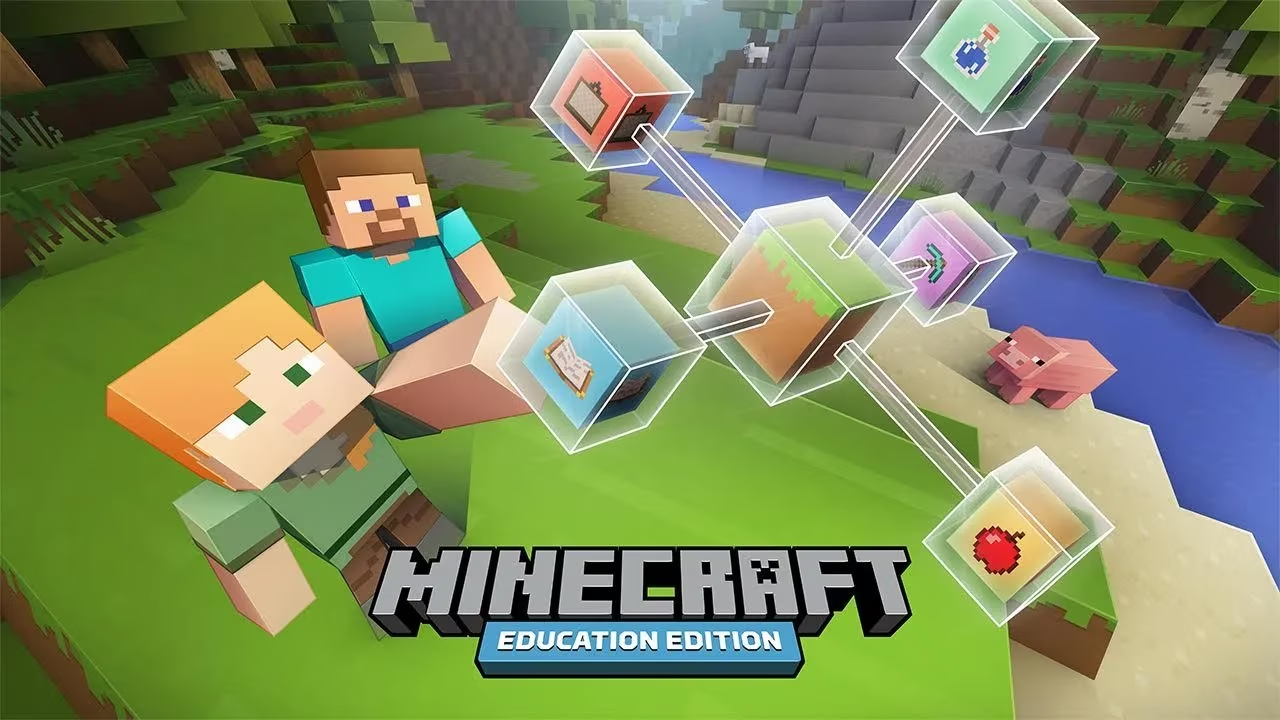
As Morgan dug deeper, a second trail appeared, one that threaded through school corridors and virtual classrooms. The existence of Minecraft: Education Edition had been a quiet revolution. Designed to turn block-building into collaborative learning, this version opened its gates to students with institutional accounts. However, it was not an effortless shortcut for the general public. A school administrator needed to purchase the licenses, and without proper credentials, a would-be player faced trial limits—only 10 logins for students and 25 for teachers before the system demanded a yearly fee. Even when accessed for free within a classroom, the experience differed sharply from the Bedrock or Java editions. Multiplayer was clipped, locked down to approved peers, and educators wielded commands that could reshape the rules on the fly. Updates arrived twice a year, often lagging behind the current mainstream release, which in 2026 was already well past the 1.21 overhaul and onto newer horizons. Still, for those enrolled in progressive schools, it was a legitimate key, a way to learn fractions by building pyramids or to grasp geometry through pixel art.
Morgan, who had long left the classroom behind, turned toward another door that had stood ajar for years: subscription services. By 2026, Xbox Game Pass had become a titan of gaming libraries, and Minecraft sat comfortably within its catalog. For anyone already paying for the service, the game essentially came at no extra cost. The logic was elegant—if you subscribed for other titles, the blocky world was a bonus. Morgan considered the math. A recurring monthly fee could be justified by the hundred-plus games on offer, and when Minecraft entered the equation, it transformed the subscription into a multi-layered treasure. The Game Pass edition kept pace with updates, meaning that any new frogs, mud blocks, or ancient city secrets that Mojang pushed into the live build were immediately available. It was the closest thing to owning the full game without actually buying it, provided the subscription remained active. The library of over 400 titles meant that a lapsed interest in mining could pivot to a racing title or a space opera, making the arrangement feel less like a gamble.
Still, no path was without its thorns. The inherent limitation of all these free avenues became clear as Morgan mapped them out on a virtual grid. Minecraft Classic was a museum piece, incapable of saving progress. The Education Edition depended on an institutional embrace that not everyone could summon. Xbox Game Pass floated on a monthly charge that, if canceled, yanked the game away. And then there was the reality that purchasing the game outright—a one-time payment—remained the only way to claim ownership forever. Once bought, every update, past and future, became part of the player’s account. The investment had not changed in a decade, a rare model in an era of microtransactions and battle passes. Morgan recalled veterans who had purchased Minecraft back when accounts were still called Mojang accounts and continued to enjoy every expansion, from the Nether update to the Tricky Trials, without spending another coin.
The landscape in 2026 had grown richer than the version that once ended at beta 1.3—the last build freely accessible to all before the purchase walls rose. For every player chasing that free-of-charge spark, the answer remained shades of gray. There was no single, universal trick that worked for everyone. Instead, the journey itself became part of the story, a scavenger hunt across browsers, school networks, and subscription libraries. Each method offered a slice of the experience: the raw core in Classic, the structured collaboration in Education Edition, the full modern game through Game Pass. For those unwilling or unable to pay, these slices could be enough to ignite a passion, or at least to provide a few afternoons of joy.
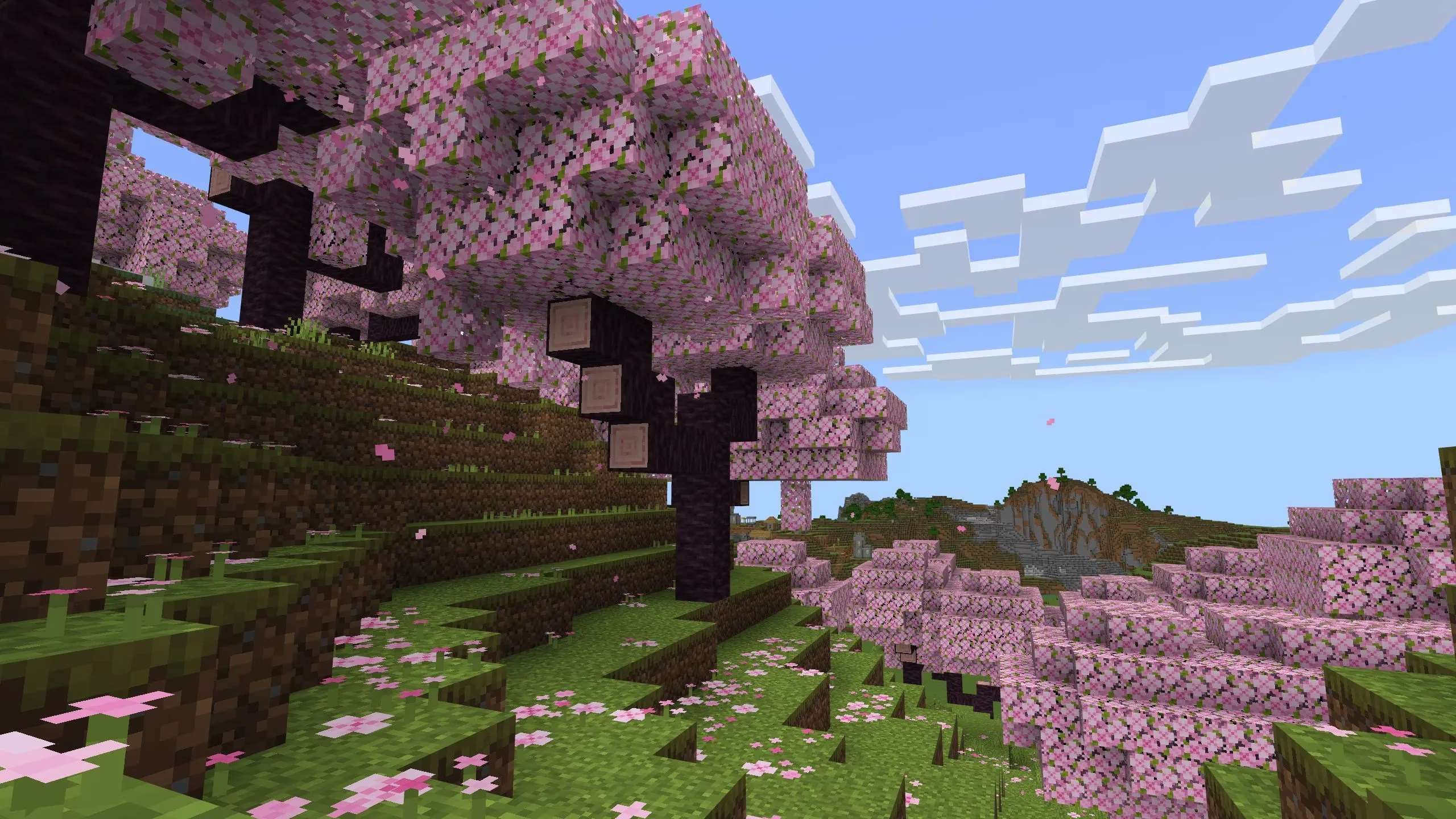
As Morgan finally settled on a temporary Game Pass trial, the first dawn broke over a random seed and the pink petals of cherry blossoms drifted across the screen. The world stretched infinitely, and for a moment, the question of price dissolved into the sound of a pickaxe striking stone. In 2026, the dream of free play was still possible, if only in fragments, and for many adventurers, that was just enough to start the legend.