The Ghastling & Happy Ghast: Minecraft's New Mobs That Rewrite Nether Lore
The Minecraft ghastling and happy ghast, adorable new mobs, are revolutionizing Nether lore with their amphibious traits and rideable utility, compelling players to rethink the game's environmental storytelling.
One of the most beautiful things about Minecraft has always been its environmental storytelling. There's no grand narrative or defined characters, but players have spent years piecing together tiny clues—hidden in structures, blocks, and mob behaviors—to build theories about forgotten civilizations and past cataclysms. Well, hold onto your pickaxes, folks, because the latest update just dropped a lore bomb that's shaking the community to its core! Mojang recently unveiled the ghastling and its adult form, the happy ghast, and these adorable newcomers aren't just cute—they're basically rewriting the history of the Nether right before our eyes. For a mob that's been in the spotlight for such a short time, it's already forcing players to completely reconsider what they thought they knew about Minecraft's world.
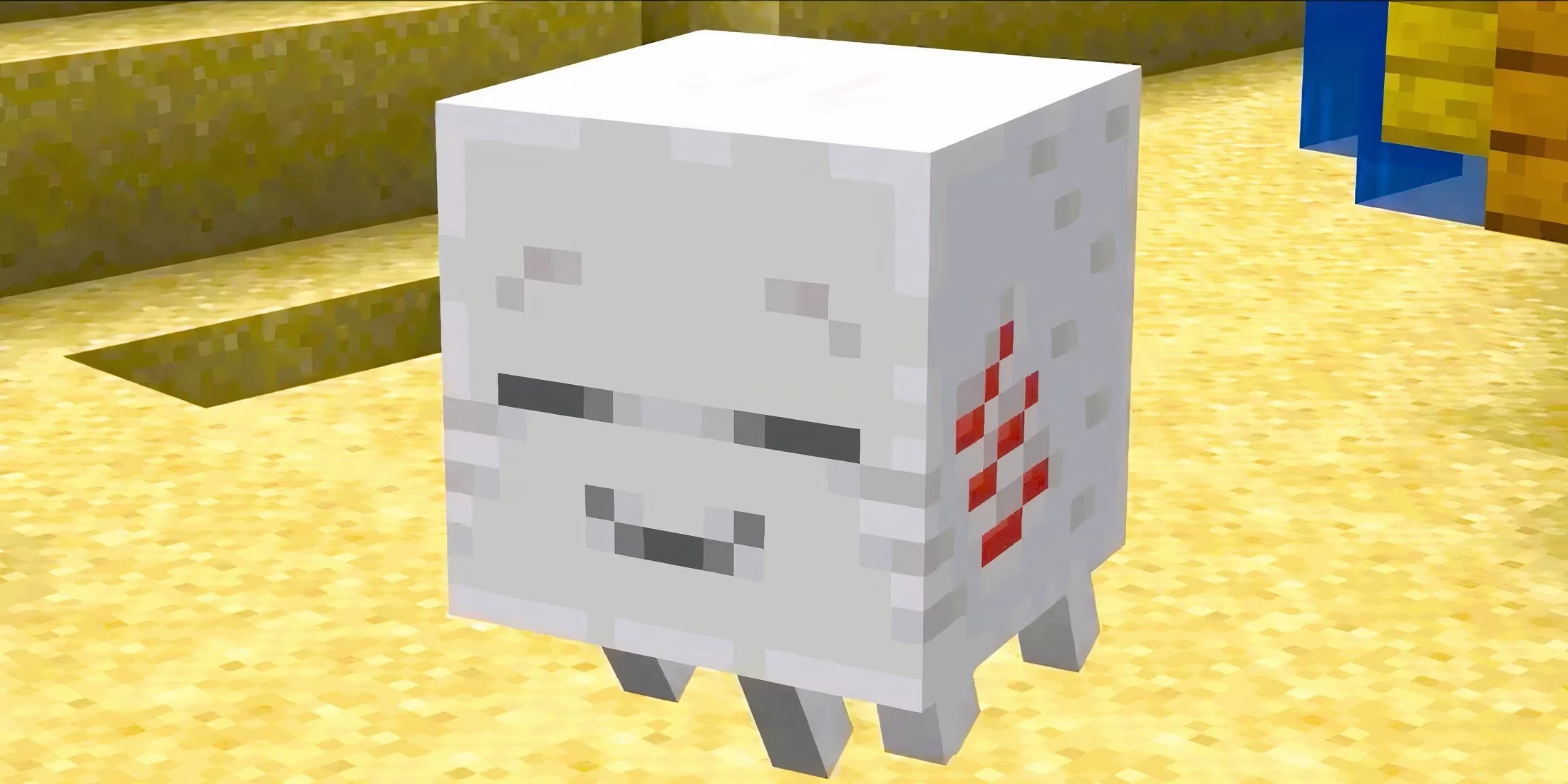
The Ghastling & Happy Ghast: Minecraft's Cutest Lore Carriers
Let's meet the new kids on the block! Announced at the latest Minecraft Live, the ghastling is, in a word, precious. Players have felt sorry for the classic ghasts since forever with their permanent sad faces and constant weeping. Now, we finally get to make one smile. Here's how it works:
-
You can find dried ghastlings underneath fossils in the Soul Sand Valley biome.
-
You pick them up like a block (how cute is that?!).
-
Bring them back to the Overworld and place them in water.
-
Watch as they grow into a balloon-like companion called a happy ghast.
But wait, they're not just for show! These mobs bring some serious quality-of-life upgrades:
-
Ridable Happy Ghasts: You can ride a fully grown happy ghast. This is a game-changer for large-scale survival builds and long-distance travel—way more convenient than a horse or boat, honestly.
-
Party Time: Up to four players can fit on one ghast, making group adventures a breeze.
Talk about a glow-up! But the real magic isn't just in their utility... it's in the story they tell.
Ghasts Were Never Meant for This Hellscape
The main takeaway from the trailer hit players like a splash potion of revelation: ghasts don't seem to belong in the Nether—at least, not the Nether as it is now. This idea has been floating around the fandom for ages, but the ghastling might be the confirmation we've been waiting for.
First, check out the visuals. Ghastlings have what look like gills. Yep, gills. On a creature that's supposed to live in a fiery, lava-filled dimension. That's... weird, right? These gills disappear by adulthood, suggesting ghasts have an amphibian-like life cycle and need water to grow. This explains why we never see baby ghasts in the Nether—it's basically impossible for a water-dependent juvenile to survive there. The fossils you find them under? Those might be the remains of their parents, a tragic detail if you think about it.
The fact that ghastlings can even "dry up" is another huge clue. They've always been compared to squids or jellyfish, and the new trailer even calls their limbs "tentacles." All signs point to one conclusion: ghasts are aquatic, or at least semi-aquatic, creatures stranded in a hostile, arid land.
Even the game's own achievement text hints at this. The "Uneasy Alliance" achievement says: "Rescue a Ghast from the Nether, bring it safely home to the Overworld... and then kill it." The word "rescue" is doing a lot of heavy lifting here. Why would taking a creature from its homeland be considered a rescue? And why does a happy ghast in the Overworld have 40 HP compared to a regular ghast's measly 10? It's almost like the Overworld environment makes them healthier and stronger. Makes you think, huh?
Confirming the Frozen Nether Theory? Let's Cook!
Now here's where things get really spicy. The ghastling's existence might be confirming one of the oldest and coolest (pun intended) fan theories: the Nether was once a frozen wasteland.
Think about it:
-
Snowball Diet: Happy ghasts can be fed snowballs as an alternative to fireballs. If they're native to the Nether, why would they have a biological preference for snow?
-
Basalt Crafting: Players have noted for years that crafting Basalt—a block native to the Nether—requires ice. Where did that ice come from historically?
The theory goes that the Nether was once icy and full of water, a perfect habitat for the ghasts' ancestors. Over time, it transformed into the hellscape we know, leaving the ghasts as tragic refugees, forced to adapt to shooting fireballs and living in constant dehydration. Their iconic, mournful wail when attacking? That might not be a battle cry—it could be a scream of pain from a creature whose biology is fundamentally wrong for its environment. Oof, that's dark.
This does create some lore tension, though. Many players believe ghasts are lost souls, based on their presence in Soul Sand Valleys and the name "ghast" being close to "ghost." The new biological framing clashes with that. But hey, that's the beauty of Minecraft's storytelling—it's all about interpretation!
What Does This All Mean for Us Players?
So, where does this leave us in 2026? The ghastling and happy ghast are more than just a fun new feature; they're a masterclass in environmental storytelling. They reward the community's years of detective work and deepen the world in a way that feels organic and earned.
The Big Implications:
-
Nether History Rewritten: The dimension's past is now shrouded in mystery and potential climate catastrophe.
-
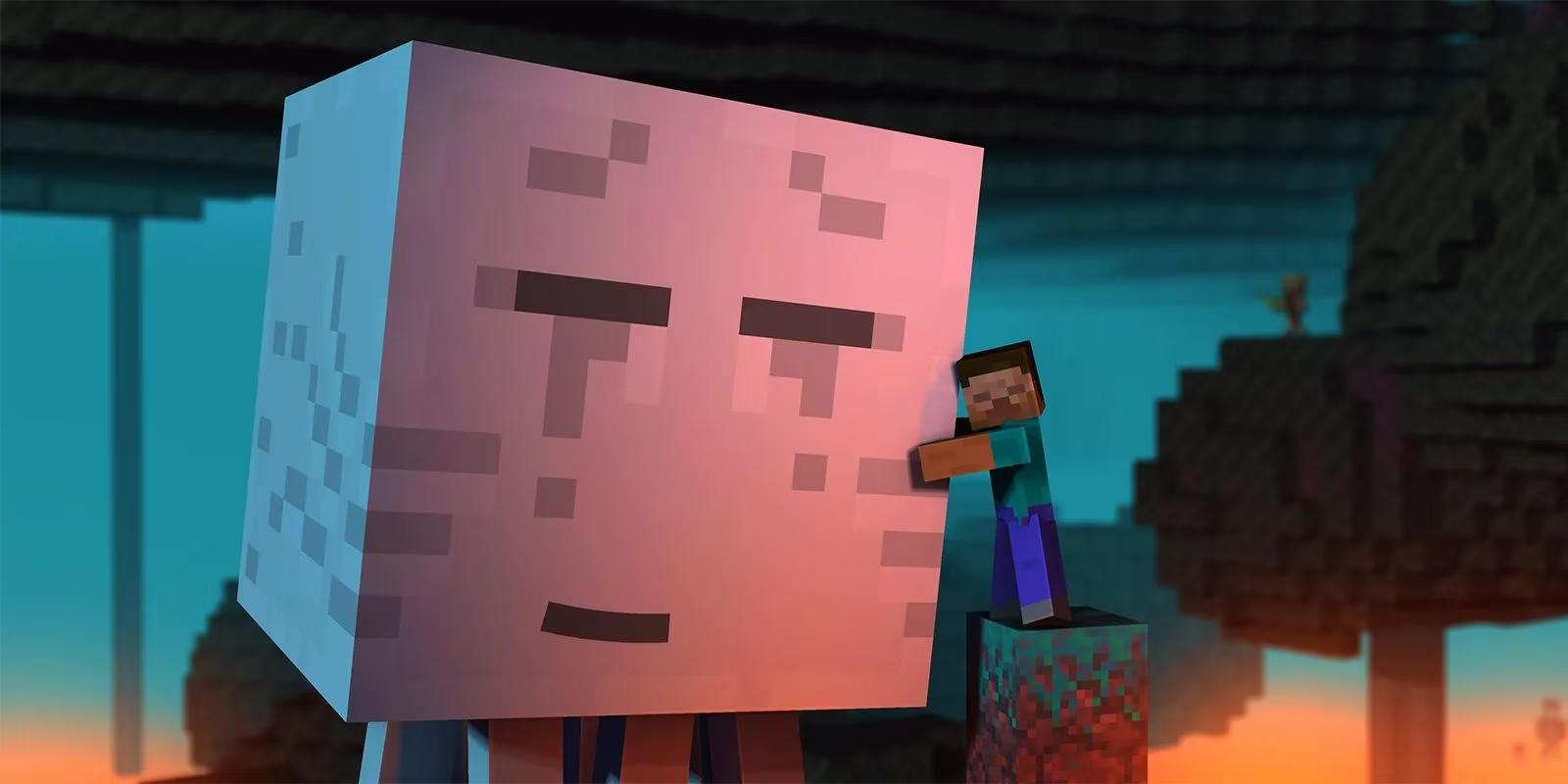
Ghast Empathy Level: MAX: It's harder than ever to see ghasts as mere enemies. They're victims of circumstance, and we now have the tools to literally save them.
-
Gameplay Evolution: Rideable ghasts open up entirely new modes of travel, exploration, and cooperative play.
Mojang will probably never give us a direct, canon answer about the ghast's true origin. And honestly? That's okay. The mystery is part of the fun. It gives us space to craft our own stories and theories. Whether you believe they're refugees from a frozen past, souls trapped in a strange form, or something else entirely, one thing is clear: your journey to the Nether will never feel the same again. You're not just visiting a hostile biome; you're walking through the tragic homeland of a displaced species. So next time you hear that familiar, sorrowful wail, maybe think twice before firing back. They've been through enough.
Now, if you'll excuse me, I have a dried ghastling to rehydrate and a whole new chapter of Minecraft history to explore. Happy crafting, everyone! ud83cudf1f