The Pale Garden and the Case for a Dedicated Horror Mode in Minecraft
Minecraft: Bedrock Edition's new Pale Garden biome and Creaking mob promise a chilling, horror-inspired evolution for 2026, deepening player immersion.
As the gaming world looks ahead to the winter season of 2026, the landscape of Minecraft: Bedrock Edition is set to be forever altered by the introduction of the Pale Garden. This new biome, first unveiled at Minecraft LIVE 2024, promises to inject a profound sense of dread into the blocky universe. It is described as a dense, foreboding forest dominated by gray trees and choked with overgrown moss, creating an atmosphere of perpetual gloom. Its most chilling resident is the Creaking, a tree-like mob whose behavior draws direct inspiration from the iconic Weeping Angels of Doctor Who. These entities are nocturnal hunters that remain petrified when observed but become terrifyingly mobile the moment they slip from a player's sightline. Their near-invulnerability can only be countered by a desperate search for and destruction of their creaking hearts, hidden within the very trees of the forest. The arrival of this biome and its central monster underscores a long-standing tradition within Minecraft: its foundational roots in horror. Given this rich history and the game's evolving suite of frightening features, there is a compelling argument for Mojang to formally introduce a dedicated horror-centric game mode.
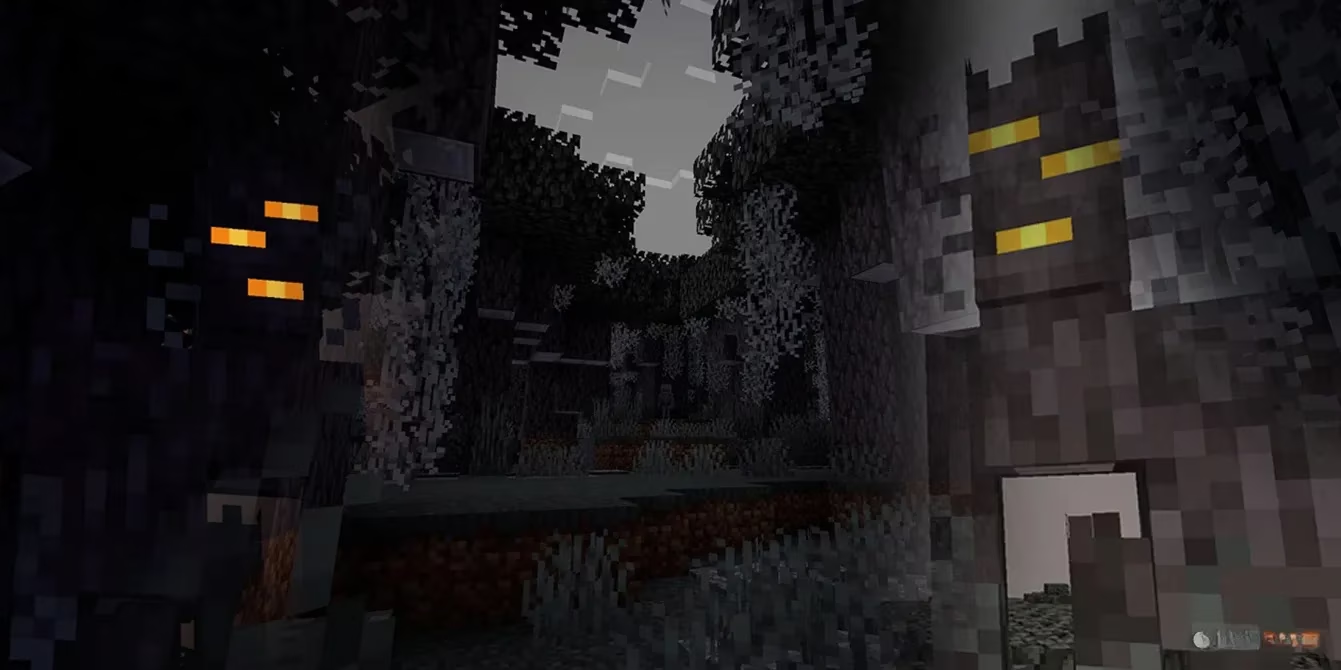
While accessible to a broad audience, Minecraft has always woven elements of fear into its core fabric. A significant portion of its hostile mobs are direct manifestations of primal human anxieties. Players confront arachnophobia with spiders of various sizes, the uncanny terror of animated human skeletons, and the pack-hunting aggression of wolves. The game's bestiary also taps deeply into global folklore and myth. The ubiquitous zombie, for instance, finds its origins in Haitian tales of corpses reanimated through witchcraft. Similarly, the entire Nether dimension is a blocky interpretation of the underworld or Hell as depicted in numerous Eurasian religions, from Norse paganism to Christianity. This grounding in real-world fears and legends provides a subconscious layer of unease that permeates the game world.
The influence of modern pop culture on Minecraft's horrors is equally significant. The Enderman stands as one of the most famous examples, its tall, dark, teleporting form a clear homage to the Slenderman creepypasta and the subsequent game Slender: The Eight Pages. Other entities blend inspirations; the formidable, sword-wielding Wither skeletons share mechanical similarities with enemies from Terraria, while the name itself has roots in Mojang's own creative history. Perhaps most evocative is the Deep Dark biome, home to the blind but deadly Warden and the spreading Sculk. These are widely interpreted as being inspired by the cosmic, unknowable horrors characteristic of H.P. Lovecraft's works, introducing a theme of existential dread to the underground. The upcoming Pale Garden and its Creaking mob perfectly continue this tradition of borrowing and adapting terrifying concepts from broader horror media.
Minecraft's existing game modes each cultivate a specific playstyle and mindset:
-
Survival Mode: Encourages creativity, cooperation, and resource management for long-term prosperity.
-
Creative Mode: Fosters unlimited experimentation and construction without threat.
-
Hardcore Mode: Demands extreme caution and precision, with permanent death as the consequence for failure.
A proposed Horror or Spooky Mode would logically extend this design philosophy, crafting an experience focused on vulnerability, tension, and survival against overwhelming odds. This mode would fundamentally shift the player's role from a builder and conqueror to a prey animal, mirroring the defensive, reactive posture of protagonists in classic horror narratives.
Envisioning this mode reveals a drastically different Minecraft experience. The world could be perpetually shrouded in night or under a blanket of relentless rain and fog, severely limiting visibility. Core mechanics would be restricted to amplify fear:
| Standard Mechanic | Horror Mode Limitation | Psychological Effect |
|---|---|---|
| Crafting & Building | Disabled entirely | Removes player agency and safe havens |
| Resource Gathering | Tools break realistically (e.g., a day to chop a tree) | Creates scarcity and time pressure |
| Light Sources | Only findable, not craftable | Makes darkness a constant, active threat |
| Progression | Reliant on loot found in generated structures | Forces exploration into dangerous areas |
Players would spawn with nothing and be unable to place blocks, stripping away the fundamental ability to shape their environment for security. Progression would depend entirely on scavenging items from chests in villages, dungeons, mineshafts, and other structures, turning every expedition into a high-stakes gamble. A found axe or pickaxe would be a temporary blessing but would operate with realistic durability, making simple tasks arduous. The ultimate goal would remain survival, but the rules of engagement would be brutally stacked against the player. Hostile mobs would spawn in greater numbers and possess enhanced tracking abilities, hunting the player relentlessly even outside direct line of sight. Crucially, the ability to sleep through the night would be removed, forcing players to endure every minute of darkness, and a single-life rule akin to Hardcore Mode would make every decision potentially final.
The introduction of the Pale Garden biome, with its psychologically unnerving Creaking mob, demonstrates that horror remains a vital and evolving part of Minecraft's identity. A dedicated Horror Mode would not only cater to a passionate segment of the player base but would also provide a fresh, intense lens through which to experience the game's world. It would transform routine monster encounters into heart-pounding events and recapture the primal fear that veteran players felt during their first nights in the game. By formally embracing its spooky heritage, Mojang could offer a uniquely challenging and immersive experience that reaffirms Minecraft's incredible versatility and enduring appeal in 2026 and beyond.