The Poetic Journey: Imagining Vehicular Dreams Across Minecraft's Vast Horizons
Minecraft travel and vehicle innovation unlock epic exploration with wagons and upgraded boats, enhancing adventure across diverse biomes.
In the sprawling, block-built dreamscape of Minecraft, the act of travel is a fundamental verse in its epic poem of creation. For over a decade, the rhythm of exploration has been set by footfalls on grass, hoofbeats on stone, and the gentle lapping of oars against pixelated shores. Yet, as the world itself has grown more complex—a tapestry now woven with 53 distinct overworld biomes, each a stanza of unique beauty—the age-old question of how to traverse these distances whispers on the digital wind. The tools of passage, from the humble saddle to the soaring elytra, have served as faithful companions, but the horizon calls for new cadences in this symphony of movement, a potential vehicular sonnet waiting to be composed.
The Caravan's Call: Wagons Across the Wastes
As worlds expand with the lush, alien flora of the Pale Garden and other recent additions, the vastness can feel like an ocean of land. Finding a rare biome can be a quest akin to seeking a single, specific star in a dense galaxy. To aid these epic pilgrimages, one can envision the introduction of carts, carriages, and wagons—not as industrial intrusions, but as natural extensions of the player's bond with the world's creatures. Picture a camel or a pair of sturdy horses pulling a crafted wagon across a savanna at dusk, its silhouette against the setting sun a moving island of hope in a sea of orange grass. These vehicles would be more than transport; they would be mobile homesteads.
-
The Craftsman's Choice: Players could craft two distinct types, each with its own poetic purpose.
-
The Two-Wheeled Cart: A nimble, single-creature vessel, like a leaf carried by a determined ant. It could carry a single chest, perfect for a focused expedition.
-
The Four-Wheeled Wagon: A grander undertaking, requiring a team of two or more animals—a symphony of synchronized strength. This could be a land-bound galleon, with space for two large chests and essential utilities like a furnace and crafting table, allowing a player to carry their entire world with them.
-
This innovation would transform long journeys from fraught resource-management puzzles into flowing narratives of discovery. The wagon becomes a character in the story, a rolling hearth in the wilderness, its creaking wheels a lullaby for the endless plains.
Sailing New Seas: The Evolution of the Vessel
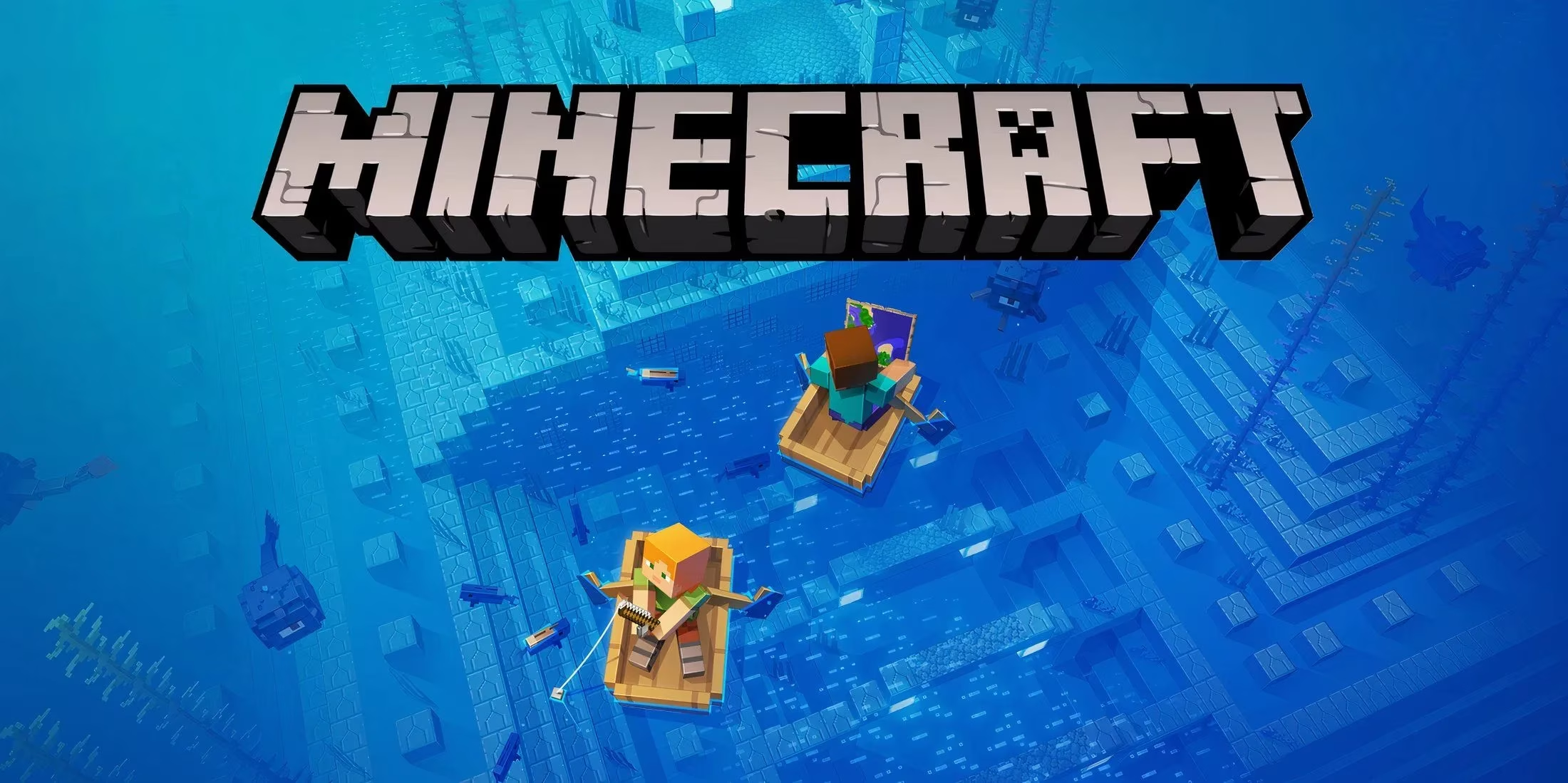
While wagons chart the continents, the oceans beckon with their own siren song. The current boat, a trusty cork on the water, has served well but feels limited against the expanse of a deep warm ocean. An update could introduce wider, two-block vessels—small frigates in this blocky maritime world. These boats would be floating arks of possibility, capable of carrying two adventurers and a large chest simultaneously, making oceanic exploration a shared, logistical dream rather than a solo endeavor. The ability to tether boats together with leads hints at a future where small flotillas could cross the seas, turning lonely voyages into communal armadas searching for buried treasure or distant mangrove shores.
The Shadow of Progress: A Clash of Aesthetics
Yet, every dream casts a shadow. The introduction of such tangible vehicles risks striking a discordant note in Minecraft's core melody of survival and homemade ingenuity. A finely crafted diamond pickaxe feels earned; a sprawling, four-wheeled wagon might feel like an anachronistic leap. The game's soul has always been in its rustic, cobbled-together charm—the feeling that one is using the bones of the world to build a life. Would a wagon feel like a natural extension of this, or a complex machine dropped from a different sky?
Furthermore, the very landscape might rebel. These new vehicles would find their poetry not in the dense, cathedral-like forests of oak and spruce, but in the open verses of meadows, plains, and deserts. In thick woodlands, they would be as useful as a sundial in a thunderstorm, their potential halted by every trunk and leaf. Without a fundamental redesign of forest generation—making trees taller and more spaced, like pillars in a grand hall—these land vehicles could be relegated to specific biomes, creating an uneven stanza in the song of exploration.
The Existing Chorus: Is There Need for a New Verse?
One must also ask if the existing orchestra of movement is insufficient. A horse with a swift gait is a streak of lightning across the plains. A donkey or mule with a chest is a patient, plodding pack-bearer of considerable capacity. The elytra offers the sublime, silent poetry of flight. For many players, this trio—speed, storage, and sky—already composes a complete suite of travel options. Adding wagons and larger boats might solve problems some players do not feel, adding complexity where elegant simplicity once reigned.
Conclusion: A Journey of Potential
As of 2026, the vehicular update remains a captivating "what if," a fan-composed movement in Minecraft's ongoing symphony. Its potential is profound: to turn the overworld into a stage for grand, land-based caravans and meaningful naval expeditions, deepening the RPG-like narrative of long-distance travel. It promises utility and a new layer of world interaction. Yet, it carries the risk of dissonance, potentially clashing with the game's handmade aesthetic and being limited by its own generated terrain. The dream is of rolling homes and oceanic arks, but the reality must be measured against the timeless, enduring rhythm of hoof, wing, and foot that has defined Minecraft's journeys for generations. The path forward, as always, lies in balancing innovation with the soulful, blocky heart of the world itself.