Top Survival Games Where You're Both Hunter and Hunted in 2026
Experience the ultimate thrill of survival gaming in 2026, where heart-pounding danger actively hunts you down in terrifying worlds like 7 Days to Die and Minecraft.
The thrill of survival gaming in 2026 isn't just about managing hunger bars or gathering sticks. It's about that spine-tingling feeling of being watched, the adrenaline rush when you realize you're not at the top of the food chain, and the desperate scramble to become the predator before you become the prey. These digital worlds have evolved, offering experiences where danger doesn't just lurk—it actively hunts you down, making every rustle in the bushes or shadow in the deep a potential heart-stopping moment.
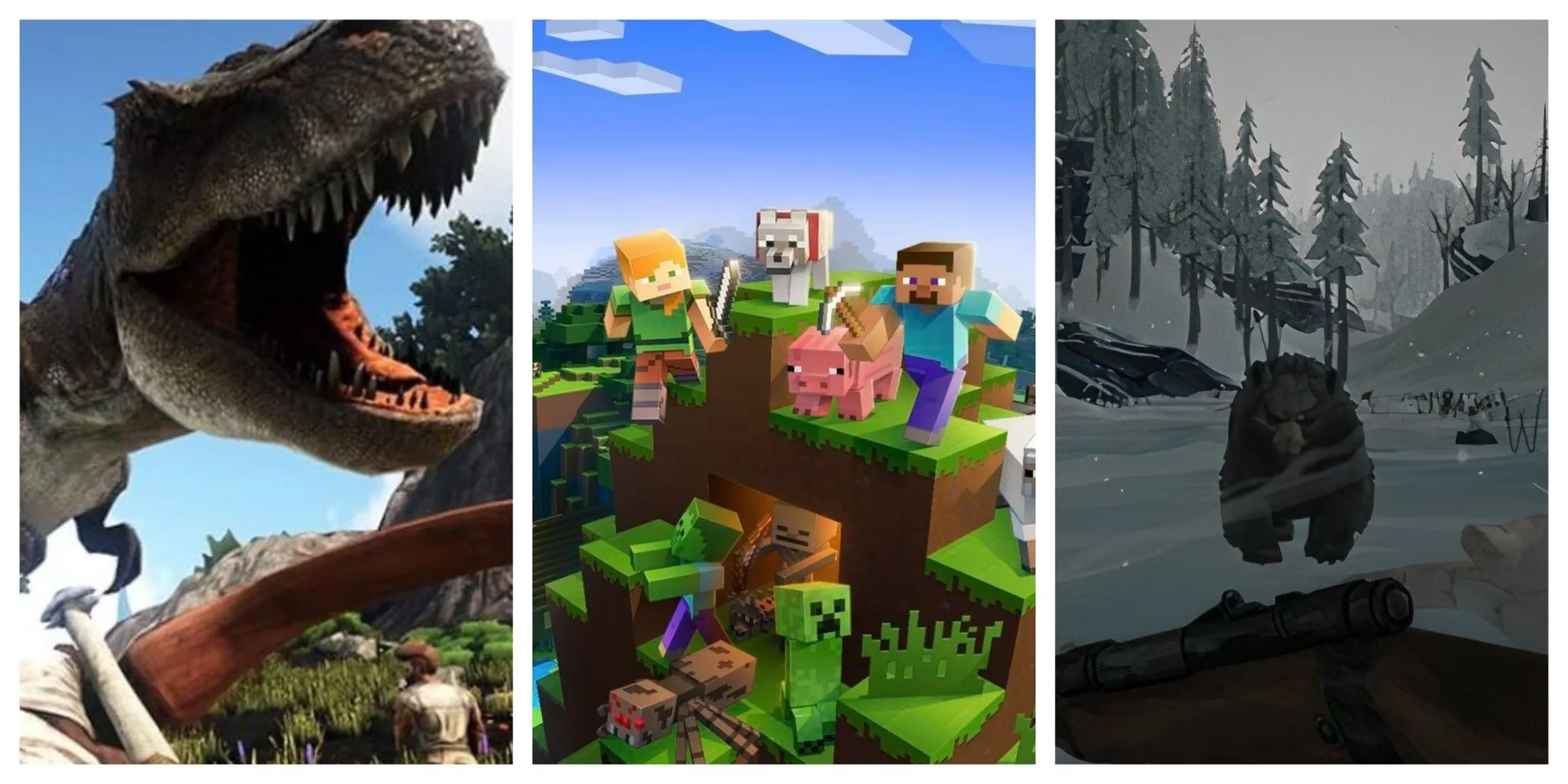
Let's talk about the classics that still have players jumping out of their seats. 7 Days to Die remains a brutal masterclass in zombie survival. Forget being the hero; here, you're just another potential snack. The zombies aren't just shambling obstacles—they're relentless hunters that will tear through your carefully constructed base like it's tissue paper. And that seventh night? Oh boy, that's when the game really puts you through the wringer. It's not just a horde; it's a test of everything you've built, a chaotic symphony of destruction that asks one question: did you prepare enough? Talk about pressure!
Then there's the blocky behemoth, Minecraft. Don't let the cute graphics fool you for a second. When the sun goes down, the rules change. The peaceful, building-focused daytime gives way to a terrifying game of hide-and-seek. Creepers don't just spawn; they stalk. Endermen don't just stand there; they watch. And venturing into a cave system? That's basically signing up to be the main course in a monster buffet. The game has a way of making you feel safe one moment and utterly exposed the next.
For those who prefer their predators with a side of prehistoric terror, Ark: Survival Evolved is the ultimate "welcome to the food chain" simulator. You start with nothing on an island where everything, from the tiniest dodo to the mightiest T-Rex, sees you as lunch. The sheer scale of the dinosaurs is humbling. You're not just avoiding them; you're surviving in their world, where a misplaced step can lead to a very loud, very sudden game over screen. The vegetation isn't just scenery; it's the perfect hiding spot for something with very big teeth.
The world of Kenshi is a different kind of cruel. It's a harsh, unforgiving RPG survival experience set on an alien planet. The monsters here are the stuff of nightmares—beaked horrors and skin spiders that hunt in packs. But the real kicker? The human factions are often just as bad, if not worse. Slavers, cannibals, bandits... it's a world where trust is a liability and everyone is out for themselves. Survival here is less about conquering the wilderness and more about navigating a landscape of constant, multifaceted threats.
Shrinking the terror down to backyard size, Grounded offers a uniquely terrifying perspective. Being ant-sized in a garden means every puddle is an ocean and every blade of grass a skyscraper. And every insect is a kaiju. The game does an incredible job of turning familiar, harmless creatures into absolute terrors. Wolf spiders are no joke—they're fast, aggressive, and will hunt you down if you enter their territory. And if you make enough noise or kill their friends, get ready for a raid on your base. It's a constant reminder that in this world, you are very, very small.
Diving into the deep blue, Subnautica trades forests and deserts for crushing ocean depths. The beauty of its alien seascape is a trap, masking the terrifying predators that call it home. This game masters the art of thalassophobia (fear of the deep sea). You're not just exploring; you're venturing further into the territory of leviathans that can swallow your submarine whole. The progression system is genius—it forces you to go deeper, into darker, more confined spaces where the big fish live. The tension is palpable; sometimes you just have to hold your breath and hope you're not on the menu.
Stranded on a deceptively beautiful island, The Forest pits you against cannibals and their mutated kin. What starts as a curious stand-off quickly escalates into a relentless hunt. These aren't dumb AI; they observe, they plan, and they attack. Building a base doesn't make you safe—it makes you a target. The story then drags you, kicking and screaming, into the claustrophobic cave systems below the island, where the true horrors live. It's a brilliant blend of open-world survival and tight, terrifying horror sequences.
Finally, The Long Dark offers a more stark, realistic kind of fear. The primary antagonist is the environment itself—the biting cold, the howling wind, the scarcity of resources. But woven into that struggle is a deadly ecosystem. Wolves in this game are not to be trifled with. They stalk. They hunt in packs. They remember you. A chance encounter with a bear or a moose isn't just a fight; it's a life-or-death event that can ruin hours of careful progress. The game's "loper" difficulty, especially, turns wildlife into your most persistent and deadly foe.
What Makes a Great "Hunter vs. Hunted" Game in 2026? 🤔
The best games in this niche have evolved. It's no longer just about enemy AI that attacks on sight. The modern standard includes:
-
Persistent Threats: Enemies that patrol, have territories, and remember your actions.
-
Ecosystem Dynamics: Creatures that interact with each other and the environment, not just the player.
-
Consequence for Aggression: Killing a wolf might attract its pack; angering a faction triggers raids.
-
Environmental Pressure: The need to venture into dangerous areas for essential resources.
-
Scalable Fear: The threat evolves as the player grows stronger, ensuring the tension never fully dissipates.
In the end, these games tap into a primal fear. They remind us that survival isn't about being the strongest, but often the smartest, the most prepared, or sometimes, just the luckiest. They create stories not just through quests, but through emergent, heart-pounding moments of pure panic and triumphant escape. So, the next time you boot up one of these worlds, listen closely. That sound behind you might not just be the wind. It might be dinner time.