Valheim's Comfort System Is the Cozy Upgrade Minecraft Desperately Needs
Valheim's comfort system turns home decor into survival power by extending Rested buffs, a clever mechanic Minecraft's vast decoration catalog lacks.
Not all survival games are created equal. Some hand a player a sword and a sense of destiny. Others hand a player a pointy stick and a hungry boar the size of a small car. Valheim is firmly in the second camp. A would-be Viking wakes up in a mysterious meadow, and within minutes the local wildlife is winning. This is the kind of game where decorating a house sounds like a hilarious joke until the raid horns blow. Minecraft, by contrast, is a much cozier power fantasy. A player can stumble into a village, loot a shipwreck, and decide that a dirt cube is adequate housing. The game does not judge. It simply lets the player become a demigod of block placement. Yet Valheim has one clever idea that could genuinely improve Minecraft: the comfort system.
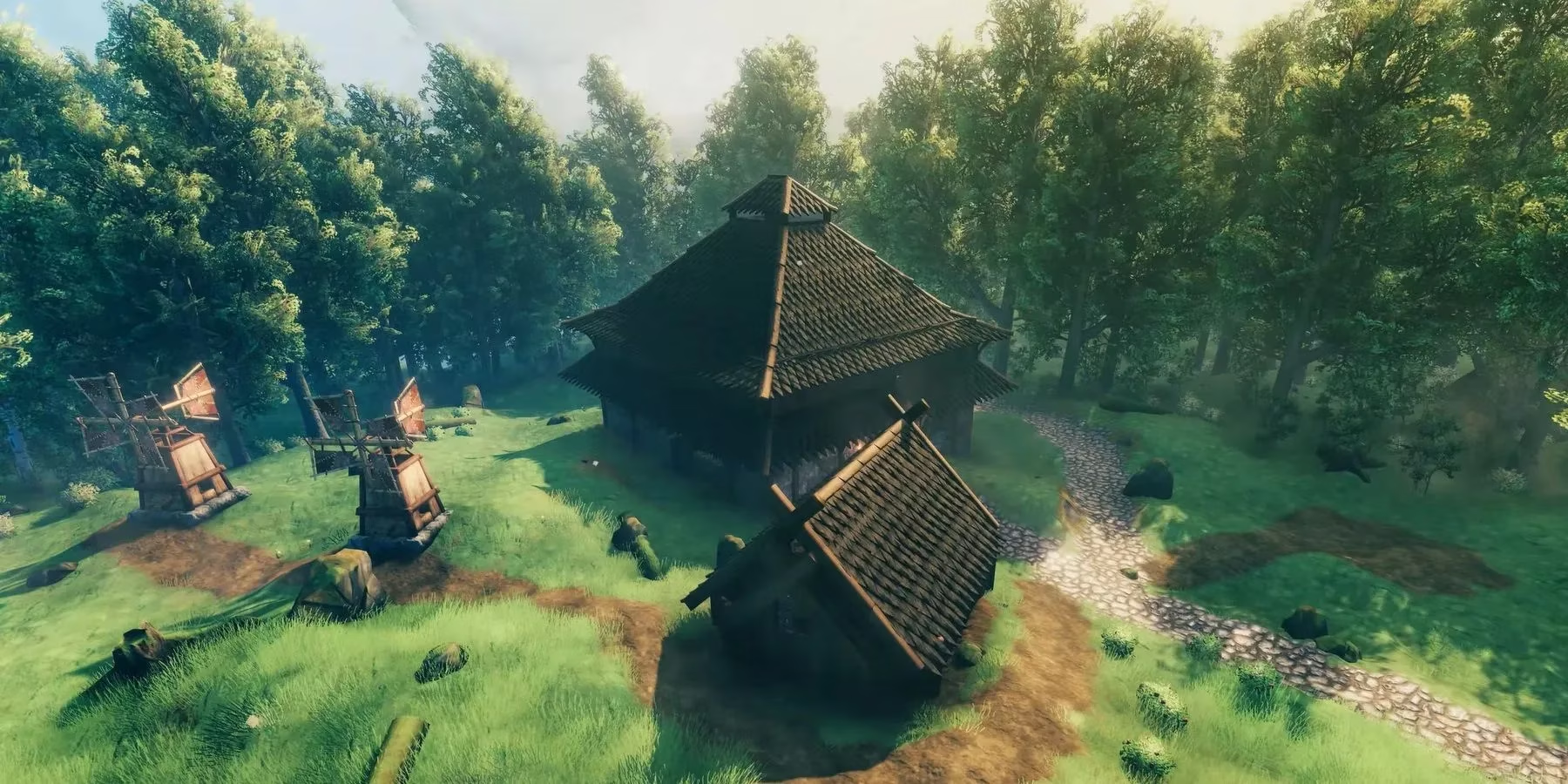
🛋️ How the Comfort System Works
In Valheim, survival starts with ugly, practical shelters. Nobody constructs a mead hall on day one unless they enjoy being turned into a boar's chew toy. The early game demands necessity: walls, roof, fire, a bed. But after the basic box exists, decorations begin to matter. Placing a rug, a table, a chair, or a banner raises the player's comfort score. A higher score extends the duration of the Rested buff. That buff grants:
-
Faster health regeneration 🩹
-
Faster stamina regeneration ⚡
-
Bonus experience gain 📈
It effectively rewards players for making their home feel like a home rather than a damp storage shed. A well-decorated base becomes a launch pad for long expeditions into the wild. Players who invest in carpets and banners can roam farther because their Rested timer lasts longer.
Minecraft has the opposite problem. It contains an almost absurd catalog of decoration: colored blocks, plants, flower pots, paintings, item frames, candles, and decorated pots from recent updates. But almost all of it is vanity. A flower pot next to a bed does nothing for a player's ability to survive. A hole in the wall with a door is perfectly functional. This is wonderful for creative types, but it means a large portion of the game's content exists purely for screenshots and interior-design flexes.
🧊 Two Philosophies, One Room
The contrast gets sharper when base defense enters the picture. In Valheim, building defenses has a real purpose because enemies can damage a home. Raids drag hostile creatures straight to the player's spawn point. A sturdy wall is not just a fashion statement; it is the difference between a peaceful nap and a troll-flavored home invasion. Even decoration feeds back into survival. In Minecraft, base defense is often optional. Illager raids exist, but a basic house rarely needs more than a door and some torches. The game does not ask much of a player's architecture.
| Feature | Valheim | Minecraft |
|---|---|---|
| Decoration purpose | Raises comfort score and extends Rested buff | Mostly cosmetic |
| Base defense | Necessary against raids and breakable walls | Optional for many players |
| Early survival | Harsh; boars are real threats | Manageable; villages provide loot |
| Building rewards | Longer buffs and safer expeditions | Personal satisfaction and creativity |
🧱 Why Minecraft Should Borrow This Idea
The suggestion is simple. If adding decorations near a bed or living area conferred small bonuses, players would have an actual reason to care about interior design. Those fancy decorated pots could become more than pretty storage. Imagine a well-placed pot or painting extending a Well-Rested timer. Suddenly, the player who never bothers with carpets would start arranging furniture like an over-caffeinated interior decorator.
This would not ruin Minecraft's sandbox freedom. It would simply add a mechanical nudge. Players who love building would get extra rewards for their passion. Players who normally ignore decoration would discover a new layer of strategy. Even a small stamina or health regeneration bonus could make a base feel like a sanctuary instead of a storage unit.
⚔️ A Door for New Challenges
This system could also open the door for tougher combat events. If bases can imbue vitality, Mojang could justify sending more danger after the player. Raids could scale with how decorated a player's home is. Maybe new mobs could break blocks or target furniture. The more a player decorates, the better equipped they are to survive the chaos. It would create a delicious loop: decorate to survive, survive to gather more decorations.
Best of all, it could revive the classic Minecraft terror of waking up in the middle of the night to a zombie smashing down the door. A whole new generation could experience those veteran memories—except now the zombie might be aiming for their brand-new bookshelf.
🏡 Conclusion
Valheim proves that comfort is not just a fun number. It is a bridge between survival necessity and creative expression. Minecraft has always been a sandbox, but sandboxes can still reward thoughtful choices. If Mojang ever borrows a page from the Viking playbook, players might finally have a reason to hang that painting in the bedroom instead of leaving it in a chest. Until then, the dirt cube remains undefeated.