Valheim's Future Beyond Biomes: Charting a New Course for the Viking Survival Sandbox
Valheim's biome-centric updates face a crossroads after the Ashlands and Deep North, requiring a strategic shift to sustain its survival sandbox legacy.
As of 2026, Valheim stands as a titan in the survival sandbox genre, having captivated players for over five years with its brutal Norse mythology-inspired world. The game's journey from its explosive 2021 launch has been defined by a steady cadence of major updates, each meticulously expanding its treacherous landscapes. However, with the long-awaited Ashlands update now firmly in the past and the icy frontier of the Deep North on the horizon, a pivotal question emerges for developer Iron Gate AB: what lies beyond the final biome? The game's foundational cycle of introducing new lands is approaching a natural conclusion, presenting both a challenge and a monumental opportunity to redefine its future growth. To maintain its momentum and legacy, Valheim may need to look beyond its horizons for inspiration, perhaps to the genre's elder statesman, Minecraft, for lessons in sustainable, feature-focused evolution.
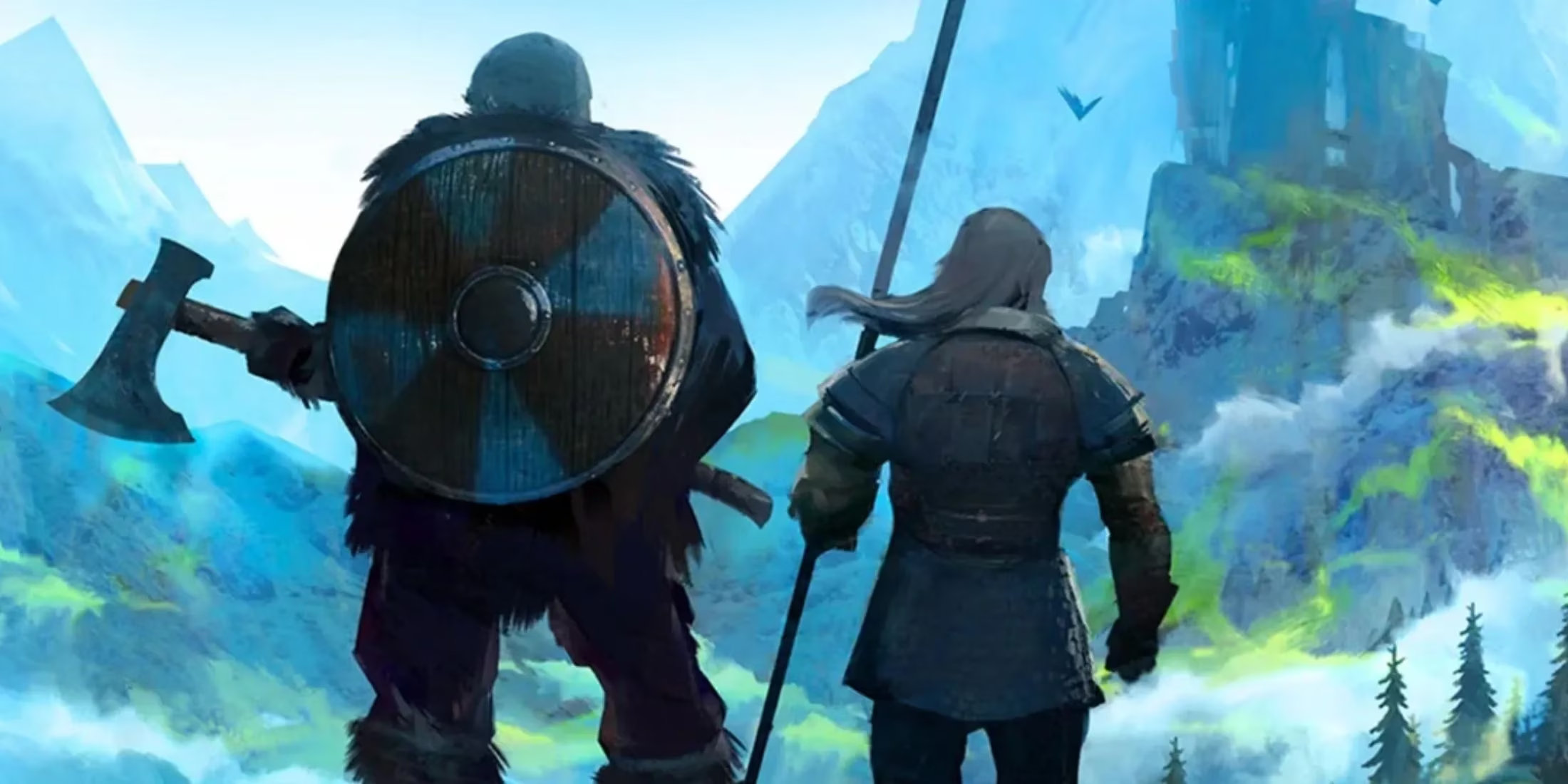
The Biome-Centric Development Cycle
Since its inception, Valheim's most substantial and celebrated updates have almost exclusively revolved around the introduction of a new, perilous biome. This strategy has been brilliantly effective, methodically weaving a tapestry of diverse and challenging environments for players to conquer. The progression is a core part of the Valheim experience:
-
Meadows: The serene, yet deceptive, starting zone.
-
Black Forest: The first real test, home to ancient trolls.
-
Swamp: A murky, disease-ridden realm of sorrow.
-
Mountains: Frostbitten peaks guarded by drakes.
-
Plains: Deceptively beautiful grasslands patrolled by deadly Fulings.
-
Mistlands: A shrouded, magical biome filled with ancient secrets and new threats.
-
Ashlands: The scorching, volcanic end-game area introduced in 2024.
-
Deep North: The forthcoming frozen frontier, the antithesis to the Ashlands.
This list represents an impressive and nearly comprehensive catalog of fantasy landscapes. The Deep North update promises to complete this world map, offering the final climatic extreme. Yet, this completion also signals a crossroads. Continuously adding more biomes risks either overwhelming the game's scope or leading to areas that feel like thematic retreads of existing ones. The fundamental truth is that there are only so many distinct environmental archetypes before the law of diminishing returns sets in.
Lessons from a Legacy: The Minecraft Blueprint
This is where the enduring example of Minecraft becomes profoundly relevant. Mojang's seminal title has thrived for over a decade not solely by adding new biomes, but by implementing updates that deeply enrich other core pillars of gameplay. Valheim has already dabbled in this, with updates bringing new weapons, enemies, and building pieces, but these have often been secondary features to the new biome. The future may lie in making these elements the star of the show.
Minecraft's history is filled with such focused updates:
-
The Combat Update: Revamped the entire fighting system.
-
The Update Aquatic: Transformed oceans from barren voids into vibrant ecosystems.
-
The Village & Pillage Update: Overhauled villager mechanics and added new raids.
These updates didn't just add a new place to go; they fundamentally improved how players interacted with the entire world. Valheim is perfectly positioned to adopt a similar philosophy. An "Age of Sail" update could revolutionize ocean travel, navigation, and deep-sea threats. A "Smithing Revolution" update could introduce complex weapon forging, unique enchantments, and legendary artifact quests unrelated to a specific biome.
Enriching the Existing World
With the world's geographical skeleton nearly complete, the next logical phase for Valheim is fleshing it out. The focus should shift from expansion to intensification—making each existing biome a richer, more dynamic, and content-filled experience. The mysterious Leviathan, currently a rare oceanic encounter, is a prime example of untapped potential. Future updates could:
-
Introduce migratory creature patterns that change with in-game seasons.
-
Add rare, biome-specific world events or dynamic weather phenomena.
-
Expand the lore and discoverable history of each region through new structures and artifacts.
-
Create deeper predator-prey ecosystems that make the world feel alive.
Regular, smaller-scale updates that add new creatures, resources, and challenges to existing biomes can keep the game feeling fresh without requiring players to learn an entirely new landscape's rules from scratch. This approach builds upon the player's existing knowledge and investment, making the familiar world suddenly feel new again.
The Path Forward: A New Update Paradigm
Valheim's success has been built on a strong, clear formula: conquer a biome, gear up, and move to the next, more dangerous one. As this cycle concludes, the game's evolution must enter a new era. The Ashlands update demonstrated Iron Gate's ability to deliver fantastic new enemies and weapons; the key for the future is to decouple that content from being solely an accessory to a new landmass.
Imagine updates titled "The Forge of Legends" or "The Blood Moon Rising," where the core loop is disrupted by new global mechanics, enemy invasions, or crafting revolutions that affect all biomes. The goal should be to create systems that encourage players to revisit old stomping grounds with new purposes and perspectives. By diversifying its update strategy beyond biome expansion, Valheim can ensure its world remains a compelling place of adventure, discovery, and challenge for years to come. The foundation is legendary; now is the time to build an everlasting saga upon it.