What Minecraft Could Learn From LEGO Fortnite's Temperature Hazards
Minecraft survival's lack of environmental danger contrasts with LEGO Fortnite's compelling temperature mechanics.
For years, Minecraft has carried a reputation as a survival game that rarely pushes players beyond their comfort zone. Critics argue that once a player secures full diamond or netherite armor, the fear of death evaporates. Even a hostile piglin horde becomes manageable when a stack of Totems of Undying sits in the offhand. This criticism is not new, but in 2026 it feels sharper than ever as players continue to invent their own restrictions—no natural health regeneration, hardcore worlds, or desert-only playthroughs—simply to restore a sense of danger. Meanwhile, competing survival titles have adopted mechanics that Minecraft could study closely. LEGO Fortnite, which launched in late 2023 and has since expanded its biomes, offers one particularly instructive example: environmental temperature as a genuine survival threat.
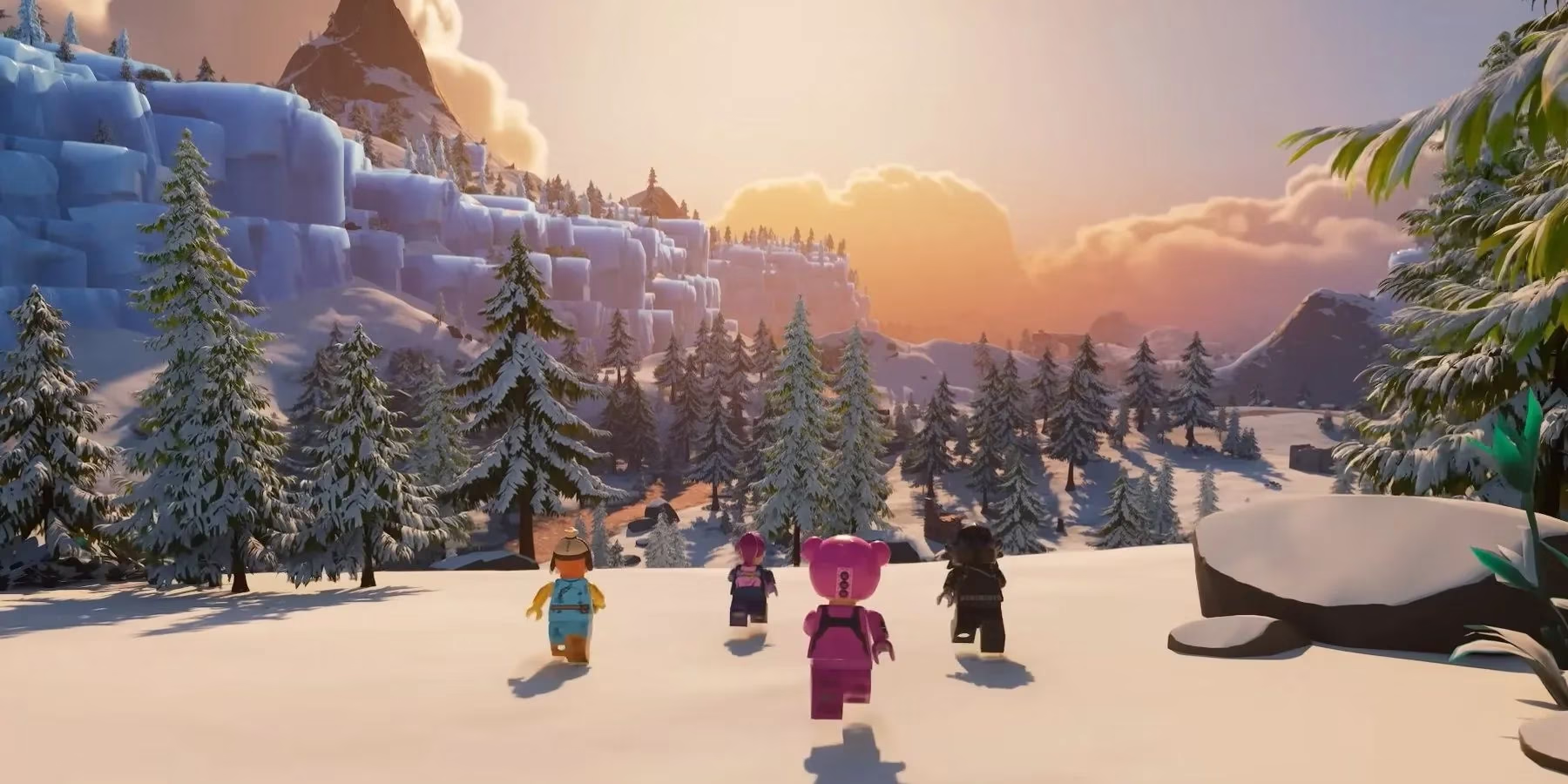
In LEGO Fortnite's Frostlands, the cold is not decorative. Temperatures drop to deadly lows, and unprepared travelers begin taking damage over time. The game pushes players to invest in specific countermeasures before venturing into the snow. Spicy peppers and spicy burgers restore warmth, torches provide a temporary heat source, and campfires offer a safe stopping point. Importantly, the spicy peppers required for those burgers are not found in the Frostlands at all. They grow in the Dry Valley, another extreme biome where intense heat creates its own hazards. This creates a loop: to survive the cold, players must first brave the heat; to endure the heat, they may need resources from elsewhere. Exploration becomes a layered preparation puzzle rather than a simple matter of walking forward with good armor.
Minecraft, by contrast, flirts with a similar idea only through powder snow. When a player sinks into powder snow, their hearts turn blue and they slowly freeze unless they escape. It is a clever hazard but rarely a real precarity. Many players treat powder snow as a utility block for mob farms or fall damage prevention. Beyond that, Minecraft's weather system remains largely cosmetic. Rain keeps undead mobs from burning, thunderstorms can create charged creepers—though the odds are absurdly low—and that is about it. A desert at noon feels no hotter than a snowy taiga at midnight. The environment rarely demands respect.
Why does a blocky world with billions of possible spawn points still treat a blizzard and a light drizzle as the same experience? Could Minecraft borrow LEGO Fortnite's temperature logic without betraying its sandbox identity? Absolutely. Mojang could introduce biome-specific weather events that pass through armor, at least partially. An exceptional snowstorm in snowy plains or frozen peaks might deal damage over time or slow and knock back the player. A period of grave heat in the desert could leave a lingering burn that temporarily increases incoming damage. These effects should not be trivialized by top-tier gear. Netherite armor enchanted with Protection could reduce the severity, but not grant immunity. Conversely, lower-tier armor made from leather and wool—historically underused in Minecraft—could offer near-immunity to cold or heat. This would create a meaningful tradeoff: do you wear your strongest armor and suffer environmental chip damage, or switch to leather and expose yourself to mob attacks?
Would players willingly sacrifice defense for comfort? The answer could decide how engaging Minecraft survival becomes in future updates.
A comparison of the current and proposed systems shows how small changes could create deeper decisions:
| Mechanic | LEGO Fortnite | Minecraft (current) | Proposed Minecraft |
|---|---|---|---|
| Extreme cold | Frostlands deals damage over time unless countered | Powder snow freezes only on contact | Area-wide blizzards apply cold damage |
| Extreme heat | Dry Valley requires heat resistance | No environmental heat effect | Desert heat waves leave burn debuffs |
| Counterplay | Spicy food, torches, campfires, crafted gear | Escape the block, avoid snow | Wool-lined leather armor, shade, water |
| Reward | Unique resources force biome travel | Biome-specific blocks, archaeology loot | More unique treasures tied to dangers |
If new dangers were attached to specific biomes, Mojang would have a natural reason to lock more unique rewards behind those areas. Players would not simply sprint through a desert because they need sand; they would need to prepare for heat, carry water or shade, and perhaps accept a temporary vulnerability. This mirrors what Mojang began with the archaeology system in the Trails & Tales update back in 2023. Digging through suspicious sand and gravel added a reason to linger in deserts and oceans, but the danger level remained gentle. Temperature hazards could deepen that design. A desert temple excavation during a heat wave becomes a tense race against time. A snowstorm in a frozen taiga turns a simple wolf hunt into a survival event.
Mojang could also use altitude to modulate temperature. Mountain peaks could become cold zones where even leather armor matters, while deep caves near lava could create pockets of intense heat. This would give players a reason to carry different armor sets or build climate-controlled outposts. Considering Minecraft's massive modding community, many of these ideas have already been validated by mods like Tough as Nails or Cold Sweat. The existence of such mods proves players crave environmental challenge; official adoption would simply bring that challenge to everyone.
As of 2026, LEGO Fortnite has continued to add new biomes and weather interactions, while Minecraft's vanilla experience still lacks true environmental pressure. The arrival of new mobs and blocks in recent updates has added variety, but not the kind of persistent, location-based danger that forces preparation. Minecraft's strongest asset remains its creative freedom, and temperature hazards would not remove that freedom. Players could toggle them off, build shelters, or simply avoid dangerous biomes until they are ready. But for those who want survival to feel like survival again, the Frostlands model could be exactly what the game needs.