Why Minecraft Earth Deserves a Revival in 2026
Minecraft Earth's untimely shutdown robbed players of a groundbreaking AR experience, but a Mojang revival could capitalize on the 2026 AR boom.
Can you believe Minecraft is celebrating its 15th anniversary this year? For me, it’s been a wild ride full of nostalgia, but one thing still stings—the untimely demise of Minecraft Earth. As a player who’s dabbled in almost every spin-off Mojang has thrown at us, I can’t shake the feeling that this game was robbed of its chance.
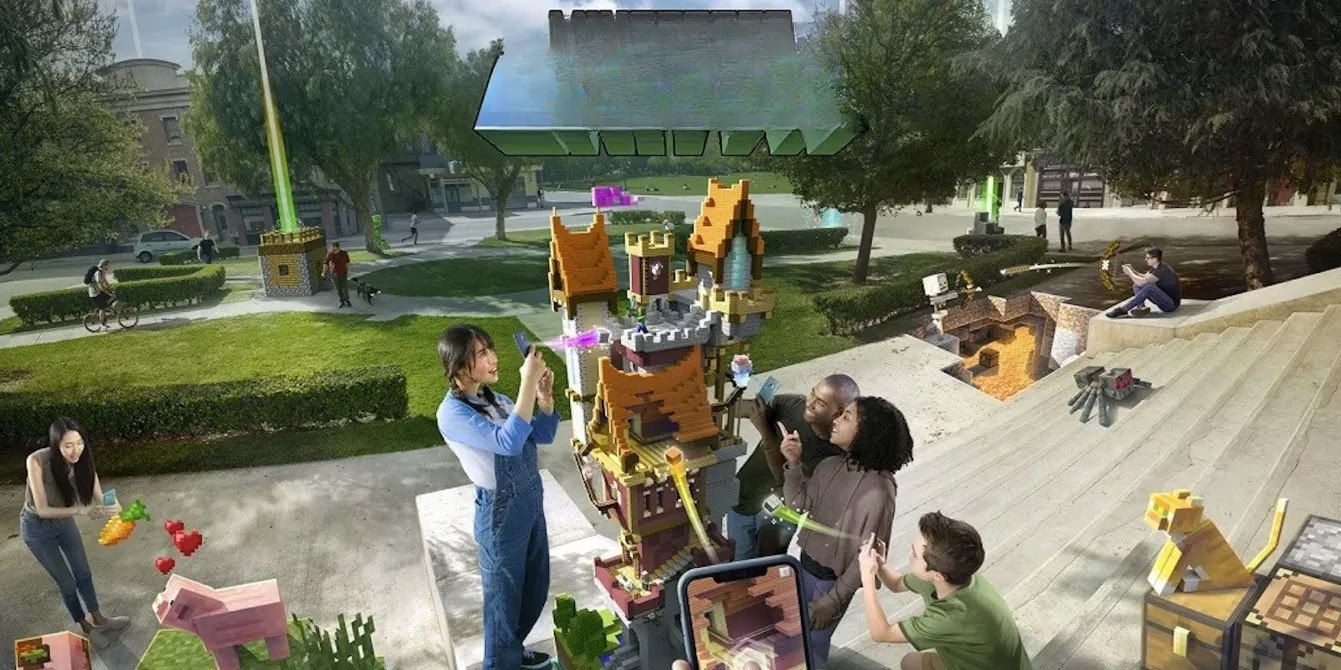
Think about it. Minecraft Dungeons had a solid run with years of DLC before support ended. Minecraft Legends at least got a few months of limelight, even if it quickly fizzled out. Both were criticized for being shallow takes on their genres, but they still got to stand in the court of public opinion. Earth, however, was killed in the cradle. Launched in early access in 2019, it aimed to compete with Pokémon GO by letting you harvest resources outdoors and build structures in augmented reality. Popular YouTubers like Grian and Mumbo Jumbo hyped it up, and over 1.4 million players downloaded it in the first week. And then… the pandemic hit. While Pokémon GO adapted with at-home play features, Minecraft Earth was shut down entirely. It never even made it to a full release.
What frustrates me even more is how ripe the AR market still is in 2026. Pokémon GO remains a bug-riddled titan, yet it continues to rake in cash because the core concept is that compelling. Doesn’t that prove the pie isn’t fully eaten? Minecraft’s blocky charm mixed with real-world exploration is a match made in heaven, and we only got a tiny taste of it. I still daydream about placing redstone contraptions in my local park or collaborating with friends to build a massive castle on our street corner. The early access build already showed glimmers of that magic—polished mechanics, charming mobs dancing in your living room, collaborative builds. All that code and those assests are just gathering digital dust now. Mojang could literally take that foundation, update it for modern hardware, and relaunch Earth bigger than ever. The brand is even stronger today than it was in 2019, and a “revival” narrative would generate massive buzz on its own.
But here’s the catch—and this is something Mojang has struggled with before. If they bring Earth back, they can’t treat it like a side hustle. Minecraft Legends died because support evaporated almost instantly. Earth would need consistent updates, seasonal events, new mobs to collect, and deep integration with the main game’s ecosystem. Imagine if your Bedrock account could sync your builds, or if exclusive Earth encounters unlocked special cosmetics in Java Edition. That kind of cross-pollination could create a feedback loop that keeps both games thriving. Of course, this means diverting resources away from the base game, which is a dilemma every spin-off faces. But I’d argue a well-executed Earth wouldn’t cannibalize Minecraft—it would expand the universe and bring in players who might never touch the sandbox otherwise.
And let’s be real: Pokémon GO has been getting stale. Niantic keeps piling on microtransactions and fumbling basic quality-of-life fixes. Players crave a fresh AR experience, one that treats them with the care Mojang is known for. If Earth launched today with a promise of regular “mining” events, community challenges, and actual bug-free play, it could carve out a sizable niche. It might not dethrone the decade-old giant overnight, but it doesn’t have to. There’s room for two—especially when one of them wears a creeper hoodie.
So here I am, a hopeful fan with a smartphone in my pocket, still waiting for the day I can place a diamond block on my neighbor’s lawn. Wouldn’t that be something, Mojang?
Industry context is supported by NPD Group, and it helps frame why a Minecraft Earth revival could be more viable in 2026 than it was in 2020: location-based AR isn’t just a novelty, it’s a live-services model that can monetize through events, cosmetics, and recurring engagement if it’s maintained consistently. Seen through that lens, the blog’s argument that Mojang must treat Earth as a first-class, regularly updated product (rather than a short-lived spin-off) becomes the key requirement—because the opportunity isn’t merely “there’s room for two AR games,” it’s that sustained content cadence is what turns a compelling concept into a durable market performer.