Why Minecraft Legends Fell Short and How a Sequel Could Finally Deliver
Minecraft Legends, Mojang's RTS, failed due to console limitations and quick discontinuation, but a sequel might get it right.
Back in April 2023, Mojang and Blackbird Interactive unleashed Minecraft Legends upon the world. The promise was intoxicating: a real-time action-strategy game set in a mythologized past of the Minecraft universe, where players could lead familiar mobs into epic battles while gathering resources and building defenses on the fly. It felt like an idea that couldn’t miss—a fusion of two beloved genres wrapped in the blocky charm millions adore. For a moment, it seemed like the perfect companion to the ever-growing Minecraft empire.
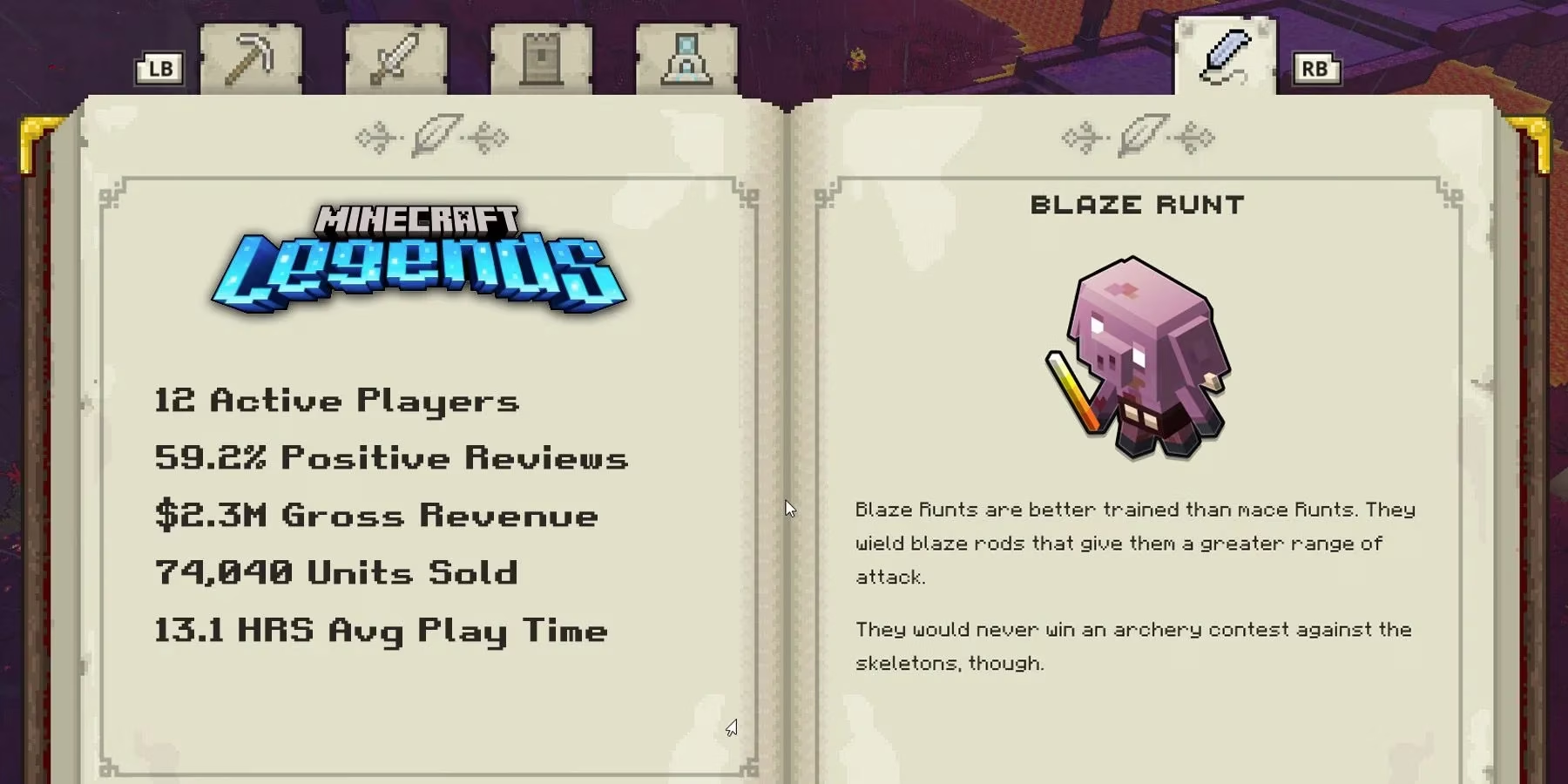
Fast forward to 2026, and Minecraft Legends is remembered less as a breakout hit and more as a fascinating case study in unfulfilled potential. Despite pulling in three million players within its first two weeks, the game never managed to translate that initial excitement into long-term engagement. Much of that early player count was driven by Xbox and PC Game Pass subscriptions, and actual sales were spread painfully thin across its comprehensive platform list. Then, on January 10, 2024—less than a year after launch—Mojang announced there would be no further updates or DLC. Just like that, the dream was over. But is the Minecraft RTS concept truly dead, or could a sequel learn from these stumbles and finally get it right?
Where the Original Game Went Wrong
On paper, Minecraft Legends had all the right ingredients. Cooperative and competitive multiplayer, monthly challenges, randomized map layouts for replayability, and a prequel narrative dripping with lore implications. The reality, however, was a game that consistently fell short of its own ambitions. At the heart of its struggles was an identity crisis born from a noble but flawed goal: making a console-friendly RTS accessible to everyone.
Console real-time strategy games have always been niche for a reason. The speed, precision, and sheer number of commands typical of the genre fight against a controller’s thumbsticks and buttons. Minecraft Legends tried to dodge this bullet by prioritizing ease-of-use over depth, but in doing so, it may have sabotaged itself. By making the hero a third-person unit locked to the action, it prevented players from quickly directing troops across an entire battlefield. You were always in the fight, sure—but you were never truly commanding it.
The compromises didn’t stop there. Randomly generated maps sounded wonderfully Minecraft, yet they often lacked the mechanical variety and careful balance that great RTS maps demand. Building and crafting—cornerstones of Minecraft itself—felt oddly marginalized. The campaign was brief and repetitious, and the story barely registered beyond its opening and closing moments. For all its polish, Minecraft Legends ended up feeling like the shallowest possible version of its own pitch. It wasn’t a bad game, but it also wasn’t an interesting one.
What a Sequel Needs to Do Differently
If Minecraft Legends taught us anything, it’s that a Minecraft RTS can still work brilliantly—it just hasn’t been done right yet. A sequel, perhaps under a new subtitle to dodge the disappointment attached to Legends, could tap into the full extent of what this crossover should be. So what would that look like?
-
Maps matter, so make them handcrafted. Instead of sprawling generated open worlds, battle arenas should be constrained to single, intentionally designed biomes. This allows for tighter gameplay, better balance, and the integration of authentic hazards like lava flows in the Nether or a wandering Warden lurking in the Deep Dark.
-
Let players truly command. By enabling a zoomed-out tactical view, commanders could direct mobs from above rather than being glued to a single hero’s perspective. The flow of battle would speed up dramatically, raising the skill ceiling without sacrificing approachability.
-
Reimagine the hero role. Instead of a hybrid fighter-builder, the hero could become a pure builder and support unit. Picture them rapidly constructing fortifications, placing spawners for different mob types, and even equipping allied creatures with armor and custom tools. This would make construction feel meaningful and integrated, not like a side activity.
-
Introduce distinct factions. The Piglins could become a playable army, blending Overworld tech with their signature spore-spreading tactics. Other factions could include Illager raiders specializing in debilitating tricks, Endermen warping in elite strike forces and stealing resources, and the Undead swarming the field in classic Zerg-rush fashion with endless weak hordes. Each faction would have its own campaign, complete with unique mission objectives and a tailored narrative arc—exactly what a modern RTS demands.
-
Expand the world. Biomes like the End, the Nether, deserts, and sprawling cave systems should all make an appearance, each offering distinct materials and environmental challenges. This would give map variety a purpose beyond simple visual changes.
A Second Chance at Greatness
The end result would be a very different game from Minecraft Legends, and that’s entirely the point. A successful Minecraft RTS shouldn’t try to force an awkward merger between sandbox creativity and competitive strategy; it should lean into being a conventional strategy game draped in everything players love about Minecraft. The original suffered a major defeat before its first anniversary, but its core concept remains exceptionally strong. It will take a lot of work to reshape that concept into something truly compelling, but if Mojang and a talented partner studio are willing to take the risk, a sequel could become the ideal side game Minecraft always deserved. Sometimes, the most important victory is learning exactly how to come back from a loss.